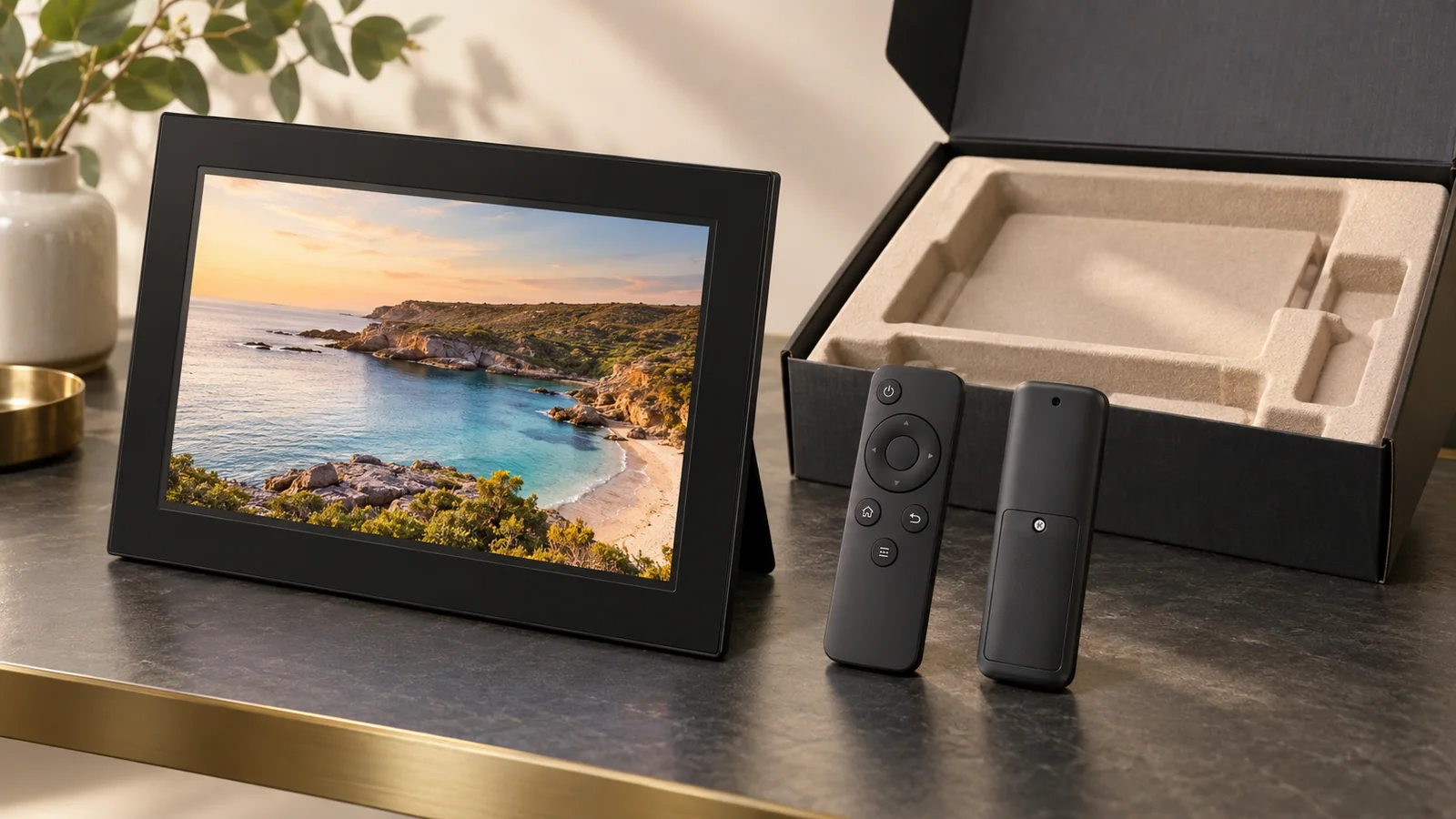
A digital photo frame may be powered from a wall adapter while its remote uses a small replaceable coin battery. In Australia, that accessory can bring the retail pack within mandatory button/coin-battery safety and information standards, with design, testing and warning obligations that should be resolved before tooling and artwork are approved.
This guide is for Australian importers, retailers, distributors, marketplace brands, product-safety teams and overseas OEMs. It is a project handover, not a scope ruling, compliance certificate, test report or legal opinion. The Australian supplier and qualified product-safety specialists must confirm the current instruments, exclusions, test route and warning content for the exact frame, remote and batteries.
What is the real buying question?
The search may begin with “Do Australian button battery rules cover remote controls?” ACCC Product Safety expressly identifies accessories such as remote controls among the covered examples. The purchasing decision then expands: which battery is present, whether it can be accessed, which tests apply, what information belongs on the product and pack, and who holds evidence before supply.
This connected-question structure matches Google Search Central's description of AI search features exploring subtopics. The intent here is inferred from public regulator materials and practical sourcing work; DOREMI does not claim direct access to Google AI Overview results.
Create a battery inventory for the whole product
Record every cell in the frame, remote and accessories. Include chemistry, dimensions, supplier, model, whether it is replaceable, whether it is installed or separate, and how the user accesses it. Photograph battery doors, fasteners, soldered locations and package presentation.
Do not let the supplier answer only for the remote. Some frames use an internal coin cell for a clock or memory function. The Australian standard has specific scope and exclusions, including treatment that may differ for certain soldered batteries in audio-visual or information and communications technology equipment. Obtain a written decision for each battery location.
Define the Australian sellable configuration
Freeze the frame model, remote, cell, power adapter, stand, manual, packaging and intended user. Link the configuration to a physical golden sample and bill of materials. A global model name is not enough when another market's remote, warning or power pack differs.
Use an Australian suffix or controlled market field if it prevents mixing. The purchase order and inspection sheet should identify the correct remote and artwork. If an app-only SKU has no remote, record that distinction rather than borrowing evidence from the remote-equipped version.
Design for a secure compartment
The ACCC overview says covered consumer goods must not release the battery during use or misuse and that user-replaceable battery compartments must resist opening by young children. It also notes that a screw or fastener should be captive so it stays with the door or cover.
Translate that into engineering controls: door geometry, screw retention, boss strength, material, tool access, contact placement and assembly method. Review the design at CAD, tooling trial and production-sample stages. A taped prototype or manually selected screw is not production evidence.
Do not treat two movements as a casual latch
If a design relies on simultaneous actions instead of a tool, the laboratory should review whether those actions are independent and whether the mechanism remains resistant after conditioning and foreseeable use. A slide-and-lift motion that naturally occurs in one gesture may not meet the intended safety outcome.
Ask the laboratory to assess the real user interaction and the applicable standard text. Keep video and photographs of the test sample's operation, but do not replace the formal evidence with a supplier demonstration.

Build a product-specific test plan
The mandatory instrument permits identified product-specific and non-product-specific routes. A qualified laboratory should select the applicable clauses, conditioning, forces, drop or impact sequence, sample count and acceptance criteria for the exact remote. Do not choose a standard because a supplier already owns a report for a vaguely similar controller.
Send drawings, materials, battery, fasteners, user instructions and intended use with the request. Require the report to identify the tested model, photographs, test sequence, results and any deviations. Confirm that the laboratory and report format are acceptable to the Australian supplier's compliance process.
Distinguish safety and information standards
Australia's framework includes mandatory safety and information instruments for products containing button/coin batteries, as well as separate instruments for batteries themselves. A secure compartment does not complete the warning workstream, and correct warnings do not repair an insecure compartment.
Create a requirements matrix with one row for each applicable instrument and each product, package or document deliverable. Name the owner and evidence. This prevents a design report, packaging proof and battery-supplier file from being collapsed into one ambiguous “battery certificate.”
Release warning artwork from authoritative files
Ask the Australian owner to provide the current warning content, symbols, location, size, legibility and durability requirements for the product, package and instructions. Use the approved source or professionally recreated production artwork. Do not copy a low-resolution warning from a competitor listing.
Check the physical proof at actual size on the smallest package. Confirm that folds, labels, retail stickers and e-commerce overlabels do not obscure it. If the product is too small for a particular presentation, obtain a qualified decision on the permitted treatment rather than shrinking the warning by eye.
Control the included battery and any spare
Name the cell manufacturer and model in the bill of materials. Verify dimensions, chemistry, packaging and supplier evidence. A substitute with the same common designation can still change fit, contact pressure, markings or documentation.
If a spare battery is supplied, review the separate battery safety and information standards and the retail packaging method. A loose cell in the accessory pouch creates an avoidable ambiguity. Document installed, spare and replacement-battery arrangements for every SKU.
Separate professional-equipment claims from real channels
The ACCC describes an exclusion for professional equipment only when all stated conditions are satisfied, including use in trades, professions or industries, no sale to the public and no use where children are present. A frame marketed to offices does not automatically qualify if it is also sold online to households or displayed in mixed environments.
Map the actual customer, channel, product page and foreseeable use. If the business relies on an exclusion, keep the responsible legal or technical rationale and controls that make the facts true. Do not use a B2B invoice as the only evidence.
Handle the soldered-cell question carefully
ACCC guidance identifies an exclusion for certain audio-visual and ICT equipment when the button or coin battery is soldered in place. Whether a frame and a particular cell meet that description requires a product-specific review. The replaceable remote battery remains a separate construction.
Record solder method, location, accessibility and equipment classification. If the OEM later moves the cell into a holder for service convenience, reopen the scope decision and test plan before the change is released.
Make the Australian supplier the decision owner
The local supplier must ensure the goods it supplies comply. The overseas factory can provide product data, drawings, reports, samples and production controls, but it should not invent the Australian legal entity or declare that a market obligation is complete without written owner approval.
Assign who reviews scope, commissions testing, releases warnings, holds records, monitors incidents and decides corrective action. Put those responsibilities in the launch plan and supplier agreement. A distributor change should trigger a records and artwork review.
Translate test evidence into a factory control plan
Release controlled drawings and part numbers for the remote housing, door, screw, contacts and battery. Define resin, tooling revision, assembly method and inspection checkpoints. A full report is valuable only if the line can reproduce the sample.
Inspect screw presence, retention, door fit, closure and correct cell at appropriate stages. Use defect images and a clear quarantine rule. Record lot and corrective action so the importer can investigate a field issue without guessing which construction shipped.
Review the entire packaging hierarchy
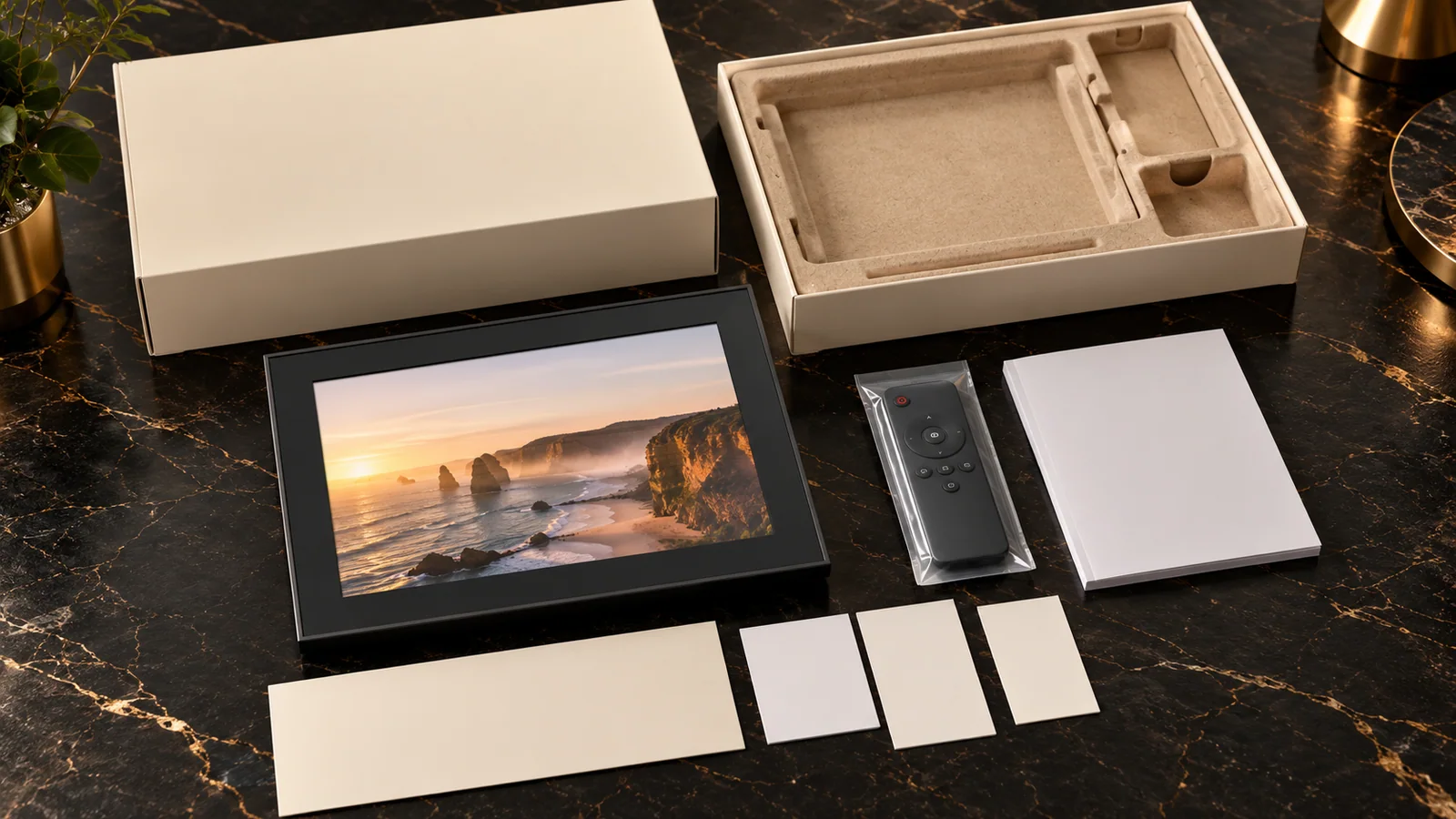
Verify product warnings, inner tray, retail carton, multipack, marketplace overbox, manual and online information as applicable. The pack shown to the laboratory or artwork reviewer should match the pack sold. Confirm that the remote cannot move in transit and damage its battery door.
Keep blank space and regulatory artwork under version control. Do not allow a retailer sticker or promotional sleeve to cover warnings. If the OEM produces several country packs, use colour-neutral controls or barcode scanning to prevent the wrong carton from reaching Australia.
Inspect production-equivalent units before shipment
Compare representative units with the approved golden sample, report photographs and artwork. Verify remote model, battery, door, captive fastener, function, package warning, product warning and instruction revision. Define critical defects that stop shipment.
Functional testing should not leave the battery door loose. If inspectors open compartments, specify the closing method and recheck. Keep photographs and sample records as configuration evidence, while recognizing that inspection does not replace the mandatory compliance work.
Prepare incident and recall records
Assign a channel for consumers and retailers to report loose doors, missing screws, accessible batteries or ingestion hazards. Keep batch, sales and importer records so affected units can be traced. Escalate a serious issue promptly to the Australian owner and qualified advisers.
Do not wait for multiple complaints before preserving samples and evidence. Quarantine remaining stock, document the condition and avoid altering failed units until the investigation plan is agreed. Corrective action must address both physical goods and customer information.
Control changes and service replacements
Require declaration of changes to moulds, resin, screw, door, battery, remote supplier, warnings, package and instructions. Compare every change with the approved baseline. Ask the laboratory or product-safety owner whether retesting or artwork action is required.
Replacement remotes supplied after sale should follow the same controls. A cheaper service remote with a different compartment can undermine an otherwise compliant product programme. Link service part numbers to the approved Australian construction.
Buyer release checklist
- All batteries in the frame, remote and accessories are inventoried
- The Australian sellable configuration is frozen
- Scope and any exclusion are documented for each battery location
- The remote has a secure child-resistant battery compartment
- Fasteners, materials and tooling revisions are controlled
- A qualified laboratory has defined the applicable test route
- The full report matches production-equivalent samples
- Safety and information standards are tracked separately
- Product, packaging and instruction warnings use current approved artwork
- Installed and spare batteries have controlled evidence and packaging
- The Australian supplier owns the final decisions and records
- Factory controls reproduce the passing construction
- Pre-shipment inspection verifies the complete pack
- Incident, service and reorder change controls are active
Questions for the OEM and Australian supplier
Ask the OEM: Which cells are present? Which are replaceable or soldered? Which remote mould, door, screw and battery ship? What changes across models? Can the factory provide reports, drawings, samples, artwork proofs, inspection records and change declarations?
Ask the Australian owner: Which instruments apply? Does any exclusion genuinely fit? Which test route and warning format are accepted? Which entity keeps the file? How are online sales, replacement remotes, incidents and changes controlled?
Experience scope and project limits
Editorial review: Jessica, Founder & Project Advisor at DOREMI Display. Updated 19 October 2026. Jessica's practical scope covers B2B digital-frame specification, supplier document handover, samples, packaging, artwork coordination and production change management. DOREMI is not presented as the ACCC, an Australian supplier, accredited laboratory, standards body or legal adviser.
This guide organizes procurement questions. The Australian Consumer Law, current mandatory instruments and regulator guidance, the exact product and qualified Australian advice control the final scope, testing, warning, supply and corrective-action decisions.
Public sources used for this guide
- Google Search Central: helpful, reliable, people-first content
- ACCC Product Safety: products containing button and coin batteries mandatory safety standard
- ACCC: guide for business on the mandatory standards
- Federal Register of Legislation: products containing button/coin batteries safety standard
- Federal Register of Legislation: products containing button/coin batteries information standard