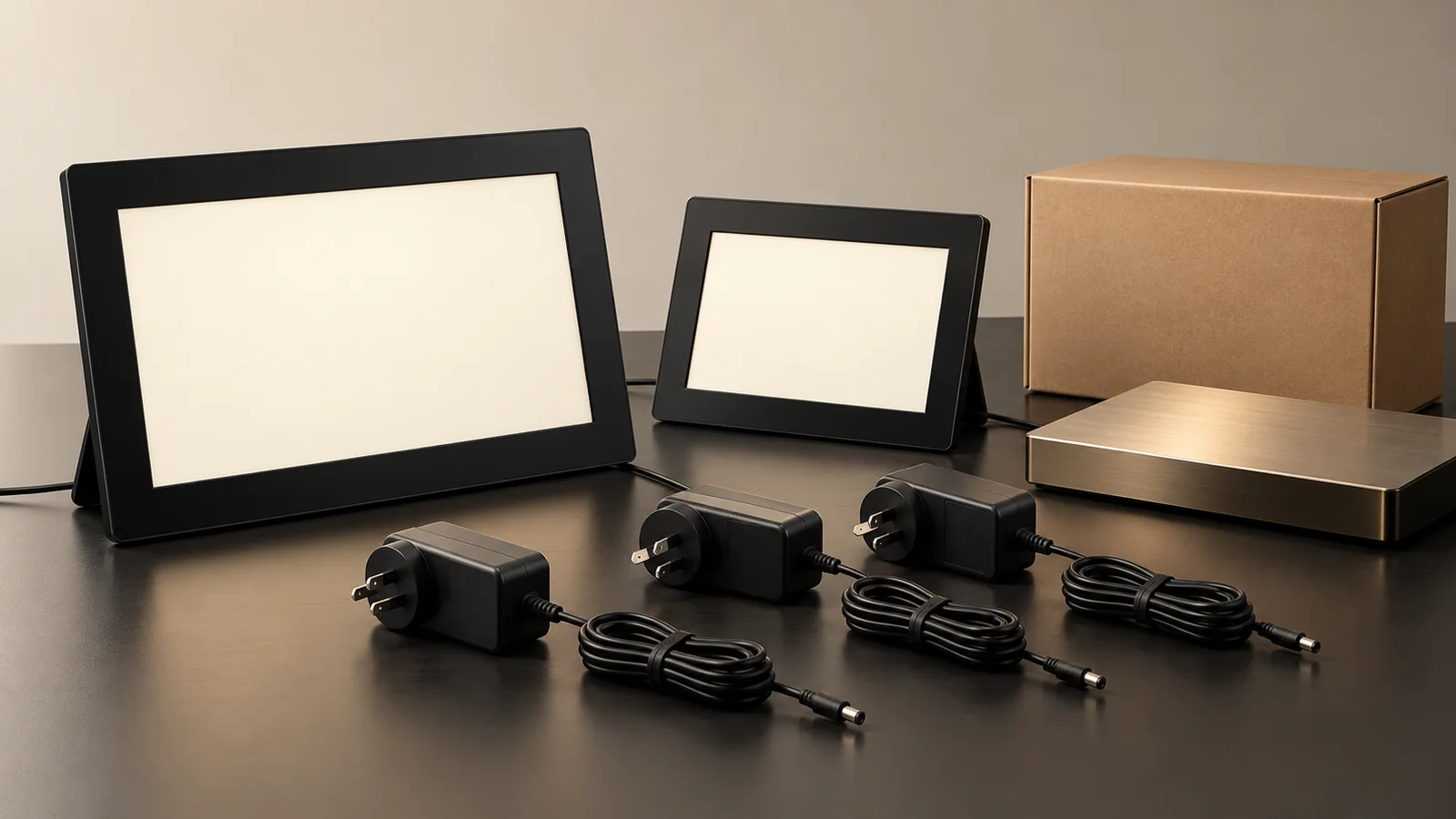
A digital photo frame may arrive in Australia with a small plug-pack that looks like a commodity accessory. Under the Greenhouse and Energy Minimum Standards system, an in-scope external power supply is a regulated product in its own right. Before supply, the responsible business needs to confirm scope, test the correct model under the applicable method, meet minimum energy performance and marking requirements, and hold a current registration.
This guide is for Australian importers, retailers, private-label digital-frame brands, compliance teams and overseas OEM factories. It translates the current External Power Supplies Determination and Energy Rating guidance into a buyer–supplier handover. It does not decide scope for a particular adapter, conduct testing, approve a registration or replace the GEMS Regulator, an accredited specialist or electrical-safety review.
What are digital-frame buyers asking?
High-intent questions include: “Is our bundled adapter covered?”, “Does a USB-C quick-charge unit count?”, “Can we use a U.S. 115 V report?”, “Who registers the model?”, “Can three branded adapters share one family registration?” and “What happens when the supplier changes the adaptor but keeps our SKU?” The answer begins with the exact hardware, not the product-page description.
Google Search Central's 2026 guidance says generative-search visibility rests on useful, unique content and ordinary SEO foundations. This guide therefore connects the questions to one operational model file. Search intent is an editorial inference from current Australian regulator guidance and OEM handovers. DOREMI does not claim direct access to or measurement of Google AI Overview or AI Mode output.
Separate GEMS from electrical safety and radio compliance
GEMS addresses energy performance and related registration for regulated products. An adapter and digital photo frame may also need electrical-safety, electromagnetic-compatibility, radio, telecommunications, battery, product-safety and consumer-law review. An RCM process or supplier declaration does not automatically complete GEMS.
Use one model master with separate workstreams. Record which entity owns each approval, which hardware it covers and the evidence expiry. Do not present a GEMS registration number as a universal product certification.
Screen the external power supply, not only the frame
The Energy Rating page describes covered products as single-output external power supply units up to 250 W or 250 VA that take AC mains input and provide one extra-low-voltage AC or DC output to a separate end-use product. They are in a separate enclosure and connect by cable, cord or wiring, subject to the Determination's detailed conditions.
Capture the adapter manufacturer, brand, model, input, output, connector, enclosure, cable and intended digital-frame models. A purchase order saying “AU plug” is not a scope record. Obtain photographs of all sides and the production nameplate artwork.
Check every exclusion against the real design
The regulator lists exclusions including simultaneous multiple-output supplies, wireless induction chargers, certain automatically changing multi-voltage quick-charge products, therapeutic-device supplies, some lamp supplies, and DC-to-DC equipment. A user-selectable voltage supply can be treated differently from a protocol-controlled multi-voltage device.
Do not rely on the marketing word “universal.” Review the electrical behaviour and Determination. If the digital frame uses USB-C power delivery or a combined charging dock, ask a competent Australian adviser to document the scope conclusion before sale.
Freeze the model identity before testing
A reliable handover identifies the exact adapter by brand and model number, manufacturer, circuit design, rated input and output, cord and plug configuration. The retail frame SKU should link to that adapter model. If the OEM sources visually similar supplies from two factories, they are not automatically the same regulated model.
Require advance notice for supplier, transformer, controller, enclosure, cable, connector, nameplate or performance changes. Record the effective production lot and affected frame models. Do not approve an unlisted substitute during a shortage.

Use the current Determination and referenced standards
The Federal Register lists the Greenhouse and Energy Minimum Standards (External Power Supplies) Determination 2014 as in force. The Energy Rating page identifies AS/NZS 4665.1:2005 and AS/NZS 4665.2:2005 as the referenced standards and notes that the applicable versions are those in effect when the Determination commenced.
Keep the Determination, regulator product page, purchased standards access and laboratory method in the project file. A supplier's newest internal test method is not automatically the legally referenced method. Record any permitted equivalent protocol and how it is used.
Test at the Australian voltage basis
The regulator says testing must be conducted at 230 V AC or 240 V AC according to the nameplate. If the range includes 230 V, testing is at 230 V; a 240 V-only nameplate uses 240 V. It explicitly states that 115 V testing alone cannot be used for Australian registration.
Ask the laboratory report to show the tested model, input basis, output condition, method, equipment and results required by the standard. Match the report to production artwork. Do not reuse a U.S. efficiency report without confirming it satisfies the full Australian requirements.
Verify minimum energy performance
For DC-output supplies, the regulator page points to no-load power consumption and average active-mode efficiency requirements in AS/NZS 4665.2. AC-output supplies use the applicable average active-mode efficiency requirement. The exact limits and test approach belong in the controlled standard and report.
The OEM should provide raw test evidence to the registrant or authorised reviewer, not only a claim that the adapter is “Level VI.” International efficiency marks can be relevant, but the Australian registration basis still needs the Determination's requirements and correct voltage testing.
Control the energy performance mark
External power supplies do not require the consumer Energy Rating Label, but the regulator states that a compliant energy performance mark is required on the product. It explains when Mark V or Mark VI formats may be used and how the mark relates to 230 V or 240 V performance.
Approve the nameplate as controlled artwork. Keep legibility, permanence, model and electrical ratings consistent with the tested unit. Do not add a higher mark because a component supplier says the design is efficient; the mark must be supported by applicable evidence.
Identify who will be the registrant
Australian guidance says a person in the supply chain with an appropriate connection to supply may be the registrant, and notes that manufacturers and importers are commonly responsible for initial supply. The commercial team should select one owner and document access to test reports, model changes and renewal notices.
If a distributor owns the registration, confirm that the exact branded model and your supply route are covered. Record the registration number, holder, product model, status, approval certificate and expiry. Avoid depending on a screenshot with no legal entity or model match.
Register before offering the model for supply
The Energy Rating registration guidance states that regulated products must be registered before they can be sold and that an unregistered in-scope model should be registered before supply. It also explains how to search the database and check whether a current Australian registration exists.
Build the gate before marketplace listing, retailer onboarding and import release planning. A submitted application is not the same as an approved registration. Keep evidence of approval and effective dates with the product launch record.
Use family registration only when the rules fit
The regulator allows a family of models where the relevant technical specifications satisfy the Determination's family requirements. Similar appearance or common packaging is not enough. The family should be supported by the required technical relationship and test evidence.
List every included model and its retail frame connection. When adding a model, use the regulator's variation process where eligible and wait for the required approval. Do not append an internal SKU to a family spreadsheet and assume legal coverage.
Keep the adapter and frame BOM connected
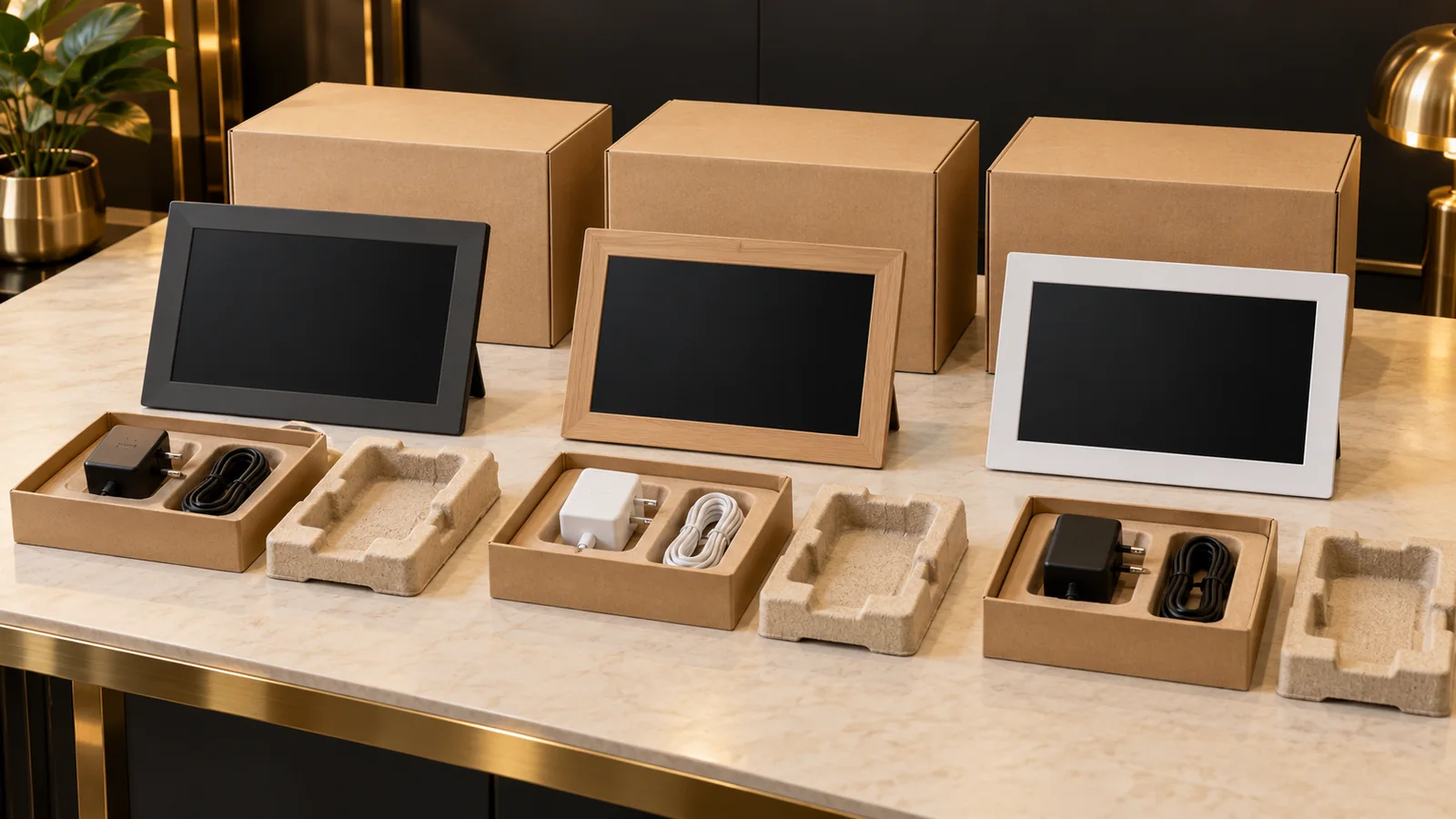
The digital frame bill of materials should name the approved power supply, cable and plug version. The packing list, inspection sheet and finished-goods record should verify the same model. This prevents a compliant sample from being replaced with a lower-cost unit in mass production.
Use incoming inspection and final packing checks appropriate to risk. Photograph the production adapter and nameplate clearly. Keep supplier lot and frame lot traceability so affected goods can be located if a model issue is discovered.
Control private-label artwork and model numbers
Private-label programmes often change the logo and model number while using an existing electrical design. The registration must match the actual regulated model and brand facts under the approved route. A factory's registration under another brand may not cover a new private-label identity.
Freeze exact spelling, model format and rating artwork. Connect packaging and online listings to the same model. Do not abbreviate or create a marketing-only identifier that prevents retailers from finding the registered product.
Monitor registration duration and changes
The regulator says registrations are typically five years and must remain current while a model is offered for supply. It provides processes for renewal, variations and changes of registrant. Cancellation or expiry can make continued offering non-compliant.
Set alerts well before expiry and assign a backup owner. Review stock, listings and purchase orders when a registration changes. Preserve the old approval and the effective date of the new one so historical supply remains traceable.
Keep claims narrower than the evidence
A registered adapter is not proof that the digital photo frame is “energy efficient,” safe, sustainable or compliant with every Australian requirement. Use the correct model and registration facts in internal records. Consumer claims need their own substantiation and legal review.
Do not display a GEMS number as a promotional badge unless an applicable requirement or reviewed practice supports the presentation. The regulator describes showing the registered model and number together as voluntary best practice where not otherwise required, but accuracy remains essential.
Prepare for supplier and model substitutions
Frame programmes can face shortages, plug changes or cost reductions. Make the adapter a controlled critical component. A substitution request should include old and new models, manufacturer, circuit and rating differences, report, registration impact, label artwork, sample and affected orders.
Hold production release until the responsible owner confirms the route. If the new adapter is not covered, complete testing and registration steps before supply. A visual fit check does not replace regulatory review.
Reconcile purchase, import and retail records
The registrant should be able to connect approved adapter models to supplier purchase orders, imported lots, frame assembly records and the models offered online or in stores. This does not mean every department needs the full test report. It means the model identifier used by each department can be reconciled without guesswork.
Run a periodic exception check for unapproved supplier codes, missing registration links, expired records and listings that use shortened model names. Investigate differences before the next shipment or sale. Keep the correction, affected stock and decision owner in the model history.
Run a pre-supply evidence gate
- The external power supply is screened against the current Determination
- Any exclusion is supported by the actual electrical design
- The frame SKU maps to the exact adapter brand and model
- Testing uses the applicable AS/NZS method and 230/240 V basis
- Minimum energy performance evidence is complete
- The product carries supported performance marking
- The responsible registrant and legal entity are confirmed
- The exact model or eligible family has current approval
- Private-label model and artwork match the registration
- Production lots verify the approved adapter
- Expiry and variation alerts have an owner
- Substitutions are blocked until review is complete
Experience scope and project limits
Editorial review: Jessica, Founder & Project Advisor at DOREMI Display. Updated 28 October 2026. Jessica's experience scope covers private-label display-frame specifications, supplier model records, external accessories, packaging, sample approval and buyer–OEM project coordination. She is not presented as the GEMS Regulator, a laboratory, electrical engineer or Australian legal adviser.
Scope, exclusions, test method, performance level, family eligibility, marking, registrant and approval status must be confirmed for the actual adapter and supply route. This guide provides a handover framework. It does not test a product, grant registration or confirm that a digital photo frame can be supplied in Australia.