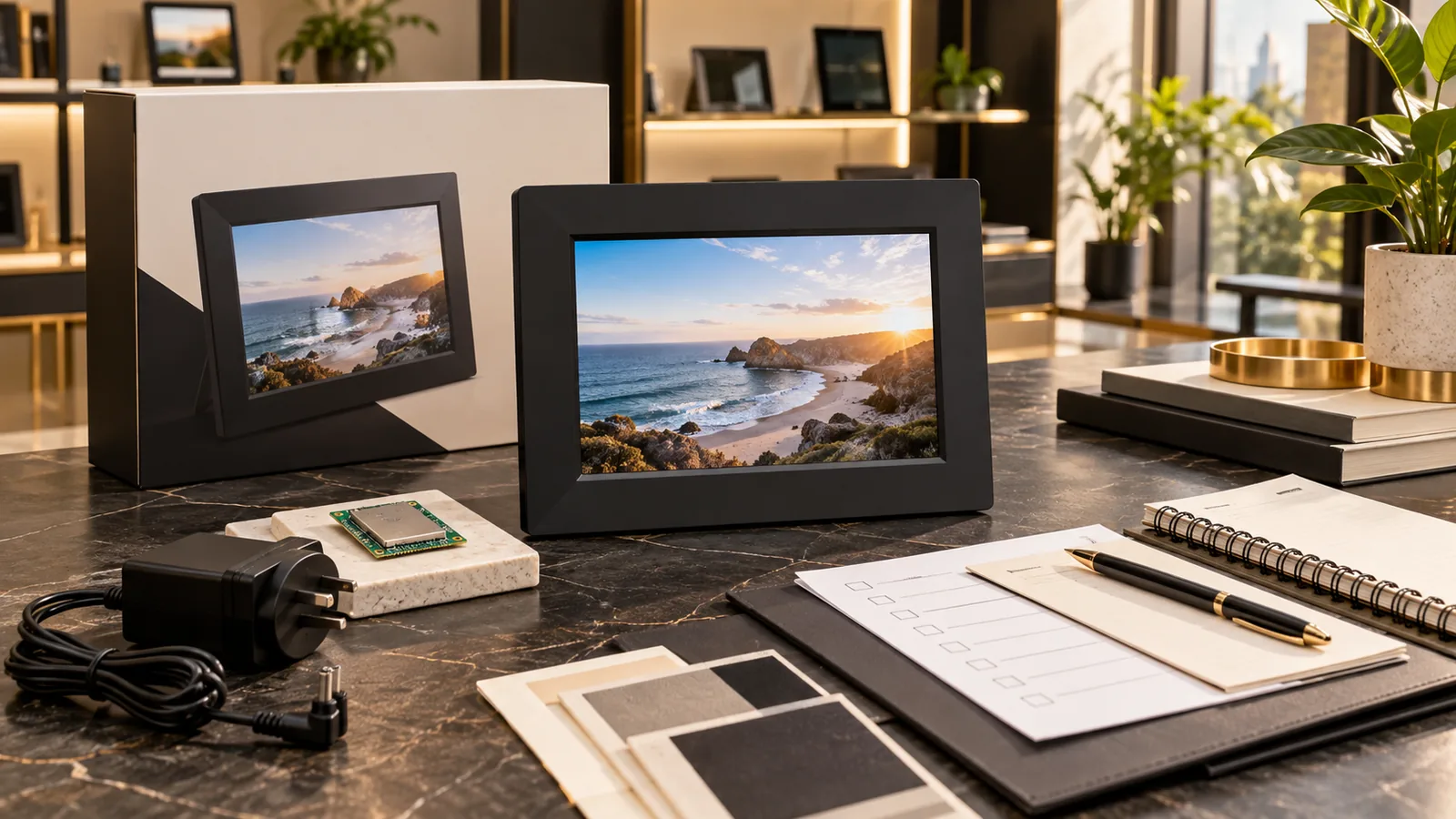
Can an Australian importer place the Regulatory Compliance Mark on a Wi-Fi digital display frame because the supplier already has CE and FCC reports? ACMA's answer is not a shortcut: overseas markings do not automatically show that a product complies with Australian rules. A connected frame may combine radio, electromagnetic compatibility, an external power supply, household electrical-safety questions and several product identities. The importer needs a rule-and-evidence map for the actual configuration.
This guide is for Australian importers, private-label brands, retailers and OEM/ODM suppliers sourcing Wi-Fi digital photo frames, LED memorabilia displays and other powered display products. It explains a practical handover around ACMA's five supplier steps and the Electrical Equipment Safety System. It does not classify a product, choose a standard, assign an EESS risk level, approve evidence or authorise use of the RCM. Australia has jurisdictional and product-specific requirements that require current regulator, laboratory and legal review.
Begin with the whole product, not the logo artwork
The RCM is the visible end of a compliance process, not its starting point. ACMA's five steps are to check the rules, show compliance, sign and keep records, register where required and label the product. An importer who asks the factory to “add RCM” before completing those steps reverses the process.
Create a launch gate that prevents artwork release until the responsible Australian business has confirmed applicable regimes, evidence, declarations and registration. Keep the RCM master artwork controlled. The overseas factory may apply an authorised mark during production, but responsibility remains with the supplier under the relevant rules.
Describe the configuration in technical terms
“Digital frame” does not show whether a product contains Wi-Fi, Bluetooth, an intentional transmitter, an LCD controller, LED lighting, touch interface, speaker, camera, internal battery, USB power input or mains power supply. List every electrical and radio function, frequency band, antenna, port, accessory and operating mode.
Identify what is supplied in the retail package and what is optional. A frame sold with a mains adapter creates a different evidence set from a low-voltage frame sold without one. A radio module that can operate in several regions needs the Australian production configuration, not only a global marketing datasheet.
Map every potentially applicable ACMA arrangement
ACMA says a product may fall under more than one group of rules. Its example is a television with Bluetooth and Wi-Fi that may need review under EMC, radiocommunications and telecommunications arrangements. A connected display frame deserves the same disciplined screening rather than a single-column “wireless approval.”
Build a matrix for telecommunications customer equipment, radiocommunications equipment, electromagnetic compatibility and electromagnetic energy where relevant. Record the reason each regime is included or excluded, the applicable technical standard, evidence route, declaration, record period and label condition. Have qualified Australian specialists confirm the matrix for the actual model.
Screen EESS separately from ACMA
The EESS addresses in-scope electrical equipment under participating-jurisdiction laws. Its published criteria include voltage limits and equipment designed or marketed as suitable for household, personal or similar use. A low-voltage frame may be outside one electrical-safety definition while its supplied mains power supply remains in scope. Do not merge the two into one unsupported conclusion.
List the frame, power supply, detachable cord, charger and other electrical accessories separately. Record ratings, intended use and supply arrangement. Ask the Australian responsible supplier and competent electrical-safety adviser to determine scope and risk level. The ACMA and EESS paths can both use the RCM but involve distinct legal bases and evidence.
Identify the responsible supplier
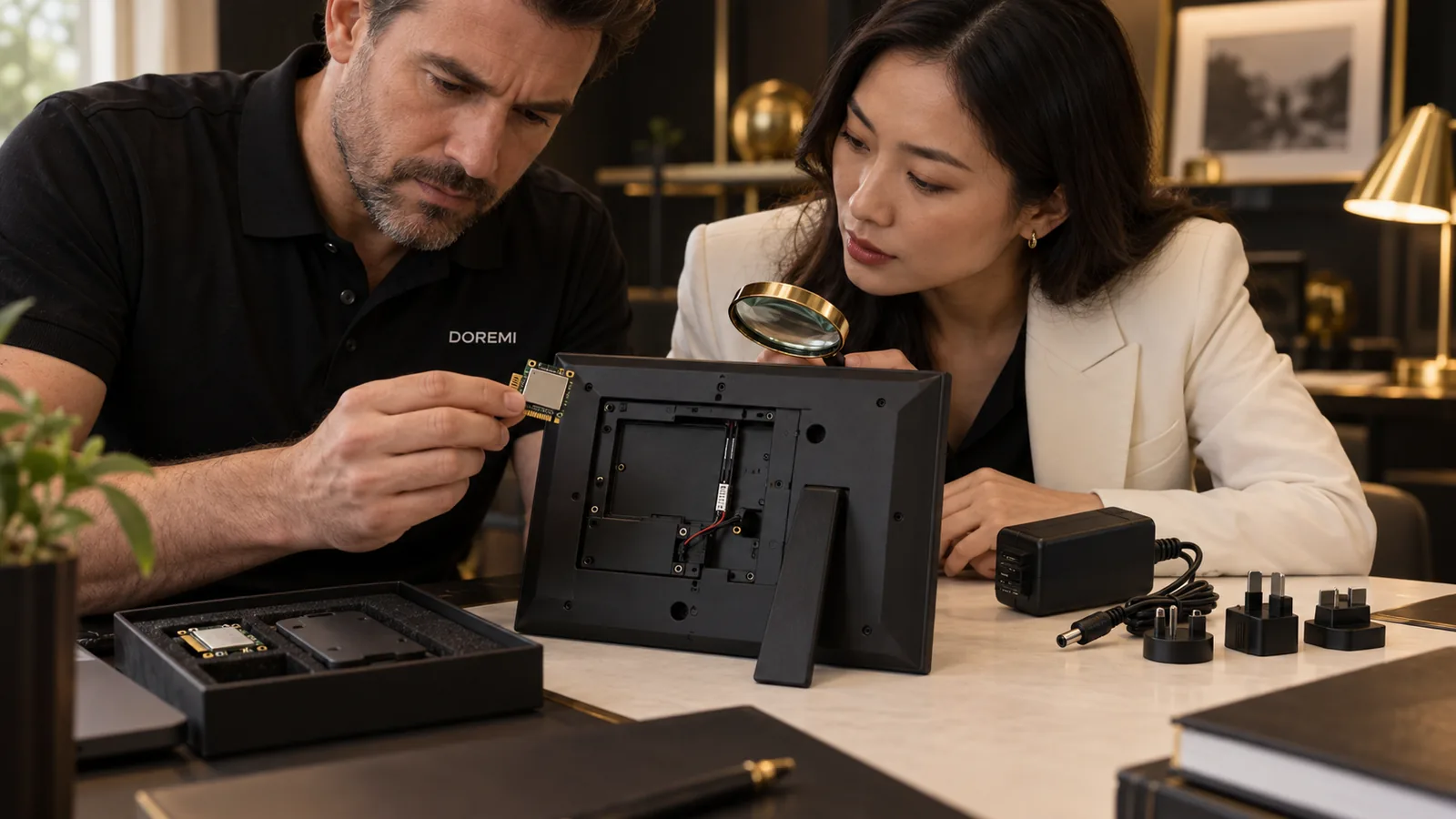
ACMA registration requires an Australian address, and the EESS describes a responsible supplier as an Australian or New Zealand legal entity that manufactures or imports in-scope equipment. An overseas OEM cannot simply register in place of each unrelated Australian importer. The exact role depends on the applicable regime.
Record the legal entity, ABN, business address, authorised officer and responsible contacts. If an agent helps with ACMA tasks, use a written agreement and understand that the supplier generally remains responsible. EESS notes that separate Australian importers of the same overseas equipment may each have their own registration obligations.
Freeze the brand, model and revision
Evidence needs a traceable product. Assign the brand, trade name, model number, hardware revision, radio-module version, firmware build, power-supply model and accessories. Link those identifiers to the product and packaging artwork. A test report for an engineering sample should be reconciled to the final production unit.
Maintain a family rationale if several sizes or finishes share evidence. Describe differences and why they do or do not affect compliance. Do not stretch one report across different radios, power architectures or enclosures because the front design looks similar. Qualified assessors should decide the evidence coverage.
Select Australian standards from the current rules
Standards and labelling instruments change. Ask the Australian compliance owner or competent test laboratory to identify the current applicable standard and edition for each regime. Record the decision date and product configuration. A supplier's old CB, CE or FCC report may contain useful test data, but it does not automatically establish Australian compliance.
Create a gap review rather than discarding all prior evidence or accepting it wholesale. Compare scope, test method, limits, laboratory competence, sample identity, radio settings, antenna, power supply and report edition. Document additional testing or engineering analysis. The final Australian declaration belongs to the responsible supplier.
Test the production-representative worst case
A representative sample should include the intended enclosure, display electronics, radio module, antenna, cables, power supply and firmware settings. Larger screens, higher brightness, different cable lengths or alternative adapters may change emissions or electrical conditions. The most attractive sample is not necessarily the technical worst case.
Define the family and worst-case rationale before testing. Photograph the internal build and record serial numbers and component labels. If a factory later changes a PCB, shield, cable or power supply, compare the change with the tested sample and obtain qualified advice on whether evidence remains valid.
Build a compliance folder that can survive an audit
Keep the applicable-rule assessment, standards list, test reports, certificates where required, product photographs, circuit and radio details, user instructions, risk records, declarations, registration evidence, label artwork and change history. Organise files by model and revision rather than by supplier email date.
ACMA requires records to remain available for specified periods after supply stops, with the exact period depending on the rules. The EESS has different evidence and compliance-folder expectations by risk level. Set an Australian owner, storage location, access control, backup and review date. A download link controlled only by the overseas factory is not a durable record system.
Complete the supplier declaration of conformity
ACMA says a supplier must not supply the product without signing a declaration of conformity and that the declaration must include the information in the current Form C02. The authorised person should sign only after reviewing applicable standards and supporting evidence.
Prepare the declaration from the controlled model record. Verify supplier identity, product description, model numbers, standards and signatory authority. Do not ask the factory to copy an Australian entity's signature or pre-date a form before testing. Update the declaration and evidence assessment when a material product change occurs.
Register through the correct route
ACMA's supplier process includes registration on the national database when the product needs a compliance label. The EESS also uses the platform for responsible-supplier and equipment registration. The registration selection depends on which ACMA and electrical-safety rules apply.
Confirm whether the supplier registers for ACMA only, EESS or both, and whether product-level registration is required. EESS says Level 2 and Level 3 in-scope equipment must be registered, while Level 1 equipment registration is voluntary even though other responsibilities remain. Never choose a risk level from an article; use the current classification process.
Control external power supplies as products
Power adapters are a frequent handover gap. Record manufacturer, brand, model, input/output ratings, plug configuration, cable, certification and registration status as applicable. Do not let the factory substitute a “same specification” adapter without written approval.
Match the adapter named in evidence to the packed accessory. Inspect markings and construction during pre-shipment checks without pretending that visual inspection proves electrical safety. If the importer changes the supplier or sells a different adapter locally, reopen the product and evidence assessment.
Authorise and place the RCM only after the process
ACMA says the label is generally the RCM and that an overseas mark such as CE does not automatically permit supply. The RCM should be legible and applied according to the relevant rules. EESS also ties use of the mark to registration and evidence for in-scope electrical equipment.
Approve a marked-up artwork showing size, contrast, location and permanence. Coordinate the RCM with the product's brand and model identification. Verify the real production unit, not only a PDF. If an electronic or packaging route is proposed, confirm it is allowed for every applicable regime; one rule's option may not satisfy another.
Keep user instructions aligned with evidence
Instructions should describe the intended power supply, operating environment, setup, radio use, ventilation, cleaning, mounting and safety limitations established by qualified review. A connected frame may also need network and software information. Do not copy warnings from a different model or invent regulatory wording.
Check that the Australian package contains the approved instructions and accessories. If an app or online manual is required, test the link from Australia and archive the released content. Marketing should not claim “certified for Australia” more broadly than the actual evidence and legal status support.
Assess every material change
ACMA tells suppliers to update records when products change and to document whether a change is material. Treat substitutions to the radio, antenna, PCB, shielding, clock, display panel, power supply, cable, enclosure, firmware or enabled frequencies as compliance-review triggers.
Require a supplier engineering-change notice before production. Compare the new configuration with evidence, ask qualified specialists whether retesting or updated documentation is needed, revise declarations and registrations where required and block shipment until approval. A commercial claim that a component is “equivalent” is not the assessment.
Verify the production batch before shipment
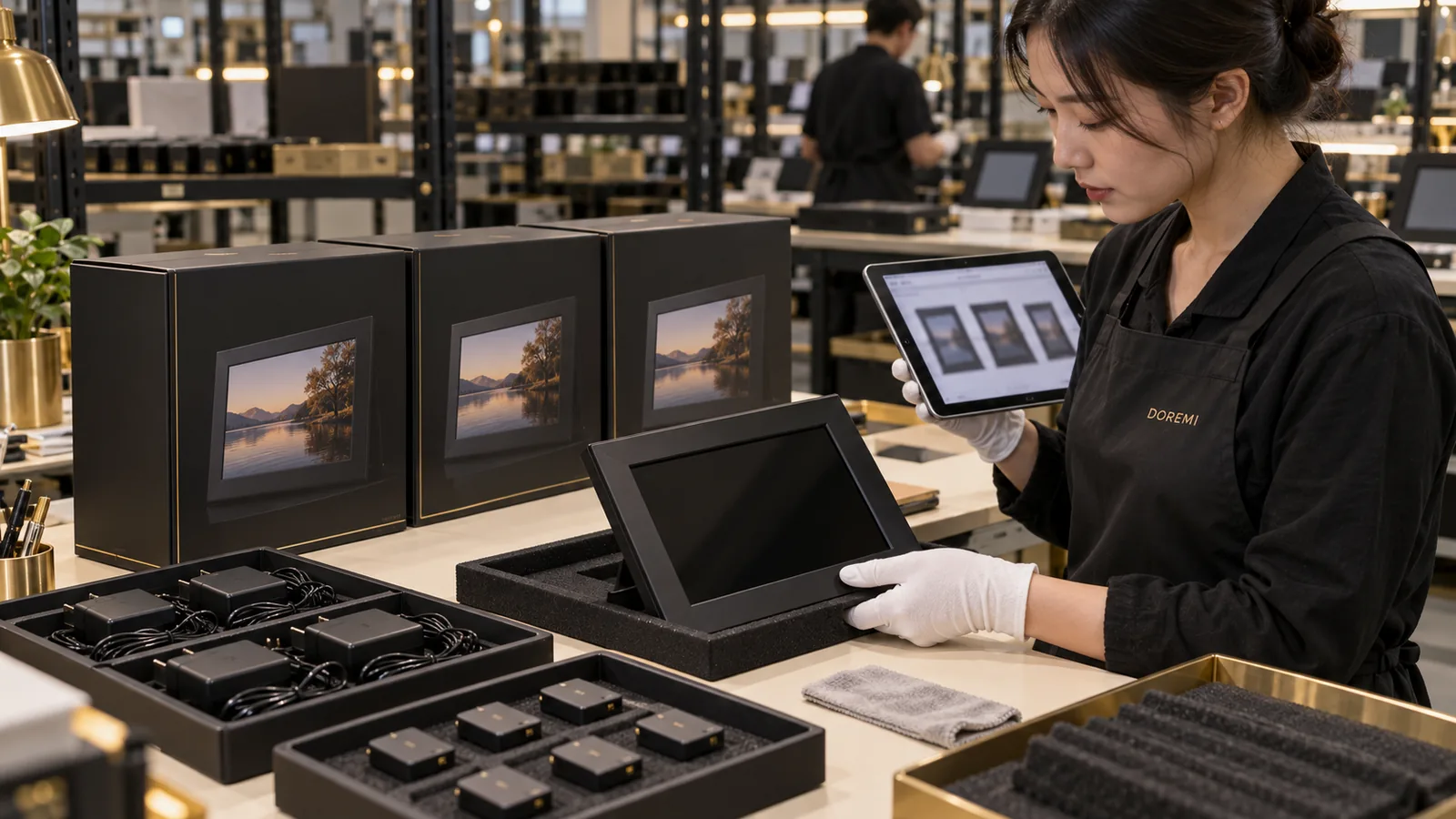
Add identity checks to pre-shipment inspection: brand, model, revision, radio module, power adapter, plug, firmware reference, label placement, instructions and carton configuration. Use sampling designed for the order and risk, while recognizing that sampling does not prove every unit compliant.
Photograph representative fronts, backs, markings, power equipment and packed contents. Reconcile purchase-order quantities and variants. Quarantine unexplained substitutions. The goal is to confirm that the goods being shipped are the goods covered by the Australian evidence and released artwork.
Keep post-market and incident routes active
Registration and labelling are not the end of responsibility. Monitor complaints, interference reports, overheating, power-supply failures, unexpected resets and software issues. Preserve product identity and first-information dates. Route potential safety, radio or compliance matters to the correct Australian owner.
Maintain retailer, distributor and customer-service contacts so affected models can be traced. Qualified teams should decide whether a report, corrective action, stop sale or recall is required. Do not use an RCM on the product as evidence that a new incident needs no investigation.
Buyer handover checklist
- Every radio, electrical function, accessory and operating mode is listed
- ACMA telecommunications, radiocommunications, EMC and EME routes are screened
- Frame, adapter, cord and charger are screened separately under EESS
- Australian responsible supplier and authorised officer are identified
- Brand, model, hardware, firmware, radio and power identities are controlled
- Current Australian standards and evidence routes are confirmed
- Production-representative samples and worst-case rationale are documented
- Compliance folder is held by the Australian owner
- Supplier declaration of conformity is completed from verified evidence
- Supplier and equipment registrations are completed where required
- RCM artwork is authorised only after the preceding steps
- User instructions match the approved configuration
- Supplier changes trigger documented reassessment
- Pre-shipment checks reconcile product, power supply, label and packaging
- Post-market complaints and incidents reach responsible owners
Experience scope and project limits
Editorial review: Jessica, Founder & Project Advisor at DOREMI Display. Updated 13 September 2026. Jessica's practical scope covers B2B display-frame briefs, materials, samples, packaging, production coordination, quality discussions and supplier-to-buyer handover. She is not presented as ACMA, EESS, an Australian regulator, accredited laboratory, certification body, electrical engineer or legal adviser.
This guide is educational sourcing preparation. It does not determine which Australian rules, standards or risk levels apply, validate a report, authorise an RCM, complete a declaration or register a supplier or product. Requirements can differ by configuration and jurisdiction. The Australian responsible supplier should verify the current official instruments and obtain qualified advice before supply.