
A module supplier can provide a Design Number or legacy Qualified Design ID, yet that does not mean a private-label digital photo frame is automatically qualified under the buyer's brand. Bluetooth SIG's September 2026 scenario guidance states that a company representing a contract-manufactured, customized or rebranded product as its own must qualify that product under its own membership.
This guide is for private-label brands, importers, product managers, marketplaces and digital-frame OEM/ODM teams. It prepares the commercial and technical handover for Bluetooth qualification and trademark artwork. It does not complete a Qualification Workspace submission, decide a design option, calculate fees, authorize a mark or replace Bluetooth SIG, a qualification consultant, test facility, radio regulator, counsel or the responsible member company.
What are buyers really asking about a Bluetooth module?
The short query is “Can we use the supplier's Bluetooth certificate?” The real launch decision includes brand ownership, membership, product qualification, Design Number or QDID, hardware and firmware configuration, model variants, listing names, publication timing, trademark artwork and separate radio approvals. The answer changes between true resale and a product offered under the buyer's brand.
Google Search Central recommends valuable, expert-led content that resolves connected questions rather than commodity summaries. This guide maps those questions into one release file. Search intent is an editorial inference from current public sources; DOREMI does not claim direct access to AI Overview or AI Mode output.
Identify the company representing the product
Write down the legal entity whose name or brand appears on the frame, packaging, listing and marketing. Bluetooth SIG's September 2026 guidance distinguishes building your own product, contract manufacturing and resale. Full customization, partial customization and rebranding under your company all place qualification responsibility on the company representing the product as its own.
A supplier may qualify its own product, but the guidance says its qualification does not apply to the customer's branded product and the supplier cannot transfer its trademark license. Resolve that ownership before artwork, launch dates or marketplace onboarding are approved.
Separate true resale from private label
In a true resale, a company sells another company's product without changing it or using its own brand. Bluetooth SIG says the company representing the product as its own is responsible for qualification, while the reseller should ensure that product is qualified. Adding your brand, changing the marketed model or presenting the device as your product is not the same commercial scenario.
Create a one-page route memo with legal entity, brand, product name, model number, manufacturer, seller and listing owner. If commercial teams disagree about whether the product is resale or private label, stop the Bluetooth artwork until the responsible member company or Bluetooth SIG support confirms the route.
Membership and qualification belong to the brand-owner plan
Bluetooth SIG states that all Bluetooth products must complete the qualification process and that a company must qualify under its own membership account. Membership also supports the trademark license. Do not ask the factory to lend a login, membership number or logo permission.
Assign an internal qualification owner and create the member account early. Keep fees and membership choices dynamic by linking to the current official schedule rather than copying an old price into the sourcing specification. Budget, payment method and approval lead time belong in the launch plan.
Obtain the correct Design Number or legacy QDID
The 2025 quick-start guide defines a Design Number as the reference issued for a unique design first used in qualification, while QDID is a legacy identifier for designs qualified before 1 July 2024. Suppliers can often provide the relevant identifier for the implemented design.
Ask the OEM or module vendor for the exact Design Number or QDID, design owner, component or subsystem identity, supported layers and the product configuration in which it is used. A screenshot of a database search or a chip part number alone is not enough to establish which qualified design the finished frame incorporates.
Freeze the wireless implementation
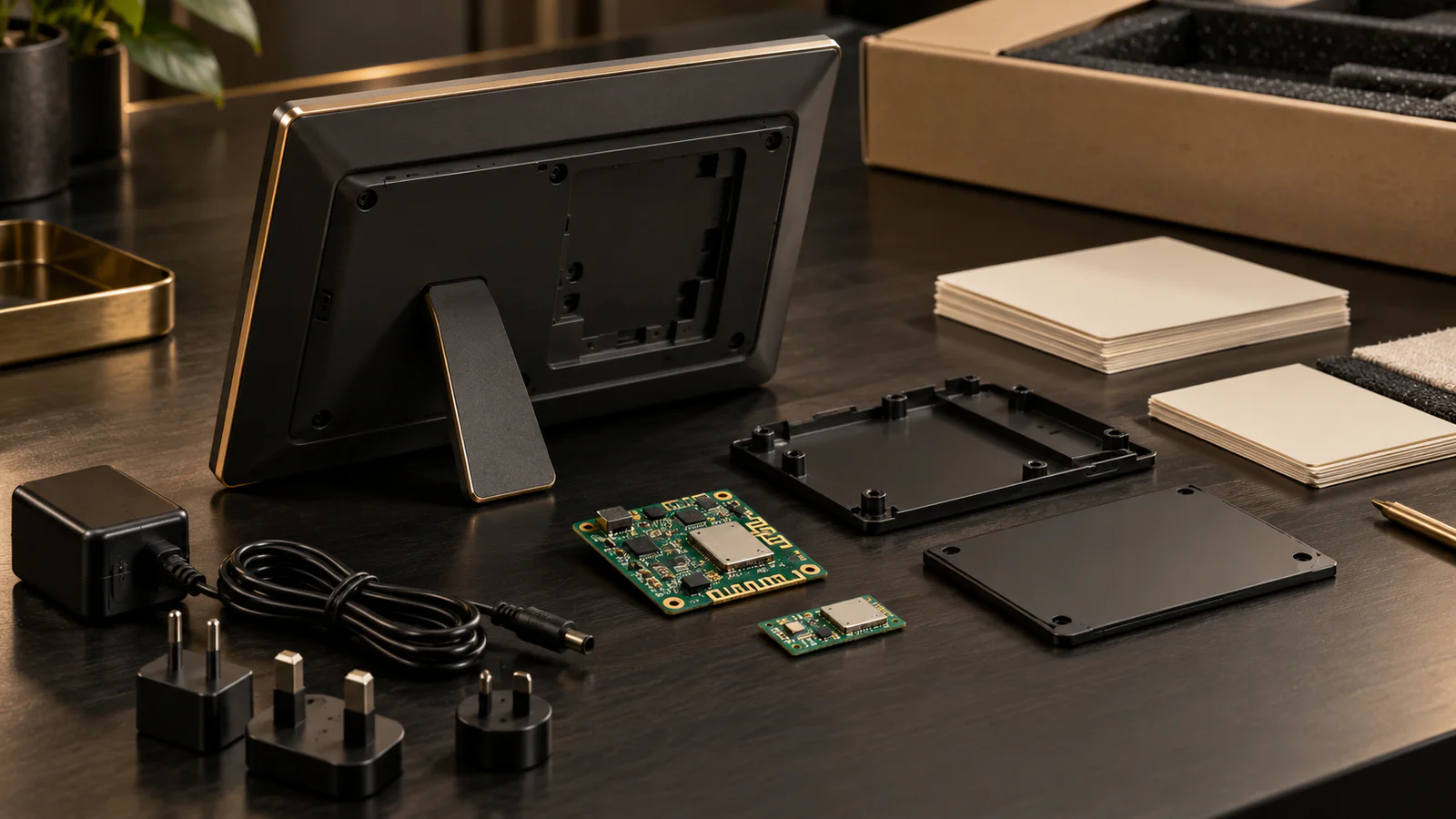
Record module manufacturer and part number, antenna, host processor, stack, profiles or services, firmware, power settings and coexistence with Wi-Fi. Link the values to schematics, BOM, software release and sample. Qualification option and testing implications can depend on whether an existing design is used unmodified or a new design or combination is created.
Procurement should not decide the technical option from a marketing phrase such as “Bluetooth 5.” Give the actual implementation to the responsible qualification owner and let Qualification Workspace, Bluetooth SIG rules and qualified specialists determine the path.
Understand the current qualification phases
Bluetooth SIG's quick-start guide describes five phases: provide product details, specify the design, pay the administrative fee, submit and complete verification. The workspace determines the available option from the design information entered. Existing, combined and new designs can create different documentation or testing needs.
Build the source file before opening a rushed submission. Gather legal entity, member account, product names, model numbers, publication plan, design identifiers, implementation details, test evidence where needed, responsible contacts and payment approval. Keep the current QPRD as the governing process reference.
Make product names and model numbers match the market
Bluetooth SIG says the product name and model number entered during qualification must match the names used when marketing, advertising, distributing and selling the product. This is a cross-functional data-control problem, not just an engineering field.
Create a model master shared by packaging, e-commerce, ERP, manuals, certification and qualification. Do not let sales rename the product after submission without review. If a mistake is found, follow the current correction or withdrawal process rather than silently changing packaging or web listings.
List variants intentionally
The quick-start guide says marketed variants with different model numbers and product names should be added so the qualified-product record accurately represents them. Colour, trim and memory capacity can look like minor commercial variants while creating separate model identities.
Prepare a variant matrix showing marketed name, model, enclosure, wireless design, firmware and region. The qualification owner should decide which products can use the same unmodified design and listing workflow. Do not assume one generic family name covers every marketplace SKU.
Plan publication timing without inventing a launch shortcut
Bluetooth SIG requires qualification on or before the date a product begins to be sold or distributed. The quick-start guide distinguishes qualification date from the chosen public Product Publication Date. These dates should be coordinated with embargoes, samples, distributor deliveries and marketplace pages.
Set a no-ship and no-public-claim gate tied to confirmed completion, not to the date a submission was started. A draft in Qualification Workspace is not approval. Save the final qualified-product record and notify packaging, legal, sales and fulfilment owners when the gate is released.
Control trademark use as a separate artwork step
Bluetooth SIG owns the word mark, figure mark and combination mark. Its branding guidance says the company must be a member and the goods must have completed qualification under the member company marketing and selling them before the trademarks are used. The brand guide controls presentation.
Do not place a Bluetooth symbol on early carton artwork because a module includes the technology. Hold word mark, logo, web copy and retailer feature icons behind the qualification and brand-review gate. Use the current official files rather than redrawing the symbol or copying it from a competitor.
Describe supported functionality accurately
A core specification version is not a complete consumer feature statement. The implemented profiles, services, audio or data roles and app behaviour determine what the frame actually supports. Bluetooth SIG separately publishes guidance on communicating functionality after qualification.
Create a verified feature table from engineering evidence and product testing. Avoid promising pairing range, simultaneous connections, codec support, phone compatibility or background transfer without a defined test and software scope. Qualification is not a performance endorsement of every marketing statement.
Keep Bluetooth qualification separate from radio approval
Bluetooth qualification and trademark licensing do not replace national radio, EMC, safety, energy, cybersecurity, battery or market-access obligations. A frame may also need FCC, ISED, CE/RED or other evidence depending on destination and configuration. Those systems have different responsible parties, scopes and identifiers.
Build a market matrix with one row per country and separate columns for Bluetooth, radio, safety, adapter, energy, cybersecurity and labelling. This prevents teams from presenting a qualified Bluetooth design as proof that the complete digital frame may legally enter every market.
Control firmware and profile changes
Wireless behaviour lives partly in software. Changing the stack, enabled features, profiles, services, security settings or module firmware can alter the implemented design and product claims. Give software releases a stable identifier and include Bluetooth impact review in the change process.
Before an over-the-air update or factory firmware change, compare the new implementation with the qualified file and ask the responsible qualification specialist whether a new design, testing or submission is needed. “No hardware change” is not an automatic exemption from review.
Control module, antenna and board substitutions
A supply shortage can trigger a module or antenna alternative. That change can affect Bluetooth qualification and separate radio approvals, as well as enclosure performance and production testing. Purchasing should not release an alternative merely because its footprint and advertised version look similar.
Require a change request with exact part numbers, design identifiers, schematics, antenna, firmware, feature comparison and current supplier evidence. Technical, qualification and market-compliance owners should approve the effective lot before production.
Build production checks around identity
Factory checks should verify approved module and PCB revision, programmed firmware, device identity, pairing behaviour, antenna assembly and labelled model. Functional testing confirms manufacturing consistency but does not complete the Bluetooth Qualification Process or authorize the trademark.
Preserve test-station version, sample rate, failure disposition and lot records. If a subcontractor programs modules or assembles boards, include it in configuration control. The qualified product marketed by the brand must remain connected to the design represented in the submission.
Prepare a retailer and marketplace evidence pack
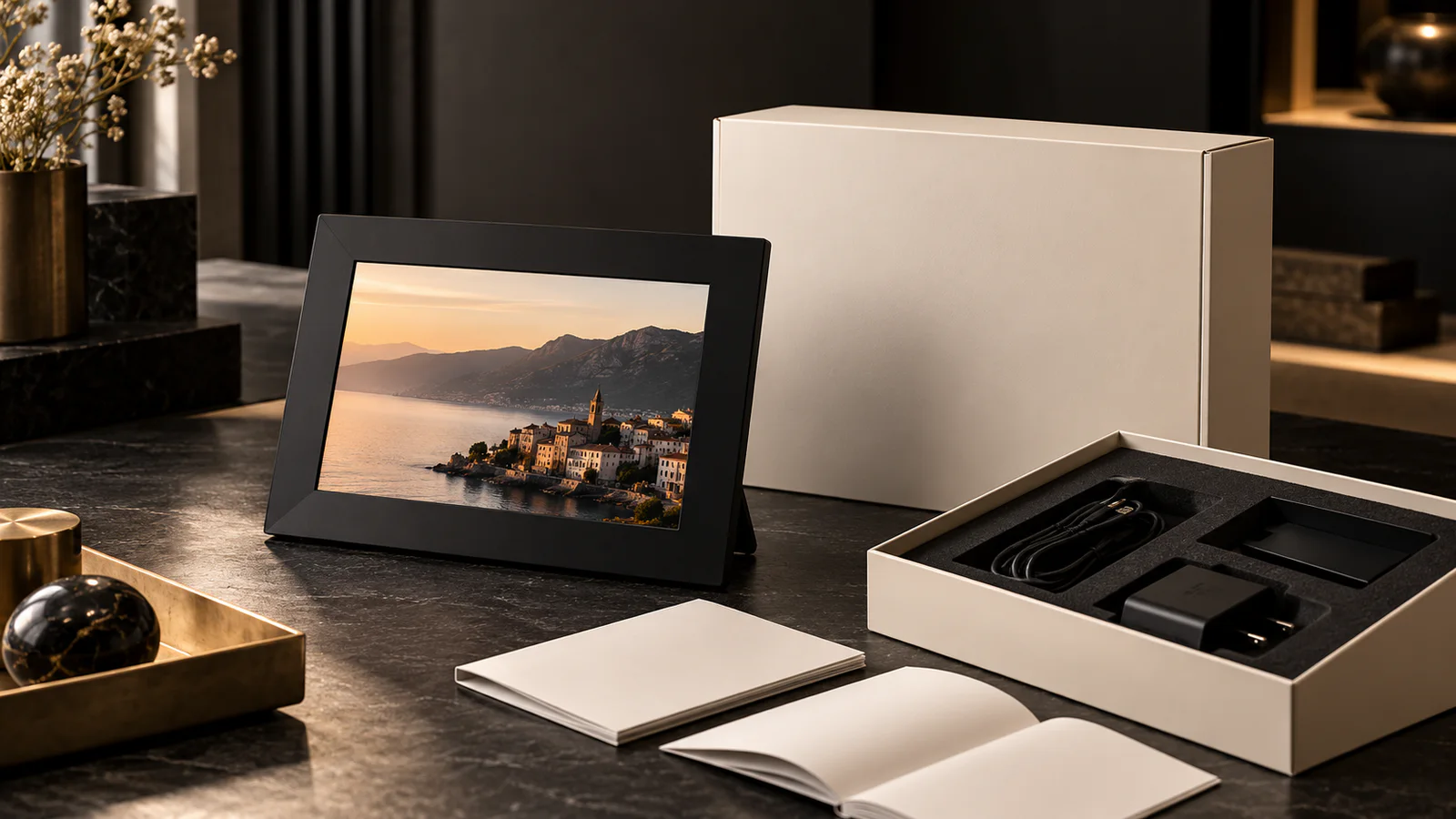
Keep the qualified-product database record, product and model mapping, member entity, design identifiers, approved artwork, user-facing feature statement, firmware baseline and responsible contact together. Add separate market-access documents without merging their claims.
Answer onboarding questions with the exact product record. Do not send a module vendor's qualification as though it names the private-label frame. If final qualification is pending, show an internal plan and hold the claim rather than uploading a mismatched record to meet a deadline.
Use an ownership matrix across brand and OEM
The brand owner controls membership, its product submission, names, models, publication timing and trademark use. The OEM supplies accurate design identifiers, BOM, firmware, samples, test documents and change notices. The module vendor supports the qualified design information. A consultant or lab may advise or test, but does not erase the member company's responsibility.
Put these roles in the RFQ and development schedule. The question “Can the factory handle Bluetooth?” should be split into technical integration, evidence supply, product qualification support and manufacturing control. Each needs an owner and deliverable.
Buyer release checklist
- The legal entity representing the product is identified
- Private label, contract manufacturing and true resale are distinguished
- The responsible brand has the appropriate Bluetooth SIG membership
- The exact Design Number or legacy QDID is obtained
- Module, antenna, stack, profiles and firmware are frozen
- The current QPRD and Qualification Workspace control the process
- Product names and model numbers match market use
- All marketed variants are reviewed
- Qualification is complete before sale or distribution
- Product Publication Date is coordinated with launch
- Trademark artwork uses the current brand guide
- Feature claims reflect implemented functionality
- Radio and other market approvals remain separate
- Hardware and firmware substitutions trigger review
- Retail evidence names the private-label product
Questions for the brand owner and OEM
Ask the brand owner: Which entity owns the marketed product? Which membership account and product owner will submit? What are the final product names, models, variants and publication date? Who releases the trademark artwork and keeps the database record current?
Ask the OEM: Which Design Number or QDID is implemented? Who owns it? Is the design used unmodified? Which module, antenna, stack, profiles and firmware match the sample? What changes are planned? Which documents and engineering contacts will support the qualification owner?
Experience scope and project limits
Editorial review: Jessica, Founder & Project Advisor at DOREMI Display. Updated 22 October 2026. Jessica's practical scope covers digital-frame RFQs, product BOMs, samples, supplier evidence, packaging, production inspection and change control. DOREMI is not presented as Bluetooth SIG, a qualification consultant, test facility, trademark licensor or radio regulator.
Use this guide to prepare a buyer–OEM file. Bluetooth SIG's current agreements, QPRD, Qualification Workspace, support guidance, the real member and product configuration, qualified specialist advice and destination-market rules control qualification, testing, fees, listing and trademark use.
Public sources used for this guide
- Google Search Central: optimizing for generative AI features
- Bluetooth SIG: trademark licenses and qualification by product scenario
- Bluetooth SIG: qualify your product
- Bluetooth SIG: qualification process quick-start guide
- Bluetooth SIG: brand your product
- Bluetooth SIG: Qualification Program Reference Document