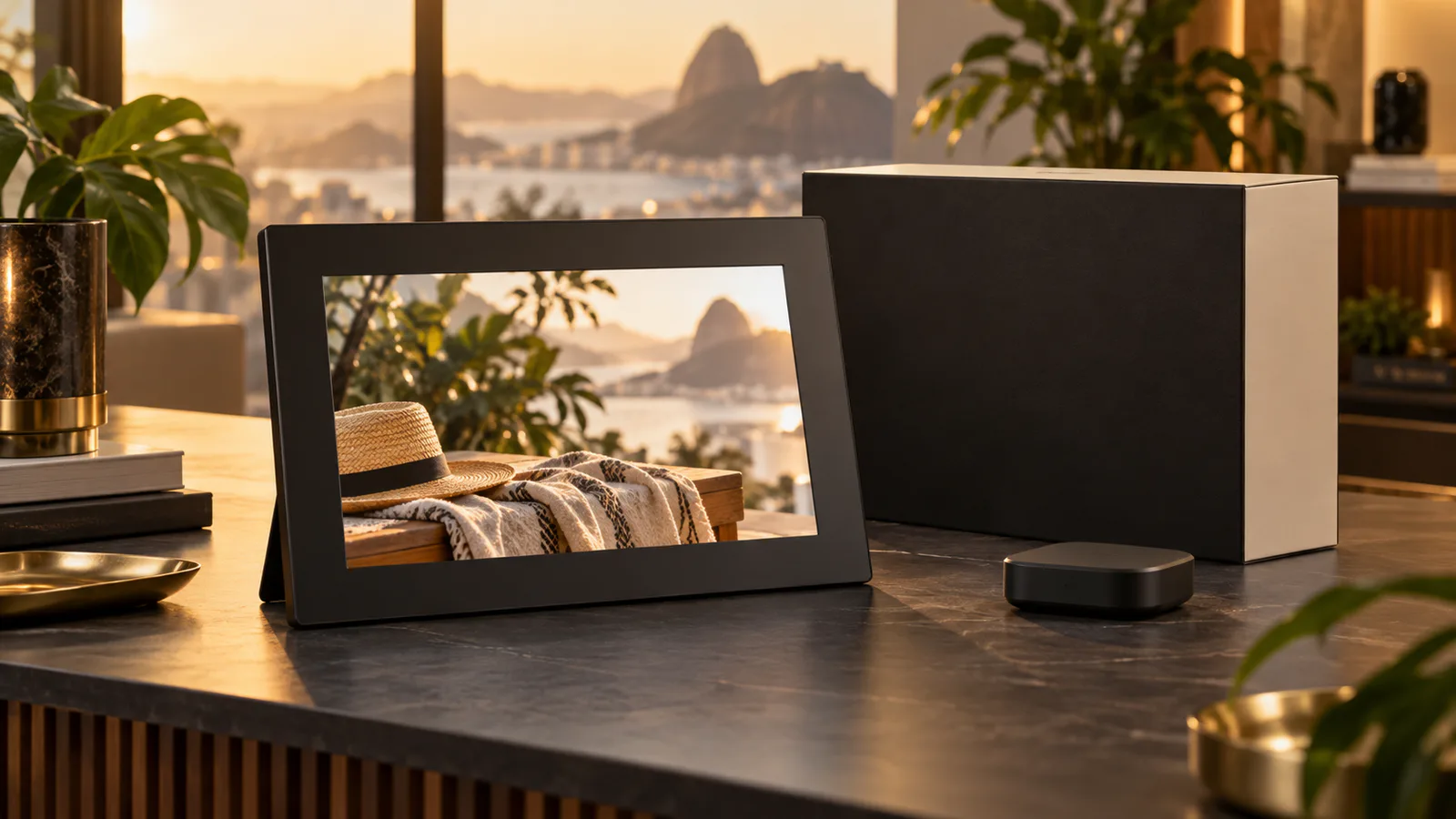
A Wi-Fi digital photo frame can look like a familiar consumer display while still being a telecommunications product for Brazilian market-access purposes. Its Wi-Fi or Bluetooth function, radio module, antenna, power architecture and final enclosure can all matter. ANATEL’s public guidance says radio-frequency transmitters such as Wi-Fi and Bluetooth devices generally require certification and homologation before they are commercialized in Brazil.
This guide is for Brazilian importers, retail brands, marketplace teams and overseas OEM suppliers planning connected digital-frame programmes. It turns official ANATEL information into a commercial handover: who holds the approval, what configuration is covered, which evidence must be frozen and what changes require review. It is not a certificate, laboratory plan, legal opinion or guarantee that a module or product family will be accepted.
What is the current ANATEL position in October 2026?
ANATEL’s certification pages state that telecommunications products must meet regulated quality, safety and technical requirements, including efficient spectrum use and electromagnetic compatibility. Its frequently asked questions identify Wi-Fi and Bluetooth devices as examples of products subject to homologation. The exact category, requirements and conformity route must still be confirmed against the current reference list and technical requirements.
ANATEL also introduced the Certifica platform as the successor to the older SCH/Mosaico workflow. Its public lookup guidance, updated in October 2026, says certificates may appear in different official databases depending on when and through which system they were issued, and that Certifica is the more current source when a corresponding record is present. Buyers should build the approval plan around live portal and OCD instructions, not an old screenshot.
Do not treat a Wi-Fi module approval as the finished-frame answer
A connected frame is a finished configuration: processor, wireless module, antenna, enclosure, power supply, firmware and interfaces operate together. A previously homologated module may be relevant, but the buyer should not assume that its number can simply be printed on a new frame. Ask a Designated Certification Body, or OCD, how the module status affects the exact final product and evaluation route.
Document the module manufacturer and model, radio chipset, supported bands, output settings, antenna type and gain, cable or trace arrangement, enclosure, grounding and shielding. Link them to the final production sample. If the supplier cannot identify these elements, the project is not ready for a reliable certification quotation.
Name the Brazilian approval holder and commercial route
ANATEL’s FAQ says certification and homologation may be requested by the manufacturer, a commercial representative of a foreign legal entity, or a person seeking approval for own use. For normal commercial sale, decide which Brazilian entity will request and hold the authorization and accept the continuing responsibilities. Record its legal name, registration data, contacts and relationship to the brand and overseas factory.
The holder decision affects who communicates with the OCD, receives notices, approves renewal or maintenance work and authorizes market use. Put it in the supply agreement. A distributor’s approval should not be treated as automatically transferable to another importer, and a buyer should not assume it can keep using an approval after the holder relationship ends.
Keep commercial homologation separate from own-use routes
ANATEL provides a declaration route for certain equipment imported for a person’s or company’s own use, but the official guidance says this applies to the specific unit and is not the regular model approval for commercial sale. A sample authorized for own use does not create a commercial approval for a retail programme.
A mains-connected digital frame can also raise electrical-safety evidence that makes simplified own-use assumptions inappropriate. For sales planning, use the certification and homologation route advised by an OCD for the final model. Do not build a launch around a personal-import exception or a foreign certificate that has not been accepted for the Brazilian process.
Select the OCD before freezing the test plan
ANATEL directs applicants to use a Designated Certification Body for the certification process. The OCD helps identify the product category, current technical requirements, laboratory route, documents, sample quantity and surveillance or maintenance obligations. Compare qualified OCD proposals on scope and deliverables rather than price alone.
Send each OCD the same configuration brief so quotations are comparable. Ask which tests are required for radio, electromagnetic compatibility, electrical safety and any accessories; which laboratories are accepted; how families and variants are handled; and which documents must be in Portuguese. The OCD and laboratory—not a generic overseas test house—should confirm the final plan.
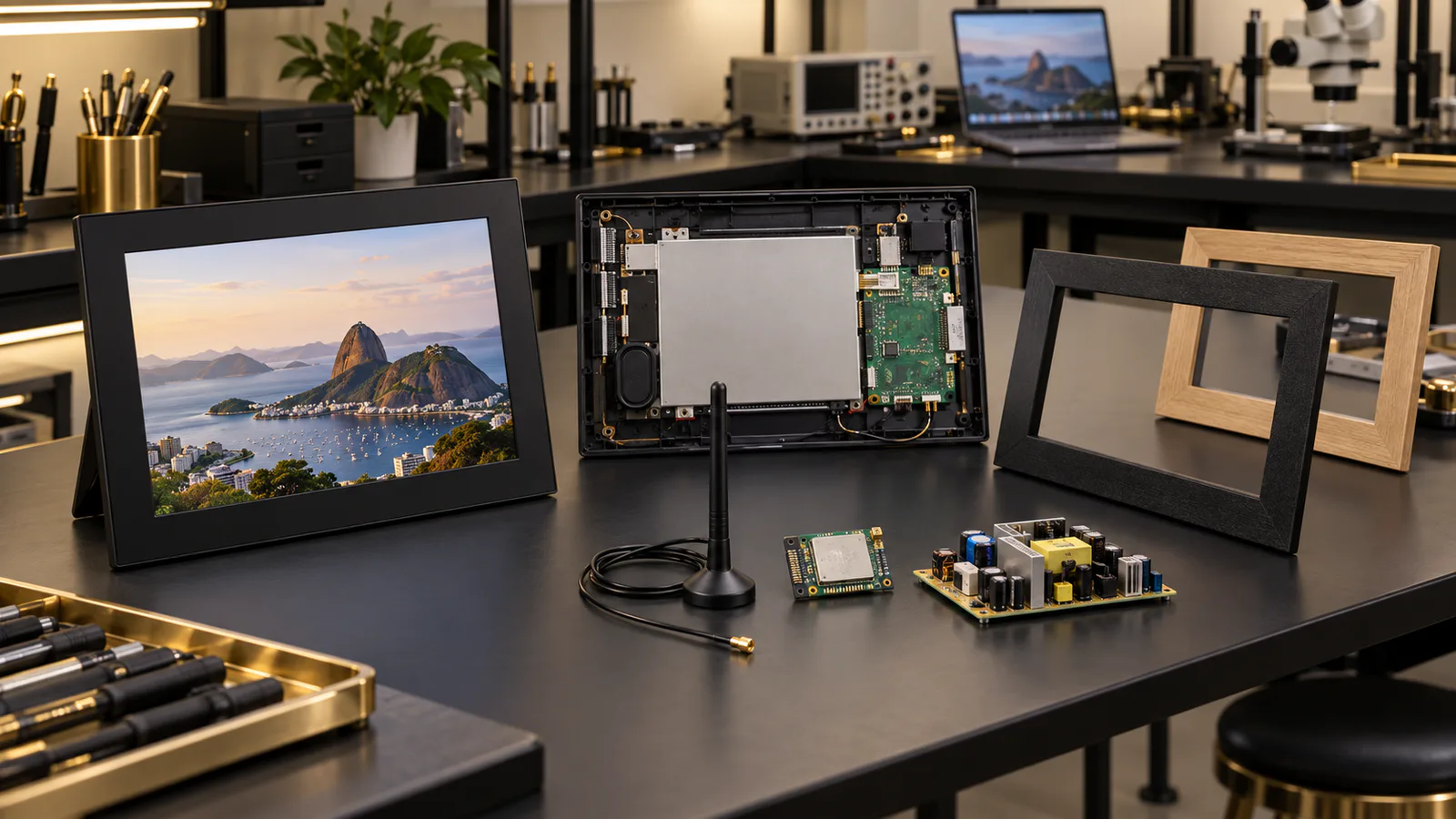
Build a configuration record for the finished product
Create a controlled model sheet with consumer brand, model, hardware revision, display and processor, radio module, antenna, firmware branch, external ports, storage, power adapter, rated input, enclosure and accessories. Add front, back, side and internal photographs and a block diagram. The model name should match artwork, manual, laboratory request and applicant file.
If the brand sells several screen sizes, colors or frame finishes, show what is shared and what changes. A wood-look bezel can be cosmetic; a larger display may introduce a different board or power supply. Ask the OCD to define the approved family. Do not decide coverage by appearance alone.
Freeze radio settings before certification samples are built
Record every enabled radio technology, frequency band, channel plan, bandwidth, modulation and output-power control used by the production firmware. Identify antenna model, gain, position and connection. Disable unsupported modes intentionally and preserve the test configuration. “Same Wi-Fi chip” does not mean the same radiated behavior after antenna or enclosure changes.
Give the laboratory the engineering access and software needed for test modes under controlled conditions. Keep a checksum or version identifier for the tested firmware where the technical team and OCD require it. Production should not use a later radio library or regional setting without a documented impact review.
Map the frame, app and cloud without confusing scopes
ANATEL homologation focuses on the regulated telecommunications product, but a connected-frame launch also includes a mobile application, cloud account, content delivery and privacy choices. Show the data and control paths so the engineering team understands which functions can change radio behavior, firmware or user configuration.
Do not market ANATEL homologation as approval of the cloud service, privacy policy, image security or overall application quality. Keep cybersecurity, data protection, consumer information and radio conformity as coordinated but separate workstreams. A valid radio approval does not replace the buyer’s responsibilities under other Brazilian rules.
Prepare a document index that can survive supplier handover
A practical index may include applicant authorization, manufacturer details, product specification, model and family matrix, circuit and block diagrams, PCB and component information, radio module data, antenna details, user manual, internal/external photographs, label drawing, test software, power-adapter information and existing reports. The OCD determines the required set.
Label each item with model, revision, owner and date. Agree which confidential files the OEM may send directly to the OCD or laboratory and which the buyer can retain. The approval holder still needs a reliable route to obtain evidence during maintenance, surveillance, enforcement questions or supplier transition.
Treat the power adapter as a controlled component
A digital frame often ships with an external power supply. Record manufacturer, model, electrical ratings, plug, cable and applicable evidence. Ask the OCD whether the adapter is evaluated within the frame process, requires separate Brazilian treatment or affects the laboratory plan. Do not substitute a locally sourced adapter after testing without review.
Check the entire production pack: frame, adapter, cable and accessories should match the tested or approved configuration. A purchasing team may see two adapters as electrically equivalent, while certification and safety evidence may identify different models. Put adapter changes into the same approval gate as radio changes.
Use production-intent samples, not convenient prototypes
The test sample should represent the product to be sold: final board, radio, antenna, enclosure, display, power supply and firmware. If a prototype uses an engineering antenna or open enclosure, ask the OCD whether it is acceptable and how the final differences will be assessed. Record serial numbers and sample photographs.
Build spare or destructive-test samples according to the laboratory plan. Certification testing can consume or alter units. Schedule them before the production line is fully committed, but after the design is stable enough that passing evidence will remain applicable.
Hold marking and artwork until authorization is confirmed
ANATEL’s guidance explains that an approved product carries the homologation identification and number in the prescribed way, such as on the product or manual according to current rules. Obtain the exact marking method, dimensions, electronic-label permissions if any, and packaging/manual placement from the OCD and current operational procedure.
Use a reserved blank area during design development. Release the real mark and number only after homologation and artwork review. Never use a fabricated number, a module number presented as a finished-product approval, or a “pending” mark that resembles authorization. Retain an approved artwork PDF and production photograph.
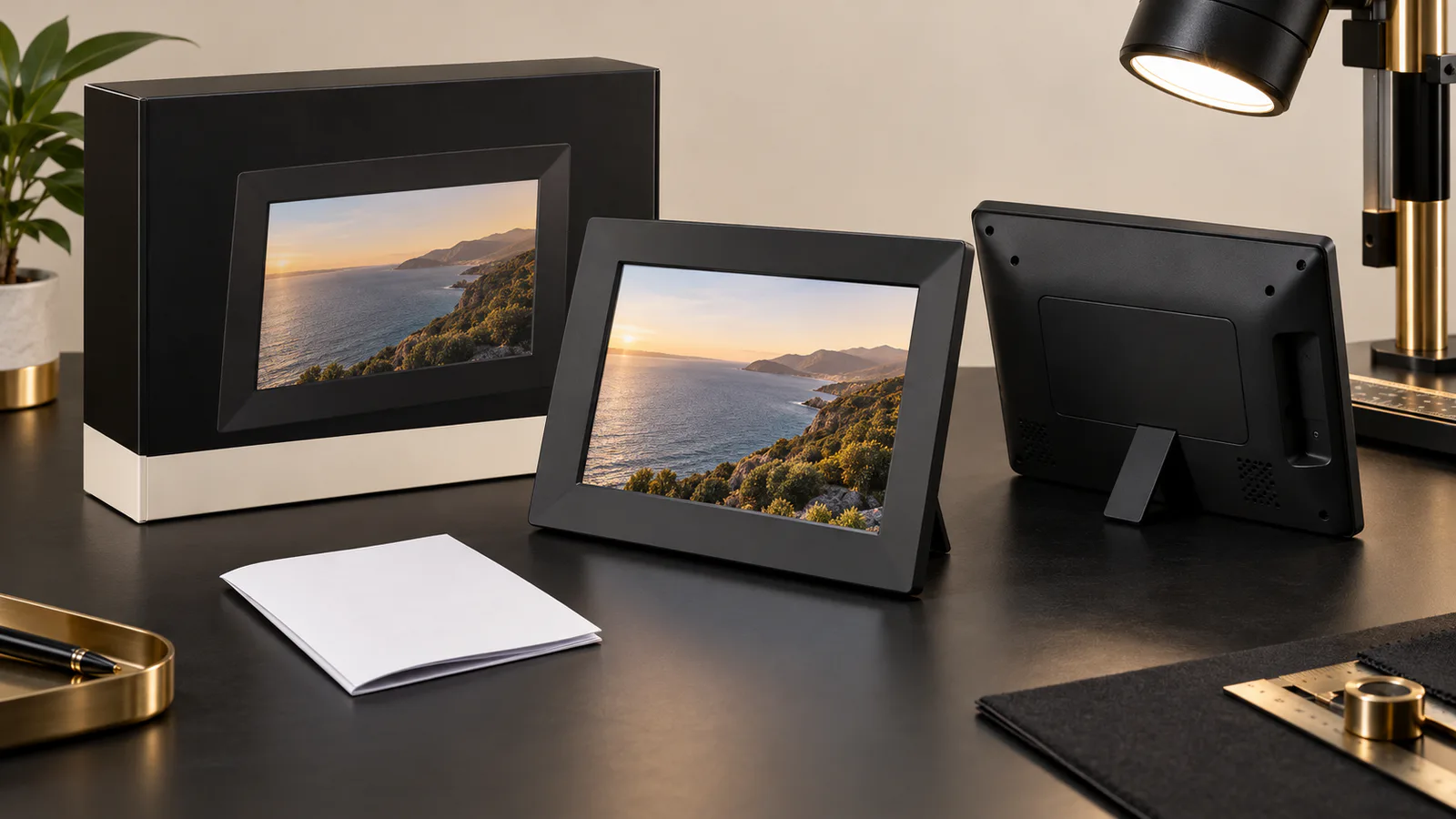
Check the public certificate record before shipment
Use ANATEL’s official public lookup to confirm holder, manufacturer, model, certificate number and current status. During the Certifica transition, official guidance recommends checking the relevant database and treating the Certifica record as current when corresponding entries exist. Save the lookup date and evidence in the release file.
Marketplace or retail teams should match the listing model to the approved record and physical label. A supplier PDF alone does not prove the record is current. If names or models differ, resolve the mismatch with the holder and OCD before inventory is advertised or shipped.
Define certificate maintenance and surveillance ownership
Approval is not a one-time image to archive and forget. Ask the OCD about validity, maintenance, periodic evaluation, factory or document surveillance and fees for the chosen product category. Put due dates and responsible contacts in the launch calendar. A certificate that becomes suspended or expired can interrupt sales.
The commercial agreement should state who pays ongoing costs, supplies samples or factory records, and notifies the brand of status changes. If the holder is a distributor, include an exit plan for stock, records and future production. Do not promise indefinite approval without confirming the applicable cycle.
Control technical changes after testing
Require written notice before changing radio module, antenna, PCB layout, processor, oscillator, shielding, enclosure, adapter, cable, firmware, enabled bands, output settings or model name. For every change, ask the OCD whether the current certificate remains valid, needs an update or requires additional testing. Keep the answer with the engineering change record.
Apply the same rule to emergency substitutions. A shortage does not create a conformity exemption. Production should have a controlled bill of materials and incoming inspection capable of identifying the approved components. Link batch or serial records to the configuration actually shipped.
Separate ANATEL from the rest of the Brazil launch file
A connected frame can also require consumer, electrical, labeling, tax, customs, privacy, cybersecurity and after-sales review. Map these workstreams with qualified Brazilian advisers. ANATEL homologation answers telecommunications conformity questions; it does not approve every claim, instruction, warranty or sales practice.
Ask the importer which company appears on invoice and packaging, who provides local support, which language and consumer information are required, and how defective connected products are handled. Keep the official ANATEL scope accurate in marketing: “homologated model” should refer to the exact approved configuration and live record.
Build a pre-shipment release gate
Before freight booking, confirm final certificate status, applicant/holder, model match, production bill of materials, firmware, adapter, label, manual, carton artwork and quantity. Photograph the product label and packed unit. Give the importer the commercial invoice, packing data and certificate reference needed for customs and channel checks.
Stop shipment if the production configuration or approval status is uncertain. The cost of holding cartons at the factory is usually easier to control than border detention, marketplace removal or relabeling finished inventory in Brazil. Name one person who can issue the compliance release.
Buyer approval checklist
- Wi-Fi, Bluetooth and other radio functions mapped
- Current product category and requirements confirmed with an OCD
- Brazilian applicant and certificate holder named
- Commercial route separated from own-use homologation
- Finished-product scope distinguished from module approval
- Model/family matrix and production configuration frozen
- Radio settings, antenna and firmware version recorded
- Power adapter and accessories reviewed
- Production-intent samples and documents accepted
- Actual homologation mark held until authorization
- Public certificate status checked
- Maintenance and surveillance owner assigned
- Every technical substitution triggers OCD review
Experience scope and project limits
Editorial review: Jessica, Founder & Project Advisor at DOREMI Display. Updated 8 October 2026. Jessica’s practical scope covers digital-frame briefs, samples, supplier coordination, packaging, configuration records and buyer handovers. She is not presented as ANATEL, an OCD, an accredited laboratory, a Brazilian lawyer or an importer-of-record adviser.
This guide is a project-readiness framework. The applicant, OCD, laboratory and qualified Brazilian advisers must determine scope, testing, documents, marking, maintenance, import and sales obligations for the exact product. ANATEL systems and technical requirements can change; verify the live official pages and certificate record before launch.
Public sources used for this guide
- Google Search Central: optimizing for generative AI features
- ANATEL: product certification and homologation
- ANATEL: certification frequently asked questions
- ANATEL: legal basis for certification and homologation
- ANATEL: current operational procedures
- ANATEL: public certificate lookup during the Certifica transition