
A Wi-Fi digital photo frame can receive family photographs from several people, store thumbnails locally, synchronise albums through a mobile app and depend on a cloud platform long after the carton leaves the factory. For a California-facing brand, the privacy question is not answered by putting a policy link in the app. The business needs to understand which personal information moves through each party, why it moves, how long it remains and how a consumer request reaches every controlled copy.
This guide is for connected-frame brands, California-facing retailers, product and privacy owners, app and cloud teams, support managers and overseas OEM/ODM suppliers. It turns current California Privacy Protection Agency and Attorney General material into a project handover. It does not determine whether a company meets the CCPA's scope thresholds, select a legal position, complete a risk assessment or cybersecurity audit, or replace California privacy counsel.
What are connected-frame buyers asking in 2026?
Late-stage questions include: “Are uploaded photos personal information?”, “Is our cloud vendor a service provider or a third party?”, “Can the factory view support logs?”, “Must a deletion request remove images from invited family accounts?”, “Does photo sorting trigger a risk assessment?”, “How should a returned frame be cleared?” and “Which privacy duties belong in the OEM agreement?” These questions affect platform selection, contract timing, launch artwork, support staffing and supplier exit.
Google Search Central says visibility in generative AI features still begins with normal Search eligibility and valuable, original, crawlable content. It does not require special AI files or forced content chunking. The questions in this article are editorial inferences from current official California sources and practical connected-product handovers. DOREMI does not claim direct access to or measurement of Google AI Overview or AI Mode output.
Screen business scope before assigning the factory a role
The CCPA applies to defined businesses and also creates duties for service providers, contractors and other recipients of personal information. Company size, revenue, California activity and data practices can matter. A small hardware factory is not automatically outside every obligation, and a brand is not automatically the regulated business merely because its logo appears on the frame. The analysis must follow the actual entities, contracts and decisions.
Create a role map before the request for quotation becomes a purchase order. List the consumer-facing brand, seller, app publisher, cloud account owner, analytics provider, customer-support operator, OEM, firmware developer and fulfilment partner. For each purpose, record who decides why and how information is processed, who acts under written instructions and who uses information for its own purposes. Ask privacy counsel to confirm the result for the released service.
Map information by event, not only by database
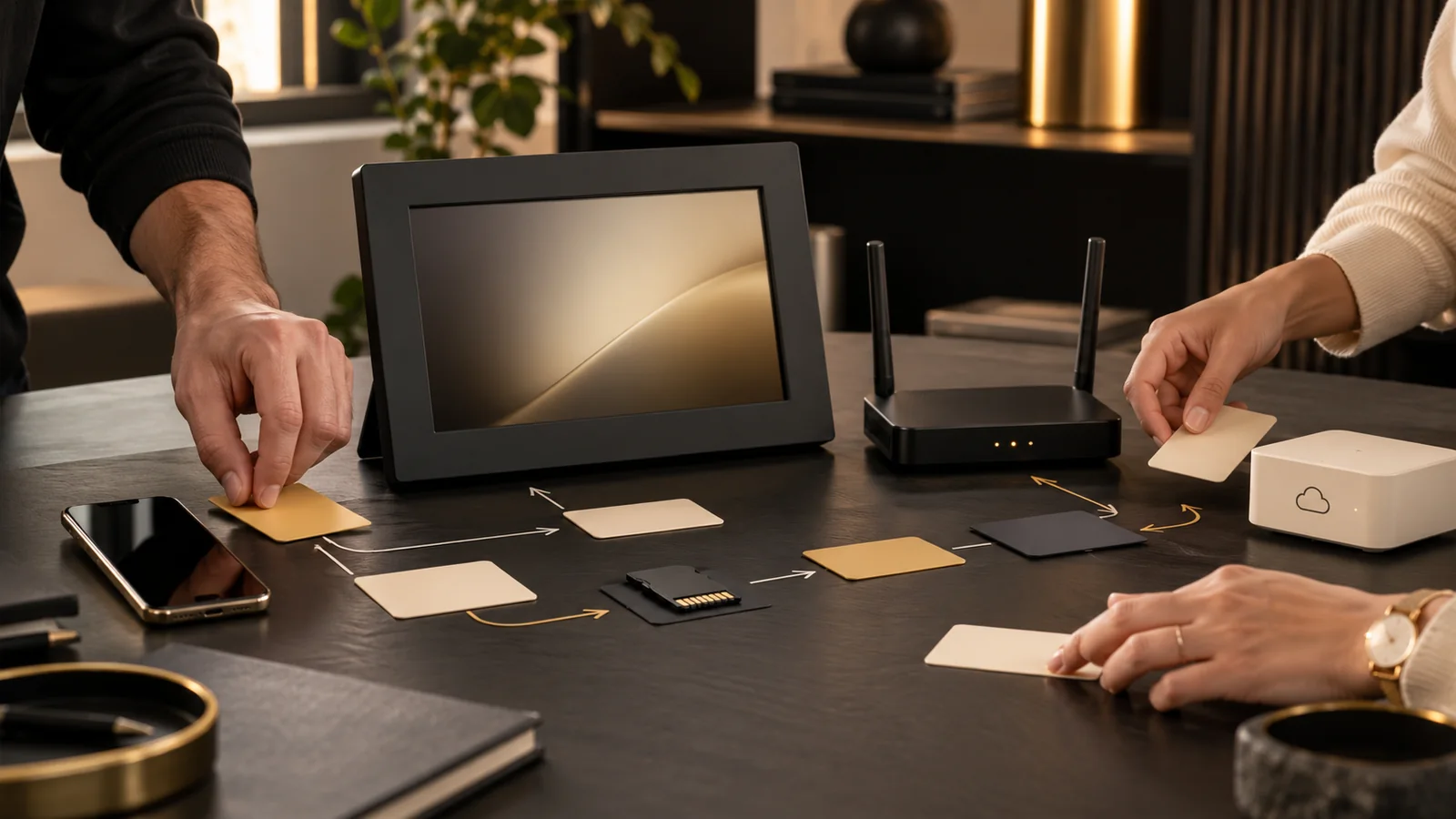
A useful data inventory starts with user events: account creation, device pairing, invitation, photo upload, album sharing, display playback, diagnostics, support, reset, return and account closure. For each event, record the information, source, destination, purpose, retention, access group and vendor. Include photographs, captions, contact details, device identifiers, IP addresses, app events, crash data, support messages and shipping records where they exist.
Do not write “cloud data” as one row. A full-resolution image, thumbnail, content-delivery copy, device cache, backup and support attachment can have different owners and lifecycles. Likewise, avoid assuming that the OEM sees no personal information. Remote debugging, test accounts, log uploads and shared administrator credentials can create access even when production servers are hosted by another company.
Match notice at collection to the real product journey
California rules require covered businesses to provide required information about collection and use. A web privacy policy alone may not give timely context when a person pairs a frame, accepts an invitation or enables an optional feature. Identify each collection point and decide what notice, choice or explanation is needed there. Keep wording consistent across the carton, quick-start material, app stores, onboarding, settings and support.
Product teams should not hide a new purpose inside a firmware release note. If a feature changes which data is collected or how it is used, route it through privacy and legal review before release. Update the data map, notices, vendor instructions, retention and request workflow together. A technical release should not create a purpose that the commercial team cannot explain plainly to a household.
Write service-provider and contractor purposes specifically
The regulations effective 1 January 2026 include detailed contract requirements for service providers and contractors. The contract must identify limited and specific business purposes rather than referring generally to the entire agreement. It also addresses limits on selling, sharing, retaining, using and disclosing the personal information received under that relationship, along with compliance and cooperation provisions.
Translate those requirements into the connected-frame supplier stack. “Provide technology services” is not a useful operational instruction. Separate image storage and delivery, device messaging, account authentication, crash diagnosis, customer support and fulfilment. Attach permitted data fields, access controls, retention, subprocessor approval, deletion, audit cooperation, incident notification and return-or-destruction duties. The legal team should approve the language; procurement should ensure it reaches every relevant subcontractor.
Use the 2026 risk-assessment trigger as a design gate
The CPPA states that businesses subject to the risk-assessment requirements had to begin compliance on 1 January 2026, with later submission milestones. Whether a particular business or activity is covered depends on the rules and facts. The practical lesson is to screen higher-risk processing before engineering and marketing make it difficult to change.
Create a short intake for new features: purpose, people affected, data categories, scale, sharing, sensitive information, automated processing, expected benefits, negative impacts, safeguards and alternatives. Escalate facial grouping, emotion or demographic inference, precise location, children's profiles, advertising uses and broad cross-service analytics. Do not describe a product meeting as a completed statutory risk assessment unless the responsible privacy team has actually performed and documented one.
Keep ordinary photo functions distinct from ADMT claims
The 2025 CPPA rulemaking also addressed automated decisionmaking technology, with specified compliance timing. A frame that merely sorts images by date is not the same product question as a service that profiles a person or makes a significant decision. Avoid marketing every automated feature as “AI,” and avoid assuming that a simple label removes the need to review a consequential system.
For each automated function, document input data, output, purpose, user effect, human involvement, model provider, retention and opt-out or control design. Ask counsel whether the feature falls within applicable definitions and duties. Even when the ADMT provisions do not apply, accuracy, security, discrimination, consumer expectation and contractual restrictions can still matter.
Build consumer rights into the supplier architecture
California consumers can have rights involving knowledge, correction, deletion, opt-out and limitation, subject to scope and exceptions. The consumer-facing business needs a verified path from request intake to the systems and vendors that hold relevant information. A support reply saying “the cloud is managed by our supplier” is not a rights workflow.
Define searchable identifiers that do not expose another household member's content. Test how the team locates account fields, invitation relationships, device records, album copies, tickets and vendor-held logs. Record exceptions and required retention rather than promising deletion where the law permits or requires information to remain. When a vendor completes a task, capture evidence that is meaningful without collecting unnecessary personal data.
Handle shared albums and multiple household roles
The purchaser, frame owner, account administrator, invited contributor and person depicted in a photo may not be the same person. Map what each can see, add, delete, export or transfer. Design invitation expiry, removal and ownership transfer. Make it clear whether deleting a contributor's account removes only their account, their uploads, copies in shared albums or content already downloaded to a device.
Do not use vague “family consent” as a substitute for product design. Give the privacy team the actual sharing model, default visibility and recovery process. If the service is likely to involve children, obtain specialised review before setting age gates, parental flows or optional analytics. Minimise the use of children's images in support and test environments.
Separate service delivery from sale, sharing and advertising
A supplier receiving information to provide a contracted service is not automatically permitted to reuse it for advertising, model training or another customer. Review analytics SDKs, cross-context behavioural advertising, audience creation and vendor improvement clauses. Determine whether opt-out mechanisms and preference signals apply to the actual business and data flow.
California enforcement examples show the importance of functioning request methods, accurate disclosures, appropriate service-provider contracts and handling recognised opt-out signals. Test the live web and app journey rather than approving a policy in a document. A mobile setting that stops one SDK is not necessarily the same as completing a legal opt-out request.
Set retention from purpose and system behaviour
“Keep while the account is active” may be too vague for thumbnails, deleted albums, diagnostics, support attachments and backups. Create a retention schedule by record type and purpose. Define the event that starts deletion, the operational delay, backup treatment, exception owner and evidence. Align cloud jobs, device cache behaviour and customer-facing explanations.
Minimise collection before arguing about retention. If an error can be diagnosed with a code and firmware version, do not upload family photographs. If an aggregate health metric is enough, do not attach an account identifier. Build support tools that redact content by default and require a justified, logged escalation for any sensitive access.
Connect privacy security to the product baseline
The privacy handover should identify the security controls that protect personal information across device, app, API, cloud and support. Record authentication, encryption, key ownership, access review, logging, update signing, vulnerability handling, environment separation and incident contacts. Do not present this checklist as a cybersecurity certification or an audit conclusion.
Link controls to the production-equivalent sample. The approved hardware revision, firmware, app build, backend environment and administrator roles should be identifiable. A supplier substitution can change data collection or security even when the enclosure looks identical. Require notice before changing modules, SDKs, cloud regions, subprocessors, support tools or diagnostic fields.

Plan reset, return, refurbishment and ownership transfer
Define what a factory reset removes from the frame, app, cloud account and shared invitations. Test it on released software and production hardware. A dark screen is not proof of erasure. Give users a clear sequence for unlinking, exporting where appropriate, deleting content and transferring a frame without transferring the previous household's data.
Returns and repair require a staff process that avoids browsing photos. Record reset status, quarantine devices that cannot be cleared and restrict diagnostic access. For supplier exit, identify who controls domains, app-store accounts, signing keys, cloud storage, backups and deletion jobs. A brand should not discover at contract termination that it cannot honour a consumer request.
Buyer–supplier handover checklist
- Business scope and legal roles are confirmed for the actual entities and purposes
- Photos, accounts, devices, apps, logs, support and cloud copies are mapped by event
- Collection notices and choices appear at the correct product moments
- Service-provider and contractor purposes are limited and specific
- Subprocessors, access locations, retention and deletion duties are controlled
- New analytics, sharing and automated features enter a risk-screening gate
- Consumer requests can reach vendor-held copies without exposing other users
- Sale, sharing, advertising and service-delivery uses remain distinct
- Retention rules match actual systems, backups and product explanations
- Security and incident contacts cover device, app, API, cloud and support
- Hardware, firmware, SDK and vendor changes require prior review
- Reset, return, refurbishment, transfer and supplier exit are tested
Experience scope and project limits
Editorial review: Jessica, Founder & Project Advisor at DOREMI Display. Updated 31 October 2026. Jessica's practical scope covers private-label digital-frame briefs, samples, model records, packaging, supplier handovers, artwork coordination and production change management. She is not presented as the California Privacy Protection Agency, Attorney General, privacy lawyer, statutory auditor or cybersecurity assessor.
The CCPA's business scope, legal roles, notices, contracts, consumer rights, risk assessments, ADMT duties, cybersecurity audits, opt-outs, security and enforcement exposure must be determined for the actual company, processing and launch. This guide is a product and supplier preparation framework. It is not a CCPA compliance finding, privacy notice or completed assessment.
Public sources used for this guide
- California Privacy Protection Agency: CCPA statute effective 1 January 2026
- CPPA: completed CCPA updates, risk assessment, cybersecurity audit and ADMT regulations
- CPPA: final-regulation announcement and implementation dates
- California Attorney General: California Consumer Privacy Act guidance
- California Attorney General: CCPA enforcement case examples
- Google Search Central: optimizing for generative AI features