
A customer report that a frame fell from a wall, a glazing panel fractured or a retaining clip came loose is not only a returns issue. For a consumer product sold in Canada, the importer, manufacturer and seller may need to preserve supply-chain records, assess the event promptly and report an incident within statutory timelines. Waiting for a complete root-cause investigation can be incompatible with a short reporting clock.
This guide is for Canadian importers, private-label frame brands, distributors, retailers, quality teams and customer-service managers handling display frames intended for consumer use. It connects Canada Consumer Product Safety Act recordkeeping and incident reporting to the physical frame, batch and supplier handover. It does not decide whether a specific event is reportable, whether a product presents a danger, what corrective action is sufficient or whether Health Canada will order a recall. Those decisions require the current Act, official guidance and qualified Canadian product-safety advice.
Why traceability and incident reporting belong in one system
Section 13 records help identify from whom a commercial participant obtained a consumer product and to whom it was supplied. Section 14 reporting begins when a business becomes aware of information meeting the statutory incident definition. These duties are operationally linked: a team cannot assess scope, notify the right supplier or identify affected units quickly if the product code on a complaint does not connect to purchase and sales records.
Build the link before launch. A consumer-facing SKU should lead to the exact frame construction, production batch, supplier, importer, sales period and customers or distribution channels recorded as required. A factory batch should lead forward to the units and destinations it supplied. Do not depend on one employee remembering which black frame came from which purchase order.
Confirm that the product and activity are in scope
The CCPSA definition of a consumer product includes components, parts, accessories and packaging that may reasonably be expected to be obtained by an individual for non-commercial use, including domestic, recreational and sports purposes. Many retail picture, jersey, medal, record and certificate frames can fit that practical context. Schedule 1 excludes certain separately regulated product categories, so scope must be checked against the actual article.
Commercial activities can include manufacturing, importing, advertising, selling and testing. A frame supplied as a promotional gift or through a marketplace may still need review; “not sold in a frame shop” is not a scope conclusion. Map the role of the Canadian entity and obtain advice where a programme sits between institutional and consumer use.
Build section 13 records around real transactions
Health Canada's section 13 guidance explains that manufacturers, importers, advertisers, sellers and testers must prepare and maintain specified documents. For a non-retailer, the core record includes the name and address of the person from whom the product was obtained or to whom it was sold, or both as applicable. Retailers have a related supplier and sales-location requirement.
Connect those legal records to commercial evidence already created in normal business: purchase orders, commercial invoices, receiving records, SKU masters, warehouse movements and sales records. Do not invent a separate traceability spreadsheet that nobody updates. The compliance view should draw from controlled operating data and clearly show any field added for product-safety purposes.
Plan for the six-year retention framework
Section 13 states that covered documents generally must be kept until six years after the end of the year to which they relate, unless another period is prescribed. Records generally need to be kept at the person's place of business in Canada or another prescribed place, subject to the Act's provisions. A supplier's short cloud-link expiry is not a retention plan.
Assign a Canadian record owner, storage location, format and backup process. Keep files readable after software or staff changes. If commercial records use codes, preserve the key that explains them. The importer should verify location and accessibility requirements with qualified advisers rather than assuming an overseas factory archive is sufficient.
Give each frame configuration a stable identity
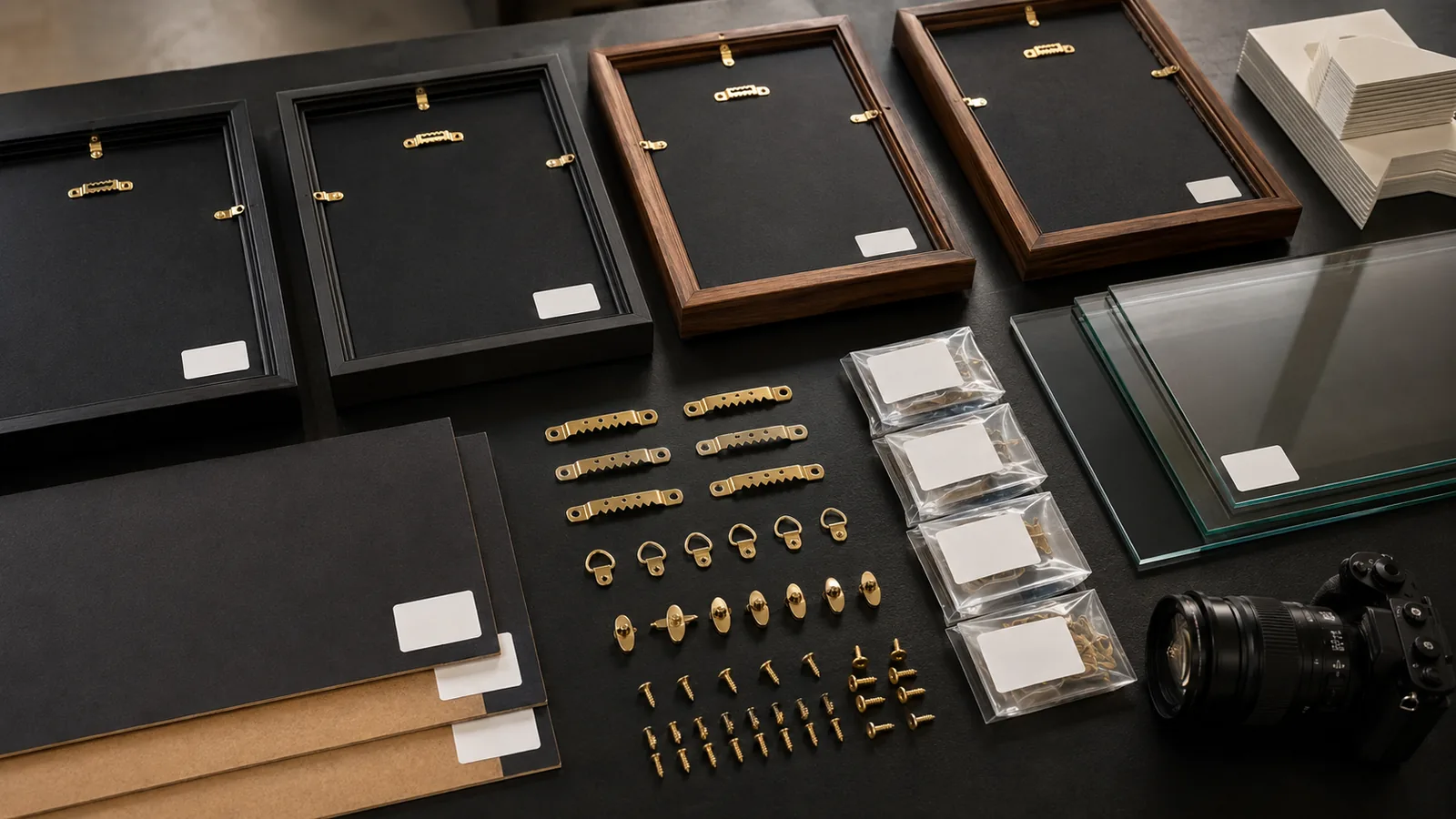
A marketing family name such as “premium shadow box” is too broad for incident scope. Record outside size, profile, substrate, glazing, backing, internal mount, hanging hardware, stand, retaining parts, accessories and pack configuration. Where the buyer sells several similar SKUs, make the differentiating features visible in records and on the product or packaging as appropriate.
Link revisions to dates and production batches. A hardware screw, backboard thickness or glazing material can change while the front image stays identical. If a complaint concerns detachment or breakage, the investigation must identify which construction was supplied. Require advance notice and a new revision whenever a safety-relevant component, source or process changes.
Capture supplier and component evidence proportionately
A complete frame may involve moulding, glazing, board, textile, adhesive, metal hardware, printed inserts and packaging. Not every component needs the same depth of documentation, but critical items should not disappear inside a finished-good invoice. Identify which features could influence falling, breakage, cuts, access to small parts, chemical exposure, electrical risk or another credible hazard for the intended use.
For those features, retain supplier identity, specification, batch or date information, incoming checks and change history suitable for the project. This is not a claim that records prove safety. They allow qualified people to determine what was used, what may be affected and which evidence needs investigation when an event occurs.
Design complaint intake to preserve safety signals
Customer service should not reduce every report to “damaged” or “refund issued.” Capture what happened, when, where, who used the product, installation context, product identifier, photographs, condition before and after the event, any injury or treatment, and whether the product remains available. Avoid leading the customer toward a preferred explanation.
Protect personal information and limit access while keeping the facts needed for safety assessment. Create urgent escalation terms for reports involving death, serious adverse health effects, reasonable potential for serious harm, fire, electric shock, laceration, falling products or repeated component failure. The list supports triage; it does not replace the statutory incident definition.
Understand the two-day reporting clock
Health Canada's current section 14 industry guide says manufacturers, importers and sellers must provide a subsection 14(2) report within two days after the day they become aware of an incident. The guide also stresses that a business may not yet possess the product, have complete facts or have finished a formal investigation when that initial report is due.
Create an escalation route that works on weekends and during staff absence. Define who can submit, who notifies the supplier and how uncertainty is recorded. Do not wait for senior management to approve a final root-cause report before the regulatory owner evaluates the two-day duty. Reporting does not itself mean Health Canada has concluded that a substantial hazard exists.
Prepare the ten-day follow-up before an incident occurs
The section 14 guidance describes a subsection 14(3) written report due from manufacturers and importers within ten days after the day they become aware of an incident. It includes information about the product, incident, other known events and proposed measures. The reporting clocks start from the same awareness point, so the later report is not a fresh ten-day period after the initial submission.
Maintain a response template and ownership matrix. Product, quality, sourcing, legal, customer service and logistics should know what evidence they control. A supplier should be able to return drawings, batches, production records, inspection evidence and change history quickly, but the Canadian importer must manage its own statutory decision and submission.
Do not limit incidents to events inside Canada
The official guide explains that incidents can include occurrences in Canada or elsewhere and recalls or measures initiated for human health or safety reasons by other jurisdictions or entities. A complaint, foreign recall, expert report, test result, study, government notice or supply-chain communication may therefore need triage even if no Canadian customer has reported harm.
Set feeds for overseas supplier notices, retailer returns, warranty data, laboratory results and foreign regulatory actions. Ask the factory to notify the importer immediately of related events involving the same or materially similar construction. Do not bury a foreign issue inside a monthly quality report if the Canadian team needs to assess it now.
Separate reporting from root-cause confirmation
An early incident report can contain uncertainty. The product may not yet have been returned, installation conditions may be unknown and the alleged defect may not be reproduced. Record what is known, what is reported but unverified and what remains open. Do not state a cause simply because it is convenient for the returns process.
Preserve the sample, packaging, hardware and photographs. Identify the production and distribution scope without destroying evidence. Use qualified engineers, laboratories or safety professionals where the issue requires expertise. Continue updating the assessment when new information changes the understanding, following the current Health Canada process.
Investigate frame-specific failure paths
A useful investigation follows the full system: wall or stand use, instructions, fixings supplied, frame mass, hardware attachment, profile integrity, glazing edge condition, back retention, mounted object, packaging and foreseeable handling. A wall failure can involve unsuitable wall substrate or installation, but it can also involve unclear instructions, missing hardware or a weak attachment. Do not choose one explanation before evidence is reviewed.
For glass or acrylic events, distinguish transit damage, installation damage, material defect, edge stress and impact. For shadow boxes, review the mass and restraint of medals or memorabilia. For tabletop frames, evaluate stand stability and pinch or sharp-edge conditions. The final corrective action must address the supported cause and affected scope.

Use batch scope instead of recalling by guesswork
When a component or process is implicated, determine which finished units used it. A hardware delivery can span several SKUs, and one frame SKU can contain different component lots over time. Connect incoming component records, line use, production dates and shipment records so the safety team can define a defensible affected population.
Do not automatically narrow scope to the customer's purchase date or expand it to every product ever sold under the brand. Both errors can harm people and the business. Qualified reviewers should set scope from evidence, document assumptions and update it when new records or testing change the conclusion.
Prepare corrective action and recall operations
Health Canada's powers can include orders for tests, studies, information, corrective measures and recalls. A business should know how it would stop sale, quarantine inventory, contact downstream customers, communicate instructions, collect product, verify completion and prevent re-entry into stock. Waiting for an order to design those controls wastes critical time.
Create draft roles and channels without prewriting claims about a hypothetical event. The product-safety lead should approve the message for the actual facts and regulatory status. Track units and responses, protect customer data and retain evidence of actions. Coordinate supplier reimbursement separately from the safety decision so a commercial dispute does not delay risk control.
Make the factory handover investigation-ready
Require a controlled product specification, approved sample, component map, bill of materials, material and hardware references, production dates, inspection records, packaging revision and shipment allocation. Define urgent contacts and time zones. State how long the supplier must retain supporting records and how quickly it must provide them after a safety escalation.
A generic certificate or “QC passed” stamp is not enough. The file should let the importer identify what was made and compare the complained-about unit with the approved construction. Do not ask the supplier to decide whether an event is reportable under Canadian law; ask it to preserve facts and respond quickly.
Audit the system with a tabletop exercise
Select a shipped frame batch and simulate a credible report, such as a rear hanger detaching. Can customer service find the SKU and escalation owner? Can the importer identify the supplier and Canadian distribution? Can the factory return the hardware lot and production record? Can the safety team meet the two-day and ten-day workflow without waiting for one unavailable person?
Record gaps and assign corrections. A tabletop exercise is not proof that the product is safe or that a real report is non-reportable. It tests whether information and responsibilities can move at the speed the law expects. Repeat it after system, supplier or product changes.
Canadian importer readiness checklist
- Consumer-product scope and Canadian entity role reviewed
- Section 13 records linked to operating transactions
- Six-year retention, Canadian location and access requirements assigned
- SKU revision connects to construction and batch
- Critical component suppliers and changes are traceable
- Complaint intake preserves event and product facts
- Urgent product-safety escalation works outside office hours
- Two-day and ten-day owners understand the shared awareness date
- Foreign events and measures enter the triage process
- Evidence is preserved before destructive investigation
- Affected-unit scope can be traced in both directions
- Stop-sale, quarantine and downstream contact processes exist
- Supplier response times and record retention are contractualised
Experience scope and project limits
Editorial review: Jessica, Founder & Project Advisor at DOREMI Display. Updated 3 September 2026. Jessica's practical experience scope covers B2B display-frame specifications, material and sample review, manufacturing coordination, packaging, quality observations and supplier handover. She is not presented as Health Canada, Canadian legal counsel, a product-safety regulator, engineer, accredited laboratory or recall coordinator.
This guide organises supplier and product facts; it does not determine whether an event meets section 14, whether a frame presents a danger to human health or safety, which units are affected or what corrective measure is adequate. Apply the current CCPSA and Health Canada guidance with qualified Canadian legal and product-safety professionals.
Public sources used for this guide
- Health Canada: preparing and maintaining documents under CCPSA section 13
- Health Canada: mandatory reporting under CCPSA section 14
- Health Canada: report a consumer-product incident
- Health Canada: CCPSA quick reference guide
- Justice Laws Website: Canada Consumer Product Safety Act
- Google Search Central: helpful, reliable, people-first content