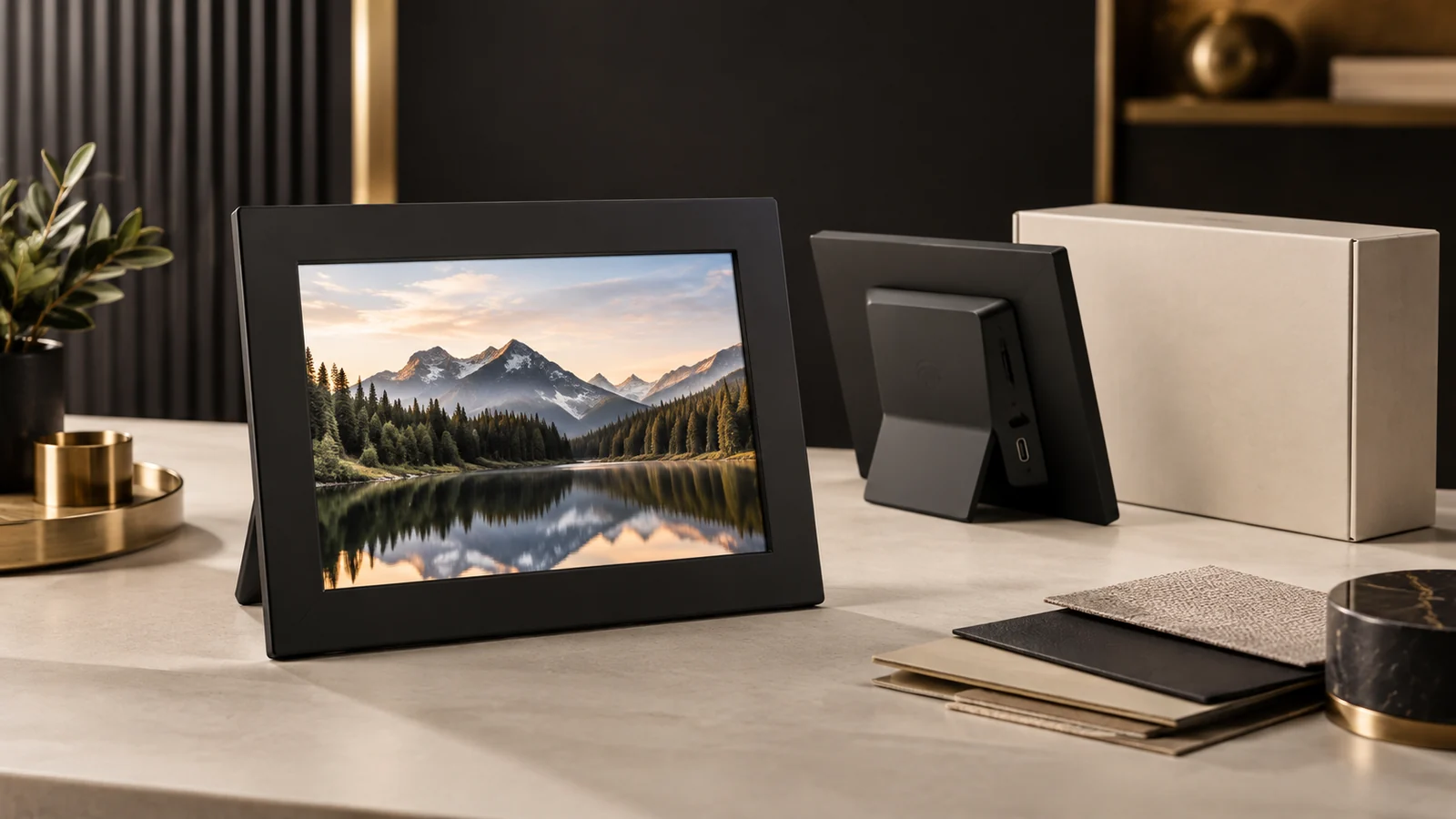
A Wi-Fi digital photo frame can look ready for Canada while its approval file belongs to a different radio module, antenna, enclosure or model name. That mismatch is easy to miss in an OEM programme: the screen and housing pass sample review, the packaging looks finished, and only later does the buyer discover that the marketed product cannot be matched confidently to Canada's Radio Equipment List.
This guide is for Canadian importers, private-label brands, retailers and overseas digital-frame suppliers. It turns current Innovation, Science and Economic Development Canada requirements into a practical product-to-record handover. It does not certify equipment, select test standards, determine an exemption or replace ISED, a recognized certification body, an accredited laboratory, an RF engineer or Canadian legal advice.
Start with the 30 July 2026 RSS-Gen update
ISED published RSS-Gen Issue 6 on 30 July 2026. The revision clarifies Category I listing and labelling requirements and includes more detail for hosts that contain certified modules. A buyer working from an old checklist may therefore miss the current transition rule, host identification or module-labelling detail.
Record the RSS-Gen issue, access date and transition position in the launch brief. Do not ask a supplier only whether a frame is “IC approved.” Ask which complete configuration or module is certified, which standards are named, which identifiers are in the Radio Equipment List, and which version of RSS-Gen supports the file.
Map every radio function in the finished frame
List Wi-Fi bands, Bluetooth, remote controls, wireless charging, cellular functions and any other transmitter or receiver. A product sold as a “Wi-Fi frame” may contain more than one radio path. The applicable RSS documents depend on those actual functions and frequencies, not the marketing category.
Create a radio architecture diagram that names the module, chipset, antenna type and location, host board, cables, power source, firmware and enclosure. If the supplier proposes several screen sizes, show which parts remain common and which change. A family resemblance is not evidence that every host configuration is covered.
Treat import, distribution and offering for sale as launch gates
ISED's wireless-equipment guidance states that before wireless equipment can be imported, distributed or offered for sale in Canada, a technical acceptance certificate must be issued and the equipment must be listed in the Radio Equipment List. That makes the evidence review a pre-shipment activity, not a task to leave until a marketplace requests a document.
Add an approval gate before bulk production and before Canadian product pages are activated. The owner should verify the relevant certification number, hardware identity and marketed name against the current REL entry. Save a dated result and link it to the product revision that will actually ship.
Choose the complete-product or certified-module route deliberately
An OEM may certify the complete digital frame, or it may integrate an already certified radio module into a host. A module certificate is useful, but it does not make every installation automatically compliant. Host labelling, antenna conditions, RF exposure, simultaneous transmission, enclosure, power and other integration facts can still matter.
Ask the certification body or qualified lab to confirm the route for the exact host. If the supplier relies on a module, obtain the module certificate, REL record, integration instructions, permitted antennas and test reports relevant to the host decision. Record any host testing or evaluation that remains required.
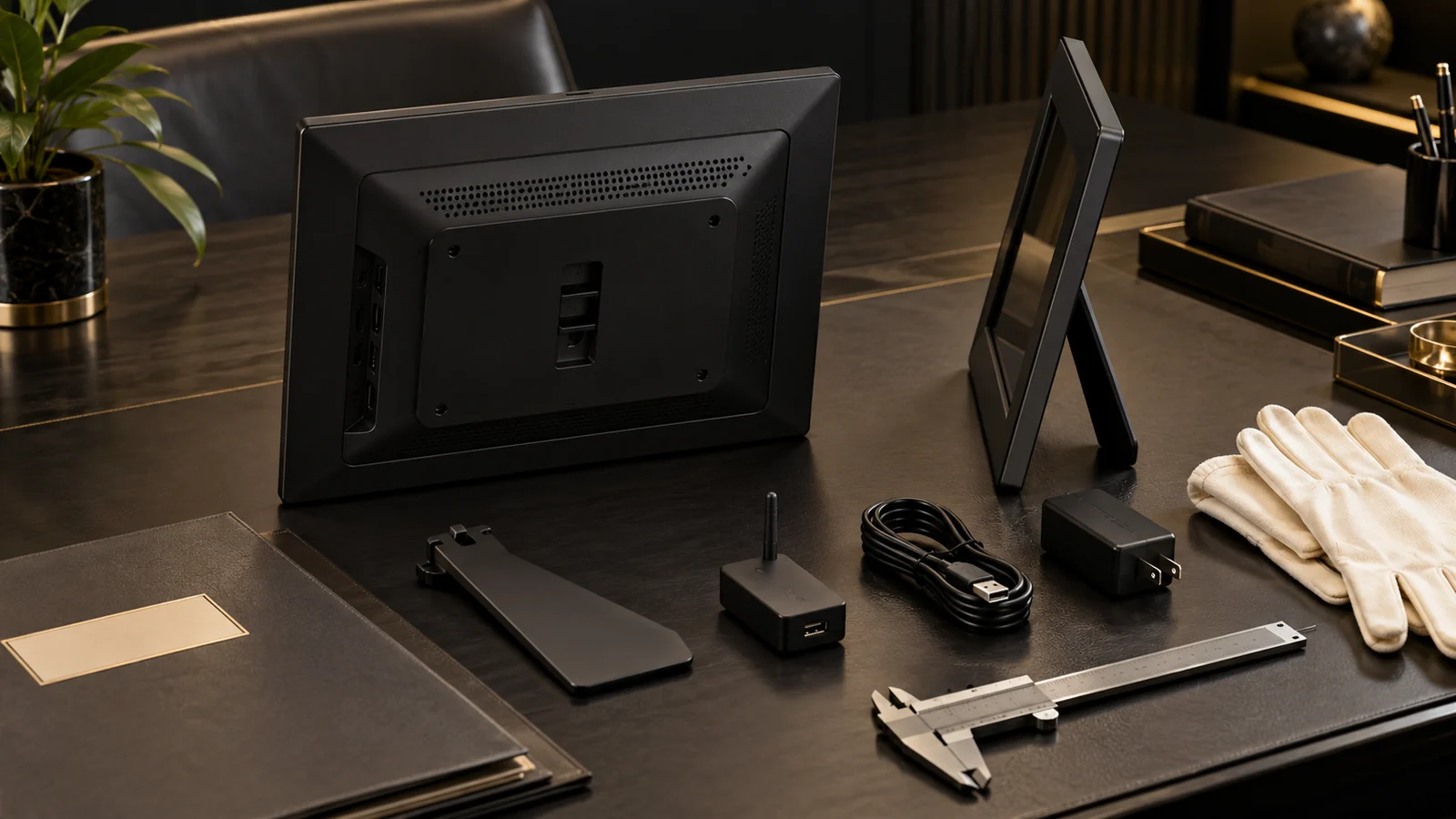
Lock PMN, HVIN, FVIN and HMN before artwork
ISED uses several identities for equipment records. The Product Marketing Name is the name or model under which the product is offered in Canada. The Hardware Version Identification Number identifies a hardware version and is required for certification applications. Firmware Version Identification is provided where appropriate. Host Marketing Name is used when a certified module requires a host identity.
Build an identity table with one row per saleable frame. Include brand, commercial SKU, PMN, HVIN, FVIN, HMN where applicable, module certification number, host label artwork and REL record. Do not allow the carton, user guide and marketplace listing to invent their own model numbers after certification work closes.
Search the Radio Equipment List by the strongest identifier
ISED provides the REL so buyers can check radio equipment certified for use in Canada. The certification number is usually the strongest search key; the HVIN or PMN can help when the number is unknown. A screenshot alone is weak evidence if it does not show the matched model and date.
Save the result as a dated PDF or controlled record, including the certificate holder, certification number, HVIN, PMN and applicable standards. Compare those fields with the supplier declaration and physical label. Escalate spelling differences, extra suffixes or unmatched private-label names before accepting stock.
Use RSS-247 for the actual Wi-Fi and Bluetooth configuration
RSS-247 contains certification requirements for digital transmission systems, frequency-hopping systems and licence-exempt local area network devices in common 2.4 GHz and 5 GHz bands. A buyer should not infer coverage merely because a module supports “Wi-Fi.” The supported bands, channel behaviour, antenna and installed firmware must match the assessed configuration.
Ask the technical owner to list enabled bands and regional firmware settings. If a global model can activate channels not intended for Canada, document how the Canadian configuration is controlled. A menu option, over-the-air update or replacement module can change the factual basis of the file.
Keep RSS-102 RF-exposure evidence connected to use conditions
RSS-102 addresses RF exposure compliance for radiocommunication apparatus. The relevant evaluation depends on the product's transmitters, separation, installation and intended use. A tabletop frame, a wall-mounted information display and a handheld setup screen may not present identical use assumptions.
Give the lab the real enclosure, antenna position, stand, wall-mount option, power modes and simultaneous-transmission behaviour. Keep the resulting evidence with the model identity. Do not turn a technical evaluation into a broad marketing statement such as “radiation safe.”
Do not forget ICES-003 for the digital apparatus
ICES-003 Issue 7 sets radio-frequency-emission and administrative requirements for information-technology equipment, including digital apparatus used for display, computation, control, data processing or storage. A digital frame can therefore have obligations beyond its intentional Wi-Fi or Bluetooth transmitter.
Ask the qualified test owner how ICES-003 and ICES-Gen apply to the final host, including its external power supply and ports. Keep intentional-radiator and digital-apparatus evidence as related but distinct records. Passing one test family does not prove the other was addressed.
Build the host and module label together
RSS-Gen includes labelling rules for certified radio apparatus and hosts containing certified modules. For a modular route, the host may need wording such as “Contains IC” or its French equivalent followed by the module certification number. The applicable format and placement should be confirmed against the current standard and product construction.
Review the physical product, packaging and user material as one set. Check permanence, visibility, size and whether electronic labelling is actually permitted for the configuration. Never place a certification number on artwork until it has been matched to the correct certificate holder, module and host conditions.
Control antennas as approved components
A small change in antenna type, gain, cable or location can affect radio performance and exposure results. Yet antenna changes are often treated as ordinary sourcing substitutions because the customer cannot see them. Put the antenna part number, supplier, type, gain, cable and installed position into the controlled BOM.
Require written technical review before changing the antenna or enclosure around it. During sample approval, photograph the installation and cable routing. During production, use a practical inspection point that can detect an unapproved part without encouraging workers to damage the unit.
Treat firmware and regional settings as configuration
Firmware can control transmit power, supported channels, duty cycle and simultaneous operation. Record the FVIN or other controlled firmware identifier where applicable, plus the Canadian region setting and update method. If the device updates after sale, define who checks whether a radio-affecting change needs review.
Do not let an app team or module vendor push a radio change outside product change control. The supplier agreement should require notice of radio-stack, driver, firmware and security updates that may affect the certified configuration.
Make the external power set part of the tested product
Power adapters, USB cables and host operating modes can influence emissions and test setup. Record the supplied adapter manufacturer, model, ratings, plug, cable and frame power mode. If the buyer sells an adapter-free version, document the assessed configuration and user instructions rather than assuming it is equivalent.
A Canadian radio file does not replace electrical safety, energy-efficiency, product-safety or other market requirements. Keep those workstreams connected through the same model and BOM revision so one team does not approve a product that another team tested differently.
Prepare a supplier technical handover
The core file should include the architecture diagram, complete BOM, module certificate and REL record, antenna specification, host drawings, photographs, PMN/HVIN/FVIN/HMN table, applicable standards, test reports, label artwork, user statements, firmware control and change history. Identify the certificate holder and certification body.
Use a document index with revision and effective date. If reports are confidential, agree a controlled review route that gives the Canadian compliance owner enough evidence to approve the programme. “Available if requested” is not a useful launch state when the marketplace or regulator asks for a quick answer.

Connect certification records to product pages
The product page should use the same model identity as the physical unit and compliance file. Avoid mixing photographs from one host with specifications from another. If a retailer requests an ISED number, provide only the number that matches the listed configuration and avoid presenting it as a product-quality endorsement.
Archive the approved listing text and images with the launch revision. When a private-label name differs from the supplier's PMN, ask the certification owner whether the REL record, multiple listing or other service must be updated before sale.
Write change triggers into the purchase order
Require advance approval for changes to the module, chipset, antenna, antenna cable, enclosure, shielding, host board, clock, power supply, ports, firmware, model name, label or manufacturing site when relevant. The supplier should state whether the proposed change affects the certificate, REL record, testing or product literature.
Do not use visual similarity as the change rule. A frame can look identical after a wireless-module substitution. Tie the purchase order to the approved hardware and firmware revision and define the evidence needed before a substitute is accepted.
Inspect identity before shipment
Pre-shipment inspection should sample product labels, host model, packaging model, supplied adapter, firmware screen where appropriate and carton configuration. Reconcile them against the controlled table. The inspection does not repeat laboratory testing, but it can catch a wrong label, mixed revision or unauthorized accessory.
For sealed products, agree a sampling method that lets the inspector verify enough units without creating unsaleable stock. Photograph the label at readable resolution for the internal file, while keeping personal or confidential data out of public marketing assets.
Common launch failures
Frequent problems include relying on an FCC identifier as Canadian approval, using a module certificate without checking host conditions, marketing a private-label model absent from the reviewed identity map, changing an antenna or adapter after testing, placing a number on packaging before REL verification, and assuming ICES-003 is covered by the radio report.
Another risk is document age. A certificate may be real while the shipped module or firmware no longer matches it. Ask the supplier to confirm the current production revision and retain traceability to lot or purchase order.
Buyer checklist before Canadian release
- All wireless functions and frequency bands mapped
- Complete-product or modular certification route confirmed
- Current RSS-Gen issue and transition position recorded
- RSS-247 and other applicable RSS standards identified
- RSS-102 use conditions and host evidence reviewed
- ICES-003 digital-apparatus requirements assigned
- PMN, HVIN, FVIN, HMN and commercial SKU reconciled
- Certification number and exact model verified in the REL
- Module integration and permitted antenna conditions retained
- Host and module labels approved against the final construction
- Power supply, cables and operating modes match the reviewed set
- Firmware and regional radio settings are controlled
- Purchase order prohibits unapproved radio-related changes
- Pre-shipment inspection checks model and label identity
Questions to send the supplier
Ask: Which entity holds the Canadian certificate? Is the complete host certified or does it contain a certified module? What are the PMN, HVIN, FVIN, HMN and ISED certification number? Which REL entry matches the unit? Which antennas, bands, firmware, adapter and host conditions were assessed? Which current reports support RSS-247, RSS-102 and ICES-003?
Then ask the certification body or Canadian specialist: Does the module route cover this installation? Which host evaluation, labelling and user statements apply under RSS-Gen Issue 6? Does a private-label name or hardware change require a new service? What must be completed before import, distribution or offering for sale?
Experience scope and project limits
Editorial review: Jessica, Founder & Project Advisor at DOREMI Display. Updated 1 October 2026. Jessica's practical scope is B2B digital-frame briefing, sample coordination, packaging and label handover, supplier documentation and production change control. This article does not present her or DOREMI as ISED, a certification body, an accredited laboratory, an RF engineer or Canadian legal counsel.
Use this workflow to make the marketed product and supplier evidence reviewable by qualified Canadian owners. The current official standards, certificate, REL record and exact production configuration control the decision.