
A custom framed photograph can look like a picture frame, be sold as wall décor and still be classified according to the printed image. A framed seasonal print can look almost identical in construction and move to a festive-article provision because its design and use are tied to a holiday. Two U.S. Customs and Border Protection rulings issued in early 2026 show why an importer cannot choose a tariff heading from the frame material alone.
This guide is for U.S. importers, photo-gift brands, print-on-demand operators, customs brokers, sourcing teams and overseas frame/print factories. It translates NY N359056 and NY N358768 into a product-facts handover. The rulings apply to their stated merchandise and facts; this article does not classify another product, confirm a duty rate, make a USMCA claim or replace CBP, a licensed customs broker, customs counsel or the importer’s reasonable-care process.
Why are framed-photo buyers asking a classification question now?
Custom-frame programmes increasingly combine digital artwork, local or regional printing, imported moulding, acrylic glazing, backing, finishing and final assembly. The buyer may describe the result as a picture frame, while the customer believes the photograph or artwork is the product. Customs classification begins with the merchandise in its condition as imported, the legal tariff text and the facts that give the whole article its character.
The buyer questions in this guide are editorial inferences from the two rulings, current CBP information and ordinary OEM handovers. They were not captured from Google AI Overviews or AI Mode. Google Search Central recommends accurate, people-first material that adds useful experience. The practical value here is a repeatable evidence pack, not a promise that a keyword or copied ruling will secure a result.
What did CBP decide for permanently mounted framed photographs?
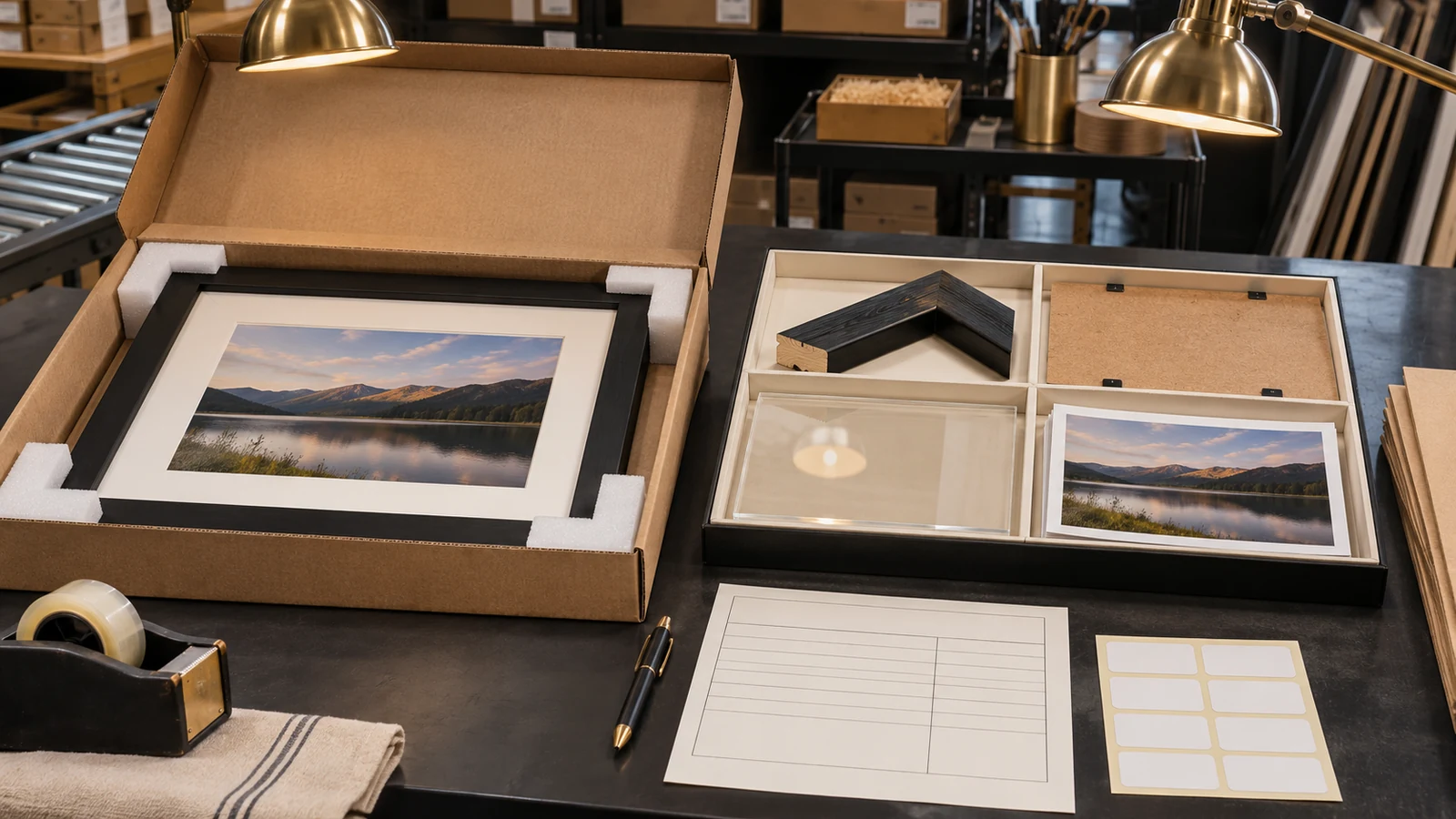
In NY N359056, dated 19 March 2026, the merchandise was digitally printed photographs permanently mounted in wooden picture frames and imported ready for display. CBP found that the photographs imparted the essential character and classified the goods in subheading 4911.91.4040, covering certain printed pictures, designs and photographs, rather than treating the wooden frame as controlling.
The ruling records a specific supply chain: digital files were printed in Mexico; paper came from Japan; ink came from Indonesia; Italian wooden mouldings were cut, made into frames and finished in Mexico; and the photographs were permanently mounted there. Acrylic glazing and ancillary parts were also present. Those details are not decorative background. They support the classification, USMCA and origin analyses in the ruling.
What did CBP decide for seasonal framed artwork?
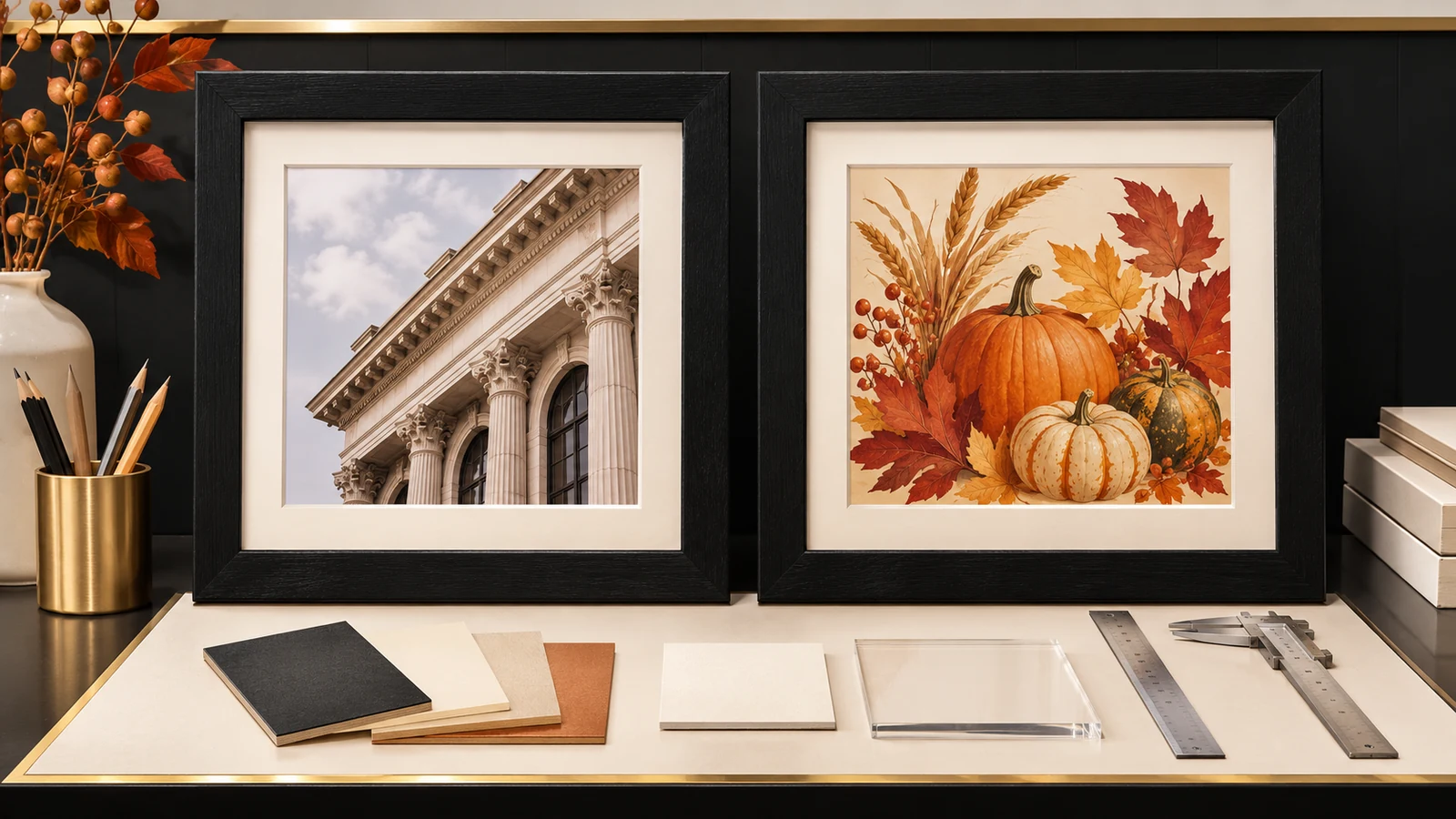
NY N358768, dated 26 February 2026, concerned a framed printed image designed and sold as Halloween décor. The design included prominent Halloween imagery and a date reference, and the ruling described year-round use as aberrant. CBP rejected the proposed printed-matter subheading and classified that product in subheading 9505.90.6000 as another festive, carnival or entertainment article.
The lesson is not that every pumpkin, autumn colour or seasonal marketing phrase changes classification. It is that design, objective characteristics, intended use and how the item is marketed can matter. A retailer’s category name cannot be the only evidence, but artwork and commercial presentation should not be omitted from a ruling or broker pack when they define the article.
Start with the imported condition, not the factory component list
A BOM may contain wooden moulding, acrylic, mat board, backing, printed paper, hardware and packaging. That list helps, but customs does not necessarily classify the finished unit by whichever component costs the most or appears first on the factory quotation. Record whether the photograph is printed, removable, permanently mounted or supplied separately; whether the frame can accept a replacement image; and whether the imported unit is complete, unfinished or packaged as a set.
Photograph the exact sample from the front, back, edges and open state. Show how the print is attached and whether the consumer can remove it without destroying the item. Record sizes and material descriptions without relying on marketing terms such as “museum quality” or “solid wood” unless the supplier can substantiate them.
Do not treat “essential character” as a buyer preference
The 2026 framed-photo ruling refers to the Explanatory Notes for heading 4911: framed pictures and photographs remain there when the picture or photograph gives the whole its essential character; otherwise the appropriate frame heading may apply. That is a legal classification analysis, not a poll asking whether a customer values the frame or image more.
Prepare facts that a broker or adviser can test: image permanence, visual dominance, retail description, replacement function, relative role of each component, and the reason the buyer purchases the whole. Avoid drafting a conclusion first and then asking the factory for only the facts that support it.
Build an artwork-status field for every SKU
For custom programmes, the same frame construction may hold family photography, licensed sports imagery, abstract artwork, a certificate, a seasonal design or a blank insert. Create an artwork field in the SKU master showing image type, creation method, age if relevant, subject, seasonal references, licence owner, intended selling period and whether the image is permanently attached.
This field should be controlled like a material revision. If a generic photograph becomes a holiday-specific graphic, the product team should trigger customs review before changing the listing, packaging or entry instruction. A new print file can change more than aesthetics.
Separate seasonal cues from general decorative style
Do not label every orange design “Halloween” or every red-and-green palette “Christmas.” The N358768 reasoning considered the prominent images, date, phrase, marketing and the abnormality of using the item at other times. A buyer file should therefore show the complete artwork and the intended commercial use rather than a cropped thumbnail.
Ask whether the product has a recognised festive association, whether its design is tied to a specific occasion, how retailers categorise it and whether it has ordinary year-round use. Qualified advisers should apply the relevant tariff provisions to those facts. The factory should not decide the legal result from a seasonal purchase-order code.
Map classification facts before requesting a quotation
A useful RFQ includes the finished configuration, print attachment, frame material, glazing, back, hanging hardware, packaging, selling description and destination. Ask suppliers to quote components separately as well as the finished unit. This helps the importer understand value and changes without implying that one component automatically controls classification.
Where multiple artwork families share a frame, request a variant table. Show which dimensions, components and assembly steps are common and which artwork or marketing facts differ. The table lets a broker identify when one entry instruction may not fit the whole assortment.
Country of origin can involve more than one test
NY N359056 addresses USMCA eligibility, marking origin and origin for Section 301 and other duties. Those are related but not interchangeable questions. For the stated Mexico production, CBP found that the framed photographs satisfied the applicable USMCA tariff-shift rule, that Mexico was the country of origin for marking under the Part 102 hierarchy, and that Mexico was the origin for the trade-remedy analysis because the components were substantially transformed there.
An importer should not reduce that to “assembly in Mexico equals Mexican origin.” The ruling depended on what occurred in Mexico, the final heading, the input classifications and the applicable rules. Another process—such as inserting a finished imported photograph into a finished imported frame—may require a different result.
Build the transformation record at process-step level
Show where the digital file becomes a physical print, where moulding is cut and joined, where finishing occurs, where glazing and backing are prepared, where the print is mounted and where the finished article is packed. Record the origin of paper, ink, moulding, acrylic and other meaningful inputs. Link photographs and invoices to the actual model.
A process map should distinguish a commercial operation from a legal conclusion. It can say that moulding is cut, mitres are joined and a photograph is permanently mounted. It should not say “substantial transformation achieved” unless the responsible adviser has made and documented that determination.
Use the USMCA ruling as a method, not a blanket certificate
For the goods in N359056, CBP applied the rule for heading 4911 and found the change from input chapters for paper, ink, wood, acrylic and ancillary components satisfied the tariff shift. The ruling also says preferential treatment depends on compliance with all applicable laws, regulations and agreements. A current claim requires the right certification data and supporting records.
As of this update, the July 2026 joint review did not renew the agreement in its current form, while USTR stated that the agreement remains in force pending resolution or termination. Importers should confirm the live agreement and tariff status at entry. Do not rely on a March ruling as proof that policy or a Chapter 99 measure has stayed unchanged.
Plan origin marking before the packing sample
The marking decision affects product, package and artwork space. Record who the ultimate purchaser is, where the mark will appear, the exact country name, permanence method, visibility after retail packing and any exception the importer intends to use. Ask the broker or counsel to approve the route before mass printing.
Do not place an origin statement only on a removable protective film without review. Also separate customs origin from marketing claims such as “Made in USA” or “Made in Canada,” which can use different legal standards. One phrase should not be copied across customs entries, retail packaging and advertising without an owner for each decision.
Keep tariff rates and trade remedies as live data
Both rulings warn that cited duty rates are subject to change and that additional duties, taxes, fees or Chapter 99 provisions may apply. Build entry instructions with a date, source and reviewer. The commercial team should never lock landed cost from an old ruling excerpt alone.
Before each shipment, verify the current HTSUS, trade-remedy messages and product facts. If artwork, country, component material or assembly changes, send the revision back through the classification and origin review. A correct decision for a prior SKU is not a permanent rate guarantee.
Understand the limit of a CBP ruling letter
NY N358768 expressly says its holding applies to the specific factual situation and merchandise description identified in the request. That boundary is fundamental. A public ruling is persuasive research for similar merchandise, but it is not an importer’s private licence to ignore factual differences.
If the business needs certainty, discuss a binding-ruling request with the broker or counsel. Submit a complete description and, when appropriate, samples, images and manufacturing details. Do not disguise a seasonal product as generic wall art or omit an attachment method to steer the answer.
Write purchase orders that preserve the customs facts
Attach the approved product specification, artwork identifier, mounting method, component-origin table, process route, package marking and change-notice clause. State that substitutions in paper, moulding, glazing, finishing location, printing location or final assembly require written approval before production.
Ask the supplier to retain production records that connect the finished SKU to the approved inputs and process. The importer remains responsible for its entry, but a contractually usable factory record makes reasonable-care review and post-entry questions more manageable.
Control samples, photography and listings as one revision
A customs file can drift when the physical sample, website image and import specification are updated by different teams. Give each artwork and construction combination a revision. Listing photographs should show the product actually imported, especially where the permanence of the print or seasonal appearance matters.
Archive obsolete images instead of silently replacing them in a shared folder. If a marketplace changes the category to “holiday decoration,” treat that as a review signal. Marketing language alone does not dictate classification, but it can become relevant evidence of intended use.
Create a broker handover that can be challenged
Provide the broker with the proposed description and code plus the underlying facts: BOM, photographs, process map, artwork, intended use, origin inputs, ruling comparisons and open questions. Ask the broker to document assumptions. A one-line email saying “same as last order” is not enough for a new configuration.
Include a disagreement route. If the buyer, broker and factory use different descriptions, stop the entry instruction from becoming final until the product owner resolves the facts. Classification should not be decided by whichever spreadsheet was circulated last.
Buyer evidence checklist
- Exact imported configuration and retail set contents
- Print type, subject, age and attachment method
- Frame substrate, finish, glazing, backing and hardware
- Seasonal design and marketing evidence where relevant
- Component origins linked to invoices and SKU
- Country-by-country manufacturing process map
- Proposed HTS analysis and current-rate verification date
- USMCA rule and certification data if a preference is claimed
- Separate marking, preference and trade-remedy origin analyses
- Approved origin-mark placement and packaging proof
- Binding-ruling need assessed for the actual facts
- PO change control for artwork, material and processing changes
Experience scope and project limits
Editorial review: Jessica, Founder & Project Advisor at DOREMI Display. Updated 24 November 2026. Jessica’s practical scope covers custom-frame briefs, artwork and component handovers, OEM/ODM quotations, samples, packaging and buyer–factory coordination. She is not presented as CBP, a licensed customs broker, customs counsel, a USMCA certifier or a tariff-classification authority.
The importer and qualified advisers must decide classification, origin, marking, preference eligibility, customs value, trade remedies, duty rates and recordkeeping for the actual merchandise and entry date. This guide organises supplier facts; it is not a ruling, entry instruction or assurance of preferential treatment.
Public sources used for this guide
- Google Search Central: optimizing for generative AI features
- CBP CROSS NY N359056: framed photographs, classification, USMCA and origin
- CBP NY N358768: framed Halloween decoration
- CBP: U.S.–Mexico–Canada Agreement information
- USTR: July 2026 USMCA joint-review statement
- USITC: current Harmonized Tariff Schedule