
“What is your MOQ?” sounds like a request for one number. For a custom display-frame programme, it is usually a request about several different constraints at once. The frame profile may be shared across the order, while each jersey insert, medal layout, certificate size or retail carton creates its own production and stock decision.
This guide is for importers, brands, distributors, event organisers and institutional buyers planning a first or expanded custom-frame order. It shows how to turn a vague minimum-order question into a quantity and assortment model. It does not publish a DOREMI minimum, promise a price or recommend one pilot size for every project.
Ask what the minimum applies to
A supplier may quote a minimum per order, profile, finish, outside size, print design, packaging design or SKU. These are not interchangeable. A total order of several hundred units can still contain a small colour variant that is inefficient to print or a carton size that requires a separate setup.
Request a written MOQ breakdown. List product family, common frame platform, variable insert, artwork version, pack, language and destination. Ask which minimum is a commercial preference and which reflects purchased material, process setup, tooling, subcontractor or packaging constraints. The answer helps the buyer redesign the assortment rather than only negotiating a lower number.
Define the SKU before negotiating its quantity
A SKU should describe a sellable and replenishable configuration. Size, finish, glazing, backing, insert, hardware, personalization and retail pack can make two similar frames operationally different. If the warehouse, customer or production team must distinguish them, the quantity model should distinguish them too.
Avoid creating SKUs for choices that can remain late-stage options. The same black certificate frame might accept several printed inserts after the frame is assembled. A medal frame might use one base construction with event-specific artwork applied later. Postponing variation can protect flexibility, but only when the physical design and data workflow genuinely support it.
Map fixed, variable and shared components
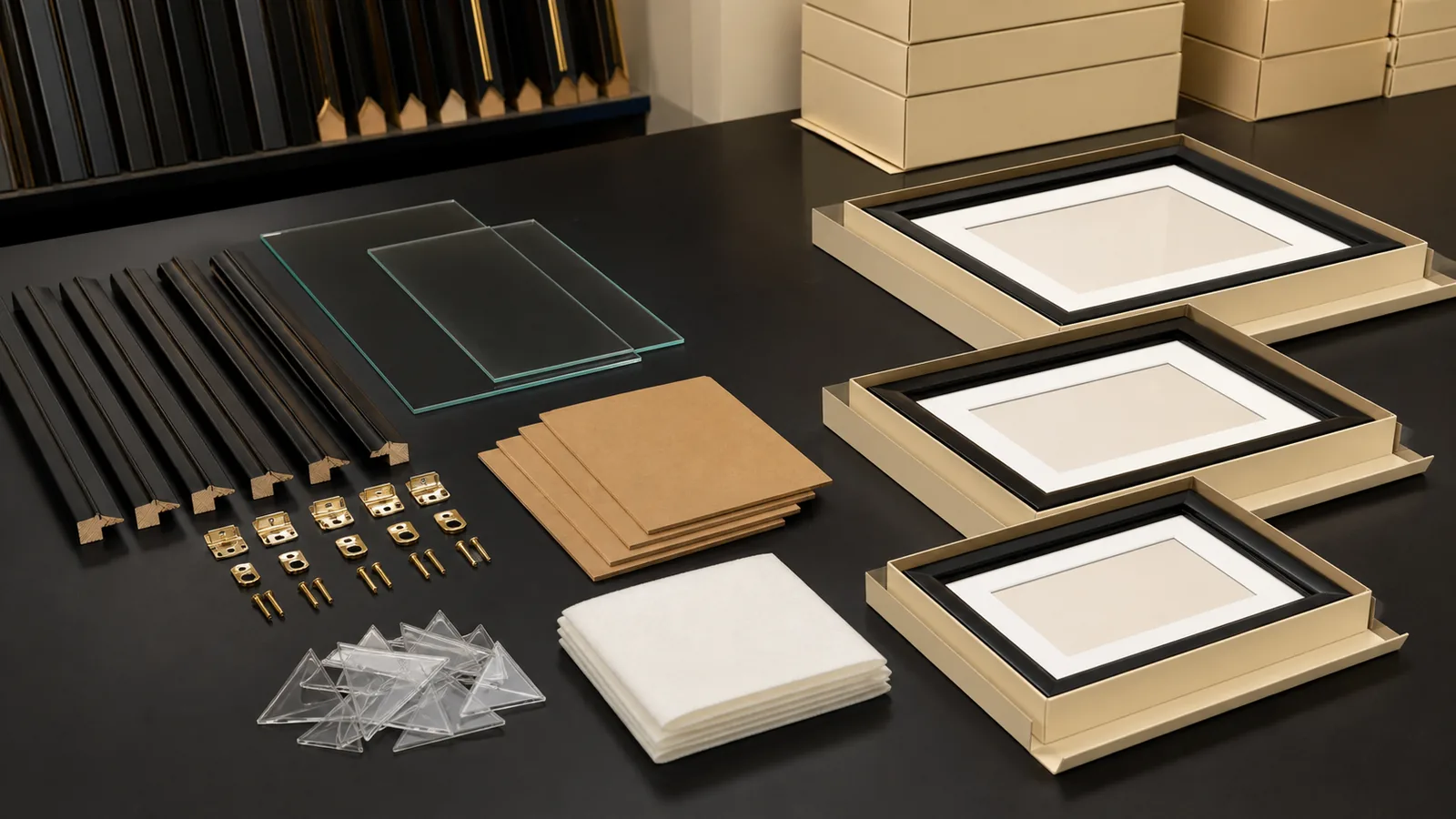
Build a matrix with components down the rows and SKUs across the columns. Mark the frame profile, finish, glazing, backing, mat, insert, plaque, hardware, accessories, inner pack, retail carton and master carton. This reveals which materials can be purchased or produced together and which create a true split.
Shared components can improve purchasing efficiency and make replenishment easier. Variable components create identity and market fit. The goal is not to eliminate variation; it is to place it where it adds buyer value. A mixed assortment that shares invisible components while changing the meaningful front presentation is often easier to manage than six products that differ in every layer.

Separate demand uncertainty from production efficiency
A low forecast does not automatically mean a low production minimum is efficient. Equally, a factory setup constraint does not prove that a buyer should hold more finished stock than the channel can absorb. Keep these questions separate, then look for a design or commercial bridge.
Demand uncertainty belongs in the range plan: expected channel, launch timing, likely mix, upside, downside and reorder speed. Production efficiency belongs in the supplier discussion: material purchase units, colour change, cutting, printing, assembly, packing and subcontractor requirements. When both sides show the real constraints, they can evaluate common components, staged personalization or quantity tiers without pretending the risk disappears.
Use quantity tiers with one controlled specification
Ask for several quantity tiers using the same product and packing specification. The quotation should state what changes at each tier: unit price, setup, tooling, packaging, lead time, payment, shipment and any unused material. If the construction changes to reach a lower price, it is not a comparable tier.
Do not force suppliers to hide setup cost inside the unit price. A transparent one-time or per-design charge may give a buyer a clearer decision than an artificially high minimum. Confirm whether charges apply again to reorders, new artwork, new sizes or revised cartons. Commercial terms should be documented in the actual quotation and contract.
Design the pilot around learning goals
A pilot is not simply a small order. Write what the team needs to learn: visual acceptance, assembly time, packaging performance, buyer response, personalization accuracy, installation experience, warehouse handling or reorder data. Choose SKUs and destinations that expose those questions without creating uncontrolled complexity.
If the pilot cannot answer the scale-up decision, it is only discounted production. Define who will review the results, which evidence will be collected and what outcome leads to repeat, revision or stop. Avoid presenting a pilot as a test result unless a qualified plan and evidence support that claim.
Choose an assortment with a clear role for every SKU
Give each variant a reason to exist. It may serve a different object, price position, institution, event, region, channel or customer segment. If two SKUs target the same buyer with only a small internal difference, one may dilute demand without adding visible value.
Use a simple role such as core, premium, entry, event-specific or test. Do not allocate equal quantity by default. A core black certificate frame may need broader coverage than a specialised deep memorabilia box. The forecast should reflect the buyer’s actual sales or programme assumptions, not an attractive symmetrical assortment photograph.
Control personalization without multiplying finished stock
Names, dates, plaques, team colours and event inserts can turn one product platform into many outputs. Decide whether personalization happens at the factory, regional fulfilment partner, retailer or end-user stage. Each point changes data cut-off, quality control, privacy, spare parts and lead time.
Where appropriate, hold generic frames and add controlled inserts later. Where alignment or premium finish depends on factory assembly, late personalization may create more risk than it removes. Build the process around the required presentation quality and data ownership rather than assuming postponement is always cheaper.
Treat packaging as part of the SKU architecture
Two frames that share an outside size may still need different internal protection because depth, glazing, hardware or included objects vary. Review individual pack and master carton together. A mixed-SKU order can become difficult to receive if cartons look identical but contents and fragility differ.
Define the warehouse identification method, carton quantity, pick unit and destination labels. Keep claims and legal marking under separate review. Do not add a new printed retail box for every minor variant unless the channel needs it; a controlled label or insert may provide identity with less packaging complexity, subject to market requirements.
Account for sample and artwork workload
Every SKU can create drawings, proofs, physical samples, approvals and correction cycles. A six-SKU pilot is not one sample multiplied automatically. Record which elements are approved at platform level and which need variant-specific review. This keeps the team from paying for unnecessary duplication while protecting visible differences.
Set artwork cut-off dates and owners. If the buyer changes one insert after the common frames are made, the schedule impact may be limited. If the change affects opening size or carton copy, it can reach many components. The quantity plan and approval plan should use the same SKU matrix.
Model cash exposure beyond unit price
Estimate deposits, balances, setup, tooling, samples, inspection, freight, duty, tax, insurance, warehousing, fulfilment, damage handling and unsold inventory. Do not use a universal landed-cost percentage. Collect project data from suppliers, forwarders, customs professionals, insurers and destination partners.
Compare scenarios on the same commercial basis. A larger order may lower factory price while increasing cash tied in stock, storage and markdown exposure. A smaller order may raise unit cost while buying useful market information. The correct choice depends on margin, working capital, launch risk and reorder path.
Price leftovers and committed materials
Some inputs are purchased in quantities larger than the finished-order requirement. Ask who owns unused moulding, printed material, hardware or packaging, how it is stored, how long it remains usable and whether it can be applied to a reorder. Do not assume a setup minimum and a material purchase unit are the same thing.
If the buyer pays for dedicated leftover material, record identity, quantity, condition and location. Agree what happens if the design changes or the supplier relationship ends. This is a commercial and contractual decision; qualified advisers should review significant commitments.
Plan the reorder before launching the pilot
Ask what a reorder will require: minimum by component or SKU, material lead time, artwork confirmation, sample refresh, production slot, packaging stock and shipment method. A pilot that sells quickly can still fail commercially if replenishment is slow or requires a much larger commitment.
Decide which components can be held safely and who bears that inventory risk. Confirm whether finishes, printed inserts and cartons have shelf-life or storage concerns. Do not ask the supplier to promise permanent availability for a material they do not control; establish a notification and alternative-approval process.
Define scale-up gates with evidence
Before placing the larger order, compare pilot outcomes with the original goals. Review product feedback, defects, packing condition, installation questions, fulfilment errors, demand mix, stock age and landed cost. Separate isolated incidents from repeated patterns and preserve the actual samples and records needed for investigation.
Choose a decision for each SKU: repeat unchanged, revise, merge, pause or retire. Update the golden sample, artwork and packing baseline where changes are approved. Scaling a weak variant because the total pilot sold well can turn a useful experiment into excess stock.
Use a supplier conversation that invites options
Instead of asking can you lower MOQ, share the target assortment and constraints. Ask which components drive the minimum, what can be common, which customization can move later, and how price changes across controlled tiers. Request the consequence of every option for quality, appearance, timing and packaging.
Do not pressure a supplier to agree to a number they cannot operate consistently. A credible answer may reveal a trade-off. Procurement’s job is to decide whether that trade-off fits the market, not to make the constraint disappear from the quotation.
Keep legal and data duties outside the quantity shortcut
A small pilot does not automatically remove product-safety, chemical, labelling, origin, packaging, tax or customs responsibilities. Requirements depend on product, role, market and distribution. Complete the applicable compliance review before the test reaches customers.
Personalized orders may also involve recipient information. Share only the data needed through buyer-approved systems and define deletion, correction and access rules with appropriate advisers. A smaller quantity can reduce commercial exposure but does not make inaccurate names or uncontrolled personal data acceptable.
Buyer MOQ and pilot checklist
- MOQ is broken down by order, platform, finish, size, artwork, pack and SKU
- Every SKU has a sellable identity and commercial role
- Common and variable components are mapped
- Demand assumptions are separated from factory constraints
- Quantity tiers use the same controlled specification
- Setup, tooling and repeat charges are visible
- Pilot learning goals and scale-up decisions are defined
- Personalization stage and data owner are clear
- Packaging, warehouse identity and master-carton logic are included
- Sample and artwork workload is budgeted
- Landed cost and working-capital exposure are modelled
- Leftover dedicated material ownership is agreed
- Reorder minimum, timing and material availability are known
- Each SKU has a repeat, revise or stop gate
Experience scope and project limits
Editorial review: Jessica, Founder & Project Advisor at DOREMI Display. Updated 24 August 2026. Jessica’s practical scope covers B2B display-frame briefs, assortment discussions, samples, manufacturing coordination, packaging and supplier handover. She is not presented as a demand forecaster, accountant, customs broker, lawyer or financial adviser.
This guide does not state DOREMI’s project-specific MOQ, price, capacity, lead time or commercial acceptance. Final quantities and terms depend on the exact specification, component sources, processes, artwork, packing, destination, schedule and supplier quotation.