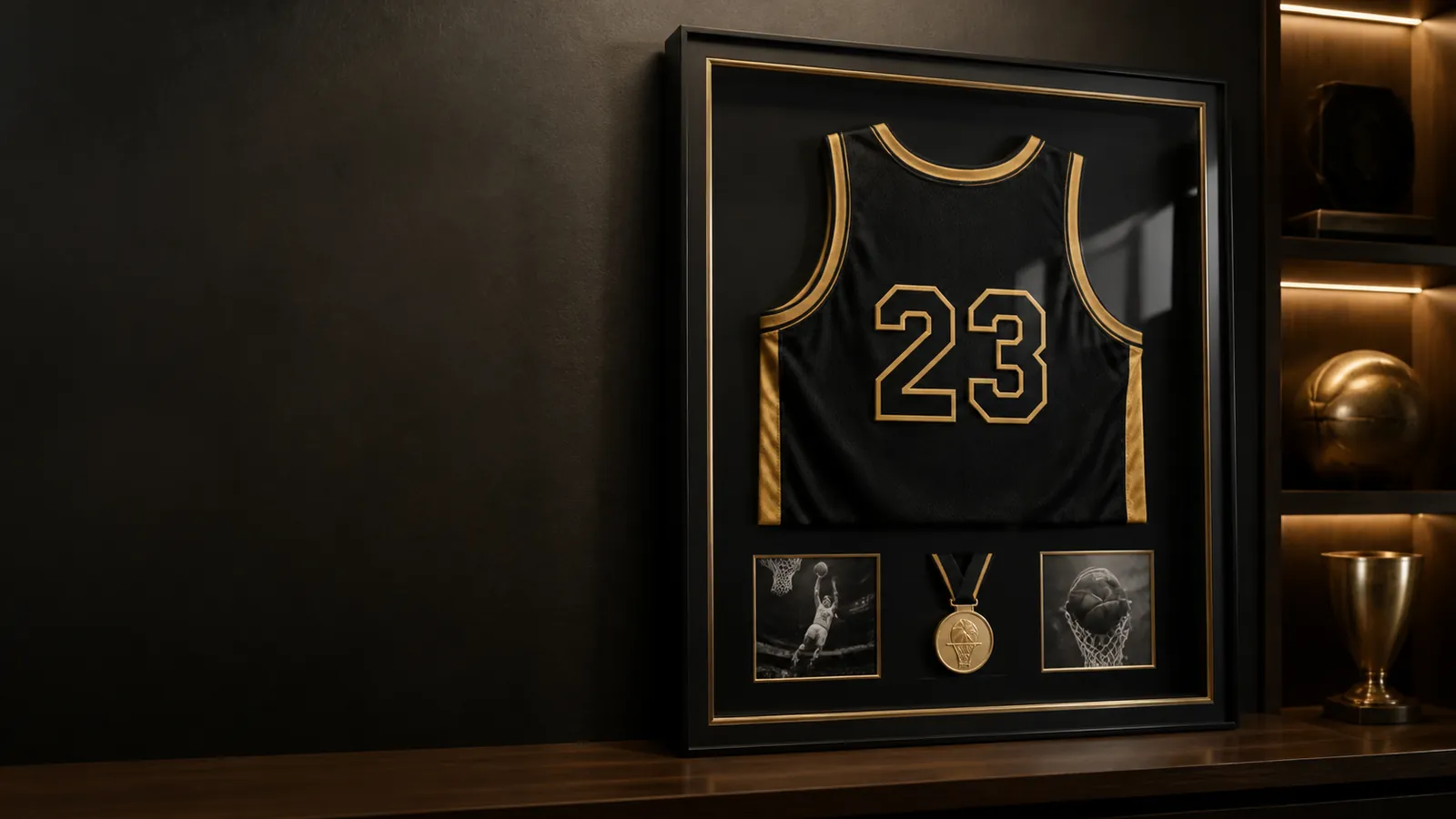
A jersey display frame is often sold as a simple product. For a buyer, it is not. It is a small protection system, a brand object and a freight-sensitive piece of retail presentation at the same time. The difference between a display that feels premium and one that produces returns is usually decided long before production begins: in the brief, the sample and the packing specification.
This guide is written for importers, sports retailers, clubs, event teams and private-label brands evaluating a repeatable display-frame program. It does not promise one universal construction. Instead, it gives you the questions that make a quotation comparable and a sample review useful.
Start with the use case, not the outside dimension
“We need a jersey frame” is a product category, not a production brief. A framed youth football shirt, a folded basketball jersey, a signed professional shirt and a retail-ready souvenir each need different usable depth, visible area and mounting approach. Ask first where the piece will live: on a club wall, in a fan’s home, in a shop, in a sponsor gift box or in an online fulfilment programme.
Then define what must remain visible. Some projects need the whole front of the jersey; others prioritise a number, signature, medal or photographs. The supplier needs a physical sample or a measured folded-volume reference, not just a flat apparel size. Fabric thickness, sleeves and attached memorabilia change the depth requirement.
Turn a visual reference into a measurable specification
Good sourcing teams convert mood boards into a one-page specification before requesting a price. Record the outside size, visible opening, internal depth, frame profile width, backing colour, glazing type, hanging method and accessory positions. Mark which dimensions are fixed and which can be recommended by the factory. This prevents a polished visual from being interpreted three different ways by three suppliers.
For private-label work, separate the product specification from the artwork specification. The product specification controls construction. The artwork sheet controls logo placement, plaque copy, printed backing, inserts and retail packaging. Keeping those files separate makes revisions faster and protects the production team from using an old logo version.
Choose the material system by risk, not by trend
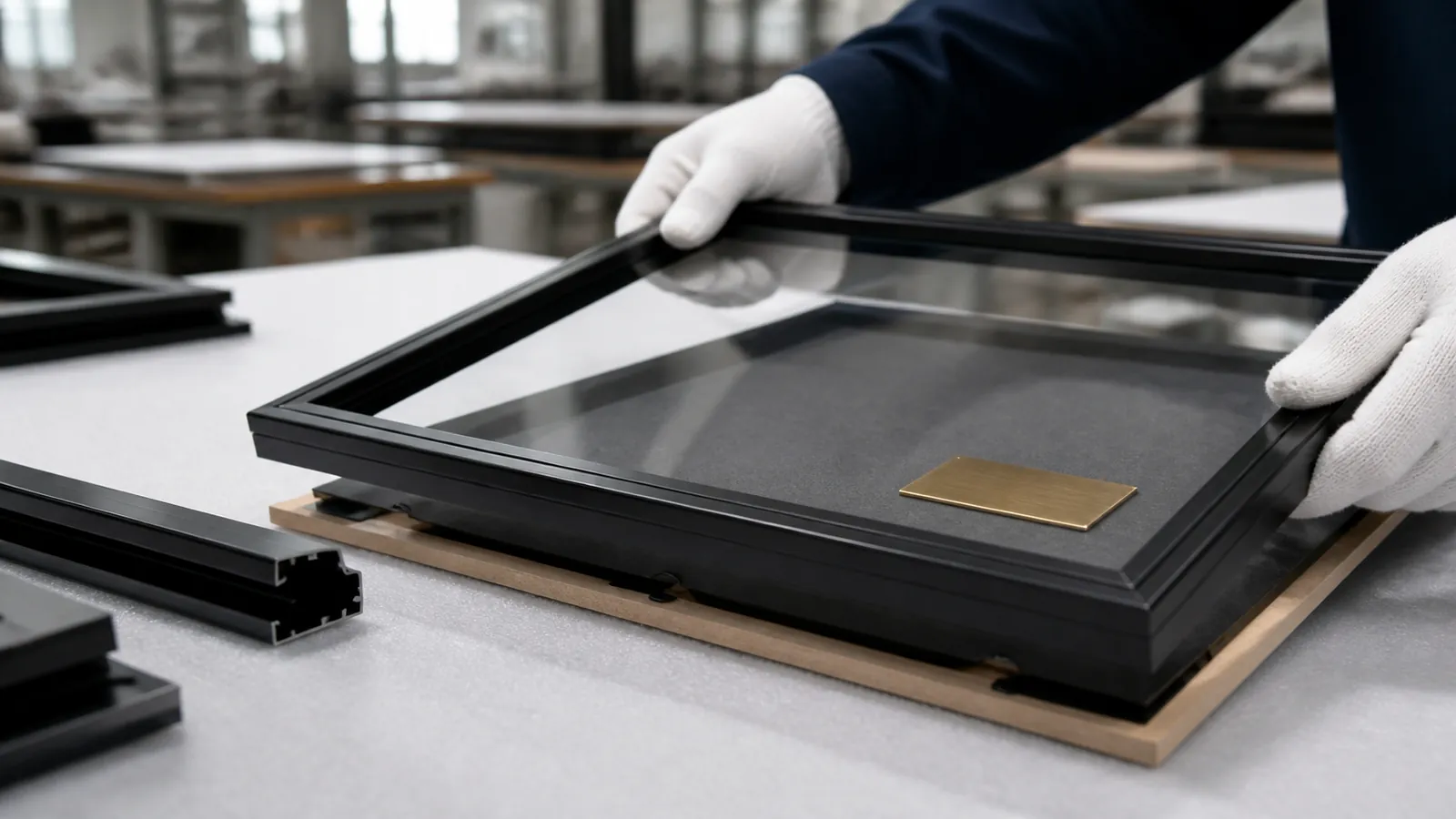
Black MDF, solid wood, aluminium and composite profiles can all be appropriate. The relevant comparison is not “which is best?” but “which manages the programme’s risks?” For a repeat retail line, consistent profile availability and finish matching may matter more than a visually dramatic profile. For a limited club presentation, a heavier profile may support the perceived value. For a mailed e-commerce product, overall weight and corner resistance can be decisive.
Ask the supplier to identify the frame substrate, surface finish, backing board and glazing separately. “Wood frame” can describe a solid-wood profile, a veneer finish or a wood-effect wrap; those are different cost, consistency and repair conversations. A clear material callout also helps your own team compare samples fairly.
Make glazing and mounting part of the buyer experience
Glazing is not merely a transparent front. It affects reflection, weight, breakage exposure and how premium the object feels in photographs. For a wall-mounted commemorative display, buyers often evaluate glare from the room, not a factory lightbox. Ask to see the sample at an angle and in ordinary interior light. If the programme needs safer shipping or a lighter unit, discuss the trade-offs of alternative glazing before approving packaging.
Mounting must keep the jersey stable without creating avoidable damage. The right method depends on whether the garment is a signed collectible, a replica shirt, a short-term event piece or a replacement garment. Ask the supplier to explain how the garment is positioned, whether the method is reversible and what happens during vibration testing or parcel handling.
Use a sample review checklist your team can repeat
Before approving a pre-production sample, review it on a table and on a wall. Check mitres, paint consistency, visible adhesive, dust under glazing, plaque alignment, back-panel rigidity and hanging hardware. Photograph the front, sides, corners, back and packaging. If the display uses printed artwork, compare it to the approved PDF at normal viewing distance rather than judging from a phone screen.
It is also useful to record “acceptable variation” in writing. Hand-finished surfaces and natural wood can have a character that is desirable, but that does not remove the need for a clear approval standard. If exact black tone, brass colour or print placement matters, include a signed reference in the production file.
Price the whole delivered system
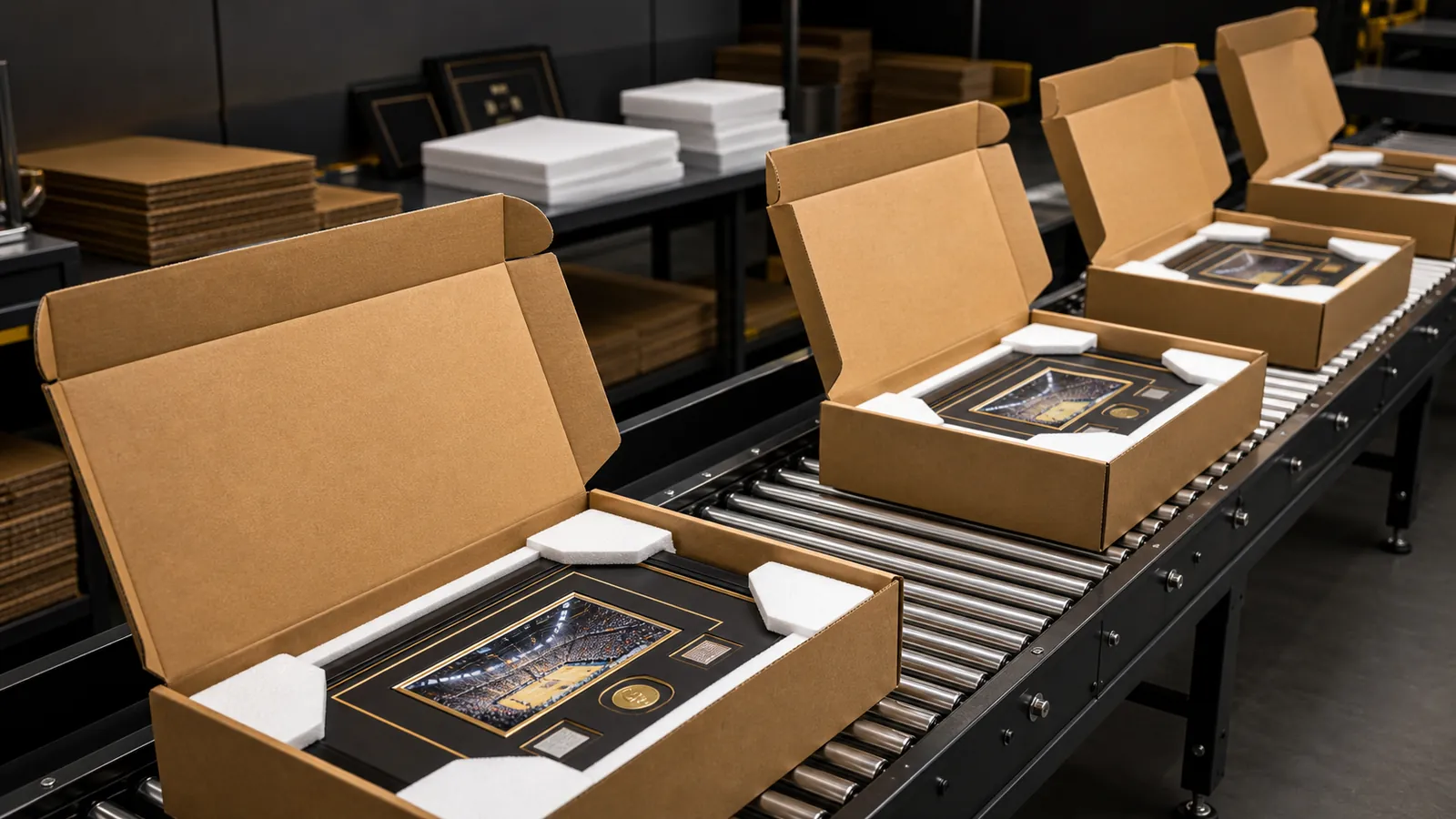
A frame quotation that excludes its protective packaging is incomplete for an export programme. Ask for unit dimensions, packed dimensions, gross weight, carton quantity, inner protection and recommended shipping orientation. These inputs affect warehouse handling, airfreight calculations, container planning and the number of damaged units a retailer must manage.
When comparing supplier prices, normalise the basis: same frame size, same glazing, same backing treatment, same plaque, same carton and the same incoterm. A lower unit price can conceal a lighter backing board, less protective packaging or omitted artwork setup. A procurement decision is stronger when it compares like-for-like, not when it compares one attractive number.
Plan the approval path before you approve the sample
For branded programmes, define who can sign off product construction, artwork, packaging and shipping marks. These may be different people. Establish the sequence: quotation, digital layout, material confirmation, physical sample, packing sample, pre-production confirmation and final inspection. If recipient names or serial data will be used, add the data-file format and final approval deadline to the timeline.
Keep one dated “golden sample” record. It can be a physical retained unit, a signed inspection sheet or a detailed photo set. The goal is not bureaucracy; it is a shared reference when a later production question arises.
Supplier questions worth asking before an order
- Which dimensions are based on the actual folded jersey volume?
- What material and glazing options are included in this quotation?
- How is the jersey secured, and can the method be reviewed in the sample?
- What does the export carton protect against at corners, front and back?
- What inspection points will be checked before dispatch?
- Which artwork and packaging files are needed, and by what date?
What this guide can and cannot decide for you
No article can select the correct format without seeing the actual jersey, display contents, route to market and delivery requirement. Use this checklist to reduce ambiguity, then ask a manufacturer to recommend the construction against your real brief. That is how a sourcing conversation moves from a nice-looking reference image to a product that can be produced, packed and repeated with confidence.
Editorial review: Jessica, Founder & Project Advisor at DOREMI Display. Updated 11 August 2026. This guide is educational and should be validated against your product, packaging and destination requirements.
Build a specification that survives handover
Most repeat-order problems appear when a decision is shared in a call but never reaches the production file. Create one named project folder with a revision date on the brief, artwork, quotation, sample photographs and packing drawing. Give every key point a visible owner. The frame profile may belong to the buyer, logo position to the brand team and carton marks to the logistics team. A short decision log is usually more useful than a long chain of messages.
For each change, record whether it affects price, lead time, appearance, packing or replacement parts. A small change in visible opening can alter glass size, backing layout and carton dimensions. A different plaque finish can affect approval timing. This does not make custom work rigid; it gives the team a way to understand the consequence of a change before it reaches a production line.
Think about the retail and installation context
A frame that looks successful in a product photograph can still disappoint when the end customer cannot hang it confidently or open it to position a jersey. Ask how the hardware is supplied, which wall types it supports and whether an installation guide is needed. For retail packs, test what the buyer sees at shelf distance: product name, size, hero image, contents, warnings and any instruction diagram should be understandable without a sales assistant.
For club or hospitality installations, request a layout mock-up with real wall dimensions. This helps determine whether displays should share a fixed outside size or vary with individual jerseys. Consistent outside dimensions make gallery walls easier to install, while variable dimensions can better suit unusual objects. The correct choice depends on the story of the collection and the team responsible for maintenance.
Manage shipping risk before the booking is made
Export packing is a system rather than an afterthought. Decide whether product cartons will be parcel-shipped, palletised, container-loaded or delivered to a third-party fulfilment centre. Each route has different handling shocks, label needs and tolerance for empty space inside a master carton. A carton that survives pallet freight may not be enough for direct-to-consumer parcel networks.
Ask for a packed-sample review whenever the display will travel internationally. Check corner protection, glazing separation, moisture protection, tape quality, carton compression and how the package is opened. If the product uses a heavy glass-like surface, confirm the practical replacement procedure and spare-part strategy. Your quote should state the agreed packing method instead of merely saying “export carton.”
Set production evidence that procurement can use
Before dispatch, a useful inspection set includes photographs of finished fronts, corners, backboards, mounted jersey details, packed cartons and shipping marks. For larger orders, agree an inspection level, defect definition and escalation contact. The objective is not to make the supplier send endless photos. It is to ensure the same approved criteria are visible to the buyer, the quality team and the person receiving the goods.
When the programme is successful, archive the final material and packing references. Reorders become faster when the team can confirm which elements are unchanged and which are new. A repeat purchase is often where a good supplier relationship becomes valuable: the buyer is no longer purchasing a single frame, but a documented, reliable display system.