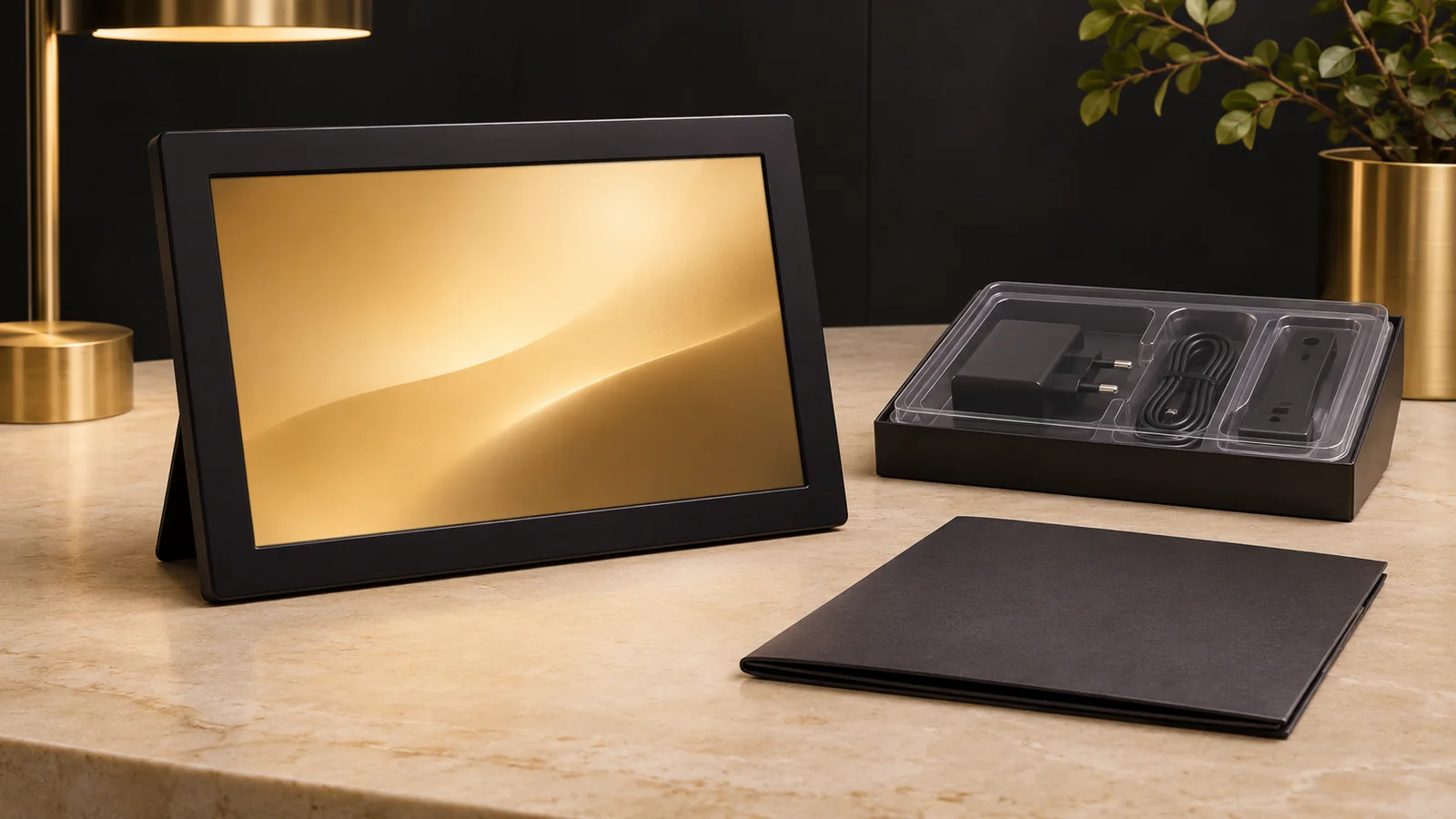
A Wi-Fi digital photo frame is no longer only a screen, enclosure and power adapter. Its app, cloud connection, radio module, firmware, update path and third-party software can place the product inside the EU Cyber Resilience Act’s framework for products with digital elements. For a private-label buyer, the difficult work is deciding who will own the manufacturer obligations after the logo, app and service model are fixed.
This guide is for EU importers, brand owners, retailers and digital-frame OEM/ODM teams planning products for the 11 December 2027 main-application date. It focuses on product-security evidence and commercial handover. It does not classify a particular device, select a conformity-assessment route or certify CRA compliance.
Why is this a separate buyer question from CRA incident reporting?
The Journal already has a guide to the CRA reporting duties that started on 11 September 2026. Those duties cover actively exploited vulnerabilities and severe security incidents, including products already on the market. The 2027 question is broader: how will the new model be designed, documented, assessed, labelled, supported and maintained before it is placed on the EU market?
These are editorial inferences from European Commission guidance and ordinary connected-product sourcing work. They were not captured from Google AI Overviews or AI Mode. Google Search Central says AI-feature eligibility uses the same helpful, reliable, people-first fundamentals as Search; the useful answer therefore separates the 2026 reporting gate from the 2027 product gate.
Start by drawing the whole product boundary
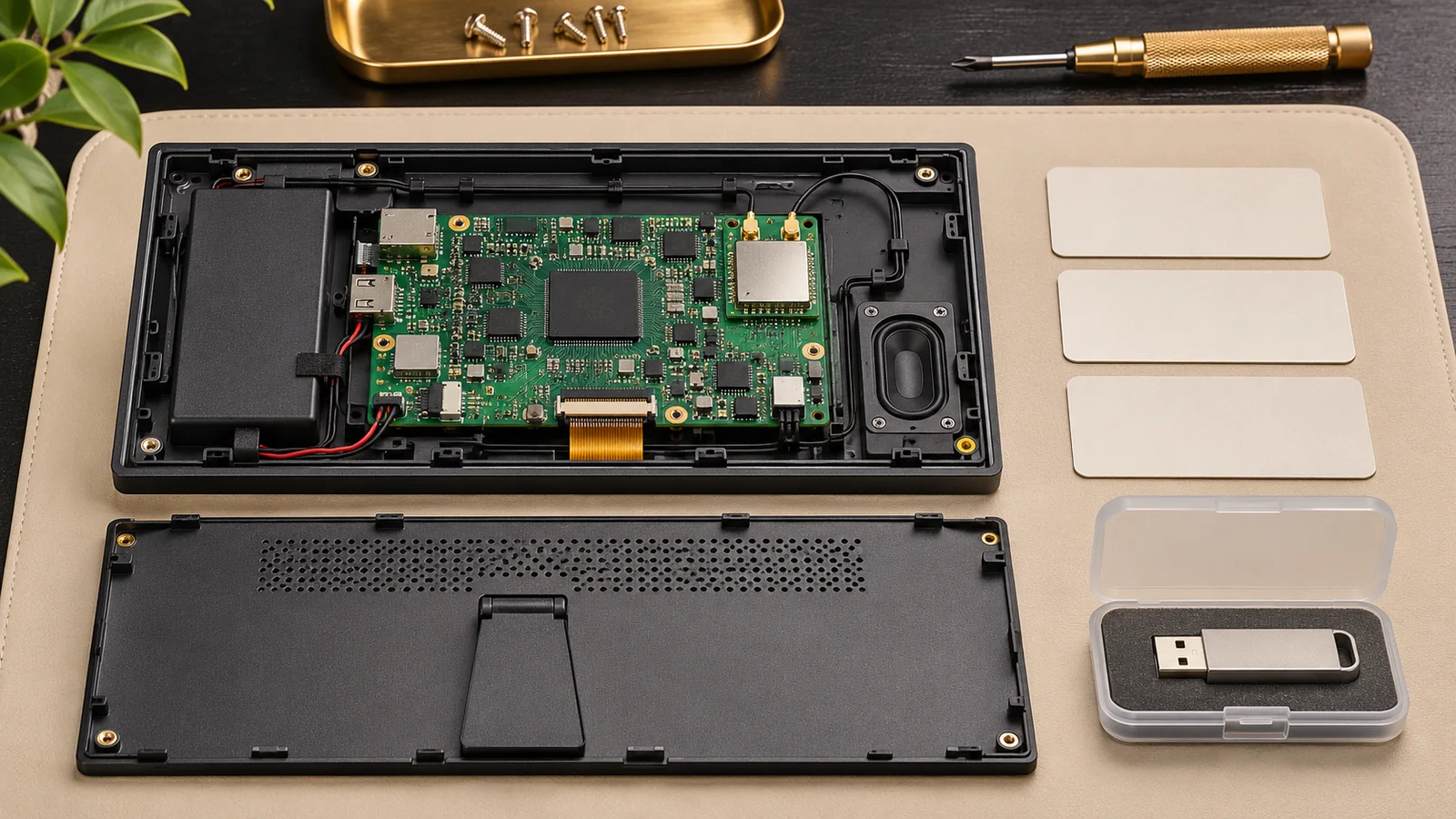
Do not review only the display hardware. Record the frame model, operating system, firmware, mobile apps, web portal, remote data processing, update server, cloud storage, authentication service, radio module, software libraries and bundled accessories. The CRA can treat remote data processing solutions as part of the product where they are necessary for a product function.
Mark which functions work locally and which depend on a remote service. A frame that can show photos from local storage presents different facts from one whose core use requires a vendor cloud. Give every element an owner and version; “the app comes from a partner” is not an ownership plan.
Identify the legal manufacturer before the quotation is final
The Commission describes the manufacturer as the party that develops or manufactures a product with digital elements and markets it under its name or trademark. A private-label buyer can therefore assume manufacturer duties even when an overseas factory designs and assembles the device. The contract should not imply that the OEM can carry every legal responsibility after the buyer controls the brand and EU market placement.
Create a role matrix for the manufacturer, importer, authorised representative if used, distributor, app publisher, cloud operator and key component vendors. Record which entity can sign the declaration, retain technical documentation, receive vulnerability reports, issue updates and communicate with authorities.
Screen exclusions and overlapping rules carefully
The CRA has exclusions and interactions for product categories governed by other sector-specific regimes. Do not assume that every product with Wi-Fi follows an identical route. A normal consumer digital photo frame is different from a medical device, vehicle component or industrial control product.
List every applicable EU framework separately, including radio, electrical safety, EMC, hazardous substances, data protection, product safety and ecodesign questions. CRA work should be coordinated with those files, not pasted over them. Ask qualified EU advisers to confirm the device’s scope and economic-operator roles.
Translate the risk assessment into product requirements
The Commission’s manufacturer guidance starts with a cybersecurity risk assessment. For a frame project, map assets such as user photos, account credentials, network access, update keys and device identity. Then map entry points: onboarding, mobile app, local ports, Wi-Fi services, cloud APIs, third-party libraries, factory tools and service interfaces.
Document foreseeable misuse and consequences rather than listing generic threats. Ask what happens if an attacker takes over a frame, views or deletes photos, moves laterally on a network, blocks updates or impersonates the cloud. Convert the answers into engineering requirements, test cases and release criteria.
Require secure-by-default onboarding
Review how the frame is first connected, how credentials are created, whether default passwords exist, how pairing is authorised and how ownership is transferred. A factory demonstration account should not survive into production. Debug interfaces and service credentials should be disabled or protected before shipment.
Test reset, resale and gift scenarios. A returned frame must not retain the previous user’s photos, tokens or network details. Document the consumer steps in plain language and confirm that the app, manual and device behaviour agree.
Control software components and their provenance
Request a maintained software bill of materials or equivalent component inventory for the shipped firmware and app. It should identify versions and suppliers clearly enough to support vulnerability monitoring. An undated list of open-source names is not a release record.
Define who evaluates component alerts and who can obtain a patched library from the chipset or software vendor. If the OEM cannot update a dependent component, that limitation affects product architecture, support promises and the buyer’s risk decision.
Design the update mechanism as a controlled product feature
Specify authenticated updates, integrity checks, rollback behaviour, power-loss recovery and version visibility. Decide whether updates are automatic, user-approved or staged, and how urgent security fixes differ from feature releases. The answer should be demonstrated on production-representative hardware.
Control signing keys and release permissions. Record who can build, approve, sign and publish firmware, and what happens when a supplier relationship ends. A secure update function is only durable when the brand can continue operating it through the promised support period.
Choose and disclose a credible support period
The Commission says the end date of the support period, including month and year, must be made clear and understandable at the time of purchase. Do not treat it as a vague “lifetime support” phrase. Align it with hardware availability, cloud economics, app-store maintenance, component vendor support and expected product use.
The purchase agreement should define who funds vulnerability analysis and security fixes, response times, supported versions and end-of-support communication. If the buyer promises five years but the module supplier offers two, the gap must be resolved before launch.
Build the technical documentation during development
The technical file should explain the product, intended use, architecture, risk assessment, essential-requirement response, design controls, test evidence, vulnerability-handling process, software components, user information and conformity assessment. It should show why decisions were made, not merely hold a collection of certificates.
Use revision control. Link the file to the exact frame model, board, firmware, app and cloud release. When a radio module, processor, library or service changes, assess whether the evidence and risk conclusion still apply.
Select the conformity route from the actual classification
The CRA provides different conformity-assessment possibilities, and important or critical product categories can affect the available route. A buyer should not assume self-assessment simply because the product looks like a consumer display. Confirm whether the product’s core functionality falls within a listed category and whether harmonised standards are available for the relevant requirements.
Record the classification rationale and adviser input. If a notified-body route or additional assessment is needed, include time, samples and cost in the programme plan rather than discovering it after tooling.
Coordinate CE marking and declarations
The CRA joins other EU legislation that may already require CE marking. The declaration of conformity and technical file need a coherent set of applicable acts and standards. Do not place an extra CE mark on the carton as if each regulation produced a separate badge.
Freeze the legal entity, model identifiers and product configuration before final artwork. The label, declaration, instructions and online offer should refer to the same product family. A private-label variant may need its own controlled documentation even when hardware is shared.
Prepare user information that supports security
Instructions should explain secure installation, account management, updates, reset, vulnerability contact and support end date. Avoid exposing service secrets or encouraging unsafe workarounds. Make the essential information accessible in the languages and formats required for the markets served.
Check the out-of-box flow with a first-time user. If the manual says one thing and the app asks for another, support teams will improvise. Capture the approved screens and instructions as release evidence.
Create a vulnerability intake and triage channel
Publish a monitored route for researchers and users to report security issues. Define acknowledgement, severity assessment, ownership, escalation, confidentiality and customer communication. An unmonitored generic inbox does not provide a response process.
Connect this process to the existing CRA reporting workflow. The team should be able to determine when an issue is merely reported, when active exploitation is known, when a severe incident exists and who has authority to submit through the EU platform.

Test the full service, not only the board
Plan security verification across device firmware, mobile apps, cloud APIs, network services, update delivery and factory provisioning. Define the test scope and environment. A radio-module certificate or generic penetration-test statement does not prove the final branded system was assessed.
Resolve findings through tracked corrective actions and retest the affected build. Keep sensitive reports under appropriate access controls, while retaining a clear management summary in the product file.
Control production and provisioning
Security can be lost on the line through shared keys, reused device identifiers, open debug ports, uncontrolled firmware images or insecure factory networks. Specify how unique credentials are generated, injected, protected and verified. Separate engineering samples from saleable production units.
Run a release audit that compares approved firmware hashes, board revision, provisioning settings, packaging identifiers and app compatibility. Quarantine units that cannot be traced to the approved build.
Plan for substantial modifications and variants
The Commission’s 2026 guidance addresses substantial modification. Treat major changes to functionality, security architecture, cloud service, update control or intended use as review triggers. Do not assume that a new app or AI feature is only a marketing change.
Maintain a variant matrix for screen sizes, radio modules, processors, apps, regions and customer brands. Decide which evidence can be shared and which needs a new assessment. Record the decision before the changed model is offered.
Write the buyer–OEM agreement around ongoing obligations
Include vulnerability notification, component monitoring, software access, update development, response service levels, record retention, regulator cooperation, security testing, subcontractor control and end-of-business contingencies. State which costs are included and which trigger a quotation.
Secure access to source code, build environments, signing keys or escrow arrangements where commercially appropriate. A low unit price does not solve the operational risk of an OEM that cannot maintain the product after shipment.
CRA 2027 handover checklist
- The device, app, cloud and remote-processing boundary is mapped
- Manufacturer, importer and service roles are signed off
- A product-specific cybersecurity risk assessment is controlled
- Software components and versions are traceable
- Onboarding, reset and ownership transfer are tested
- Updates are authenticated and operationally owned
- The support end date is commercially sustainable
- Technical documentation matches the released build
- The conformity route is based on the actual product category
- User instructions and vulnerability contact are ready
- Production provisioning prevents shared secrets
- Changes and private-label variants trigger reassessment
Experience scope and project limits
Editorial review: Jessica, Founder & Project Advisor at DOREMI Display. Updated 22 November 2026. Jessica’s practical scope covers private-label frame specifications, digital-frame component handovers, OEM/ODM samples, packaging and buyer–supplier coordination. She is not presented as an EU authority, notified body, cybersecurity laboratory, lawyer or conformity assessor.
The legal manufacturer, importer, qualified security specialists and EU advisers must determine scope, product category, risk treatment, conformity route, standards, support period, reporting and final compliance. This guide organises project evidence; it is not a declaration of conformity, certification, penetration test or legal opinion.