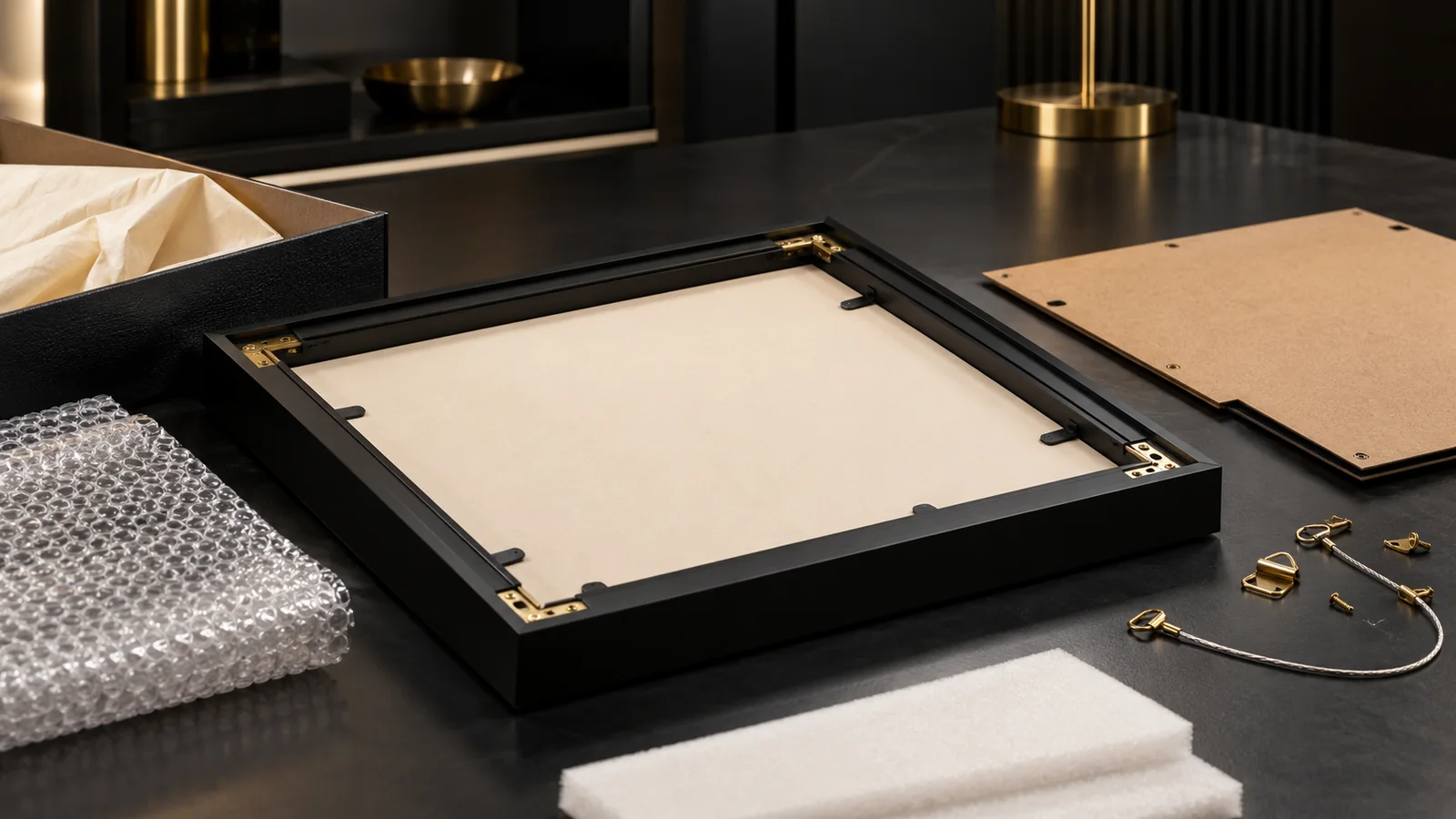
A wall-mounted frame falls, glazing breaks, a sharp edge causes an injury or a digital frame overheats. The first commercial question is rarely “Which portal do we use?” It is “Which exact product is involved, who knows what, where else was it sold, and what action protects people now?” Under the EU General Product Safety Regulation (GPSR), those facts must move quickly between the seller, importer, manufacturer, EU responsible person, marketplace, authorities and consumers.
This guide is for importers, private-label brands, retailers, distributors and OEM teams handling custom picture, jersey, medal, certificate, record and digital display frames in the EU. It focuses on accident and recall readiness. It does not determine that a product is dangerous, prescribe a remedy, replace a risk assessment or legal advice, or act as a submission to the Safety Business Gateway.
What are display-frame buyers really asking?
The short queries are practical: “Do we report a frame accident?”, “Who files the GPSR notice?”, “What must a recall notice say?” and “How do we trace affected units?” Behind them sits one operational problem. A buyer needs to connect a consumer report to the correct model and lot, preserve evidence, assess risk, decide corrective action, notify the right parties and communicate without delay or speculation.
Google Search Central recommends useful, original, people-first content rather than pages manufactured around every query variant. This article joins those questions into one response playbook. Search intent is an editorial inference from official sources and display-frame project handovers; DOREMI does not claim direct access to Google AI Overview or AI Mode results.
Start with the rule that applies now
Regulation (EU) 2023/988 has applied since 13 December 2024. The Commission's 2025 business guidelines explain the obligations of manufacturers, importers and distributors, while separate guidance describes practical use of the Safety Business Gateway. Those sources should be read with the regulation and the applicable sector rules for the actual product.
A manual wooden picture frame, an LED frame and a Wi-Fi digital photo frame do not share the same complete legal file. The GPSR can provide a general consumer-product-safety framework, but electrical, radio, battery, chemical, accessibility or other rules may also apply. The response owner should identify the product and the legal framework before copying a generic template.
Build one intake route before an incident occurs
Consumer complaints can arrive through a retailer, marketplace, warranty inbox, social channel, installer, distributor or logistics partner. Publish an internal route that sends safety-related reports to a named product-safety owner. Train customer-service staff to recognise injury, fire, overheating, falling, breakage, sharp-edge and hardware-failure language without asking them to make a legal conclusion.
The first record should capture the reporter's contact details where permitted, product name, photographs, purchase channel and date, location, description of what happened, injury or property damage, unit identifiers, packaging and whether the product remains available for inspection. Ask only for relevant data and follow privacy requirements. Do not delay urgent action while waiting for a perfect form.
Know what the official guidance calls an accident
The Commission's business guidelines describe reportable product-related accidents as occurrences associated with use of a product that resulted in death or serious adverse effects on health and safety. The effects can be permanent or temporary and may include injuries, bodily damage, illness or chronic health effects. Qualified owners must apply the current legal definition to the facts.
A complaint that does not meet that accident threshold can still reveal a dangerous product or a pattern requiring corrective action. Maintain one triage process that distinguishes accident reporting, dangerous-product notification, ordinary quality complaints and non-safety warranty issues. Do not close a report merely because no injury has yet been alleged.
Protect people before debating root cause
If available information indicates an immediate risk, the responsible business should consider stopping sale, holding stock, suspending dispatch, warning relevant partners or taking other proportionate measures under qualified direction. A factory investigation can begin in parallel, but “we are waiting for the supplier” is not a safety control.
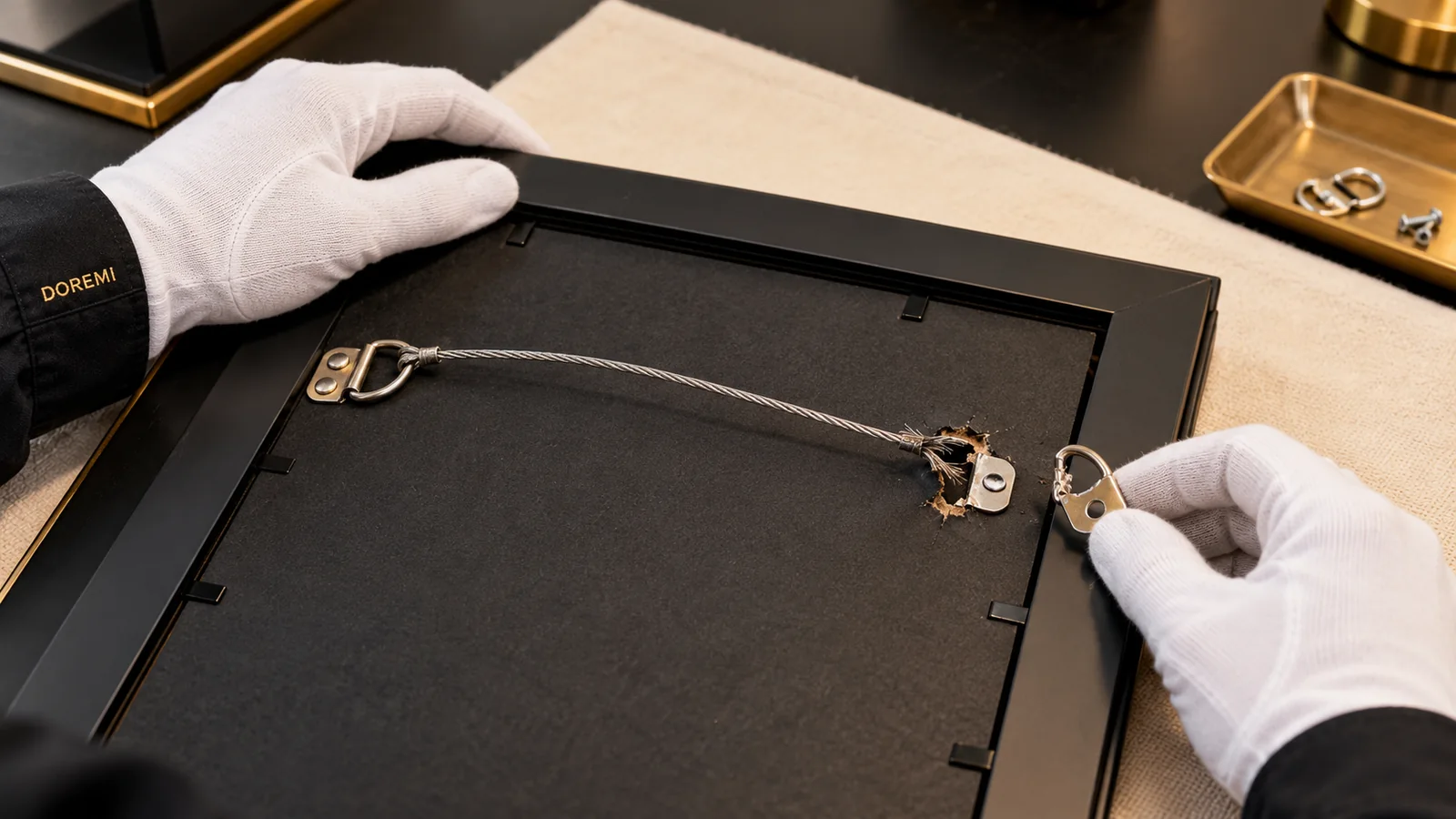
Write down the interim decision, owner, time and evidence considered. If the event concerns a hanging system, separate stock that uses the same hardware. If it concerns glazing, identify material, thickness and sizes. If it concerns an electronic unit, preserve adapter, battery, firmware and configuration details. The exact containment should follow the credible hazard rather than a generic product family name.
Freeze evidence without contaminating it
Ask the consumer or channel partner not to discard or modify the unit where safe and lawful. Photograph the product as found, wall or shelf context, hardware, breakage, packaging, labels and nearby damage. Preserve messages in their original sequence and record translations separately. If the unit is returned, use a controlled collection and storage process.
At the supplier, hold the golden sample, retained production samples, incoming-material records, work orders, inspection reports, test files, change notices and packing references. Restrict destructive examination until the investigation plan identifies what must remain available. A replaced screw or cleaned fracture surface can erase useful evidence.
Connect the event to a defined product population
A recall cannot be scoped from “black frame” or a storefront title. Create a model identity that connects external dimensions, profile, glazing, backing, hanging hardware, electrical configuration where relevant, supplier, site, work order, production dates, lot, shipment, importer and sales channels. Record which fields are reliable and which are missing.
Use distribution records to estimate where potentially affected units are located: factory stock, ocean or air freight, fulfilment centres, retailers, marketplace inventory and consumers. Do not narrow a population simply to reduce recall cost. Conversely, do not assume every product with a similar appearance shares the same component or process. The documented change history should support the boundary.
Assign legal and operational roles explicitly
The GPSR gives duties to manufacturers, importers, distributors and the EU responsible person, among others. A private-label buyer may be treated as a manufacturer in circumstances defined by the regulation, while an overseas physical factory may supply evidence without being the entity that makes the EU notification. Map the actual legal entities and roles before an incident.
Create a response matrix for risk assessment, authority contact, Safety Business Gateway access, consumer communication, marketplace action, remedy, logistics, OEM investigation and executive approval. Include deputies and weekend contacts. The overseas supplier should know whom to alert, but the EU economic operator should not outsource its legal decision to a sales contact.
Use the Safety Business Gateway for the right notification
The Commission describes the Safety Business Gateway as the portal through which businesses inform Member State market-surveillance authorities about dangerous products and accidents, including measures taken. The practical guidance explains access, submission and coordination. It is not a public complaint box or a substitute for contacting emergency services.
Prepare the information needed to identify the product, countries concerned, risk, events, supply chain and measures. State what is known, what is being investigated and when updates will follow. Avoid unsupported certainty. The responsible legal team should confirm who submits, which Member State authorities are addressed and whether sector-specific systems are also required.
Keep the OEM investigation factual
Send the supplier a controlled event brief with the product identity, photographs, allegation, sample-return status and questions. Ask for the relevant bill of materials, production route, component sources, retained sample, inspection evidence, change history and known similar complaints. Set response times based on risk, not ordinary quotation cadence.
Root-cause work should test plausible failure paths: unsuitable wall hardware, insufficient backing strength, fastener pull-out, wire or bracket failure, incorrect assembly, glass breakage, sharp edges, overheating, adapter mismatch, user instructions or damage during transport. Do not select the cause that is most commercially convenient. Distinguish evidence, hypothesis and conclusion.
Design corrective action for the identified risk
Possible actions can include a sales stop, withdrawal, repair, replacement component, updated instructions, consumer warning or recall. The correct action depends on severity, likelihood, exposure, affected population and whether risk can be removed effectively. A new instruction sheet cannot repair a structurally inadequate hanger, and a replacement part is not effective if consumers cannot identify or install it safely.
Control the revised product through a new specification, change record, verification evidence, artwork and production release. Identify how remaining old stock is blocked and how returned or corrected units are recorded. The action plan needs measurable completion evidence, not only a factory promise.
Write the recall notice from the mandatory structure
Article 36 of the GPSR specifies elements for a written product-safety recall notice. The Commission's mandatory template supports a clear headline, product identification, hazard, immediate consumer action, remedies, contact route and sharing request. The notice must be understandable in the relevant language or languages and accessible to people with disabilities.
Avoid language that reduces risk perception, such as calling a recall “voluntary” or “precautionary” where the regulation says not to use such expressions. Use a clear product photograph and explain where an identifier can be found. Do not hide the action in promotional copy, legal boilerplate or a downloadable image containing the only essential text.
Plan direct consumer contact and channel coverage
The Commission guidelines stress direct information to affected consumers where contact details are available. Map the sales systems that can identify buyers: brand store, retailer, marketplace, distributor, loyalty programme and warranty registration. Agree who sends the approved message, which address it comes from and how bounced or incomplete contacts are handled.
Public notices may also be needed, but a website banner alone may not reach the people at risk. Coordinate retailer pages, marketplace notices, social channels and customer service. Preserve message versions, dates, audiences and delivery evidence. Make updates visible when the product population or remedy changes.
Offer remedies that the consumer can actually use
The GPSR sets rules for remedies in a product-safety recall, including the choice framework described by the Commission. Legal owners should confirm the options required for the case. Operational teams must make those options real through stock, repair capacity, refund process, shipping materials, multilingual support and reasonable timing.
Do not require a consumer to keep using a dangerous product while awaiting a complicated approval. Give clear instructions for safe disconnection, storage, return or disposal as appropriate. If shipping broken glazing or a battery presents additional risk, design a controlled alternative with logistics specialists.
Separate recall logistics from ordinary returns
A safety return needs identifiers, quarantine, condition recording and disposition control. Configure warehouse systems so affected units are not restocked automatically. Give fulfilment sites a visual and data-based identification guide and require escalation for unknown variants.
Track units notified, contacted, responded, returned, repaired, replaced, refunded and outstanding by market and channel. Reconcile the totals against distribution records. If the product was sold as part of a personalised award or framed collectible, protect the consumer's artwork or object and define how it will be returned.

Run a dry exercise before launch
Select one representative SKU and simulate an incident. Can customer service find the safety owner? Can the importer identify the EU responsible person? Can the team trace a production lot to retailers and consumers? Can the supplier retrieve the hardware record and retained sample? Can communications create an accessible notice in the required languages?
Time each handoff and record gaps. A tabletop exercise is not proof of compliance, but it reveals missing contacts, identifiers, contracts and system fields before a real event. Repeat it after a new supplier, marketplace, product category or fulfilment route is introduced.
Buyer and OEM readiness checklist
- One safety-intake route covers every sales channel
- Serious injury and hazard language is escalated immediately
- Product, model, lot, hardware and shipment identifiers connect
- EU manufacturer, importer, distributor and responsible-person roles are mapped
- Safety Business Gateway access and submission ownership are confirmed
- Evidence preservation and returned-unit handling are documented
- Factory retained samples and change records are available
- Risk assessment distinguishes facts, uncertainty and action
- Sales-stop and quarantine instructions reach every stock location
- Recall notice follows the mandatory current template
- Consumer communication is multilingual and accessible
- Remedies, return logistics and disposition are operational
- Marketplace and retailer responsibilities are written
- Corrective changes use a controlled new revision
- A dry exercise has tested the full response chain
Experience scope and project limits
Editorial review: Jessica, Founder & Project Advisor at DOREMI Display. Updated 24 October 2026. Jessica's practical scope covers display-frame specifications, samples, hanging and packing details, buyer–OEM handovers, inspection coordination and change control. She is not presented as a market-surveillance authority, Safety Business Gateway operator, product-safety engineer, recall administrator, medical specialist or lawyer.
This guide supports planning only. The exact product, event, injury, risk assessment, legal role, Member State, sector rules and authority direction control notification and corrective action. Obtain qualified EU product-safety and legal advice and use current official systems and templates.
Public sources used for this guide
- Google Search Central: optimizing for generative AI features
- EUR-Lex: Regulation (EU) 2023/988 on general product safety
- European Commission: business guidelines for the GPSR
- European Commission: practical Safety Business Gateway guidelines
- EUR-Lex: mandatory product-safety recall notice template
- Your Europe: selling products safely and reporting dangerous products