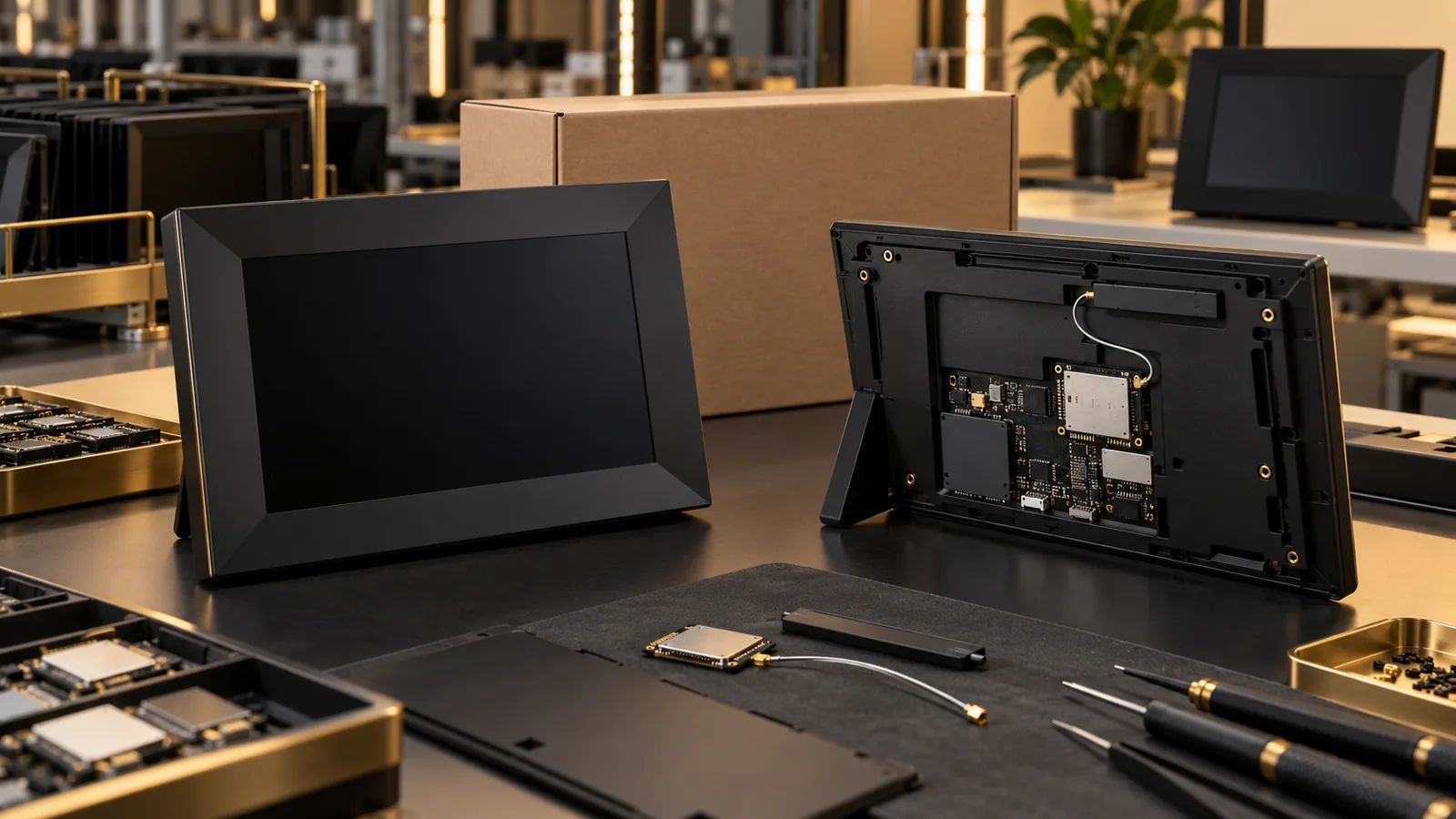
A private-label digital photo frame may use a Wi-Fi or Bluetooth module that already has an FCC identifier. That can simplify the radio authorization path, but it does not make the finished frame automatically compliant. The module must be used within its approved conditions, and the final host still needs the applicable evaluation, identification, user information and responsible-party records.
This guide is for U.S. digital-frame importers, brands, electronics buyers, OEM engineers and certification coordinators. It turns 47 CFR 15.212 and FCC equipment-authorization guidance into a buyer–OEM handover. It does not approve a radio, interpret a grant, perform testing or replace the FCC, an accredited laboratory, Telecommunications Certification Body or qualified U.S. compliance specialist.
What are private-label buyers asking?
Common questions include: “If the Wi-Fi module has an FCC ID, do we need host testing?”, “Can the factory change the antenna?”, “What does the exterior label say?”, “Does the same module cover Wi-Fi and Bluetooth?”, “Can two radios operate together?”, “Who is the responsible party for the digital device?” and “Does a new wooden frame enclosure change the file?” These are configuration questions, not logo questions.
Google Search Central's generative-search guidance says useful, original, expert-led content and ordinary Search foundations remain important. This guide connects the questions to one controlled model file. Search intent is an editorial inference from FCC public materials and buyer–OEM handovers. DOREMI does not claim direct access to or measurement of Google AI Overview or AI Mode output.
Separate the module from the complete host
The radio module is one device inside a larger product. The digital photo frame also includes the processor board, display, memory, power supply, cables, enclosure and sometimes speakers, camera, USB, HDMI or another radio. The authorization route for the transmitter does not erase requirements for the host's other radio-frequency functions.
Create two evidence lanes: the certified transmitter module and the finished host. Then connect them through one integration record. Do not file a module grant in a folder and assume every product containing a physically similar board is covered.
Verify the exact module identity
Record the grantee, FCC ID, hardware version, module photographs, grant notes, frequency bands and integration instructions. Search the FCC equipment-authorization database and retain the public grant and applicable exhibits. Match the module markings and shield-can construction to the purchased production part.
A distributor listing or supplier screenshot is not enough. Confirm the module manufacturer and model against the purchase specification. If the OEM buys from several sources, each approved option needs its own identity, evidence and host impact review.
Read the grant conditions and integration instructions
The FCC's modular framework depends on conditions such as shielding, buffered inputs, power regulation, antenna configuration, stand-alone testing, identification, operating instructions and RF exposure. Limited modular approval can also restrict host types, installation, separation or professional control. The specific grant and integration manual matter more than a generic statement that the module is “pre-certified.”
Extract the usable conditions into a buyer checklist: permitted antennas and gains, cable type, connector, separation distance, installation location, supply range, firmware constraints, co-location conditions and required host statements. Keep the original documents linked so the checklist does not become an unsupported summary.
Freeze the antenna as a controlled component
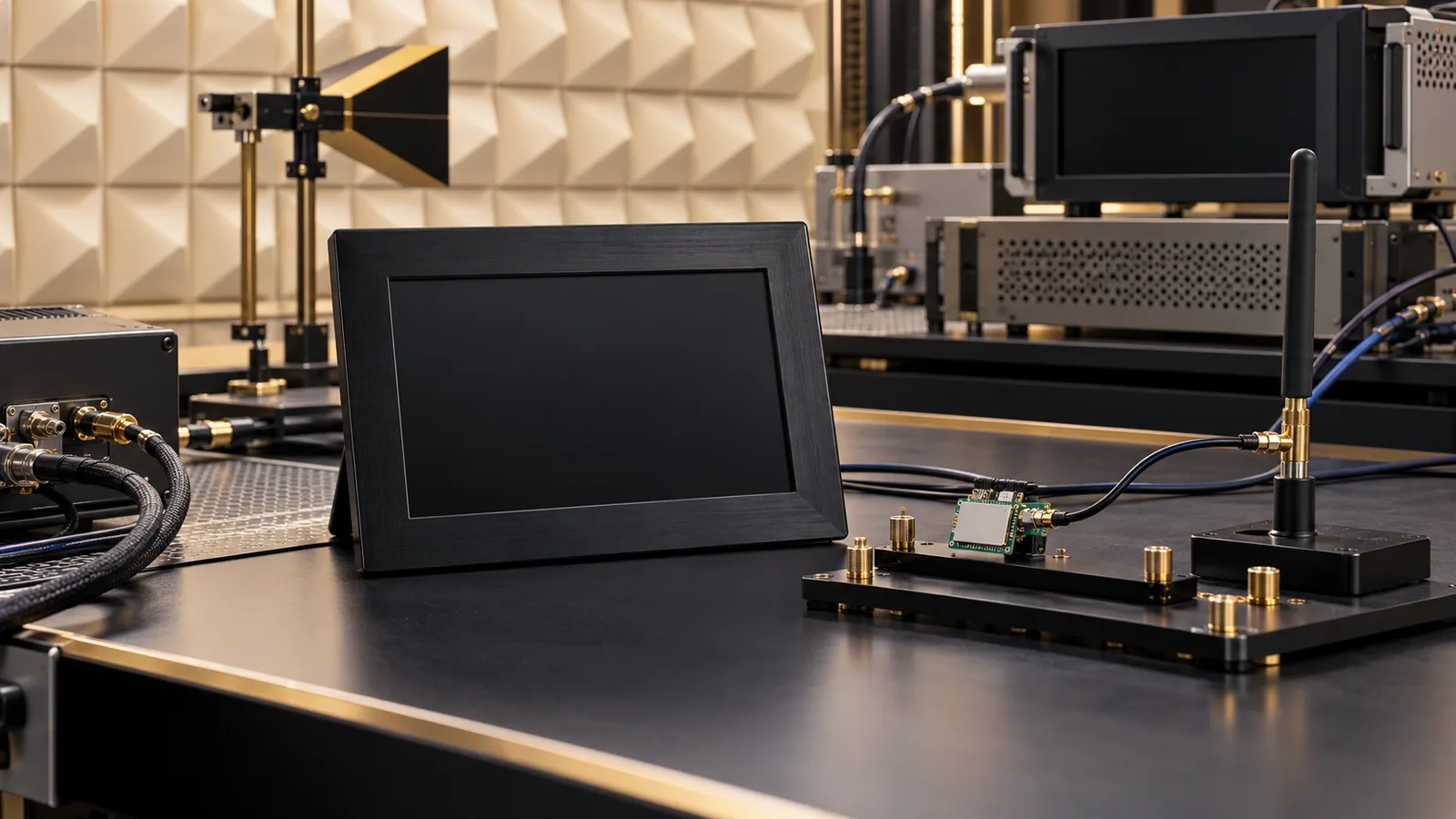
Antenna type, gain, connector, cable length and placement can affect compliance. The final frame enclosure can detune an antenna or change exposure and emission behaviour. A metal back, decorative aluminium moulding, thicker wall, speaker magnet or different board location can be relevant even when the radio module is unchanged.
Name the approved antenna and cable in the BOM. Show its installed position and keep-clear area in the mechanical drawing. Block factory substitutions and routing changes until the responsible engineer or laboratory evaluates them.
Control power and digital interfaces
The module's supply and host interface should follow the approved design and instructions. A different regulator, clock, cable, processor board or power adapter can change emissions and operating modes. Record the voltage source, interface, grounding, shielding and firmware settings used in the final host.
Run the host in representative worst-case modes during the applicable review. A sample that displays one static image with radio traffic idle may not represent cloud synchronization, Bluetooth pairing, video playback, USB access and simultaneous processor load.
Review co-location and simultaneous transmission
Many digital frames combine Wi-Fi and Bluetooth in one module; some add a second radio, remote control, cellular function or wireless charging. The module documentation may place conditions on co-location or simultaneous transmission. The buyer should not assume two individually authorized devices are automatically acceptable together.
Map every transmitter, antenna and operating combination. Give the laboratory the final firmware and enabled bands. If one global hardware design disables functions by region, control the software release and production test so U.S. units cannot activate an unreviewed mode.
Complete the RF exposure analysis for the final configuration
Section 15.212 requires a modular transmitter to meet applicable RF exposure requirements. The host integration can affect separation distance, user position and simultaneous-transmission analysis. A tabletop digital frame, wall-mounted display and handheld setup may present different use conditions.
Do not copy a separation statement from an unrelated product. Provide enclosure drawings, antenna position, intended installation, user access and operating modes to the qualified reviewer. Keep the conclusion and any required user instruction with the released model.
Evaluate the host's unintentional-radiator functions
A certified transmitter does not authorize the digital circuitry of the host. The processor, display timing, memory, ports, power conversion and cables can create unintentional emissions. FCC equipment-authorization rules provide a Supplier's Declaration of Conformity pathway for applicable equipment, with a responsible party and supporting compliance information.
Ask the laboratory to define the complete test configuration, ports, cable arrangements, peripherals and modes. Retain the report and test photographs for the final host. Do not present a module certification report as the digital-frame host report.
Name the U.S. responsible party
The responsible party for SDoC has specific obligations and must be located as required by the applicable FCC rules. Determine whether the U.S. importer, brand owner or another eligible entity will hold that role. The factory can supply evidence but should not be named casually if it does not satisfy the rule.
Reconcile the responsible-party name and contact information across the compliance statement, product documentation and internal records. Plan how that entity will receive test reports, approve changes, respond to inquiries and retain the supporting file.
Build host and module identification together
Under the modular rules, if the module's FCC identifier is not visible after installation, the outside of the host generally needs wording that refers to the enclosed module, subject to the applicable physical or electronic-labelling route and grant instructions. The final wording and placement should be reviewed for the actual product.
Keep the host model, module identifier and artwork revision in one table. Check the label on production-equivalent units, not only a PDF. Do not place an FCC logo, approval badge or invented identifier on the product.
Prepare the required user information
The module instructions can require statements about operating conditions, interference, RF exposure, installation or antenna use. The host's SDoC route may also require compliance information. Collect these requirements before the manual and packaging artwork are locked.
Use controlled country-specific text and keep translation ownership clear. Do not hide required information behind a broken app link or generic support page. Verify the printed and digital material shipped with the U.S. model.
Check private-label and model naming
Retail brand, host model, module model, FCC ID and factory part number serve different purposes. Build an identity map so marketing does not rename the host after testing or print the radio module's commercial nickname as if it were the complete-frame model.
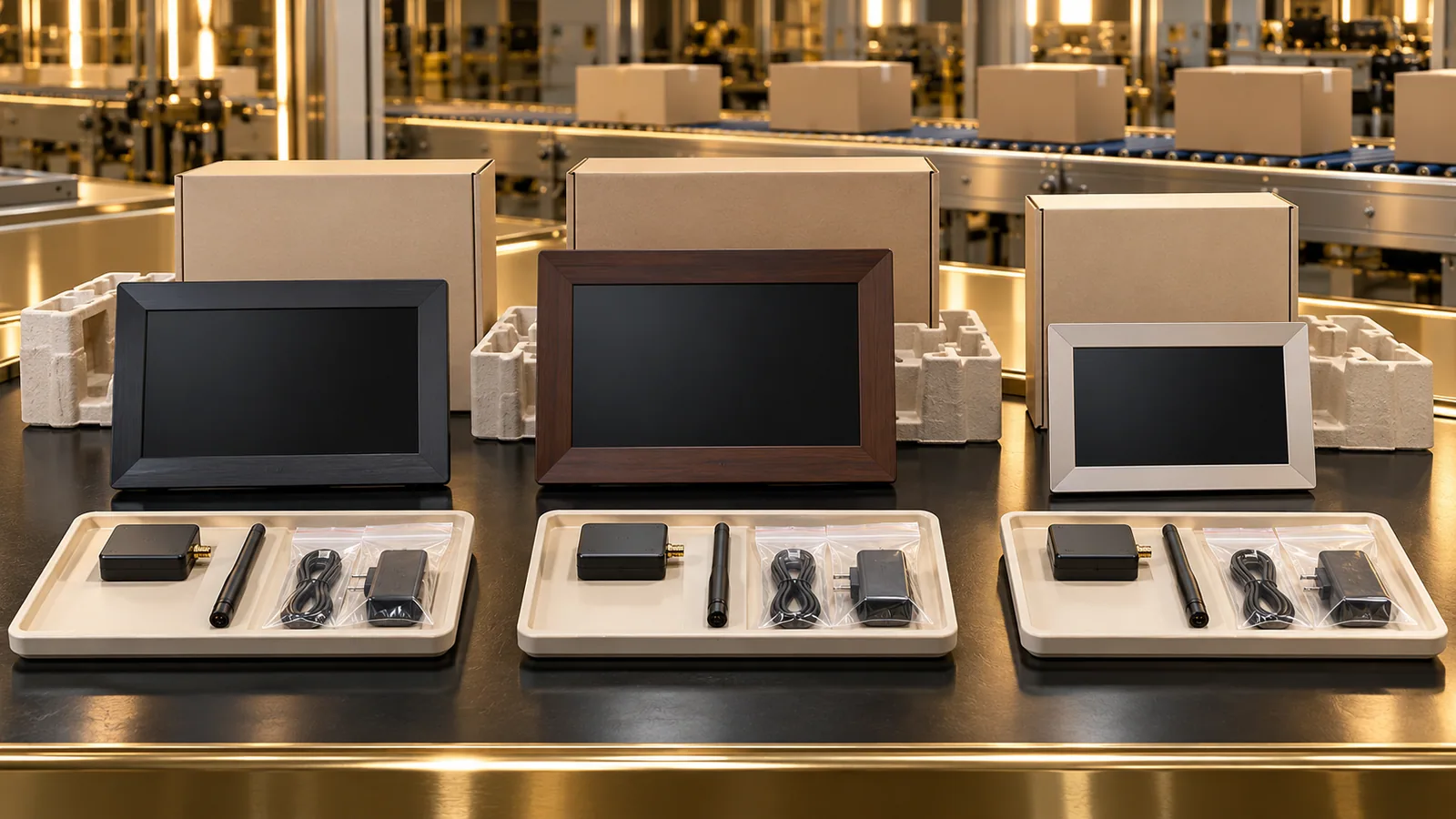
If several retail SKUs share a host platform, document the hardware differences and why the evidence applies. A colour-only variant may be straightforward; an enclosure, screen, adapter, speaker, camera or radio change may require technical review.
Control firmware and regional settings
Firmware can set transmit power, channels, bandwidth, dynamic frequency-selection behaviour and enabled functions. Record the reviewed release, region configuration and update route. Production and service teams should not load a global engineering image into U.S. stock.
Define who may approve over-the-air updates that affect radio or test modes. Keep a version history and rollback plan. Cybersecurity and FCC authorization are separate workstreams, but both depend on controlled software identity.
Verify the module supply chain and current status
Purchase the exact module from an approved source and monitor lifecycle notices. A visually identical board can use a different chipset, shield, oscillator or antenna connector. Ask the module grantee or authorized distributor for change notices and updated integration documents.
Also check the current FCC database and any applicable Covered List or equipment-authorization restrictions with qualified U.S. advisers. Do not assume that a historic grant or old factory declaration resolves current sourcing restrictions for a new launch.
Use representative samples and final accessories
The host evaluation should use the production enclosure, display, board, module, antenna, adapter, cables and enabled ports. If accessories vary by retailer, identify the worst-case or separately controlled sets. Photograph internal routing before closing the unit.
Keep a retained golden sample and signed configuration sheet. A hand-built engineering sample with shielding tape, a development antenna or external power board should not silently become the compliance baseline.
Run a release gate before mass production
Before purchase-order release, require the module grant and instructions, approved antenna record, RF exposure conclusion, host evidence, responsible-party information, label proof, user statements and firmware identity. Assign an owner for every unresolved item.
Before shipment, inspect the physical module, antenna, cable, host model, label and packaging against the release file. Photographs help prove configuration; they do not replace laboratory evidence or authorization.
Manage substitutions and permissive-change questions
A module vendor, antenna, enclosure, processor board, cable, power design or firmware change should trigger a written comparison. The responsible party, grantee, TCB or laboratory can determine whether existing authorization remains valid, a permissive change is available or a new application or test is needed.
Do not let procurement approve an “equivalent” wireless part based only on pin compatibility and price. Hold the substitution until the technical and document consequences are understood, then update the BOM, reports, artwork, sample and affected lot.
Keep marketplace claims within the evidence
Product pages should state only the wireless functions, compatibility and identifiers supported by the released U.S. model. A module FCC ID is not an endorsement of product quality, cybersecurity or interoperability. Avoid “FCC approved” marketing language that implies an agency recommendation.
Archive the approved listing and retailer data sheet. Connect customer support scripts to the correct model and firmware. If a platform requests an FCC identifier, provide the exact evidence for the applicable transmitter rather than inventing a host ID.
Buyer–OEM checklist
- The exact module grantee, FCC ID and hardware are verified
- The current grant and integration instructions are retained
- Antenna type, gain, cable and placement are controlled
- Power, interface, enclosure and grounding match the reviewed design
- Every transmitter and simultaneous mode is mapped
- RF exposure is assessed for the final use configuration
- Host unintentional-radiator evidence is complete
- The eligible U.S. responsible party is named
- Host identification and user information are approved
- Retail model, host platform and module identities reconcile
- Firmware and regional radio settings are version controlled
- Substitutions stop until qualified review is complete
Experience scope and project limits
Editorial review: Jessica, Founder & Project Advisor at DOREMI Display. Updated 29 October 2026. Jessica's experience scope covers private-label digital-frame specifications, component and model records, supplier evidence, samples, packaging, artwork and production change coordination. She is not presented as the FCC, a TCB, accredited laboratory, RF engineer or U.S. legal adviser.
The authorization route, grant conditions, antenna, RF exposure, host evaluation, SDoC, responsible party, identification and change treatment must be confirmed for the actual configuration under current rules. This guide organizes the buyer–OEM handover. It does not certify a module or host, approve a label or confirm marketability.