
A Wi-Fi or Bluetooth digital display frame sold through a U.S. online marketplace needs more than an attractive listing and an electronics test folder. A Federal Communications Commission final rule published on 11 September 2026 requires covered marketplaces to display a valid FCC ID at the online point of sale for radiofrequency devices subject to certification, with different 2027 compliance dates depending on the marketplace's relationship to the goods.
This guide helps private-label brands, importers, marketplace operators and OEM teams prepare connected photo, art and memorabilia display products. It does not state that every LED frame is subject to certification, determine the correct equipment-authorisation procedure, validate an FCC ID or replace FCC, Telecommunications Certification Body, laboratory or legal advice.
First decide whether the finished frame is a covered radiofrequency device
A decorative frame with passive LED lighting is not the same product as a frame containing Wi-Fi, Bluetooth, cellular or another intentional radiator. Even non-wireless digital electronics can have separate authorisation considerations. Start with a function-and-module inventory: radios, processor, display, power supply, ports, clock frequencies, antennas, accessories and intended modes. Then have a qualified owner determine which FCC equipment-authorisation rules apply.
The new marketplace display rule is written for a radiofrequency device subject to certification. Do not paste an FCC ID onto every electric frame as a trust badge. Do not assume that a module's label automatically covers the host product. Record the authorisation path for the exact finished configuration, including the responsible party, grantee, model and any integration conditions.
Understand what changed in the September 2026 final rule
The FCC amended its marketing rules to clarify that online marketplace activity can constitute marketing of regulated equipment. It also added a requirement for marketplaces to display a valid FCC ID for covered certified devices at the online point of sale. The rule is effective 13 October 2026, while the FCC provided later dates for marketplace compliance with the FCC ID display provisions.
For marketplaces selling their own devices, or offering third-party devices while having physical access to or taking title to them, compliance with the display requirement is not required until 1 March 2027. For a marketplace hosting third-party offers without physical access or title, the corresponding date is 1 June 2027. Treat these as preparation deadlines, not as permission to market unauthorised equipment before then.
Map the marketplace's role instead of using one seller label
A platform may warehouse inventory, manage fulfilment, process orders, label packages or only host a listing. The final rule's definition and liability structure turn those operational facts into an important workflow question. Map title, possession, warehousing, inventory management, order processing, labelling, packaging, billing and fulfilment for each U.S. channel.
The brand should not decide which date applies from a generic “seller fulfilled” or “platform fulfilled” badge. Ask the marketplace and counsel to confirm its relevant role. Preserve programme terms and account settings. If fulfilment changes mid-year, reopen the review. A listing can remain visually identical while the physical-access and title facts change.
Build an FCC ID source of truth
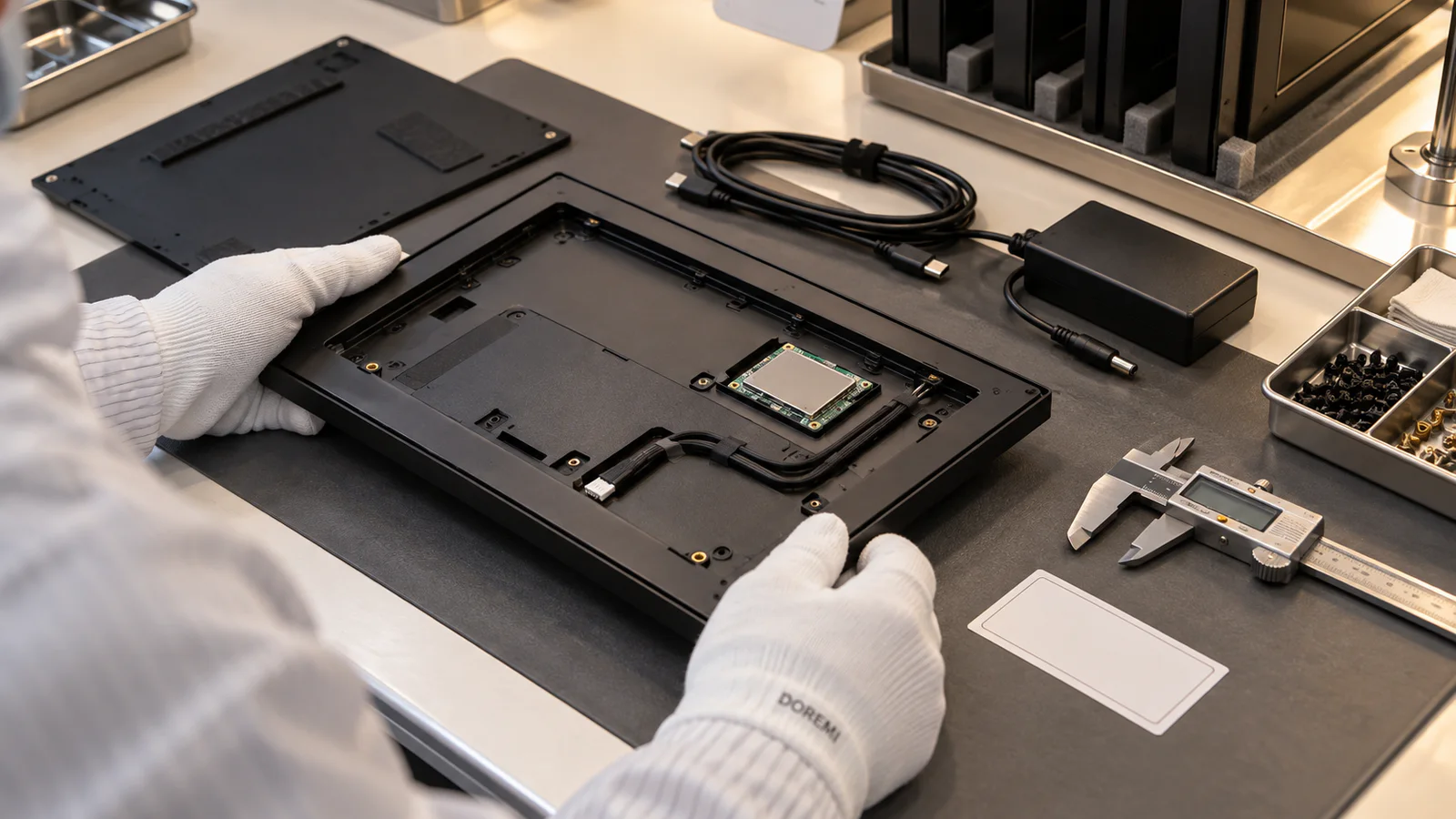
The FCC ID used online must be valid and accurate for the device offered. Create one controlled record linking the FCC ID to the grantee, equipment class, model, module where applicable, grant documents, label location, user information and approved product variants. Verify the record against the FCC Equipment Authorization System rather than a supplier email or a photograph alone.
A private-label seller needs to know whether the authorised identity can support the branded product as configured. Check model differences, host integration, antenna, enclosure, power, firmware and labelling with qualified specialists. Keep the FCC ID as structured data, not only embedded in an image. That allows the marketplace feed, product page, support team and customs records to draw from the same approved value.
Do not confuse an FCC logo, SDoC or FCC ID
The marketplace rule concerns display of an FCC ID for a device subject to certification. Supplier's Declaration of Conformity and certification are different equipment-authorisation procedures. An FCC logo is not a substitute for either, and an FCC ID is not a general quality seal. The product team should use the correct terminology in specifications, packaging and online content.
Create an authorisation field in the SKU master: procedure, responsible party or grantee, FCC ID when applicable, supporting record, label requirement and listing-display status. Train marketing not to add regulatory marks for visual credibility. If the device is not subject to certification, document the actual authorisation path and obtain marketplace instructions rather than entering a fabricated ID.
Prepare for the two marketplace evidence models
Where the marketplace sells, possesses or takes title to the device, the rule requires it to display a valid and accurate FCC ID. Expect the platform to demand clean product data and potentially stronger validation. Give it the controlled ID, model linkage and evidence contact early enough to prevent a launch hold.
Where the marketplace lacks physical access and title, the rule provides a liability condition based on reasonable verification that the seller-supplied FCC ID is validly issued and a seller certification of accuracy. That does not make the seller's duty casual. Prepare a repeatable attestation process owned by an authorised person, and preserve the evidence used. Do not let an agency or junior cataloguer certify an ID from packaging art alone.
Review the rule's listing exclusions precisely
The final rule excludes certain pre-existing listings, listings by sellers that are not high-volume third-party sellers as defined by the INFORM Consumers Act, and used-device listings. These are scoped provisions, not a broad exemption for small brands or old inventory. The pre-existing-listing treatment can end when a listing is amended, updated or republished after the rule's effective date.
The rule says a change to product description, images, specifications or seller information counts as an amendment or update, while certain non-substantive automated changes such as ranking, page layout, translation, price or currency display do not. Maintain a dated listing-change log. Before refreshing hero images, specifications or seller data, confirm whether the FCC ID field must be ready.
Connect the FCC ID to the exact model variation
Digital frames may share an enclosure while using different radio modules, antennas, display sizes, memory configurations or power supplies. A marketplace parent listing can make those variants look interchangeable. Build a child-SKU matrix showing which FCC ID and authorisation evidence applies to each selectable option. Do not use one visible ID across unrelated electronics merely because the front housing is the same.
Check the model naming used on the product, rear label, packaging, user information, grant evidence and listing. Resolve truncation and punctuation differences before upload. If a seller bundles a power adapter, remote or wireless accessory, review those elements too. The consumer selection must lead to a product whose regulated identity matches the page.
Control radio modules and supplier substitutions
A radio module shortage can trigger an apparently simple substitution that changes authorisation, integration or labelling obligations. Require prior written notice for changes to radio module, chip, antenna, layout, shielding, enclosure, power or firmware affecting RF behaviour. Freeze the approved bill of materials and link it to the marketplace record.
When a change is proposed, have the qualified compliance team determine whether the existing grant and host integration remain valid or whether testing, a permissive change, new certification or listing update is needed. The September rule also addresses prohibited logic-bearing components and modifications involving Covered List entities. Do not reduce that analysis to an origin checkbox; review the current FCC requirements and supplier identity.
Design the physical label and online field together
The final rule did not require an FCC ID on external packaging at this time, but existing device labelling requirements still matter. Confirm where the FCC ID appears on the device or through an approved electronic-label route and how a user can access it. The online value should be copied from the controlled record, not manually retyped from a blurry production photo.
Add label artwork to sample approval. Check size, permanence, contrast, location and consistency with the authorised model. For electronic labels, verify access instructions and behaviour in the production unit. Photograph the approved label and store the editable artwork, but treat the structured ID as the master for data feeds.
Prepare a marketplace listing packet
A useful packet contains seller entity, brand, product title, parent and child SKUs, model, FCC ID, authorisation procedure, evidence link, label photograph, responsible contact, current product images and effective date. It should state which fields are safe for public display and which documents are retained for verification. Keep commercial claims separate from compliance facts.
Test the platform's field limits, validation and propagation across country storefronts. Confirm that the ID appears at the online point of sale for the relevant U.S. offer, not only in a downloadable manual after purchase. If an API or bulk template is used, validate the exported child variants. Screenshot the live field after publication and retain the time and listing version.

Align marketing images with the approved product
Listing images can show ports, rear housings, adapters or accessories that differ from the approved configuration. Build the photography brief from the golden sample and current BOM. Avoid compositing a wireless icon, antenna claim or rear-label detail that is not present. If an image update can activate the pre-existing-listing rule, coordinate it with the FCC ID field rather than treating imagery as a separate creative task.
Claims such as “FCC approved,” “FCC certified quality” or “government approved” can misstate what equipment authorisation means. Use factual language reviewed by the compliance owner. An FCC grant concerns the applicable technical rules; it does not endorse picture quality, cybersecurity, durability or overall product safety.
Run a 2027 readiness test before the deadline
Select representative listings across platform-held inventory, marketplace fulfilment and seller-fulfilled routes. Verify the product's authorisation status, FCC database record, structured ID, label, evidence owner and public page. Test new listings and amended legacy listings. Record where the platform rejects, truncates or hides the field.
Build an exception queue for missing IDs, model mismatches, obsolete images, unauthorised substitutions and uncertain seller status. Assign a stop-listing rule when evidence cannot be supported. The goal is not merely to populate a field by March or June; it is to prevent the field from pointing to the wrong device.
Buyer readiness checklist
- Each digital-frame configuration has a documented FCC authorisation review
- Certification, SDoC, FCC logo and FCC ID are not confused
- The marketplace's title, access and fulfilment role is mapped
- The applicable March or June 2027 preparation path is confirmed
- The FCC ID is verified in the Equipment Authorization System
- Every child SKU maps to its authorised electronics configuration
- Module, antenna, enclosure, power and firmware changes require notice
- Physical labels and structured online data use the same source
- Legacy listing updates are logged against the rule's effective date
- Seller attestations have an accountable approver and evidence file
- Listing images match the approved product and avoid endorsement claims
- A pre-deadline audit verifies the live online point of sale
Experience scope and project limits
Editorial review: Jessica, Founder & Project Advisor at DOREMI Display. Updated 28 September 2026. Jessica's practical scope covers display-frame briefs, electronic module and product-data handovers, samples, labels, packaging, supplier coordination and marketplace readiness. She is not presented as the FCC, a Telecommunications Certification Body, an RF engineer, an accredited laboratory or U.S. counsel.
This guide is educational procurement material, not legal advice, an equipment-authorisation determination, an FCC database validation or permission to market a device. Buyers and marketplaces should confirm the current rule, device scope, authorisation, labelling, Covered List restrictions and listing obligations with the FCC and qualified advisers for the exact product and channel.
Public sources used for this guide
- Google Search Central: AI features and your website
- Federal Register: FCC final rule published 11 September 2026
- FCC 26-50: Third Report and Order and Third Further Notice
- FCC: equipment authorization system search
- eCFR: 47 CFR Part 2 equipment authorization and marketing rules
- Federal Trade Commission: INFORM Consumers Act guidance