A digital photo frame can be fully manufactured, correctly packed and ready for a German marketplace, yet still be blocked because the responsible producer is not registered for the relevant brand and equipment type. ElektroG planning belongs in the commercial launch calendar, not in a last-minute label request.
This guide is for private-label brands, importers, marketplace sellers and OEM suppliers placing powered digital frames on the German market. It converts public stiftung ear and statutory information into a buyer–seller handover. It does not assign a binding equipment type, issue a WEEE number or replace German legal and authorised-representative advice.
Separate the product from the producer role
ElektroG scope begins with electrical or electronic equipment, but the responsible producer depends on how the product reaches Germany. A company can be a producer because it manufactures under its own name or brand, offers another product under its own name or brand, imports equipment into Germany for the first time, or sells directly to German end users from outside Germany.
The overseas OEM is not automatically the registered producer. For a private-label frame carrying the buyer's brand, the brand owner or importer may hold the relevant role. Draw the chain from factory to brand, importer, marketplace seller and end user before asking for a number.
Confirm that the exact product is electrical equipment
stiftung ear explains that equipment is generally in scope when it depends on electrical current or electromagnetic fields for correct operation within the voltage limits, unless an explicit exclusion applies. A mains-powered or battery-powered digital photo frame will normally require a serious scope review. A passive wooden picture frame is a different product.
List the display, power input, radio module, battery, speakers, sensors and supplied accessories. Decide whether each item is part of one end device or a separately marketed product. Where scope is genuinely uncertain, stiftung ear provides a fee-based assessment application; the supplier's informal opinion is not a binding decision.
Name the first placer on the German market
Create one row for every route: German importer buys from China; EU distributor transfers stock to Germany; foreign brand sells directly to a German consumer; German retailer sources a registered brand; or marketplace fulfilment stores imported units. Identify who first places the equipment on the German market and under which brand.
Commercial invoices and Incoterms do not alone settle every producer question. Review the actual offer, ownership, brand, establishment and sales route. A company may be a distributor for one brand and a producer for another. Keep the conclusion with the channel file.
Understand private-label ownership
stiftung ear's public guidance says an OEM that manufactures without placing its own brand on the equipment is not the producer merely because it built the unit; the customer selling it under its own brand is the producer. This is a critical distinction for digital-frame programmes where the factory name may appear only in internal records.
The purchase order should state the commercial brand shown on the product and who owns the German registration task. Do not ask the OEM to lend a registration number from an unrelated house brand. A registration is tied to the registered producer, brand and equipment type, not to a generic factory capability.
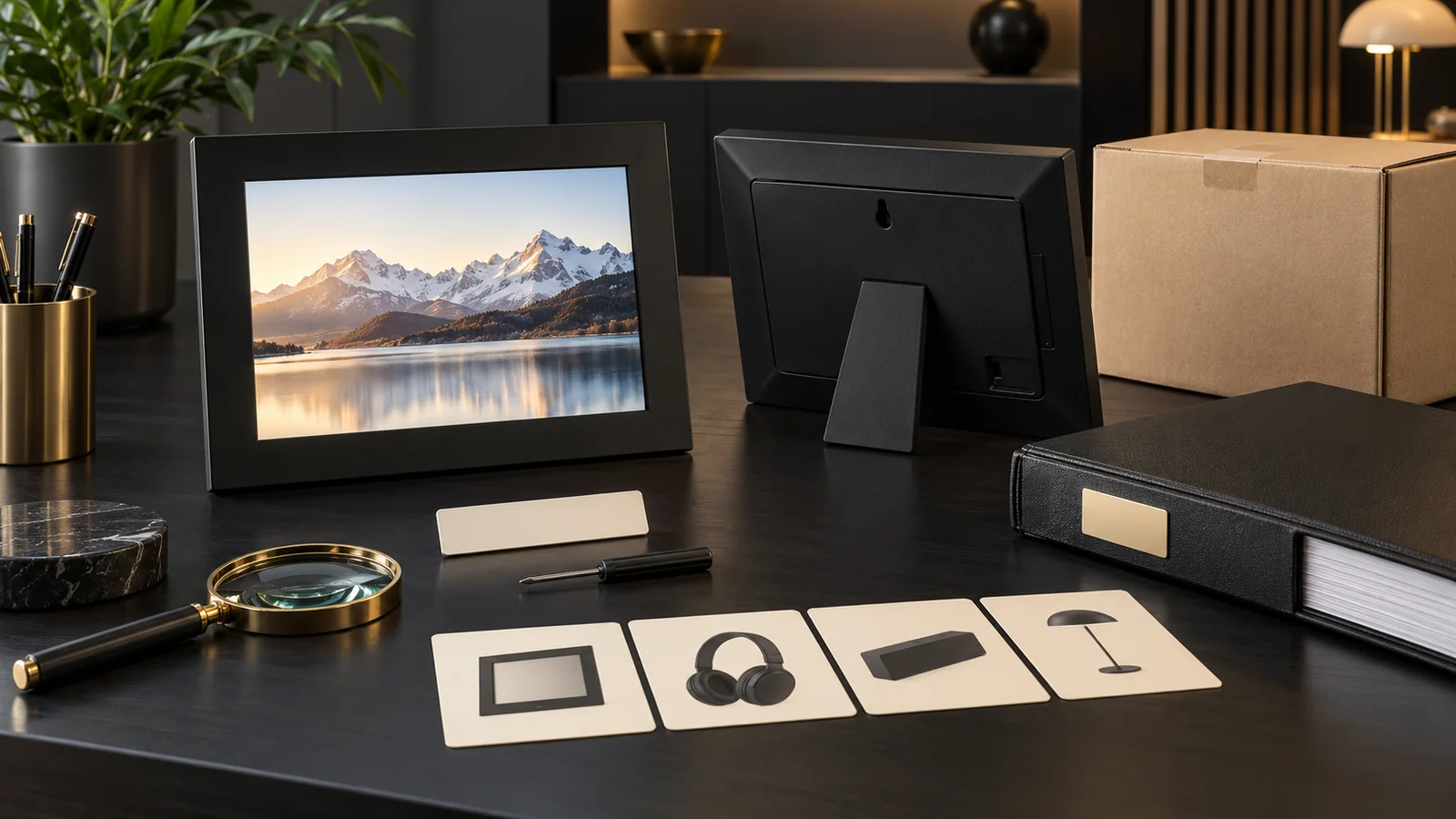
Register before placing equipment on the market
ElektroG section 6 requires the producer, or its authorised representative where applicable, to register with the competent authority for the equipment type and brand before placing equipment on the market. stiftung ear is the competent authority handling the process. Creating a portal account is not the same as receiving the registration order.
Build registration time into the launch plan. The public application guide notes that a complete, plausible application can still require processing time. Packaging print, marketplace onboarding and inventory booking should not assume approval before the registration order exists.
Do not treat a WEEE number as a universal SKU licence
stiftung ear explains that registration is not issued for each individual product, but for each equipment type. At the same time, the registration connects the producer with a brand and equipment type. A seller therefore needs to verify that the number presented actually covers the producer and product configuration being offered.
Create a model-to-registration matrix with legal entity, brand, equipment type, B2C or B2B classification, registration status and evidence date. Add each new brand, white-label customer and materially different device to the review. Do not paste one eight-digit number across a mixed catalogue without checking the register.
Handle foreign distance sellers through an authorised representative
A foreign producer without a German establishment that sells equipment into Germany generally needs an authorised representative established in Germany. stiftung ear explains that the authorised representative applies in the foreign producer's name and takes on the relevant obligations. The appointment must follow the formal process; a logistics provider or marketplace address is not automatically an authorised representative.
Name the representative before marketplace onboarding and label approval. Record represented company, brands, equipment types, effective date and contact. For all brands and equipment types of one foreign producer, the public guidance describes one authorised representative arrangement, so fragmented appointments should be reviewed carefully.
Classify B2C versus exclusively B2B use
ElektroG obligations differ depending on whether equipment can be used in private households or is exclusively professional. A digital photo frame sold to hotels or offices may still be capable of household use. A purchase order marked “B2B” does not automatically make the equipment exclusively B2B.
Document design, intended use, sales channels and user group. Ask the responsible German adviser or stiftung ear process to confirm the treatment. For household-use equipment, insolvency-safe guarantee and municipal collection responsibilities can arise; exclusively B2B equipment has its own take-back and customer-information framework.
Assign the guarantee and reporting owners
For equipment that can be used in private households, stiftung ear describes an insolvency-safe guarantee that must remain sufficient for the equipment placed on the market in a calendar year. Producers also face quantity and annual reporting duties through the ear portal. Exact categories, periods and amounts should be managed by the registered producer or authorised representative.
The OEM can provide unit weights, power configuration and shipment quantities, but it should not submit German producer reports unless formally responsible. Reconcile purchase orders, inbound stock, returns and units placed on the market. Record zero reports when required rather than assuming no sales means no task.
Plan marking from the approved responsibility file
The finished equipment and accompanying information need the markings and producer information required for the assigned route. This can include the crossed-out wheeled-bin symbol and identification that supports producer traceability. Exact placement, permanence and date-related marking should be approved against current German requirements and the actual product surface.
Use a controlled label drawing. Link every name, brand and number to evidence; never generate a plausible-looking WEEE number. If the display is electronic or space is limited, do not assume the packaging alone is acceptable without a documented review.
Prepare marketplace verification before inventory arrives
German electronic marketplaces must check relevant registration information, and public stiftung ear material addresses sellers whose numbers are rejected or whose suppliers are not properly registered. A marketplace can request a number in a particular format and compare it with registered producer, brand or equipment-type data.
Prepare a seller pack with legal entity, authorised representative where applicable, WEEE-Reg.-Nr. DE, brand, equipment type, register evidence and model list. Keep it separate from unrelated packaging EPR numbers such as LUCID. WEEE and packaging registrations address different regimes.
Keep the OEM data useful without transferring legal ownership
The factory should provide finished-device photographs, model structure, electrical functions, dimensions, weight, battery and adapter details, brand placement, serial or lot method, packaging components and change notice. These facts support the producer's application and ongoing records.
The supplier should not sign a statement that the buyer “is compliant” or choose an equipment type without the responsible party's confirmation. Instead, it certifies factual manufacturing information and preserves the build record for the approved model.
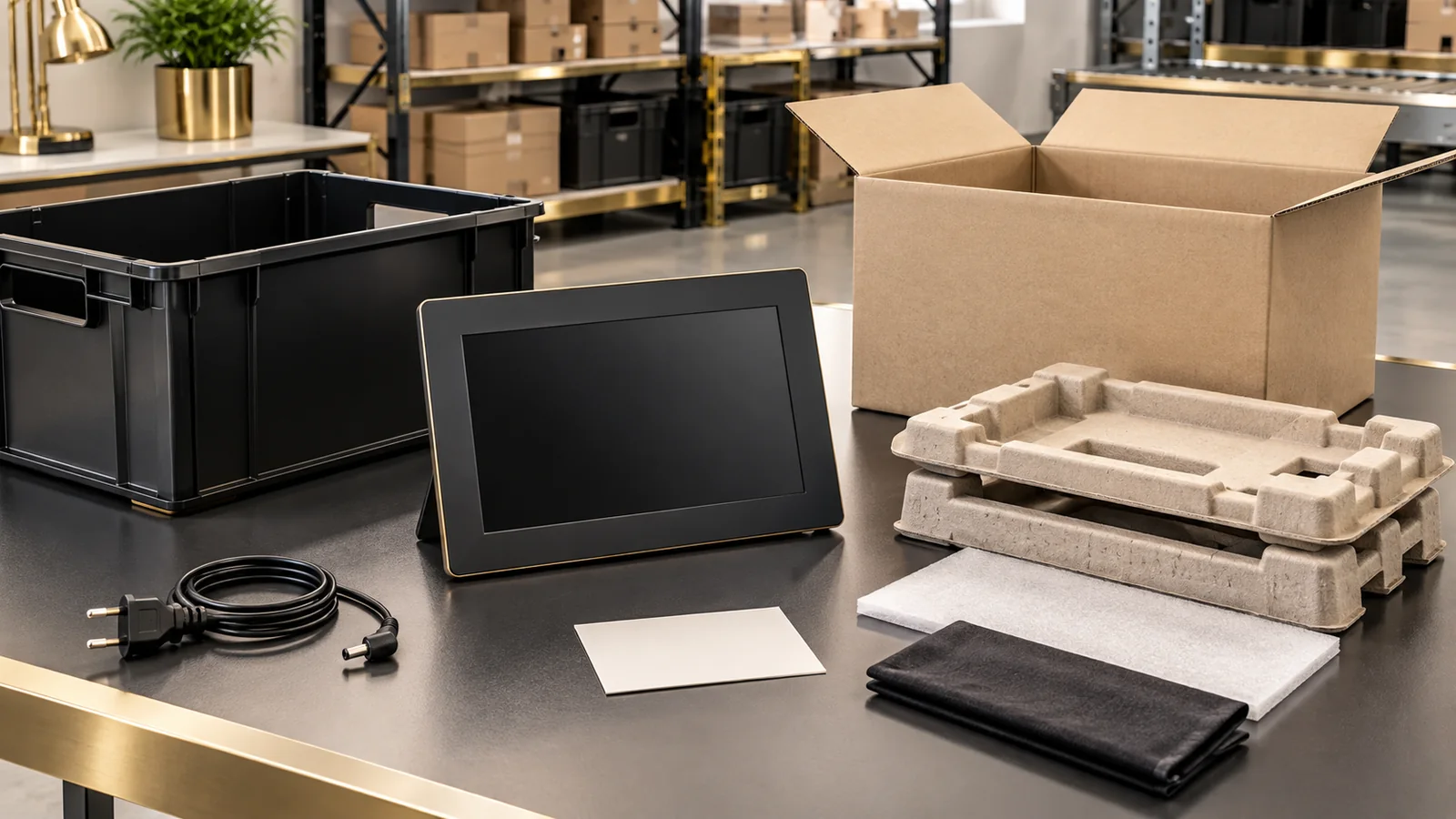
Design take-back and customer information
stiftung ear lists customer-information obligations covering separate disposal, removal of loose batteries and lamps where relevant, return routes, deletion of personal data and the meaning of the crossed-out bin. Household and exclusively professional equipment have different take-back structures.
A connected frame adds a practical data step: explain account sign-out, factory reset and deletion of locally stored personal content before return, without promising that a reset deletes every cloud copy. Coordinate the instruction with the app and privacy teams. The physical return route and the data-removal route need named owners.
Control batteries and adapters as separate questions
A digital frame with an incorporated battery can create battery-law obligations in addition to ElektroG. A supplied external adapter may also be electrical equipment within its own commercial and registration context. Do not assume the frame's registration automatically covers every separately branded accessory.
List what is supplied, who places it on the market and under which brand. Align the German electrical-equipment and battery files with packaging EPR, but keep the legal numbers and reporting datasets distinct. Ask specialists to confirm the current Battery Regulation transition and German implementation for the exact launch date.
Use change control for brand, entity and hardware
Changes to the legal entity, authorised representative, brand, equipment type or permanent market exit can require portal action. Hardware changes can also alter scope or classification. A new screen size alone may not create a new equipment type, while a shift from passive frame to battery-powered connected display clearly deserves review.
Require a change declaration before every reorder. Compare label artwork, rear enclosure, radio and battery configuration, adapter, brand, seller and channel with the approved file. Keep the marketplace listing in the same review so online evidence does not lag behind the product.
Make the sample answer registration questions
The production-intent sample should show the real brand, electrical function, rear label area, power input, battery arrangement, supplied accessories and packaging. Photograph front, back, labels and contents. Weigh the finished unit and accessories separately if those data support reporting or categorisation.
Do not release mass packaging from a cosmetic mock-up. A sample with a blank label cannot prove the final marking, and a printed carton cannot prove that the registered model matches the actual electronics. Close both evidence sets before shipment.
Create a Germany launch checklist
- Finished product assessed as electrical or electronic equipment
- Producer, importer, distributor and marketplace roles mapped
- Private-label brand owner identified
- German establishment status confirmed
- Authorised representative appointed where required
- Brand and equipment type reviewed
- B2C or exclusively B2B treatment documented
- Registration order received before placing on market
- Guarantee and reporting owners assigned
- Label drawing tied to valid evidence
- Marketplace verification pack prepared
- Take-back and customer information approved
- Battery and accessory obligations reviewed separately
- Change-control process active for reorders
Questions to send each party
Ask the seller and importer: Who first places the product on the German market? Which legal entity and brand appear? Is the seller established in Germany? Is the device capable of household use? Which marketplace account and fulfilment route are used? Who holds the registration and reports quantities?
Ask the OEM: What is the finished electrical function, power source, battery, radio configuration, outside dimensions, weight, brand and accessory set? What changes are planned? Then ask the German adviser or authorised representative to confirm scope, producer role, equipment type, B2C/B2B treatment, guarantee, marking, reporting and take-back.
Experience scope and project limits
Editorial review: Jessica, Founder & Project Advisor at DOREMI Display. Updated 2 October 2026. Jessica's practical scope is B2B digital-frame briefing, private-label artwork, sample coordination, packaging handover and production change control. This article does not present her or DOREMI as stiftung ear, a German authority, lawyer, authorised representative, guarantee provider or waste-management scheme.
Use this workflow to make product and supply-chain facts reviewable. Current ElektroG text, stiftung ear decisions, the public register, the exact sales route and qualified German advice control the final obligations.
Public sources used for this guide
- Google Search Central: optimizing for generative AI features
- stiftung ear: which products ElektroG applies to
- stiftung ear: producer, distributor and authorised-representative roles
- stiftung ear: producer obligations
- stiftung ear: applying for WEEE registration
- German Federal Ministry of Justice: current ElektroG text