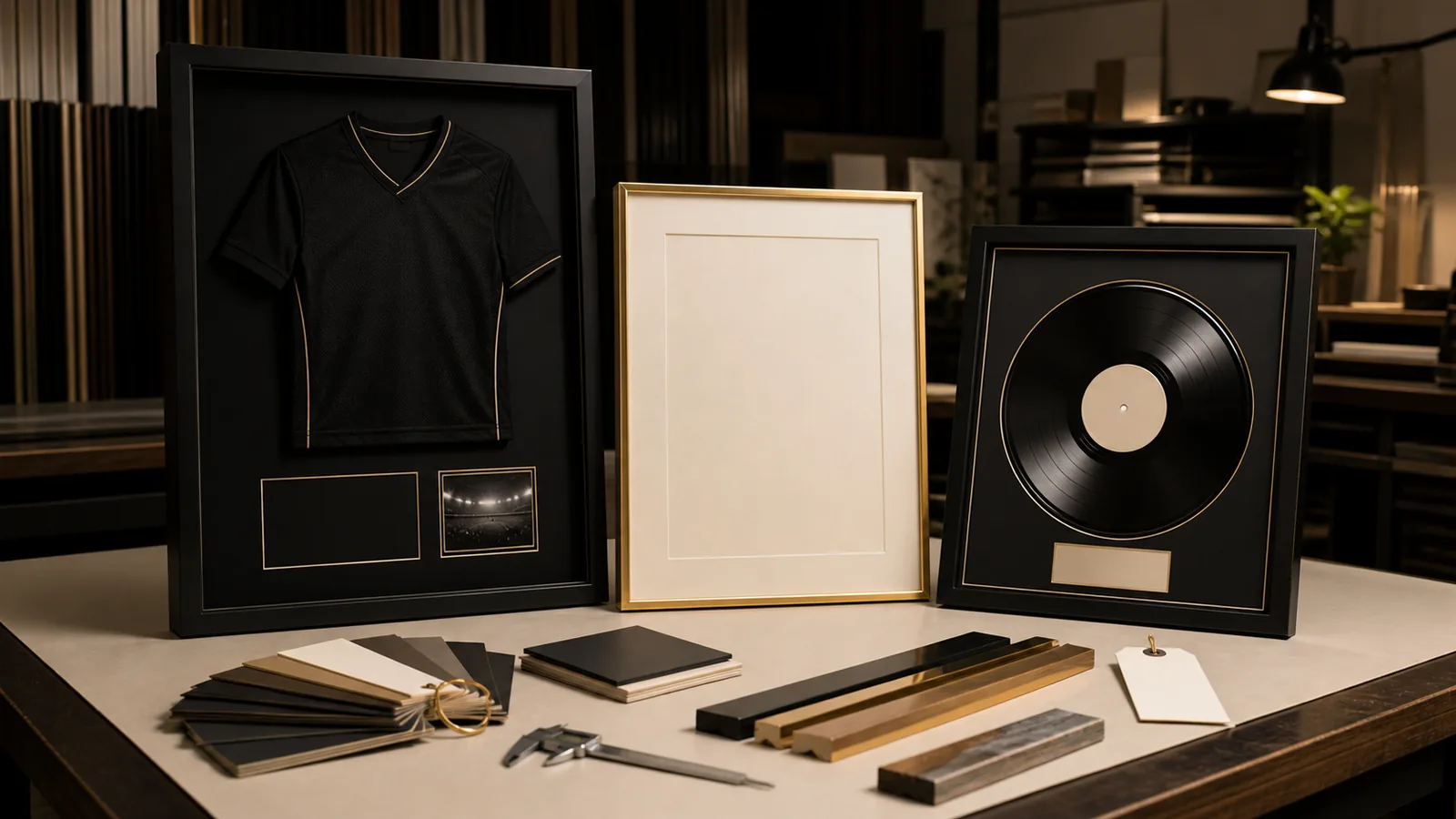
A supplier sends a beautiful display-frame sample. The brand team approves the front view, procurement pays the deposit, and production begins. Weeks later, the finished order has a different backboard, an altered gold tone or packaging that no one remembers approving. The problem is not necessarily that the first sample was poor. It is that “approved” never became a controlled production baseline.
This guide is for importers, private-label brands, distributors, clubs and institutional procurement teams buying custom jersey, medal, certificate, award, vinyl-record or mixed-object frames. It explains how to connect a physical sample with drawings, component identities, artwork and packing evidence. It does not create contractual terms, prescribe universal tolerances or guarantee that a supplier’s quality system is effective.
Define what the sample is intended to prove
A concept sample, material sample, appearance sample, pre-production sample, packing sample and shipment reference do different jobs. Label the stage before reviewing it. A concept sample may test proportion while using temporary hardware. A colour chip may approve a finish but say nothing about the assembled corner. A pre-production sample should represent the materials and process intended for bulk manufacture unless every known difference is recorded.
Ask the supplier to state the sample purpose, date, project code, SKU, revision and production-equivalent exceptions. If an item is temporary, name its replacement and approval path. This prevents a buyer from treating an early visual prototype as proof of production readiness and prevents a supplier from treating limited aesthetic approval as permission for every hidden construction choice.
Build one product identity before using the word golden
A golden sample is useful only when everyone can identify it. Assign a stable product code and revision. Record the outside size, visible opening, internal depth, moulding profile, finish, glazing, mat or insert, backing, mounting method, hanging hardware, included accessories and packaging configuration. Photograph the front, back, sides, corners and open construction under neutral light.
Do not rely on a handwritten note such as black frame approved. Two black profiles can have different width, substrate, wrap, sheen and corner behaviour. A jersey frame can look identical from the front while using a different mounting board or closure system. The baseline should identify the features that procurement, production and inspection need to distinguish.
Separate product, artwork and packing approval
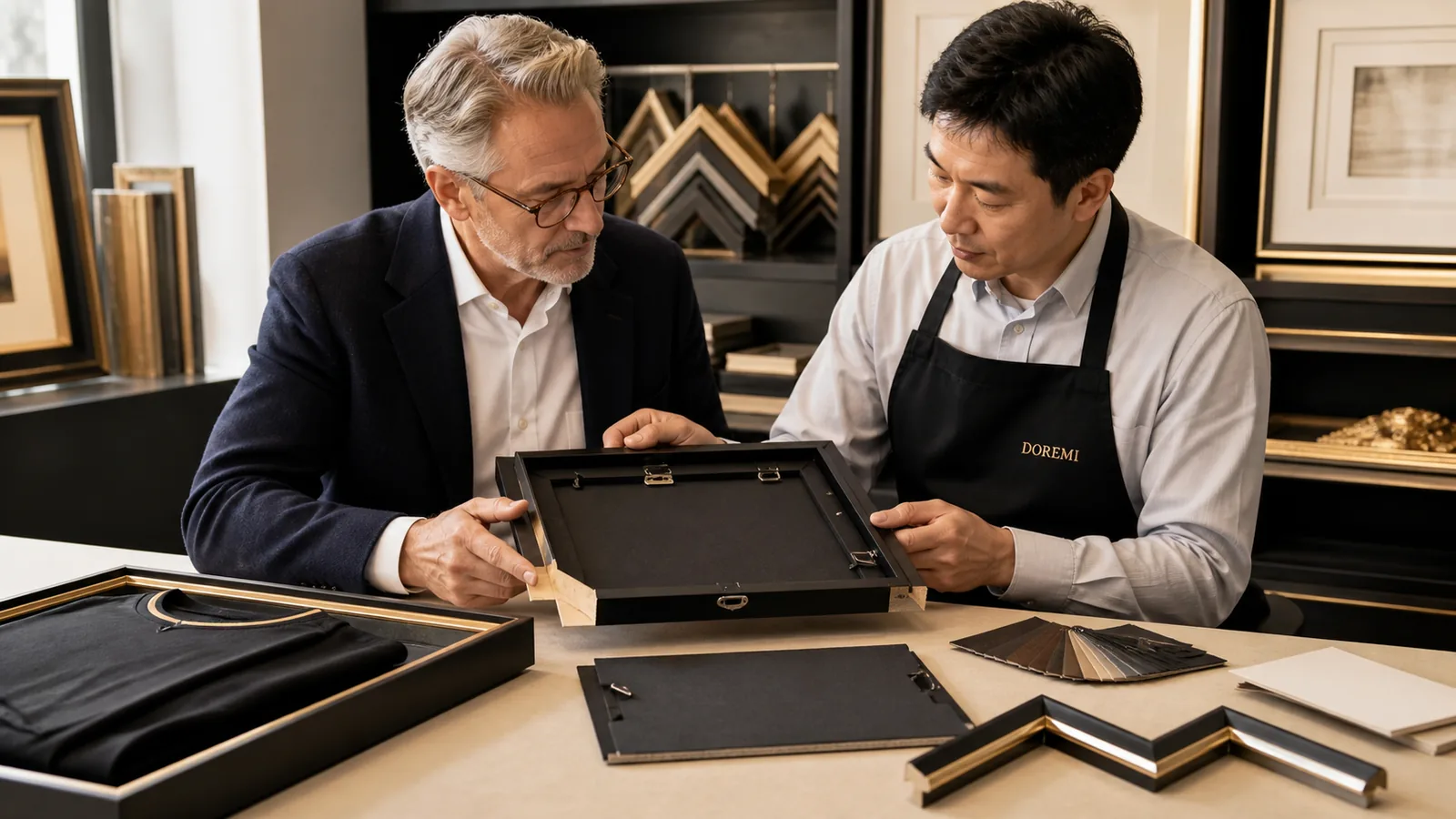
One approval signature should not silently cover three different systems. Product approval controls materials, dimensions, construction, finish and function. Artwork approval controls logos, plaques, printed inserts, colour references and language. Packing approval controls protective layers, carton construction, orientation, contents, marks and opening sequence. Use separate status lines even if the same people review them on the same day.
This separation is especially important for institutional and event programmes. A university may approve a frame before final graduate artwork is available. A race organiser may approve the medal position while sponsor artwork remains open. A private-label retailer may approve the product but require a later packaging compliance review. Clear gates let one workstream progress without implying that unfinished elements are accepted.
Create a sample approval record people can retrieve
The approval record should show sample ID, revision, review date, reviewers, decision, open points and the exact files attached. Use a short decision such as approved for production, approved with listed conditions, revise and resubmit, or appearance reference only. Avoid informal replies such as looks good when money, tooling or capacity will be released against them.
Store the record in the project folder rather than one person’s message history. Include dated photographs and file hashes or controlled filenames where your system supports them. If buyer and supplier retain physical references, mark both with the same identity and protect them from being used, damaged or confused with later development samples.
Approve measurable characteristics and visual boundaries
Some characteristics can be measured: outside dimensions, opening, depth, hole position or component identity. Others need a visual boundary: acceptable grain, brushed-metal direction, print alignment, black tone or natural material variation. Record the inspection method and viewing condition instead of converting every appearance question into an arbitrary number.
A single perfect sample is not evidence that every visual variation is unacceptable. Where natural wood, hand-finishing or textile placement creates legitimate variation, create approved range references or clear reject examples with the buyer’s quality owner. Do not invent tolerances after production is complete. The commercial team, supplier and inspector should know the same acceptance language before the purchase order is released.
Verify that the sample is production-equivalent
Ask which workshop, line, tooling, material lots and subcontracted processes made the sample. Development teams sometimes hand-build a sample using resources that will not be used for the order. That does not make the sample deceptive, but it changes what it can prove. Identify the gaps and decide whether a line trial or pre-production run is needed.
Check that coatings, adhesives, print methods, glazing thickness, hardware and packing materials match the intended bill of materials. If the production source is not final, record the item as open. A sample made from the right-looking substitute should not become evidence that an unidentified bulk component is approved.
Control the bill of materials without exposing unnecessary detail
The buyer needs enough component identity to control the promised product. Depending on the programme, that may include supplier part numbers, material descriptions, drawings, finish codes, approved sources or performance requirements. It does not always require a factory to disclose every confidential process parameter. Agree the level needed for procurement, compliance, continuity and inspection.
Mark components as fixed, approved alternative, supplier-selected within a requirement, or buyer-approved before substitution. High-risk examples may include glazing, mounting materials, adhesives, electrical components in illuminated frames, hanging hardware and branded inserts. A vague bill of materials makes later change review impossible because there is no recorded starting point.
Use configuration control across every SKU
ISO 10007 describes configuration management as guidance applicable across a product or service life cycle. For a frame programme, the practical lesson is to identify controlled items, establish a baseline, record status and audit changes. The golden sample is one part of that system; it is not the system by itself.
Create a matrix for shared and SKU-specific elements. Several certificate sizes may share a profile and finish but use different glazing, backs and cartons. Medal editions may share the frame while artwork changes by event. A vinyl display may use the same outside size but a different internal support. Record inheritance explicitly so a change to one common item triggers review across every affected SKU.
Write change triggers before a shortage occurs
List changes that require notification and approval: material source, substrate, coating, colour, profile, dimensions, glazing, backing, adhesive, hardware, mounting, artwork, packaging, factory site, process or sub-supplier. The list should match project risk. A minor internal packing adjustment may need documentation but not a new beauty sample; a new visible gold finish may require physical approval.
Define who can propose a change, which evidence is required, who assesses commercial and technical impact, and who approves it. Include price, timing, compliance, testing, packaging and stock consequences. A supplier should not have to guess whether a substitution is material, and a buyer should not discover it during final inspection.
Use a clear before-and-after change request
A useful change request identifies affected SKUs and batches, current state, proposed state, reason, implementation date and inventory transition. Attach photographs, drawings, samples or test evidence appropriate to the change. Record whether old and new versions may coexist and how cartons or batch records distinguish them.
A purchasing message saying please use the cheaper hook is not enough. The hook may affect rear clearance, hanging instructions, pack thickness or wall compatibility. Equally, demanding a full resample for every invisible administrative update can slow the project without improving control. Scale the review to the actual risk and keep the decision traceable.
Retire superseded samples and files
When a new revision is approved, mark the previous reference as superseded. Do not leave two physical samples on a production shelf with the same label. Archive old files so the history remains available, but prevent them from being selected accidentally for new artwork, purchasing or inspection.
Tell every affected function when the baseline changes: supplier sales, engineering, purchasing, production, quality, packaging, buyer procurement and third-party inspectors. Version control fails when one department updates a drawing but another continues using an old photo or purchase description.
Connect the baseline to the purchase order
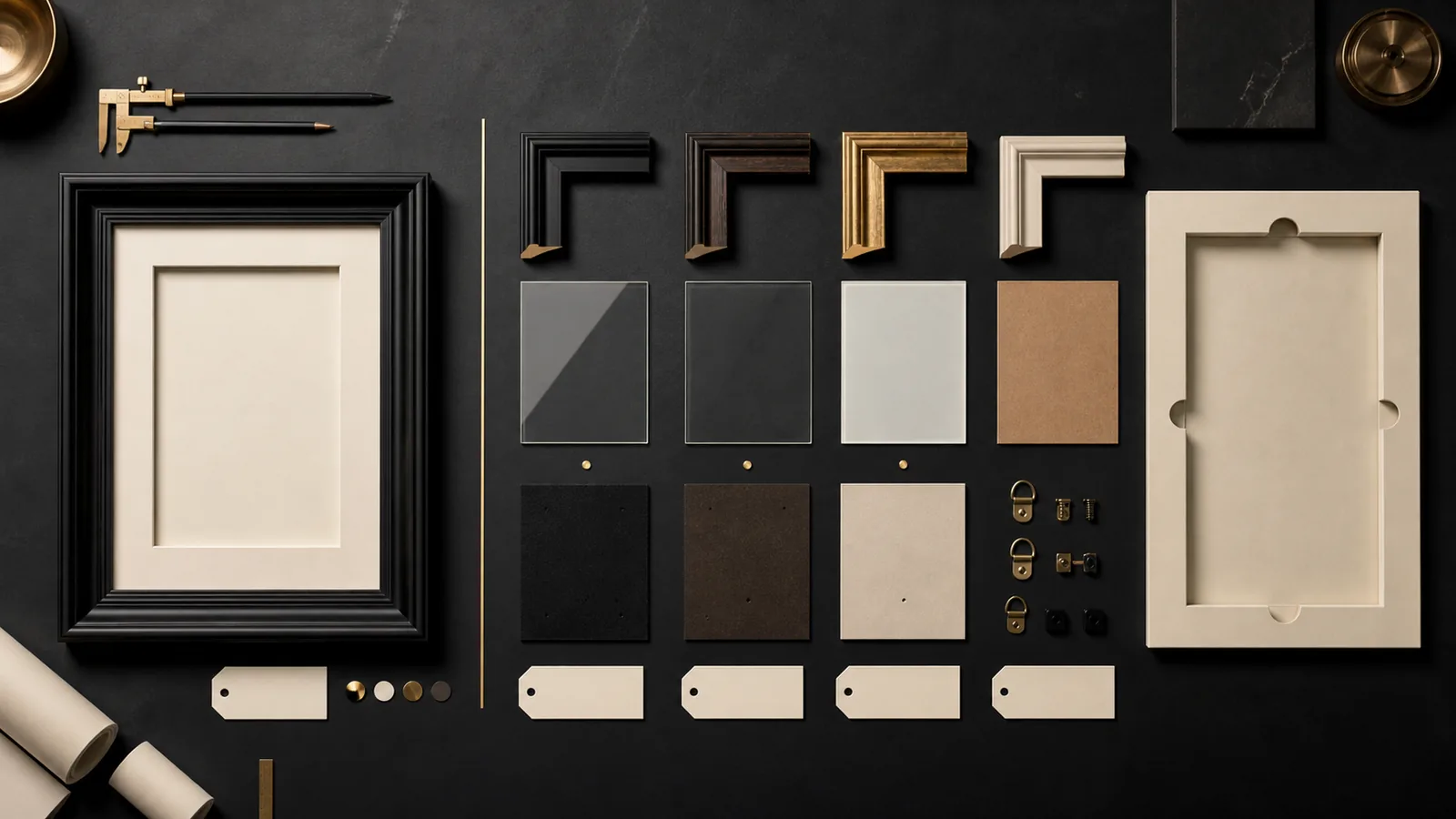
The purchase order or contract should reference the agreed specification, sample ID, artwork revisions, packing revision, quantity, delivery term and approved deviations. Qualified commercial or legal advisers should decide the enforceable wording. A photograph pasted into a message is not a substitute for a complete sales agreement.
Confirm document priority if materials conflict. If the drawing says one opening and the sample has another, which controls? Resolve discrepancies before production. The baseline should help the parties make decisions, not create a second set of ambiguous promises alongside the contract.
Plan the production start gate
Do not let an approved front appearance automatically release bulk production. Use a short start checklist: commercial order accepted, product baseline approved, artwork status known, packing status known, materials available, open deviations closed or owned, and inspection references issued. Record who authorises production.
For a complex first order, consider a small production-equivalent run before the full quantity. Review actual line-made units and packed examples. The appropriate scope depends on quantity, tooling, novelty, schedule and buyer risk; this guide does not prescribe a universal pilot size or timing.
Use the sample in production and inspection
Make the controlled reference available where it is needed, not locked in an office that line supervisors and inspectors cannot access. Production teams can compare colour, fit and assembly details during first-off review. Inspectors can use it alongside drawings, defect definitions and measurement methods.
The sample cannot replace an inspection plan. It may not show internal specifications, safety requirements, material chemistry or acceptable variation. Combine physical comparison with the written product and packing criteria. The existing DOREMI AQL guide separately explains how a buyer can define shipment sampling and defect classification without inventing universal limits.
Handle damage, ageing and reference drift
A physical reference can fade, collect dust, compress or become damaged. Note storage conditions and periodically confirm that it still represents the controlled record. For colour-critical finishes, retain approved chips or supplier standards where appropriate and compare them under defined light.
If a reference is lost, do not silently choose the closest production unit as the new golden sample. Reconstruct the evidence, identify uncertainty and obtain a new approval. Digital photographs help with history but may not reproduce gloss, texture, depth or colour reliably enough to replace the physical reference.
Manage reorders as a new confirmation, not automatic replication
Before a reorder, confirm the last approved revision, known concessions, complaints, material availability, regulatory changes, artwork, quantities, destination and packing route. Ask the supplier to disclose component or process changes since the prior lot. A SKU name alone does not prove that every input remains unchanged.
Use the prior golden sample as the starting baseline, then decide which evidence must be refreshed. If the order moves to a new site or profile supplier, a new pre-production sample may be appropriate. If only recipient artwork changes within an approved template, product resampling may add little value. Make the decision explicitly.
Buyer approval checklist
- Sample stage and intended proof are named
- SKU, revision and sample ID are unique and visible
- Front, back, sides, corners and open construction are reviewed
- Product, artwork and packaging approvals have separate status
- Production-equivalent exceptions are recorded
- Dimensions, materials, finish and component identities are controlled
- Visual variation and reject boundaries are defined where needed
- Shared and SKU-specific components are mapped
- Change triggers, evidence and approvers are agreed
- Superseded samples and files cannot be used accidentally
- Purchase order references the controlled baseline
- Production and inspection teams can access current references
- Reorders include a change and lessons-learned review
Experience scope and project limits
Editorial review: Jessica, Founder & Project Advisor at DOREMI Display. Updated 24 August 2026. Jessica’s practical scope covers B2B display-frame briefs, material and component discussions, sample coordination, manufacturing handover, packaging and buyer communication. She is not presented as an ISO auditor, accredited laboratory, engineer or contract lawyer.
This guide is a procurement framework. It does not establish acceptance criteria, warranties, legal remedies, tolerances, testing or change rights for a specific project. Those must be agreed in the actual specification and contract with qualified technical, quality and legal owners.