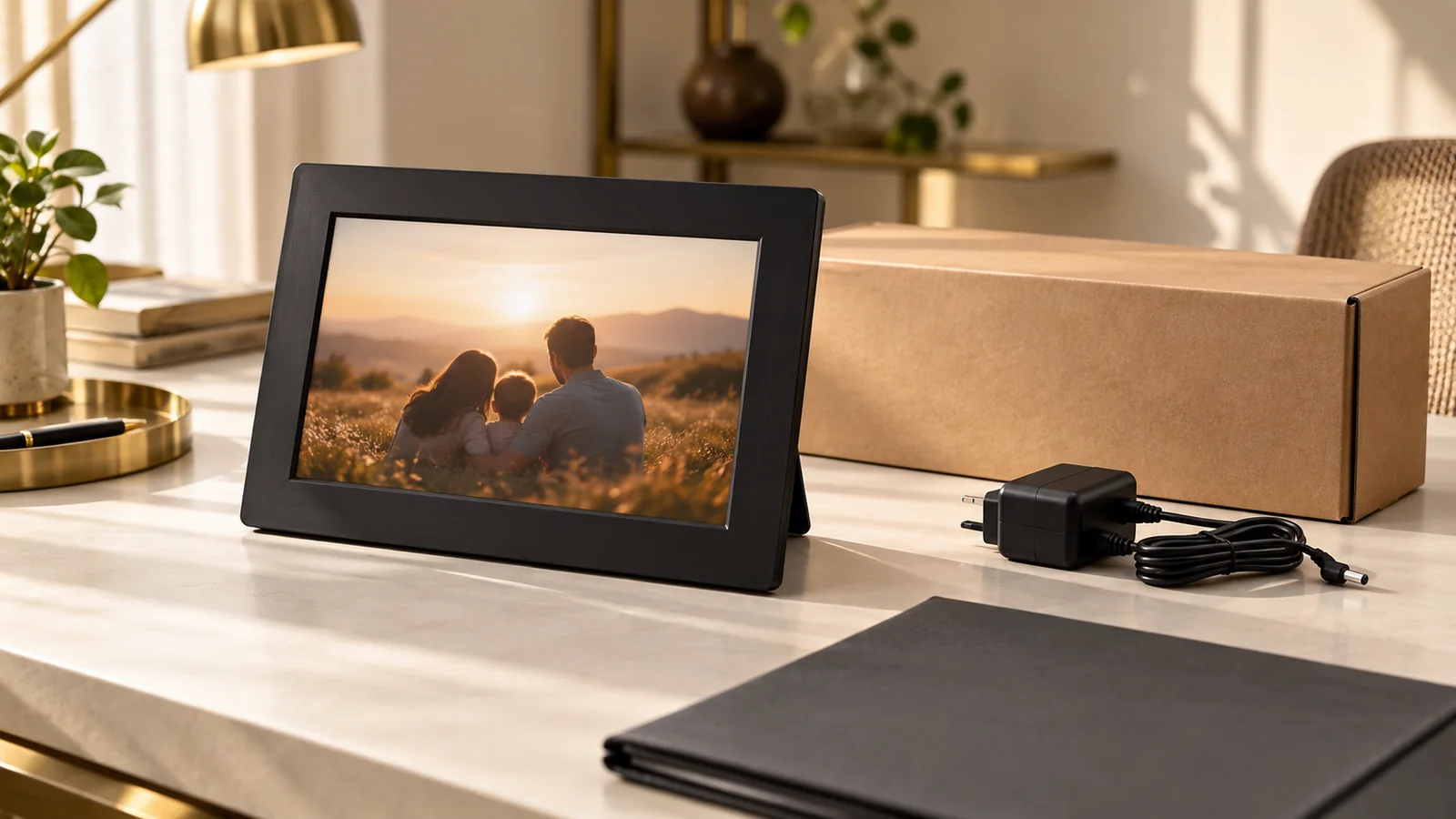
A Wi-Fi digital photo frame prepared for India is not simply a picture frame with a wireless module inside. The importer must connect the finished model to its radio evidence, decide who will make the WPC Equipment Type Approval submission, screen the supplied power adapter under the current BIS compulsory-registration list, and release a retail pack that matches the legal entity and product actually being sold.
This guide is for Indian importers, private-label brands, retailers, marketplace teams and overseas OEM suppliers. It is an operational handover, not an ETA certificate, BIS scope ruling, Legal Metrology registration, customs opinion or legal advice. The Indian applicant and qualified local professionals must verify the current portals, standards, product categories, declarations and exemptions for the exact configuration.
Why does a digital photo frame need a radio decision?
The Department of Telecommunications describes WPC Equipment Type Approval as the approval route for wireless communication devices operating in licence-exempt bands or involving radio-frequency transmission. A connected frame commonly contains Wi-Fi and Bluetooth, even if the sales team presents it mainly as home décor, a gift or a family-photo display.
Start with the functions that will ship in India, not with a generic chipset brochure. Record supported bands, channel controls, protocols, module identity, antenna type, firmware build and whether radio features can be enabled by software. A model sold with Wi-Fi disabled in one market should not be assumed identical to an India version without a controlled configuration statement.
Separate the finished product from the radio module
The WPC FAQ distinguishes questions about a finished product and the RF modules inside it. It states that an ETA fee applies to each product with one or more built-in RF modules and discusses the RF reports needed when multiple modules are present. That makes the commercial question more precise than asking whether a module has a certificate somewhere in the supply chain.
Create a product-family table with finished-model name, hardware revision, module manufacturer and model, radio bands, antenna, enclosure, firmware, power supply and intended applicant. Ask the Indian representative to confirm whether the submission should cover the finished product, a module or another defined grouping. Do not treat a module document as automatic permission for every host, brand or firmware combination.
Choose the Indian applicant before samples are booked
The official ETA service identifies the importer or authorised Indian representative as part of the self-declaration route. The manufacturer can support the file, but an overseas OEM should not invent the applicant, use a distributor's details without authority or promise that the factory itself can complete every India-side obligation.
Before requesting reports, agree which Indian entity will apply, pay fees, receive the approval, answer authority questions and maintain the record. Obtain the manufacturer's authorisation in the required form. Put model naming, applicant spelling and address under document control because inconsistencies across the technical literature, report, invoice, carton and submission can delay review.
Build the RF evidence around the marketed configuration
The service page lists an RF test report, manufacturer authorisation and technical literature among the required documents. Its FAQ says the RF report should come from an accredited laboratory and addresses products containing multiple RF modules. The importer should confirm the current accreditation acceptance, test standards, band coverage and report format before testing begins.
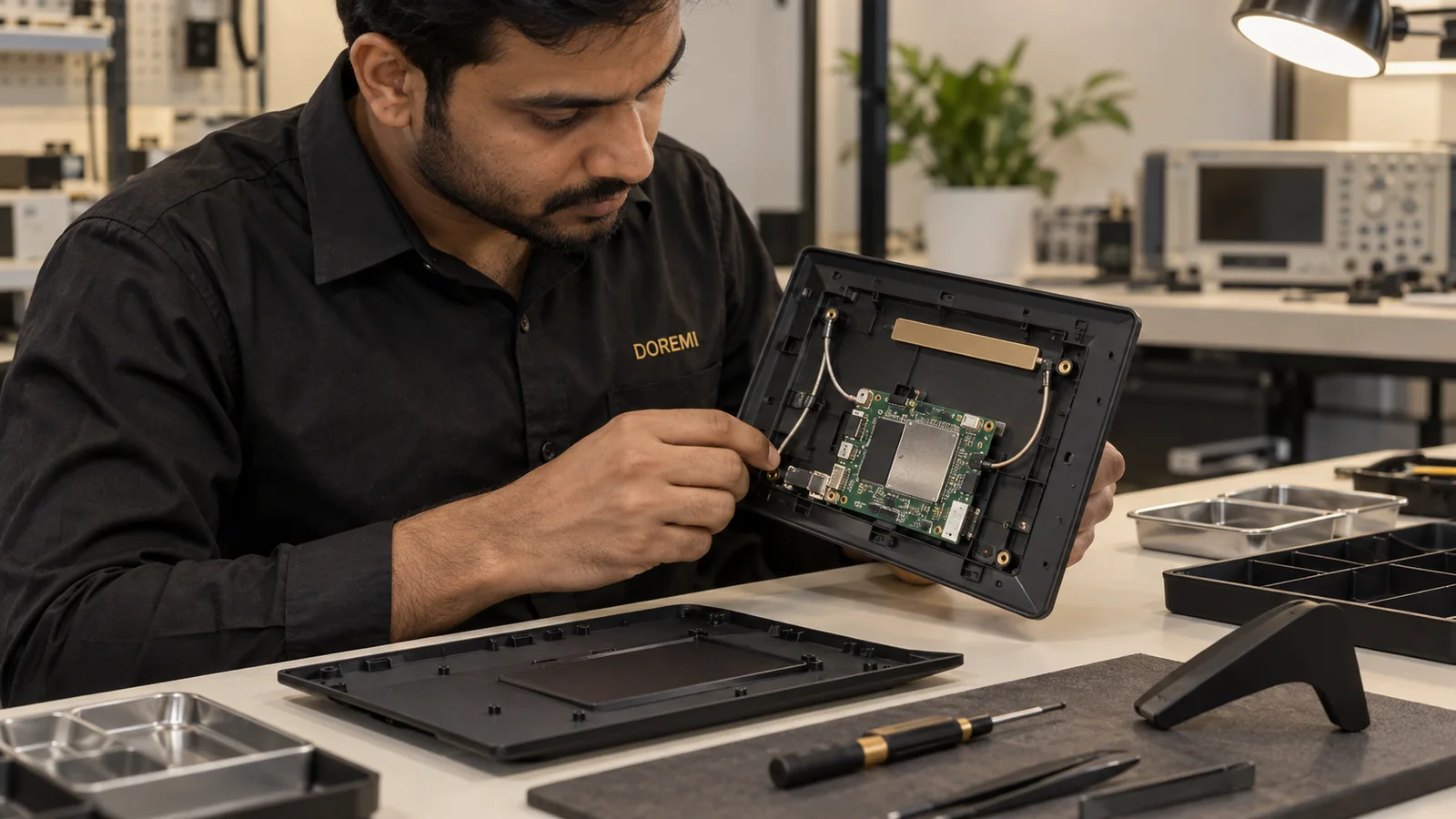
Give the laboratory a controlled radio specification rather than only a sample. Include block diagrams, module details, antenna information, operating modes, firmware needed for testing and the highest-risk supported configuration. If Wi-Fi and Bluetooth share hardware, state that clearly. If different frame sizes use a common radio board but different antenna placement or enclosure geometry, ask the responsible reviewer whether additional evidence is needed.
Treat self-declaration as accountable evidence
The self-declaration memorandum includes undertakings about the authenticity of the test report and cooperation with WPC sample checks or audits. Self-declaration is therefore not a shortcut that removes technical accountability. The applicant must be able to trace the declaration back to the product and supporting report.
Keep the submitted file, acknowledgement, fee record, approval output, signed authorisation, report and final product photographs together. Limit editing rights after approval. If a document is corrected, preserve the previous version and the reason. The supplier should provide facts and change notices, while the Indian applicant controls the representation made to the authority.
Confirm the live application route in 2026
India's telecom authorisation framework and portals changed during 2026. The DoT service pages publish notices about migration to the Telecommunications Act, 2023 authorisation portal for certain services and about Radio Equipment Possession Authorisation applications. Those notices do not automatically redefine the ETA workflow for every commercial frame, but they are a reason to verify the live service path at the time of filing.
Record the portal URL, service name, submission date and authority guidance used by the applicant. Do not rely on an old screenshot or a consultant deck that predates a portal migration. If the applicant encounters a different process from the public ETA page, obtain written clarification and keep it in the project file.
Screen the supplied power adapter separately
A digital frame and its external power adapter are related commercially but can sit in different product categories. The current BIS Scheme II list includes categories for power adaptors used with IT or audio-video equipment and identifies applicable standards and notification history. Whether the exact adapter supplied with a specific frame falls within a category requires a current BIS and Indian-importer decision.
Record adapter manufacturer, model, input and output ratings, plug, construction class, cable and the frame models it supports. Ask the responsible Indian team to confirm whether BIS registration is required, whether the registration covers the factory and model, and what marking may be used. Never copy a BIS number from a similar adapter or treat a test report as a registration.
Keep WPC, BIS and product safety workstreams connected
WPC radio approval does not approve electrical safety, and a BIS registration for an adapter does not approve the frame's wireless functions. A buyer's release sheet should list each workstream separately with its responsible entity, applicable product, evidence status and artwork consequence.
Use one configuration identifier across the matrix. If purchasing substitutes the adapter, radio module, antenna, display panel or enclosure, the change request should reach the Indian importer before production. Ask whether the change affects ETA evidence, BIS registration, electrical testing, instructions, carton data or customs documents. “Equivalent” is a decision supported by evidence, not a supplier nickname.
Map the retail pack under Legal Metrology
India's Department of Consumer Affairs publishes the Legal Metrology (Packaged Commodities) Rules and amendments. Imported retail packs can require declarations connected to the manufacturer, packer or importer, country of origin, common or generic product identity, quantity, manufacture or import timing, maximum retail price and consumer care, subject to the current rules, package type and exemptions.
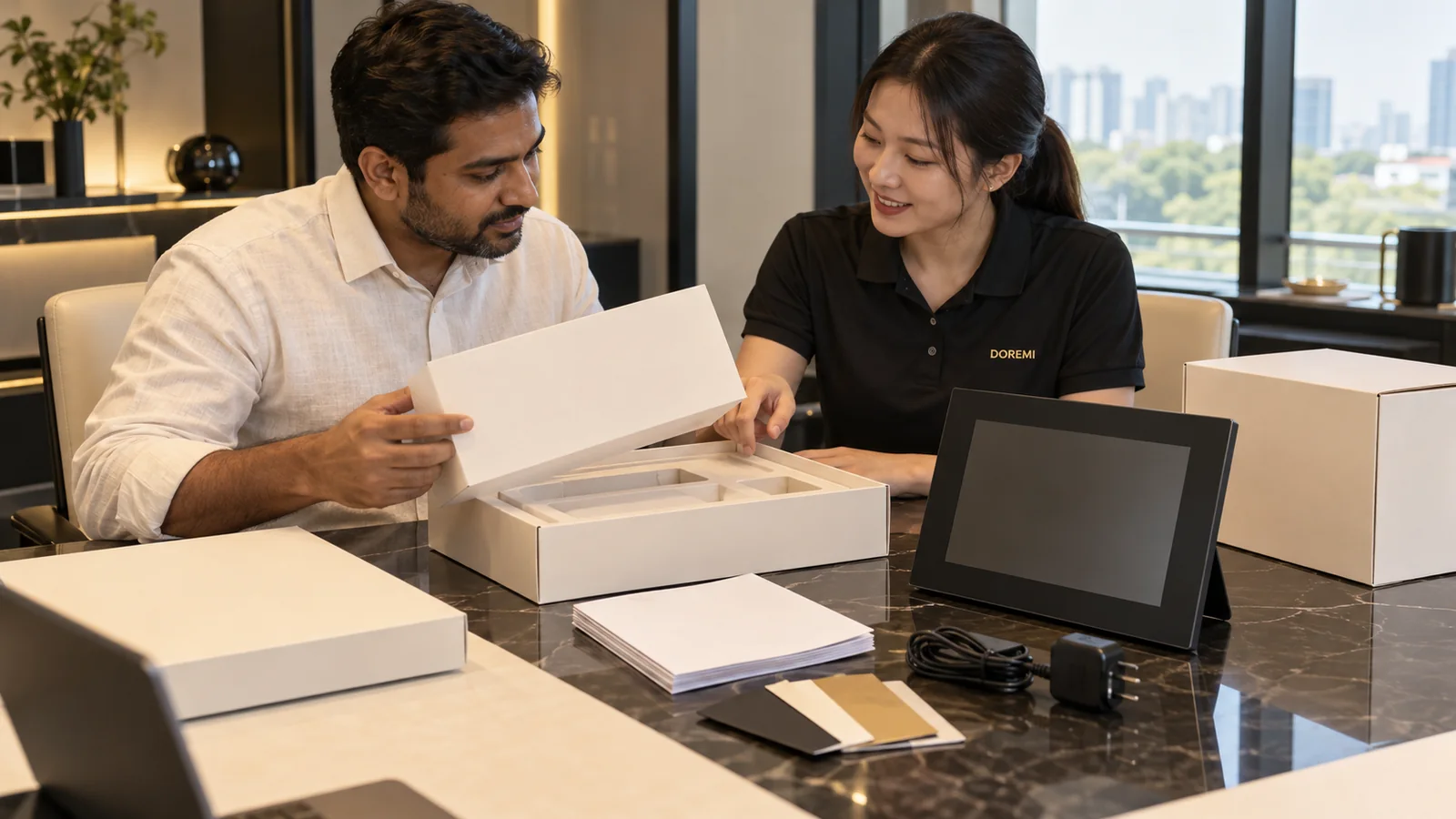
Do not turn that list into artwork without Indian review. Build a field matrix showing the legal source, responsible data owner, exact approved wording, location, minimum presentation requirement and variable-print method. A ten-inch frame, its adapter and bundled accessories can create questions about product identity, quantity and included contents that the local reviewer should settle before the dieline is final.
Align e-commerce data with the physical carton
Legal Metrology and consumer-protection rules can affect information displayed before an online purchase as well as information on the pack. The marketplace team should not type product facts independently from a supplier spreadsheet. Create one approved source for model, dimensions, included contents, country of origin, importer, customer-care details and price presentation.
Check the live listing at launch and after major updates. A marketplace field can truncate an address, reuse an old model image or display a different variant's dimensions. Archive screenshots or exports under the seller's policy, but remember that a screenshot only proves what was displayed at that moment. The responsible Indian seller controls the final listing and claims.
Design an India-specific model and artwork matrix
Private-label buyers often share one hardware platform across several brands, memory capacities, screen sizes or colourways. Each variant can change the marketed model, importer relationship, adapter, radio configuration, carton, manual and listing. Create a matrix that states which items are genuinely common and which require separate approval or artwork.
Use locked fields for regulatory and legal-entity data. The design agency may place those fields, but it should not rewrite them for tone. Keep early sales renders free of invented ETA or BIS marks. Add official identifiers only after the applicant supplies the approved content and placement instruction for the exact model.
Write instructions for the actual India build
The quick-start guide should match the supplied adapter, stand, wall-mount option, buttons, app flow, Wi-Fi setup, reset method and support route. Avoid reusing a manual from a tablet or another region if it describes different radio bands, plugs, cloud services or customer-care details.
Decide which languages are appropriate for the sales channel and support model with the Indian team. Test printed and digital instructions on the production firmware. If a QR code is used in the final product, validate its destination, ownership and accessibility, but do not let a link replace information that must be physically supplied under the applicable rules.
Plan customs documents from the same identity record
Customs clearance can involve the invoice, packing list, bill of lading, product description, model, value, origin and supporting approvals. The WPC memorandum notes that an importer or authorised representative's self-declaration may support customs processing for eligible equipment, but the importer and broker must confirm the documents needed for the actual shipment.
Use the same model spelling and product description across the purchase order, invoice, ETA record, adapter evidence, carton and listing. Explain the product accurately: a Wi-Fi digital photo frame should not be declared as a passive wooden photo frame merely to simplify paperwork. If accessories ship separately, record their quantities and regulatory treatment.
Verify the production lot against released evidence
Pre-shipment inspection should compare the finished frame with the approved model matrix. Check module and antenna references where access is practical, firmware identification, adapter model, plug, rear label, carton, manuals, accessories and packed configuration. Photograph representative evidence without turning confidential labels into public marketing content.
Define shipment blockers before inspection. An unexplained radio-module substitution, wrong adapter registration reference, mismatched importer data or obsolete carton should trigger quarantine and review. Sampling does not certify every unit or replace the authority's process; it gives the buyer evidence that the inspected lot matches the released configuration.
Maintain the file through reorders and changes
An ETA page may describe validity as continuing unless revoked, but that does not mean an approved product can change without review. Assign an owner to monitor authority notices, product changes, applicant details and related BIS or lab evidence. Revalidate the file before reorders when a component, firmware, supplier or legal entity has changed.
Keep a decision log for changes that were reviewed and found not to affect approval as well as those that required action. This reduces repeated debate and makes future product-family planning more efficient. It also prevents a purchasing substitution made months later from bypassing the importer who owns the India-market risk.
Buyer release checklist
- The exact India radio configuration is documented
- Finished-product and module treatment are confirmed by the applicant
- The importer or authorised Indian representative is formally assigned
- RF reports cover the relevant bands and modules
- The live 2026 filing route is verified before submission
- The power adapter receives separate BIS scope review
- WPC, BIS, safety and packaging workstreams remain distinct
- Legal Metrology fields are approved by the Indian owner
- Marketplace data matches the released physical pack
- Model, brand and colour variants are mapped
- Instructions match hardware, software and support operations
- Customs documents use a consistent product identity
- Inspection checks the released configuration
- Changes and reorders trigger documented review
Questions to send the OEM and Indian importer
Ask the OEM: Which radio modules, bands, antenna and firmware ship in this model? Which report supports each function? What differs across screen sizes and brands? Which adapter model is supplied? What components can change during production? Can samples, test mode, technical literature and manufacturing authorisation be provided on the applicant's schedule?
Ask the Indian team: Who will apply and maintain the ETA? Does the finished product or module strategy fit the current route? Which lab evidence is accepted? Does the adapter need BIS registration, and which exact model is covered? Which retail-package and e-commerce declarations apply? What must the broker receive before shipment?
Experience scope and project limits
Editorial review: Jessica, Founder & Project Advisor at DOREMI Display. Updated 10 October 2026. Jessica's practical scope covers B2B digital-frame specifications, OEM data handovers, packaging coordination, sample review and production change control. DOREMI is not presented as WPC, DoT, BIS, the Department of Consumer Affairs, an accredited laboratory, customs broker or Indian legal adviser.
Use this guide to organise model, evidence and artwork ownership. Current Indian law, authority guidance, live portals, accepted reports, the exact imported configuration and qualified local advice control ETA, BIS, Legal Metrology and customs decisions.
Public sources used for this guide
- Google Search Central: optimizing for generative AI features
- India Department of Telecommunications: Equipment Type Approval
- WPC: Equipment Type Approval frequently asked questions
- WPC: ETA through self-declaration office memorandum
- Bureau of Indian Standards: Scheme II compulsory-registration list
- India Department of Consumer Affairs: Packaged Commodities Amendment Rules