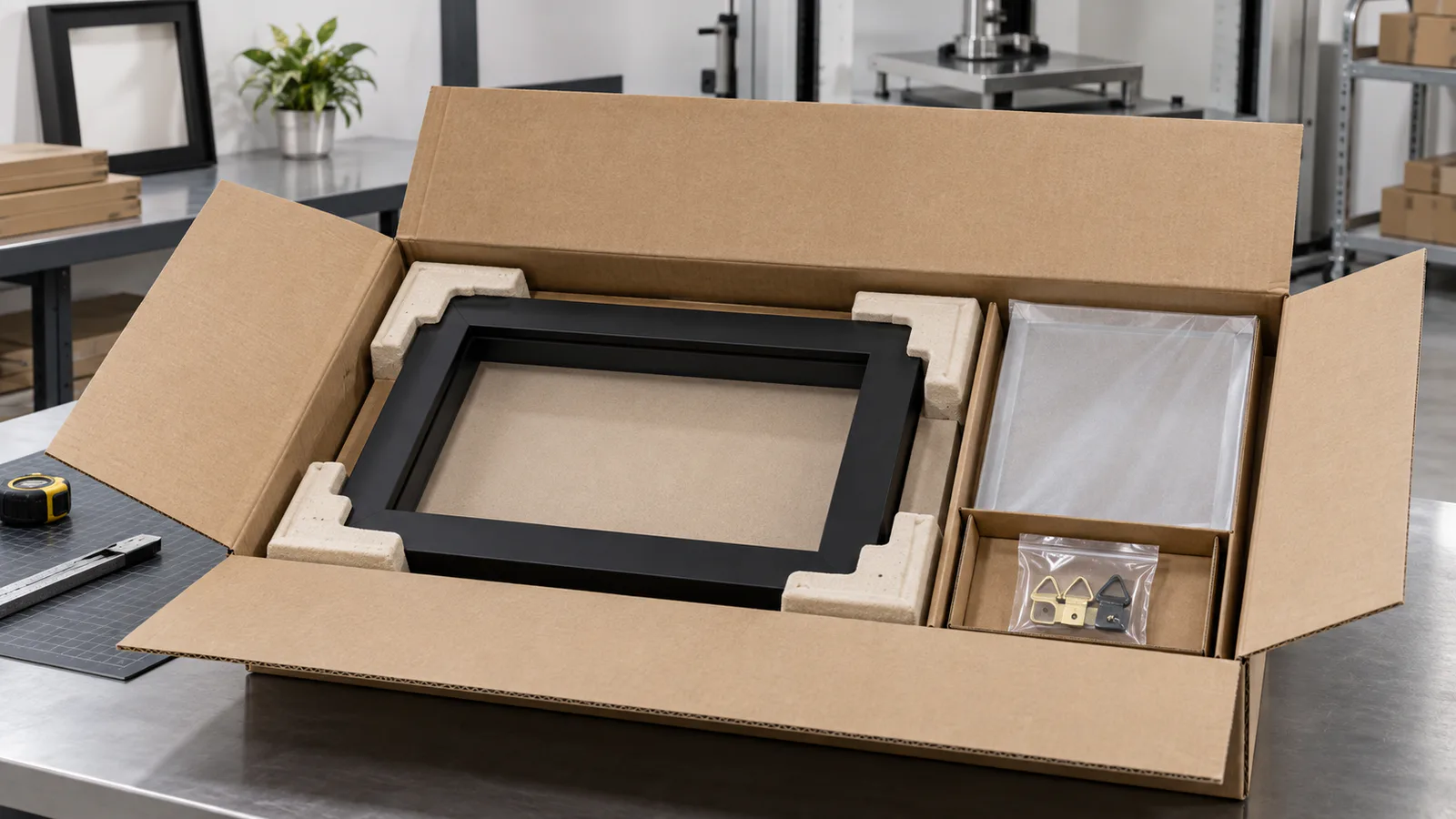
A display-frame pack that survived pallet freight, a European parcel route or a North American laboratory sequence is not automatically validated for individual parcel delivery in India. Route, handling, vibration, climate and the number of transfers can change what the frame and pack experience. A new market launch needs a packaging decision tied to the actual distribution system, not a generic “export carton” statement.
This guide is for brands, importers, marketplace sellers, packaging engineers and frame suppliers planning parcel distribution within India. It explains how to prepare a useful handover around ISTA Project 3P, the new general-simulation procedure for packaged products up to 70 kg / 150 lb in the India parcel-delivery system. It does not reproduce the paid procedure, prescribe laboratory parameters, certify a pack or replace an ISTA-qualified packaging professional and competent laboratory.
Why ISTA created a separate India parcel procedure
ISTA says Project 3P was developed from field research conducted across India because the parcel network presents a distinct combination of handling, transportation and environmental conditions. Its public announcement identifies new vibration, drop, and temperature/humidity profiles and warns that packaging performing adequately in other regions may not provide the same protection in India.
For a display-frame buyer, this is a prompt to reopen the route assumptions before launch. It does not mean every pack used elsewhere will fail, or that every Indian shipment needs the same design. It means the approval basis should match the route being claimed.
Confirm that Project 3P matches the distribution model
ISTA describes 3P as a general simulation for individual packaged products weighing 70 kg / 150 lb or less and shipped through India's parcel network by air or ground. Confirm the packed weight, package form and final route with the brand, carrier, fulfilment partner and laboratory. A palletised replenishment to one retail distribution centre is not the same as a single parcel to a consumer.
Map whether the unit travels factory to importer, importer to marketplace fulfilment, fulfilment to customer, or directly from an Indian warehouse. Mark overpacking, repacking and points where retail packaging becomes the shipper. If more than one route is material, decide which pack will serve each route and which evaluation applies.
Do not treat 3P, 3A, 3L and 3M as interchangeable labels
ISTA's public test-procedure directory gives each project a different distribution basis. Procedure 3A addresses individual parcels in a general air-or-ground parcel system. Project 3L covers retailer fulfilment, while 3M covers international direct-import shipments from Asia-Pacific manufacturing sites to U.S. distribution or fulfilment locations. Project 3P is specific to India's parcel-delivery system.
Ask the packaging professional to select the procedure from the actual route and objective. A report named “ISTA tested” without the procedure, version, specimen and configuration is not enough. A buyer should also understand whether the laboratory performed an official current procedure or a custom development sequence inspired by several sources.
Start with a production-equivalent packed product
A frame package is a system. The specimen should use the intended frame profile, mitre joints, glazing, mat, backing, displayed-object surrogate, hardware, corner protection, surface wrap, inner carton, shipper, closure and packed orientation. A wooden dummy or empty carton can help early development, but it cannot support a final claim about the production pack.
Record finished dimensions and mass, centre of gravity where relevant, glazing type, deepest internal object and every pack component. Photograph the packing sequence. If several frame sizes share a design, define which specimen represents the most demanding combination and obtain a qualified rationale.
Define frame-specific failure before the test
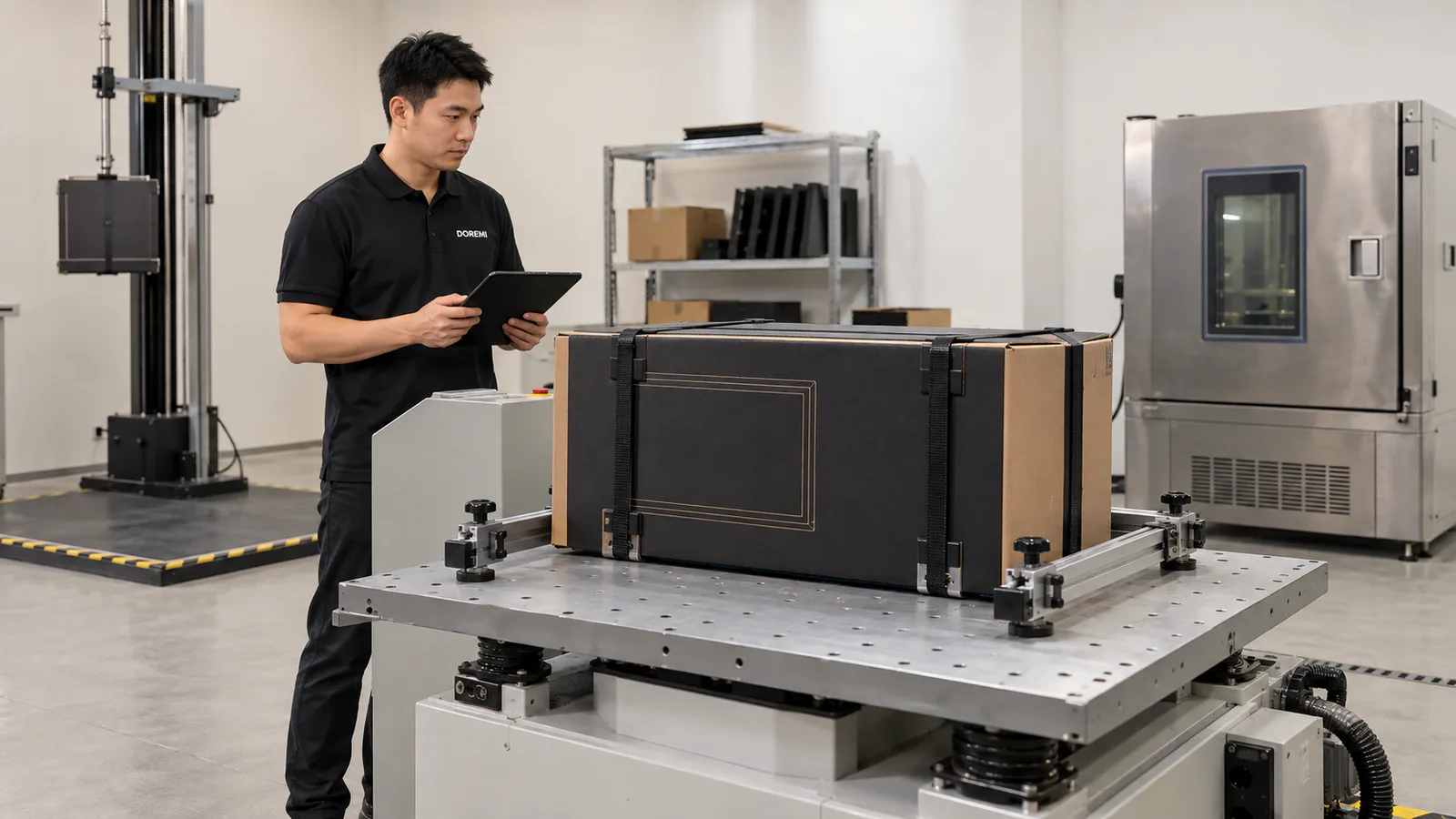
A parcel test produces observations; procurement must decide what counts as unacceptable. For a display frame, critical failure may include broken glazing, unsafe loose hardware, open frame joints, loss of object retention or a carton that exposes the product. Major failure can include cracked moulding, shifted medals, damaged mounting or a backing that no longer closes.
Cosmetic criteria also matter: rubbed finish, trapped debris, dented gift box, torn presentation wrap or a carton too damaged for the intended customer experience. Define inspection lighting, viewing distance and measurement method where appropriate. Separate normal material variation from new transport damage.
Design protection from the product outward
Identify the surfaces and components that cannot carry concentrated load. Glazing needs controlled clearance from plaques, medals, hooks and hardware. Mitred corners need support that restrains the frame without abrading the visible finish. Rear fittings should not press through the backing or against another surface.
Internal protection should limit movement and distribute loads. Empty space is not cushioning. If the frame can accelerate inside the box, it may strike the carton after a drop. Use a packing drawing with material, dimensions, position and assembly sequence so production can repeat the laboratory configuration.
Review flat and elongated frame geometries
Large picture and certificate frames often have a broad, shallow package. Long jersey or poster displays may behave like elongated parcels. These shapes can flex, twist and receive edge or corner impacts differently from compact boxes. Tell the laboratory the real geometry and allow the current procedure to classify and sequence the specimen.
Do not shrink the specimen to fit equipment or test a small frame and extend the result across a much larger size without qualified engineering justification. The larger pack may have different bending, glazing support, corner leverage and handling exposure.
Prepare for humidity and temperature as pack-system questions
ISTA's announcement states that Project 3P includes new temperature and humidity profiles reflecting the India environment. That matters because corrugated strength, paper cushioning, adhesives, wraps and wood-based frame components can respond to conditioning. The correct laboratory sequence and parameters come from the current procedure and competent test owner.
Buyers should supply material identities, moisture-sensitive components and allowed storage conditions. After conditioning and mechanical testing, inspect carton integrity, cushion recovery, adhesive closure, frame joints, backing flatness and displayed-object position. Do not invent a climate claim from one test or assume that a dry-lab sample represents every season and warehouse.
Keep presentation packaging separate from transit protection
A black gift box or premium sleeve may be central to the customer experience, but it may not be a parcel shipper. Decide whether it sits inside a dedicated transit carton, receives an overbox at fulfilment or is expected to travel alone. The test specimen must represent that real outbound configuration.
If a marketplace may add dunnage or an overbox, document what is controlled and what is not. A successful overboxed test does not prove the retail box is ship-ready by itself. Conversely, a ship-in-own-container design needs closures, labels and opening features appropriate to that role.
Choose protective materials production can repeat
A hand-cut laboratory pack can pass while mass production drifts. Specify the corner-block material, density or construction, dimensions, grain or flute direction where relevant, face pads, bags, films, closures and carton grade. Mark the allowed tolerances and substitution gate. Use work instructions with photographs of correct and incorrect assembly.
Design for the packing line as well as the laboratory. Workers need a clear sequence, ergonomic handling and a way to identify different frame sizes. A part installed backwards or omitted under time pressure can erase the value of an otherwise capable pack.
Control hardware and accessories inside the parcel
Hanging hardware, instruction sheets, plaques and spare parts can become impact points if left loose. Use a controlled compartment or pouch and keep metal components away from glazing and finished profiles. Confirm that the pouch itself remains secured after the full sequence.
If the consumer must assemble or hang the frame, protect instructions from moisture and crushing while keeping them easy to find. Do not tape a hardware bag directly to a sensitive surface. Verify that all accessories are present after testing and that no fastener escaped into the frame cavity.
Use the current procedure and a competent laboratory
Obtain the current Project 3P document through ISTA and agree the test plan with a laboratory equipped for the required specimen and sequence. The public announcement is not the procedure. Procurement should not copy numbers from a presentation, old report or unrelated test.
Before booking, confirm specimen count, conditioning, equipment limits, observation plan, report format, photography, retest rules and whether any deviation will be identified. Name who owns the pass criteria and who may authorise a redesign. A laboratory should not have to invent the buyer's acceptable cosmetic condition on test day.
Inspect after each relevant stage without changing the specimen improperly
Agree how observations will be recorded during the procedure and when the pack may be opened. Some damage modes become easier to diagnose when connected to a stage, but the official sequence and specimen handling must remain controlled by the test owner. Photograph exterior condition, closures, corners and orientation consistently.
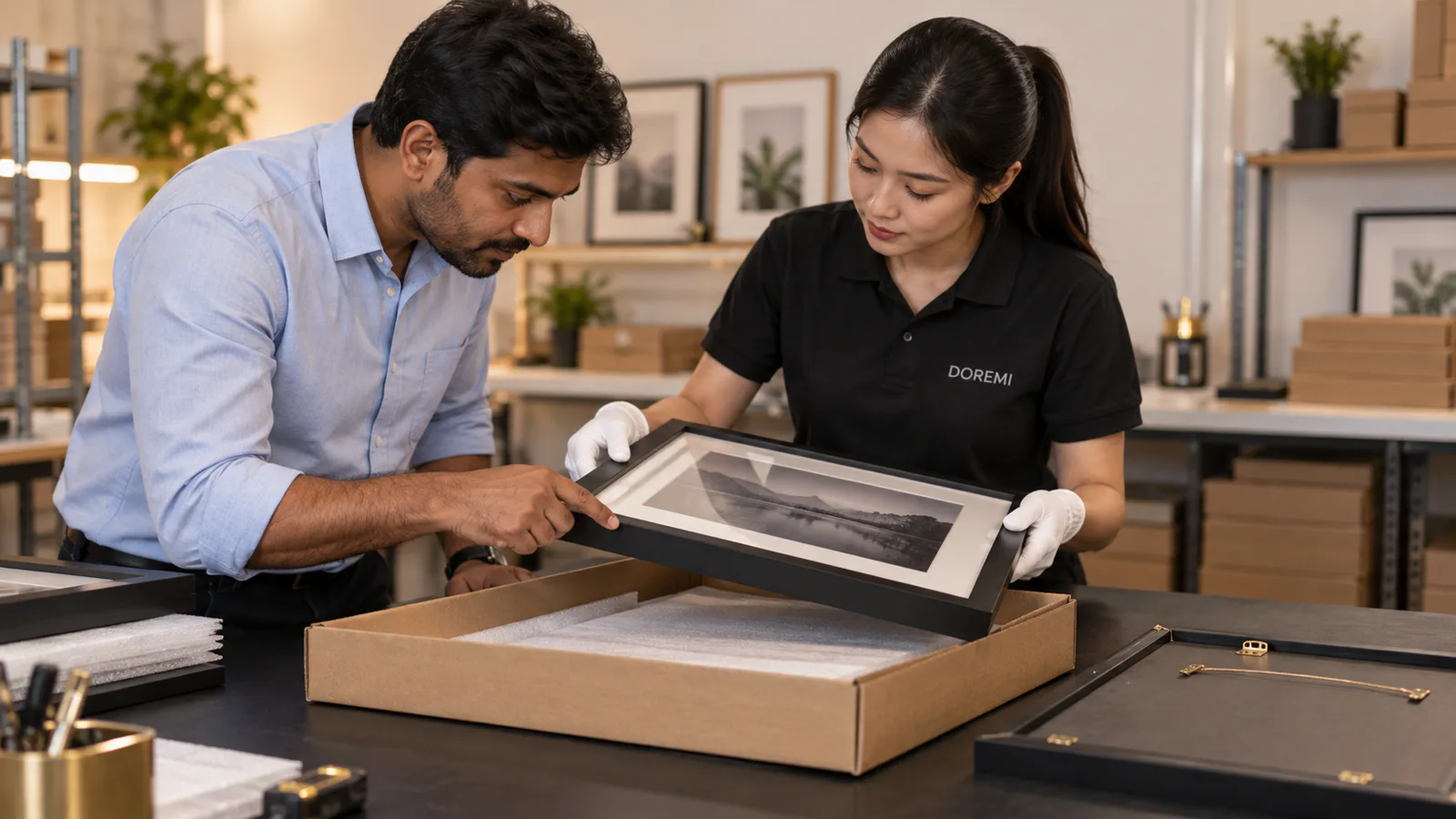
At final inspection, compare the frame with its pre-test record. Check glazing, mitres, profile finish, backing, hanging hardware, internal mount, displayed object, accessories, inner pack, presentation surfaces and outer carton. Record the location and direction of every new defect.
Diagnose failure before adding more material
A broken corner does not automatically mean “use thicker foam.” The cause may be frame movement, poor load distribution, weak joint construction, insufficient clearance, carton collapse, a hardware pressure point or inconsistent packing. Open the specimen methodically and preserve evidence.
Choose corrective action that addresses the failure path. This might involve product reinforcement, redesigned restraints, a different corner geometry, better glazing separation, revised carton dimensions or improved closure. Retest the changed production-equivalent system according to the qualified plan.
Balance protection, cube and material use
Display frames are large relative to their mass, so small dimensional changes can affect parcel charges, warehouse slots and vehicle cube. Review protection and logistics cost together. The lightest or smallest pack is not better if damage and replacement increase, while an oversized pack may add cost and allow movement.
Ask for a pack bill of materials, assembled dimensions, mass, unit cost, packing time and expected pallet or warehouse quantity. Sustainability decisions should include damage prevention and actual recovery routes, not only material reduction on a drawing.
Connect the approved pack to production inspection
Create a golden packed reference with component codes, photos and revision. Pre-shipment inspection can verify carton identity, dimensions, internal parts, packing sequence, closure, hardware restraint, product orientation and representative finished condition. Sampling does not repeat a laboratory procedure, but it can detect whether production matches the validated configuration.
Require a change notice for carton source, board construction, cushion, bag, tape, adhesive, closure, frame dimension, glazing, backing, hardware or packed weight. ISTA advises retesting when product or package details change as necessary; the qualified owner should decide the trigger.
Monitor real India shipments after launch
A laboratory simulation is evidence, not a promise of zero damage. Track complaints, returns, photos, courier route, warehouse, frame size, pack revision and weather or handling clues where available. Separate manufacturing defects from distribution damage and customer-installation issues.
Compare field experience with the laboratory results. A repeating failure in one corner, region or fulfilment path may justify investigation and a targeted design change. Preserve failed units when practical. Use real data to improve the next pack rather than treating the report as the end of packaging work.
India parcel-packaging handover checklist
- Actual India parcel route and fulfilment model are mapped
- Packed product is within the selected procedure's scope
- Current Project 3P procedure and competent laboratory are used
- Production-equivalent product, glazing, hardware and pack are supplied
- Frame-specific critical, major and cosmetic failures are defined
- Flat or elongated geometry and largest variants are represented
- Presentation box and transit shipper roles are explicit
- Climate-sensitive materials and conditioning assumptions are disclosed
- Accessories cannot become loose impact points
- Report identifies specimen, procedure version and deviations
- Failure analysis precedes redesign and retest
- Production inspection and change control protect the approved configuration
- Field damage and returns feed the next packaging review
Experience scope and project limits
Editorial review: Jessica, Founder & Project Advisor at DOREMI Display. Updated 16 September 2026. Jessica's practical scope covers display-frame briefs, pack construction, samples, factory coordination, quality discussions and buyer handover. She is not presented as ISTA, a packaging laboratory, carrier, Indian regulator or packaging engineer.
This guide supports procurement planning. It does not contain the Project 3P procedure, select the correct test for every route, specify parameters, certify a package, guarantee carrier acceptance or predict zero damage. Use the current official procedure with qualified packaging specialists, the chosen laboratory, carriers and fulfilment partners.