
A Wi-Fi digital photo frame can carry a radio module already used in other markets and still need a Japan-specific approval review. The radio construction, antenna, enclosure, software settings, certification route and mark must align. The external AC adapter creates a separate electrical-safety handover under Japan's PSE system.
This guide is for brands, Japanese importers, distributors and OEM suppliers preparing connected digital frames for Japan. It translates public TELEC and METI information into a project workflow. It does not issue certification, decide a final product classification or permit a buyer to copy marks from a component or another model.
Split the project into radio, power and product files
Start with three linked files. The radio file covers Wi-Fi and Bluetooth hardware, frequencies, power, antenna, firmware settings, certification applicant and mark. The power file covers the external AC adapter, mains lead where supplied, Japanese importer, PSE category, conformity evidence, inspection and label. The product file connects those items to the finished frame, packaging, instructions and model control.
This separation prevents a common failure: presenting an adapter certificate as approval for the wireless device, or a radio module record as electrical-safety evidence for the adapter. The retail box contains a system, but the legal routes and responsible parties can differ.
List every radio function in the shipped model
Record 2.4 GHz and 5 GHz Wi-Fi, Bluetooth versions, any remote control, near-field function or cellular module. Include frequency bands enabled in Japanese firmware, maximum power settings, antenna type, gain, cable, connector and physical location. A chipset data sheet is not enough; conformity relates to the radio equipment construction presented for certification.
Compare the engineering sample, bill of materials and software configuration. Disable unsupported bands through controlled production settings, not an informal promise. If one SKU uses different modules due to availability, each configuration needs its own traceable approval decision.
Understand the two TELEC certification approaches
TELEC, a registered certification body under Japan's Radio Act, describes technical-regulations conformity certification for individual units and construction-design certification for a design. Individual conformity can issue a certificate and mark for each tested unit. Construction-design certification examines the design, confirmation method and sample so equipment manufactured under the same design can share the certification basis.
Mass-produced digital frames commonly need a scalable design route, but the applicant and registered body should choose it. Record the exact certificate type and number. Do not translate “TELEC certified” into a universal factory status; TELEC is one certification body and the approval attaches to the certified equipment or construction design.
Lock the certified construction
For construction-design certification, the holder must ensure equipment conforms to the certified construction and inspect units according to the approved confirmation method. TELEC's public guidance lists inspection records such as certification number, date and place, responsible person, quantity, method and result, with records retained for ten years.
The buyer–OEM contract should identify the certificate holder, production site, inspection owner, record location and access rights. If the buyer changes factories, the new site should not assume it can continue using the mark without review of the certified design and quality method.
Do not rely on a module certificate alone
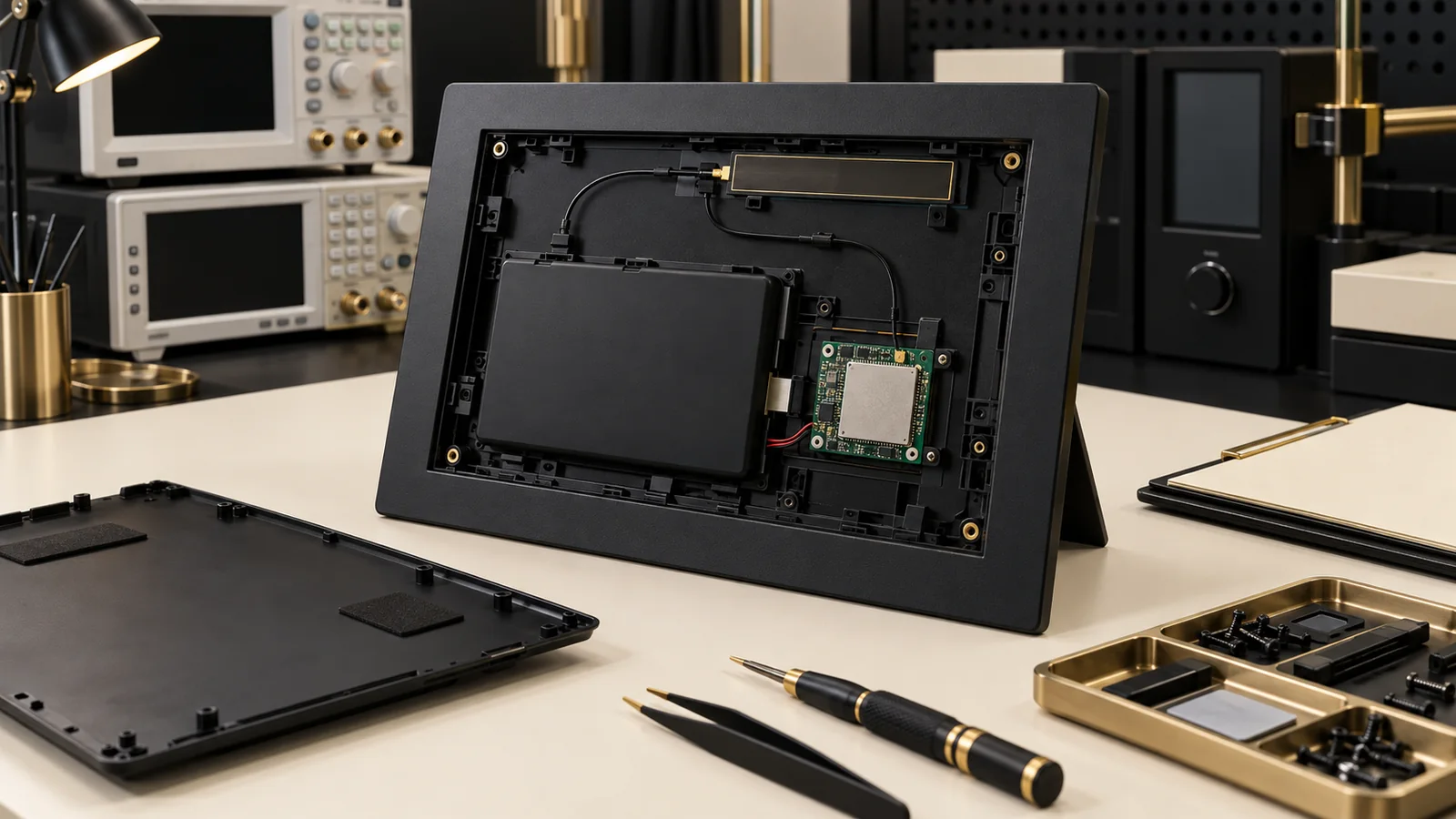
A pre-certified radio module can reduce work only when its certification, construction conditions and final integration are understood. Antenna substitution, cable length, shielding, power setting, co-location with another transmitter or enclosure material can change behaviour. The mark and number also need a valid route into the finished equipment.
Ask the registered body or Japan radio specialist to review the module certificate, block diagram, antenna specification and final installation. Keep the written conclusion with the model. A screenshot from a component seller is not a release record.
Control antenna and enclosure decisions
Digital frames create integration challenges because the display, metal trim, speaker magnets, power board and stand can sit near the antenna. A late cosmetic change can affect antenna orientation or shielding. The construction file should show photographs or drawings of component layout and outside view that match the certified configuration.
Define no-change zones around the antenna and identify approved suppliers and part numbers. If a black plastic rear cover becomes aluminium, or a flexible antenna changes shape, stop the change for radio review before mass production.
Match firmware to the Japanese configuration
Radio hardware may support bands or channels not permitted in the intended Japanese configuration. The production firmware, country code and user-access controls should lock the approved operation. A global firmware menu that lets users activate unreviewed settings can undermine the construction handover.
Record firmware hash or version, factory programming step and verification evidence. Include over-the-air updates in change control. The brand's app team should not release a radio-setting change without the certificate holder and specialist review.
Approve the technical conformity mark
TELEC explains that the certification mark should be affixed in an easily recognisable location on certified equipment, with specific alternatives where physical affixing is difficult or unreasonable. The exact format and electronic-display route, if proposed, must follow current Japanese rules and the certificate.
Use artwork supplied or approved by the certificate holder and registered body. Link the number to the correct module or construction. Never recreate a mark from an online image or use a number from a sample supplier. Check legibility, permanence, display steps and instruction references on the production-intent unit.
Map the Japanese importer for PSE
METI explains that manufacturers or importers of electrical appliances and materials subject to the Act are notifying suppliers. For imported items, the importer is responsible for the required notification and conformity work. A foreign company without the required Japanese establishment cannot simply replace the Japanese importer by printing its own name.
Name the importer before adapter label approval. If the distributor, marketplace seller or importer changes, review the notification, label and evidence. The OEM can support testing and records but should not claim the Japanese importer's legal role.
Check whether the external AC adapter is a specified item
METI lists AC/DC power supply units among specified electrical appliances and materials. Specified items require conformity assessment by a registered conformity assessment body in addition to the notifying supplier's duties. The exact adapter construction, ratings and intended use determine the route.
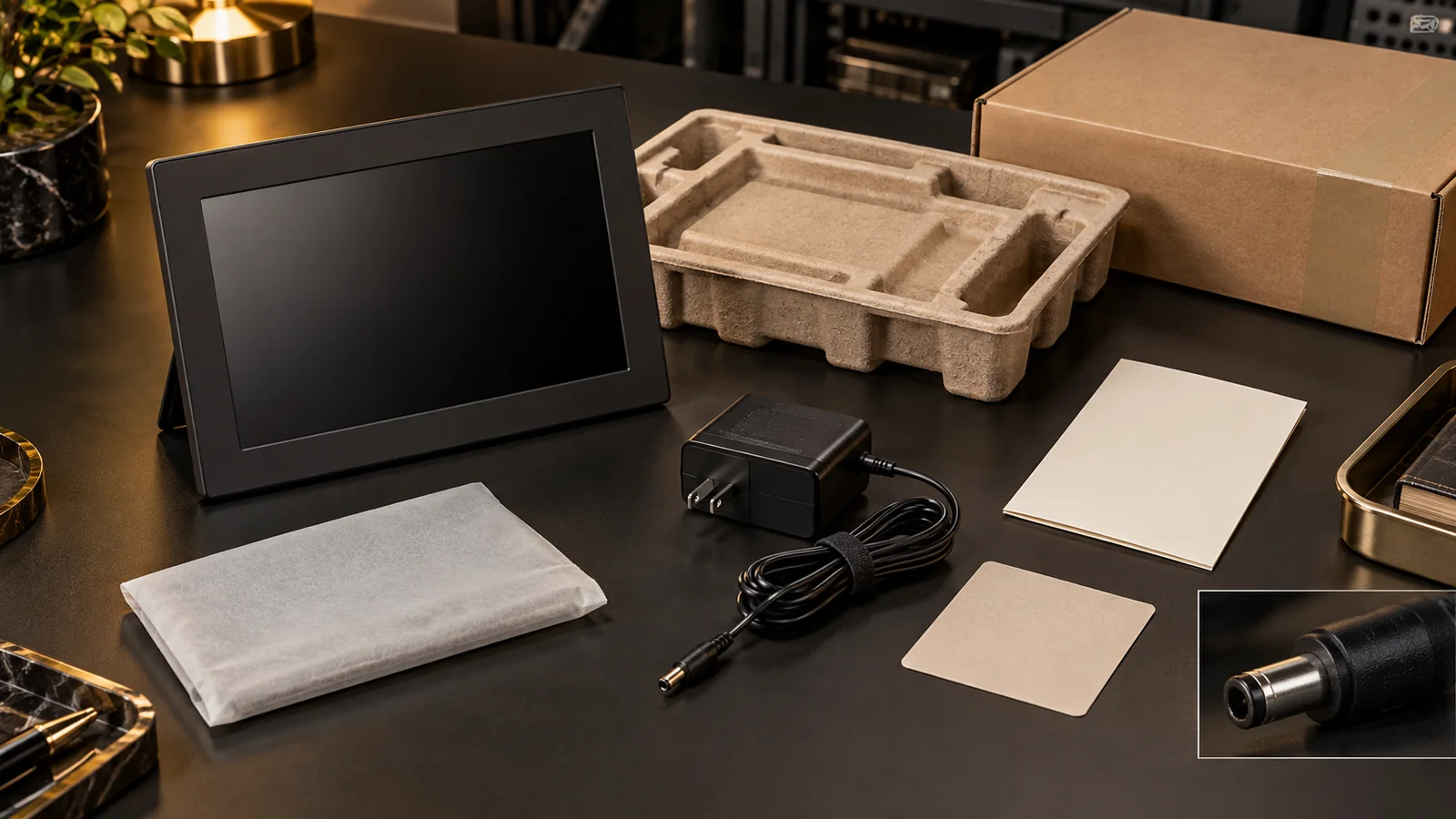
Obtain the adapter model, input and output ratings, plug, cable, manufacturer, factory, materials and certificate scope. Confirm that the evidence covers the exact Japanese unit, not a visually similar adapter for another voltage or plug. If the frame can also charge by USB-C, list which power supply is included and which claims are made.
Understand the PSE responsibility chain
METI's public procedure requires the notifying supplier to notify the business, ensure conformity with technical requirements, conduct self-inspection and retain records. Specified products also require the registered-body conformity assessment. Only a notifying supplier that has fulfilled the obligations can affix the prescribed PSE labelling.
A test report alone does not complete that chain. Build an evidence index connecting importer, notification, certificate where required, model, factory, self-inspection, records and label. Ask the Japanese responsible party to approve the exact use of its name and mark.
Separate adapter approval from frame safety
Even if the external adapter has the required PSE route, the low-voltage frame still needs a product-safety review appropriate to its construction and applicable laws. Check overheating, connector fit, cable strain, enclosure, sharp edges, battery charging where present, tip-over stability and foreseeable use. Radio and PSE records do not certify these broader hazards automatically.
Define the safety standards, test plan and responsible laboratory with the Japanese importer. Keep results specific to the finished model. Do not turn a supplier's internal test into a public certification claim unless a competent body and legal owner support the wording.
Write the label and instruction matrix
Create a matrix for the frame rear label, radio mark or electronic display, adapter label, carton, manual and online listing. Each item should have source, language, owner, minimum size, permanence and model relationship. Keep voluntary Wi-Fi or Bluetooth alliance logos separate from legal marks.
The instructions should explain rated power, approved adapter, setup, wireless use, ventilation, cleaning, secure placement and support. Where the mark is electronic, give clear steps to display it without requiring an unavailable network connection.
Control the bill of materials after approval
Radio module, crystal, antenna, cable, shielding, power amplifier, enclosure, adapter transformer, fuse, plug, PCB, firmware and label can all matter to the approval file. Mark controlled parts in the bill of materials and require supplier notice before substitution.
When a part becomes unavailable, compare the proposed replacement against the certified construction and PSE evidence before purchase. Do not wait for final inspection; a compliant-looking finished unit may contain an unapproved change that cannot be corrected with packaging.
Make the golden sample technically useful
The golden sample should carry the production module, antenna, firmware, adapter, labels and packaging. Photograph the closed product, open rear construction, antenna route, adapter sides, cable and mark locations. Record serial or lot reference and software version.
Pair the sample with the certificate and drawing revision. A sample without documents is difficult to audit; documents without a matching sample are difficult to verify. For reorders, compare both before releasing the first batch.
Keep marketplace content inside the approval boundary
Product pages and distributor sheets should name only radio functions, bands, adapter specifications and approvals supported by the released model file. Do not describe a global SKU as Japan-ready because one sample contains a certified module. If a customer selects another plug, adds Bluetooth, changes the app-controlled radio setting or receives a different adapter, the listing and approval review must follow that configuration.
Give the Japanese seller a controlled content sheet with model, included items, wireless functions, rated input, mark location, instruction link and support contact. Archive screenshots of the approved listing. Marketplace content is not a substitute for the physical mark, but contradictions can expose weak model control and create avoidable support questions.
Plan factory inspection evidence
Inspection should verify model, brand, radio module, antenna, firmware, adapter, plug, ratings, marks, carton contents and record linkage. Sample quantities and acceptance rules belong in the quality plan. Inspectors should not decide whether a new component is legally equivalent; they should stop and escalate a mismatch.
Collect clear photographs and lot records without exposing certificate-holder credentials. If production spans several factories, confirm which sites and quality methods are within the approval arrangement.
Create a Japan launch checklist
- Every wireless function and enabled band documented
- Radio-equipment classification reviewed
- Certification route and holder confirmed
- Certified construction and confirmation method available
- Module, antenna, enclosure and firmware match the file
- Technical conformity mark approved
- Japanese importer named
- Adapter scope and PSE category confirmed
- Notification, registered-body evidence and self-inspection responsibilities assigned
- Frame safety reviewed separately
- Label, instruction and online-listing matrix approved
- Controlled parts flagged in the bill of materials
- Golden sample linked to revisions and certificates
- Change notices and reorder checks active
Questions to send the OEM
Ask: Which wireless radios, bands, antennas and firmware settings are in the shipped model? Who holds the certificate? What construction and confirmation method were approved? Which changes require registered-body review? Where are inspection records retained? Which mark and number belong on the unit?
For power, ask: Which exact adapter and cable are supplied? Who manufactures them? Which PSE category and certificate cover the model? Who is the Japanese notifying importer? How are self-inspection records connected to each lot? What substitutions are prohibited without approval?
Experience scope and project limits
Editorial review: Jessica, Founder & Project Advisor at DOREMI Display. Updated 2 October 2026. Jessica's practical scope is B2B digital-frame briefing, component and packaging coordination, sample review, private-label artwork and production change control. This article does not present her or DOREMI as METI, MIC, TELEC, a registered certification body, Japanese importer, laboratory or legal adviser.
Use this workflow to make the product facts and supplier evidence reviewable. Current Japanese law, the registered body's decision, the certificate holder's controlled construction, the actual importer and qualified Japan advice control the market-entry decision.
Public sources used for this guide
- Google Search Central: optimizing for generative AI features
- TELEC: Radio Equipment Conformity Certification Service
- TELEC: certification examination, mark and construction-design obligations
- TELEC: radio equipment classifications and technical regulations
- METI: Electrical Appliances and Materials Safety Act
- METI: procedures required by the Four Product Safety Acts