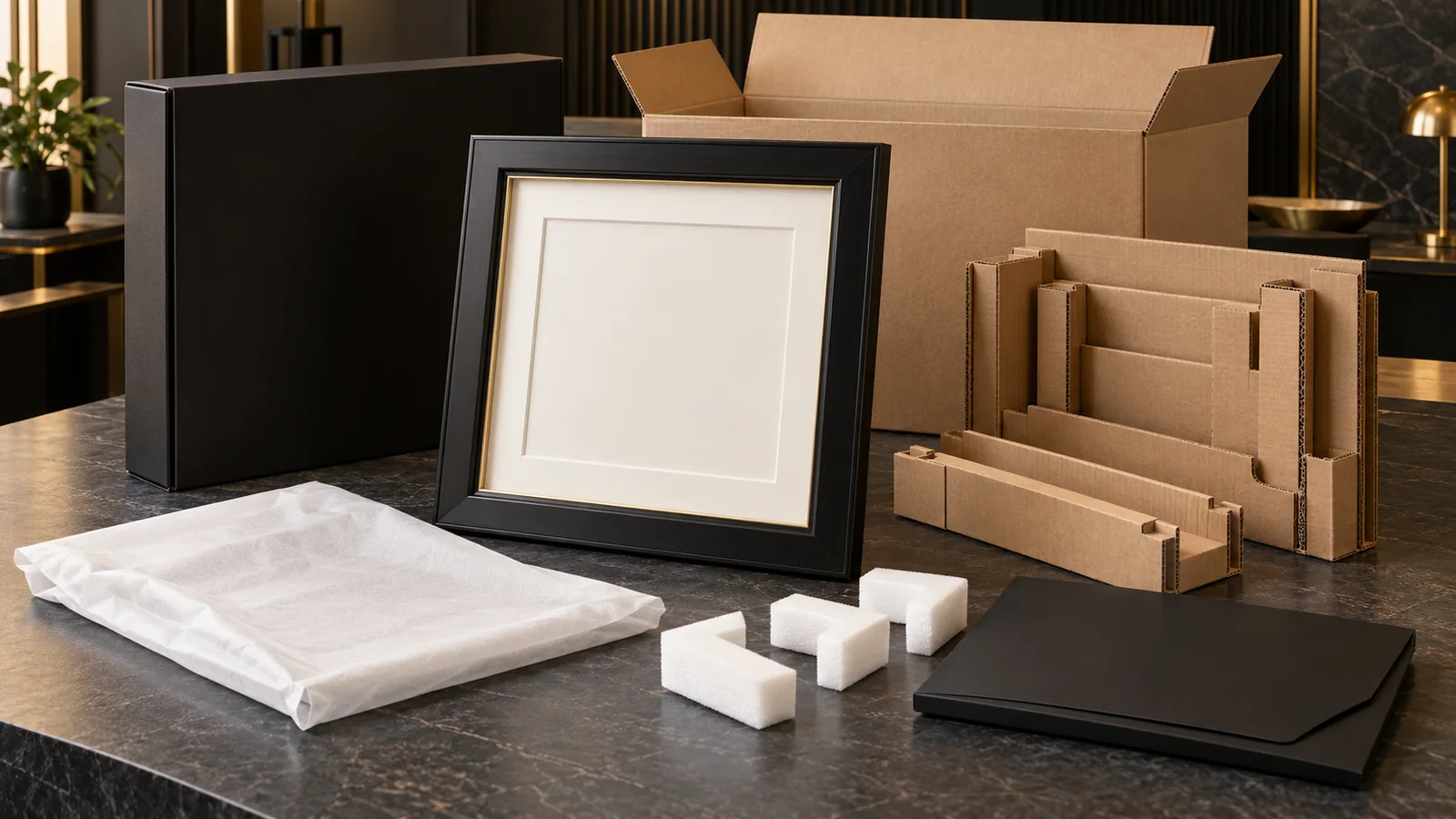
A display-frame shipment can contain a retail box, corner protection, glazing film, hardware pouch, instruction sheet, master carton and a second parcel box added by a fulfilment centre. Maryland's final packaging producer-responsibility rules do not treat that stack as one vague “carton weight.” They connect producer identity, brand, sales route, material category and weight distributed into the State.
This guide is for private-label frame brands, U.S. importers, retailers, marketplace sellers, fulfilment operators and OEM teams selling picture, certificate, poster, jersey, medal or record displays into Maryland. It converts the final 2026 regulations into a practical registration and data handover. It does not decide producer status, approve an exemption, register a business, calculate fees or replace the Maryland Department of the Environment, an approved PRO or qualified counsel.
What are Maryland frame sellers asking?
Common questions include: “Is the brand owner or importer the producer?”, “Does remote-sale packaging count?”, “Who reports the parcel box?”, “Are small sellers exempt?”, “What weights does the PRO need?” and “Can the factory provide one national packaging total?” The answer depends on the legal entity, brand, physical or online route, packaging function, Maryland distribution and current approved reporting method.
Google Search Central recommends people-first content that makes authorship, evidence and limitations clear instead of publishing thin pages for every query variation. This guide therefore assembles the questions into one operational file. Search intent is an editorial inference from Maryland's final rules and buyer–supplier handovers; DOREMI does not claim direct access to or measurement of Google AI Overview or AI Mode output.
Use the final 2026 rule set
Maryland's producer-responsibility page links the Packaging and Paper Products law, the May 2026 final action, COMAR 26.04.14, a compliance guide and the registered-producer list. The final chapter took effect in May 2026. Teams should use those current materials rather than an early bill summary or a draft slide deck.
Save the source URL and access date in the compliance file. When a PRO template, Department notice or plan requirement differs from an older internal checklist, route the change to the EPR owner. Do not ask the factory to interpret Maryland law; ask it for the stable packaging facts needed by the responsible U.S. entity.
Start with the consumer-market packaging boundary
The regulation defines packaging as material, a substance or an object used to protect, contain, transport, serve or facilitate delivery of a product sold or supplied with it for personal, noncommercial use and sold, offered, imported or distributed in Maryland. Covered packaging includes primary, secondary and tertiary packaging intended for the consumer market, along with integrated components, labels and void-fill materials.
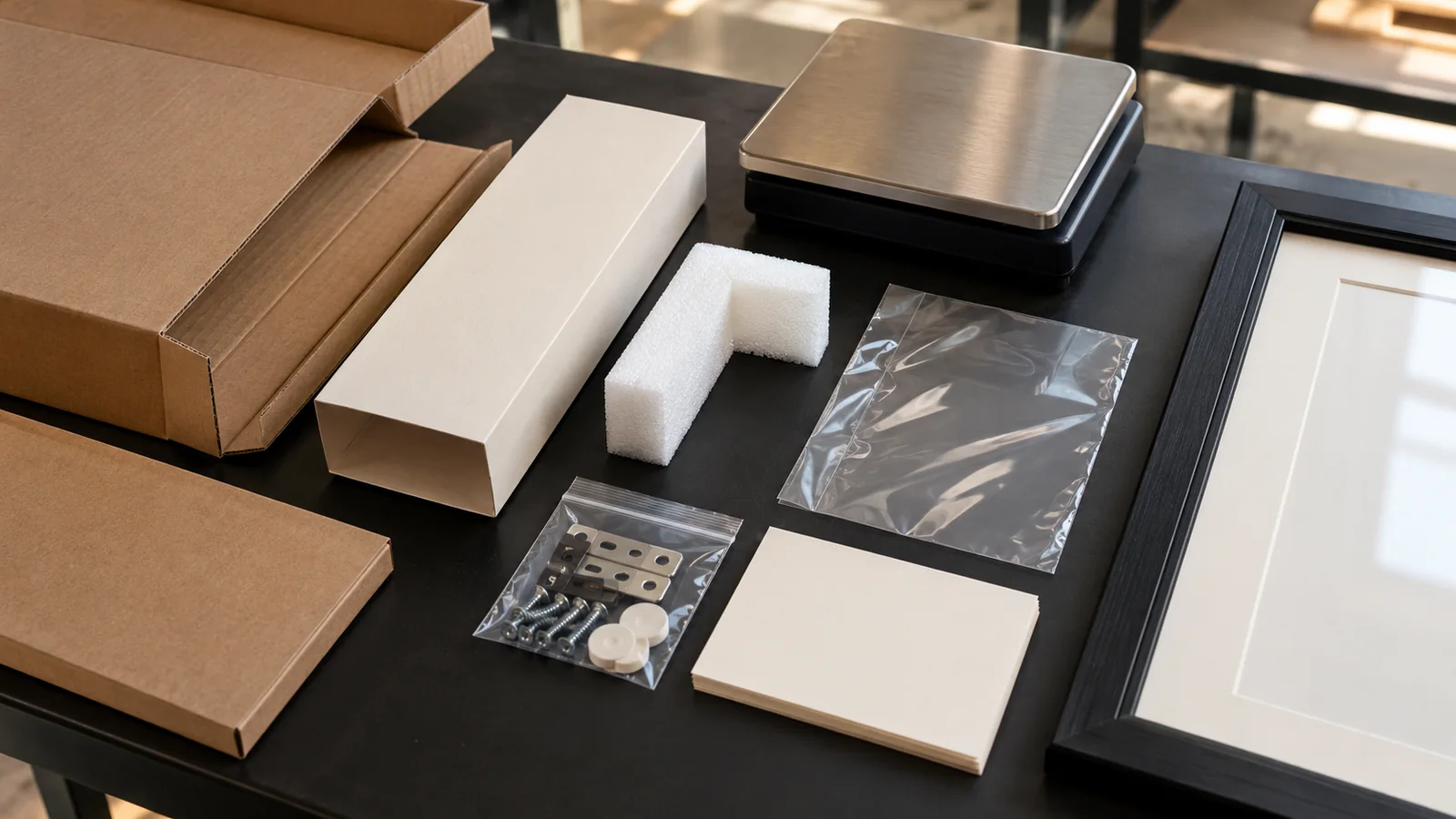
For a display frame, inventory the sleeve touching the product, glazing film, corner protectors, backing spacers, hardware pouch, label, retail or gift box, inner dividers, master carton, pallet materials where relevant and e-commerce shipper. Classify function and route before deciding whether an exclusion applies. A component does not disappear merely because it is small or added late in fulfilment.
Follow the physical-retail producer hierarchy
For items sold at a physical retail location, the rules set an order that can move through item manufacturer, licensee, brand owner, U.S. importer and first distributor depending on who exists and how the item is branded. A factory outside the United States should not automatically be assumed to be the Maryland producer, and a U.S. importer should not automatically assume it is outside the hierarchy.
Create a legal-entity sheet for each brand. Record manufacturer, brand owner, trademark licensee, U.S. importer, retailer, first Maryland distributor and written responsibility agreement. Have counsel or the approved PRO confirm the responsible entity. Keep the analysis with the brand list because a house brand and a licensed sports brand may not follow the same route.
Map remote-sale packaging separately
The final rule addresses e-commerce, remote sale and online distribution. For packaging used directly to protect or contain the item, the producer follows the applicable packaging hierarchy. For packaging used to ship the item to a consumer, the producer is the person that packages the item for shipment. That distinction matters when a marketplace or fulfilment centre adds a parcel box, paper void fill or protective overpack.
Draw the route from factory to importer, warehouse, fulfilment node and Maryland consumer. Mark who adds and removes each packaging layer and where it becomes waste. A factory BOM may describe the retail and master pack but not the final parcel. The seller needs a separate data feed or contract requirement for fulfilment-added packaging.
Test de minimis status with evidence
The regulation defines a de minimis producer as a person that, in its most recent fiscal year, introduced less than one ton of covered material into Maryland or earned global gross revenues of less than $2,000,000. The word “or” and the defined entity matter, but a seller should not apply the threshold informally without confirming its facts and current Department or PRO process.
Keep the entity's fiscal period, global revenue evidence, Maryland covered-material calculation, source sales data, packaging factors, method and approver. If an exemption or exclusion is claimed, the rule requires supporting records for Department approval. Recheck status after acquisition, brand growth, new marketplace access or a change in pack-out.
Do not turn long-term packaging into a shortcut
The rule contains concepts for long-term packaging and certain packaging used for long-term protection or storage of a product with a lifespan of at least five years, subject to the regulatory definition and Department determination. A premium keepsake box is not automatically excluded because a buyer might retain it.
Record whether the packaging has a resealing mechanism, whether it is designed for continuing protection, the product lifespan and the evidence supporting intended reuse or storage. Ask the Department or qualified adviser about the exact design. Do not rename an ordinary single-use retail box “archival storage packaging” to avoid reporting.
Build the material-category BOM
Maryland requires covered materials to be identified under defined registration categories. A useful factory BOM separates corrugated fibreboard, paperboard, flexible plastic film, rigid plastic, expanded foam, metal, glass, wood, textile or multimaterial components as applicable. It also identifies small-format items and coatings or laminations that may affect category treatment.
For every component record supplier part number, material description, structure, unit mass, product units per pack, effective revision and measurement method. Do not group “paper” when a laminated insert, coated board and corrugated master carton may be handled differently. Ask the PRO for its current category mapping rather than inventing a local taxonomy.
Measure production-equivalent components
Use actual approved pack materials, a calibrated scale, a documented sample count and consistent rounding. Weigh packaging separately from the display frame and distinguish unit, inner, master and shipment quantities. Photograph the separated components and retain a representative sample or drawing tied to the revision.
Where component mass varies, document tolerance and use an approved method. Do not subtract a guessed frame weight from gross parcel weight. Moisture, carton grade, supplier changes and mixed pack quantities can make that shortcut unreliable. Reweigh after a material, dimension or pack-out change.
Convert units into Maryland weight
The annual registration information includes covered materials by category and by weight distributed into the State during the previous calendar year. Build a controlled calculation from Maryland units to component mass, then aggregate by category. Preserve units sold, delivered, returned, cancelled, replaced and repacked separately so the reporting owner can apply the approved rules.
Use order-level destination data when available. If state-specific data is not available or feasible, the final rule allows prorated national data only with Department approval. “We used national sales because it was easier” is not an approval. Keep the request, method and decision in the evidence file.
Control the brand list
Registration requires brand information as well as material weights. Map every consumer-facing brand, licensed programme, retailer private label and unbranded product to the responsible producer entity. Match spelling to packaging, marketplace listings and contractual rights. Retain the effective dates for launches, discontinuations and transfers.
A factory model number is not a brand, and a distributor account name may not be the trademark owner. If one construction ships under several brands, the packaging weight can be shared as a controlled factor while brand and sales populations remain distinct. Prevent duplicate counting when affiliates sell the same item.
Join the approved PRO or assess an IPP
The regulation allows compliance through an approved Producer Responsibility Organization, an approved individual producer responsibility plan, or a combination for different covered materials. Maryland's public page identifies the approved organisation and publishes programme materials. The business should confirm the current participation route directly.
Assign owners for registration, brand data, material data, fees, plan questions and Department correspondence. The OEM is a data contributor, not the programme applicant unless the legal structure actually makes it responsible. Service contracts should preserve the producer's access to submitted data and historical records.
Respect the registration calendar
The final rule sets annual registration beginning in 2026 and requires the approved PRO or an individual-plan producer to submit defined information and fees. Producers participating in a PRO must provide their information by the date identified in the approved plan or Department method. The public rules also establish later plan and sales restrictions that should be checked against current Department notices.
Build a calendar from the PRO's data deadline, not only the statutory date. Include brand freeze, sales extraction, BOM revision freeze, fulfilment data, material mapping, management approval, corrections and submission evidence. A factory closure or holiday should not make the U.S. team miss a data deadline.
Capture fulfilment-added packaging
Ask each warehouse or marketplace fulfilment service for the packaging types it adds by frame size, service level and shipping route. Capture parcel cartons, mailers, paper, air pillows, foam, tape and labels where required by the applicable methodology. Identify who is the person packaging the item for shipment under the remote-sale rule.
Use a sample pack-out audit to test the data feed. Compare recorded packaging factors with actual orders and carrier packaging. Returns and replacements may use different materials. If the fulfilment provider cannot supply Maryland-specific totals, agree a documented allocation method for qualified review.

Keep records for at least five years
COMAR requires documents necessary to demonstrate compliance to be maintained for a minimum of five years and made available within the stated Department timeline. Relevant records can include calculations, dues, recycling information, postconsumer recycled content data and other material needed to assess compliance.
Archive producer analysis, brand lists, sales extracts, packaging BOMs, measurement evidence, category mapping, exemption support, PRO submissions, invoices, corrections and correspondence. Use immutable reporting-period folders. A live spreadsheet that overwrites last year's factors cannot explain an earlier filing.
Design a correction workflow
If a brand is omitted, a material is misclassified, a weight factor is wrong or a fulfilment pack was excluded, preserve the original submission and quantify the effect. Contact the PRO or Department using the current procedure. Record the corrected file, approval, fee impact and preventive action.
Trace the root cause to the source: stale packaging drawing, missing marketplace route, unreported warehouse carton, wrong unit conversion or responsibility change. Update the system and train the owner. Do not silently replace the evidence pack after the fact.
Use change control before the next order
Add an EPR impact field to packaging and product engineering changes. A new frame dimension, deeper shadow box, foam density, sleeve, gift box, carton grade, shipping node or brand can change the material total and responsible-party map. Assign an effective lot and date.
Preserve both old and new BOMs because a calendar year may contain several revisions. Notify the reporting owner before production. A unit-cost saving is incomplete if the new pack creates unrecorded material data or shifts packaging work to a fulfilment partner.
Buyer and supplier readiness checklist
- The final Maryland rules and current PRO materials were reviewed
- The responsible entity is mapped for each brand and route
- Physical retail and remote-sale packaging are separated
- Fulfilment-added shipping packaging has an identified owner
- Any de minimis or material exclusion has evidence
- Every packaging component has a controlled category and unit mass
- Maryland units reconcile to material weight by reporting period
- Brand names and effective dates are controlled
- PRO or individual-plan responsibilities are assigned
- Deadlines include supplier and fulfilment data lead time
- Changes preserve old and new pack revisions
- Records are retained for at least five years
- Corrections preserve the original audit trail
Experience scope and project limits
Editorial review: Jessica, Founder & Project Advisor at DOREMI Display. Updated 26 October 2026. Jessica's experience scope covers B2B display-frame specifications, packaging BOMs, supplier measurement records, sample approval, private-label handovers and fulfilment project coordination. She is not presented as the Maryland Department of the Environment, a PRO, environmental lawyer or fee adviser.
Producer identity, covered materials, exemptions, category mapping, state allocation, registration and fees must be confirmed for the actual legal entity, brand and sales route using current programme sources. This article is a preparation framework and does not confirm that a seller is registered, exempt or compliant.