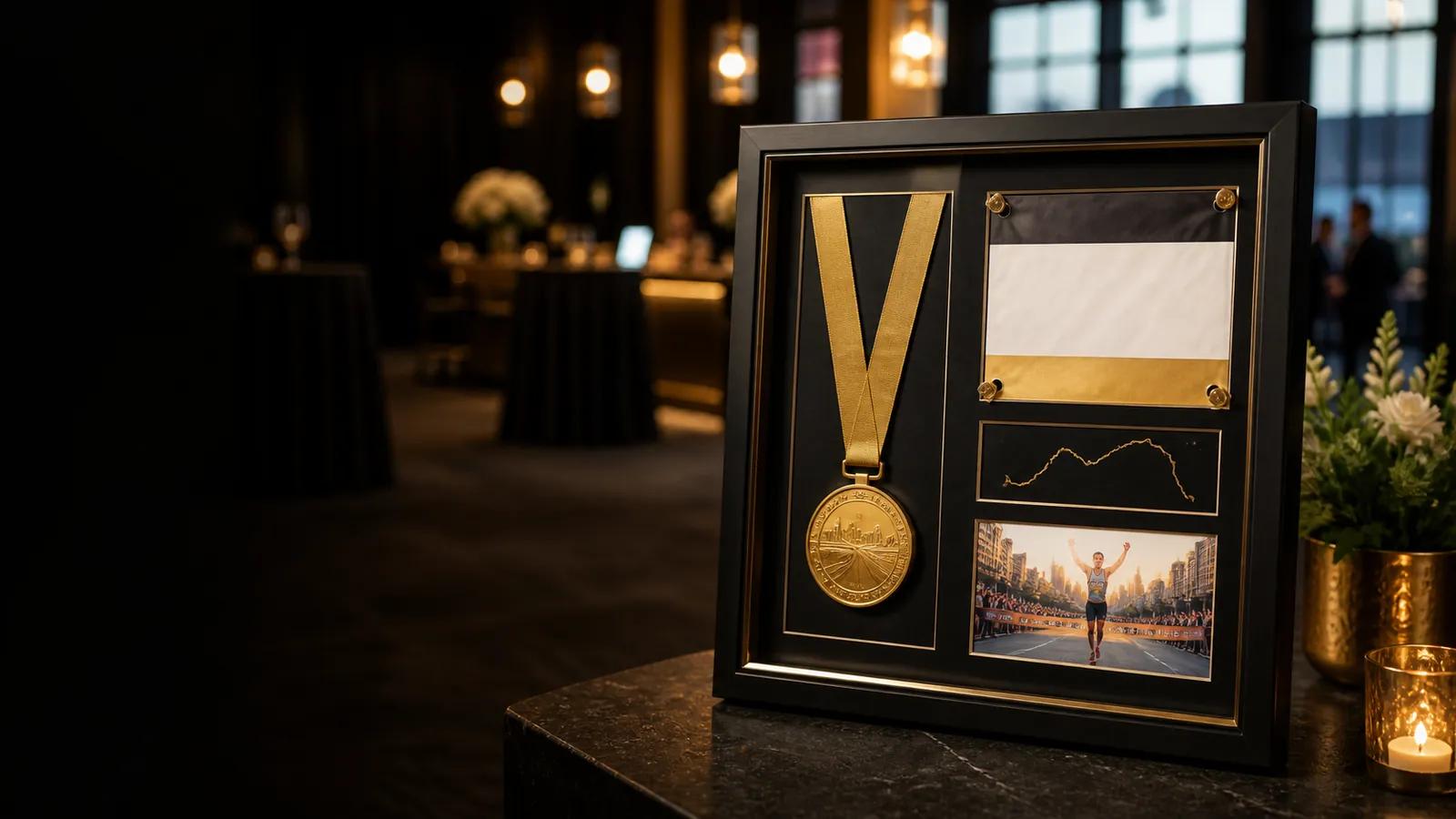
A medal remembers the finish line. A display programme decides what happens after it. For an event organiser, club or brand, that programme can extend the value of the achievement into a gift, retail product, sponsor item or annual tradition. It also introduces practical decisions about contents, timing, personalisation and delivery that should be made before the event calendar becomes urgent.
This guide is for teams sourcing medal display frames or shadow boxes at programme scale. It focuses on the decisions that make an offer easy to explain to participants and practical to manufacture for a supplier.
Choose the programme model first
There are several valid medal-display models. An organiser may sell a ready-to-ship frame after the event, include a display in a VIP package, offer it as sponsor recognition, or distribute it to a club’s annual achievers. Each model changes the unit mix, demand certainty, product price point and packing plan.
Write down the expected buyer or recipient journey. If participants order after the race, you may need a stock format with an insert that works for many names. If displays are preplanned for finishers, you need a dependable forecast, packing sequence and event deadline. If a sponsor receives a limited presentation piece, the brief can emphasise individualisation and premium materials.
Identify the objects that tell the story
A medal rarely tells the entire story by itself. A programme may include a bib, route graphic, event photo, finishing time, year, club mark or a separate plaque. The most useful brief lists all potential items and ranks them. This protects the visual hierarchy: a display with every possible item can lose the achievement it was meant to celebrate.
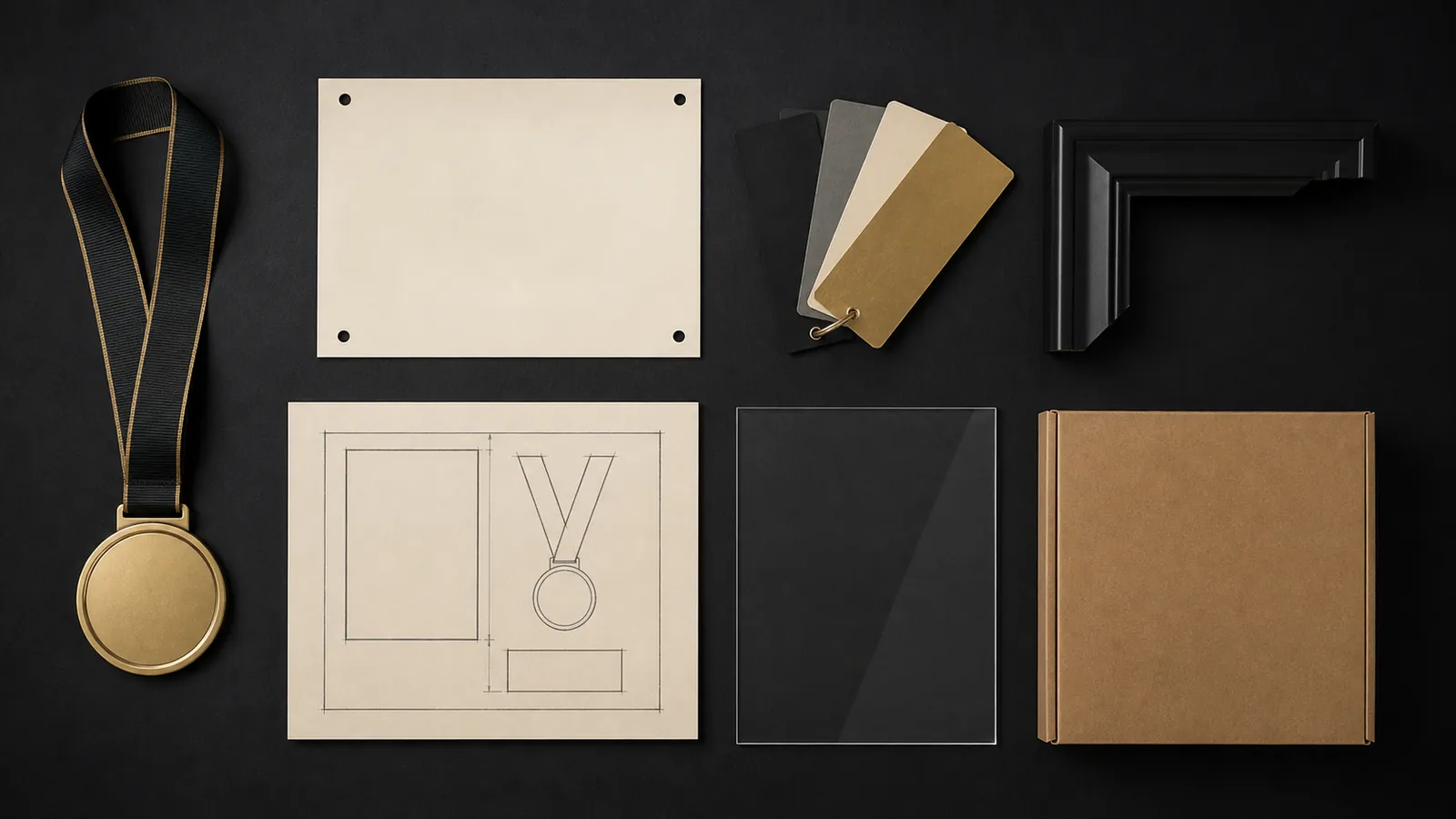
Provide the real medal or an accurate dimensional drawing. Ribbon width, medal thickness, pin placement and bib size influence usable depth and layout. If a photo will be included, decide whether it is a standard image, a local event image or individual participant photography. Every variation has a production consequence.
Balance event identity with lasting display value
Event branding should be recognisable without overwhelming the personal achievement. A dark backing, a restrained route line, a small date and a carefully placed event mark can often outlast a large promotional graphic. The test is simple: will a recipient still want to display this in a home or office after the campaign visuals have moved on?
For annual events, establish which elements remain constant and which change by year. A stable frame system with an updated insert can support repeat ordering and a recognisable series. A completely new format each year may be right for a special anniversary, but it creates more artwork, sampling and inventory risk.
Use an artwork handover that reduces last-minute changes
Send vector logos, approved colour values, print-ready artwork, required languages and a hierarchy of mandatory information. Confirm which elements are printed, engraved or applied as plaques. If there are sponsor marks, specify their clear-space rules and the final approval owner.
Do not rely on screenshots in messaging apps as the final source for production. Use a named file set and version date. One team member should confirm the final artwork before the supplier moves beyond sampling. This small discipline is especially valuable when event title, route, date or sponsor details change close to launch.
Plan a sample around the real experience
Ask for a sample that represents the actual programme, not only a generic frame. It should include the target medal or accurate substitute, the intended artwork, backing finish, plaque treatment and proposed packaging. Review the item in the same orientation the recipient will see: on a wall, on a shelf or while opening a gift box.
Inspect visual balance, dust control, mounting security, accessible hanging hardware and any sharp edges. If the medal is suspended, observe how the ribbon lies. If the display contains a photo, check its legibility at normal viewing distance. Use written notes and photos to document corrections before production.
Make fulfilment part of the product design
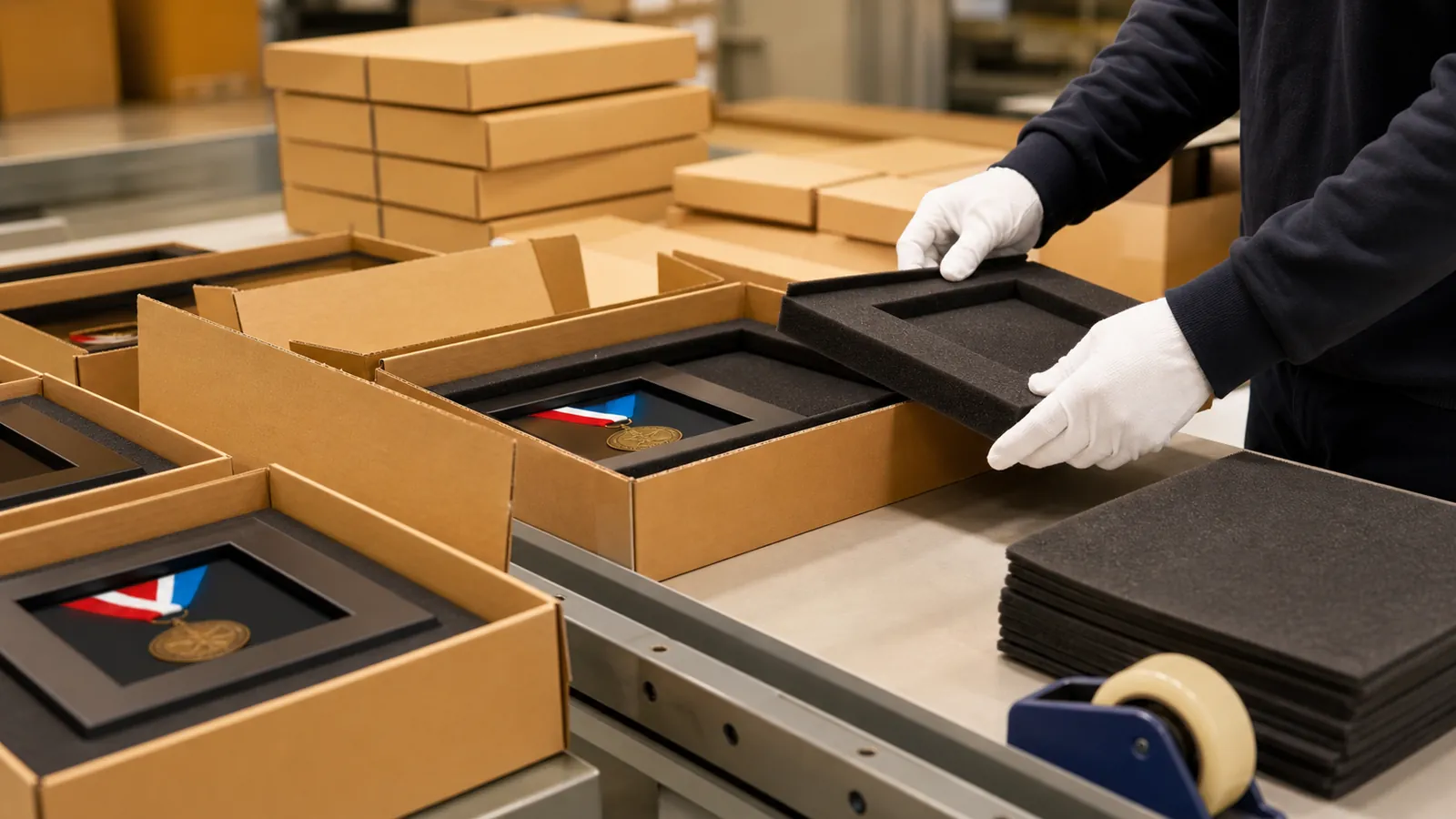
Event teams often decide on the display before deciding how it travels. That is backwards. A frame designed for direct-to-recipient shipping needs a robust protection plan. A frame delivered in bulk to a venue needs a master-carton count, handling instructions and a practical way to identify variants. A retail product may need a presentation sleeve, barcode area or replenishment-friendly carton.
Ask for packed dimensions and gross weight with the proposed internal protection. These figures influence storage, last-mile cost and the type of carton that can be handled without damage. If the display is shipped internationally, discuss how documents, incoterms and destination requirements will be managed by your logistics partners.
Set quality checkpoints before production starts
A quality plan for medal displays should include structural and presentation checks. Confirm the frame profile and finish, backing colour, glazing condition, print accuracy, plaque placement, medal mounting, cleaning standard, hanging hardware and packing completeness. Where the programme has variable data, define who checks the data file against the finished item.
For repeat programmes, retain a sample and a set of approved photographs. The point is to give future orders a visual reference, not to make every unit identical in ways the material cannot support. An agreed reference lets both buyer and supplier distinguish acceptable variation from a genuine defect.
Forecast demand honestly
When the display is optional, use a range rather than a single optimistic number. Consider VIP count, retail conversion, sponsor allocation, reserve stock and the lead time available for replenishment. A supplier can often recommend a more efficient production and packing approach when they understand the range and the risk of a late reorder.
Where demand is uncertain, a standardised frame with changeable inserts can be more resilient than a highly personalised build. Where the event has a committed pre-order base, personalisation can be planned with more confidence. The right approach follows the demand model, not the most elaborate visual reference.
Questions to include in your request for quotation
- Which medal, bib, photograph and event elements must be displayed?
- What are the expected unit range, event date and delivery destination?
- Which finishes and glazing options suit the intended presentation and shipping route?
- How will the medal and ribbon be secured?
- What will the display, inner packaging and master carton weigh and measure?
- What sample, artwork and data approvals are needed before production?
From a memorable event to a repeatable programme
The strongest display programmes are planned as a system: a recipient story, a clear visual hierarchy, a controlled sample, practical packaging and a delivery plan. That system does not reduce the emotional value of a medal. It is what allows more recipients to receive the moment in the condition the organiser intended.
Editorial review: Jessica, Founder & Project Advisor at DOREMI Display. Updated 11 August 2026. Recommendations are general sourcing guidance and should be checked against your actual event objects, delivery route and production timetable.
Design the offer around how participants decide
For an optional post-event keepsake, the display needs an offer that is simple to understand quickly. Show the medal, the display dimensions, what is included, the personalisation choice and the delivery expectation. Avoid promising a level of customisation that the production process cannot support at the event scale. A clear standard format with a strong event identity can convert better than a complicated menu of unclear options.
Consider when the participant encounters the offer. Before race day, they may need confidence that the product represents an event they have not yet completed. Immediately after finishing, the emotional connection is high but attention is short. Weeks later, a follow-up offer may need stronger photographs and a reminder of the personal achievement. The same physical display can be presented differently across those moments.
Account for variable event objects
Not every medal, ribbon or bib arrives exactly as the first design file suggests. Confirm final medal thickness, ribbon length, attachment point and any year-specific features before approving a production layout. If a sponsor, route or category can change, make the insert or plaque system flexible enough to accommodate approved updates without rebuilding the entire frame.
Where a display includes a participant photograph, define whether it is universal artwork, a customer-uploaded photo or an event image selected by the organiser. Each option changes the data workflow and customer-support burden. A programme that uses individual images needs a clear submission deadline, file quality guidance and a method to handle missing or unsuitable uploads.
Make quantity decisions with a risk range
Few event teams know the exact final demand for a keepsake product. Instead of hiding this uncertainty, give suppliers a base quantity, a likely range and an upper scenario. Ask which elements become more efficient at each level: frame components, print runs, cartons or regional deliveries. This produces a more honest commercial conversation than asking for a single price that later needs to be renegotiated.
For stock held after the event, consider whether an undated or easily updated backing can serve more than one year. For pre-sold displays, define the exact cut-off for final names and delivery addresses. Demand planning is closely tied to the display construction because it determines whether a frame can be safely held, personalised late or replenished in a small second batch.
Create handover instructions for every route
A venue team distributing displays needs an easy way to identify cartons and check quantities. A fulfilment partner needs packed dimensions, weights, product codes and any fragile-handling requirements. A sponsor receiving a presentation item may need a different outer box and a simple note explaining the objects included. Capture these needs in the project brief rather than assuming every recipient will use the same packaging.
If items cross borders, align the product description, origin information, carton marks and shipping document requirements with the logistics partner. The display manufacturer can provide packed-product data, but the importer or organiser remains responsible for the wider delivery arrangement. Good handover documents prevent the final product from becoming difficult to move after it has been carefully made.
Use feedback to strengthen the next event edition
When the first programme ships, save approved product photographs, final artwork, packing specifications, delivery issues and participant comments. This record makes next year's discussion more specific. You can decide which parts of the display are a recognisable tradition and which should change with the race identity or sponsor story.
A medal display programme succeeds when the operational system supports the emotional outcome: participants receive a piece that feels connected to their effort, and the organiser can deliver it without a last-minute exception process. That balance is what turns an attractive idea into a durable event asset.