
A picture, certificate, award, vinyl-record or memorabilia frame can arrive in Mexico with attractive global packaging and still need a separate commercial-information review. NOM-050-SCFI-2004 is Mexico’s general labelling standard for many consumer products, while product-specific rules can displace it. The importer must identify the route before artwork is released or cartons are packed.
This guide is for Mexican importers, retailers, private-label brands and overseas display-frame factories preparing ordinary non-food consumer frames. It does not classify a tariff line, determine which NOM applies, approve a label or replace a customs broker, verification unit or Mexican legal adviser.
Is NOM-050 still current in 2026?
The Secretaría de Economía’s official normalisation page lists NOM-050-SCFI-2004 as vigente, or in force, and records a 2024 systematic review confirmation. The 2026 foreign-trade rules also reference Chapter 5 commercial-information requirements in their Annex 27 framework.
Do not reject the standard because its original publication date is 2004, and do not assume a blog summary is the current legal text. Save the official status page, DOF text and current customs instructions used for the shipment review.
Why are frame buyers asking these questions?
Frame programmes often share one carton design across North America. Buyers ask whether English-only packaging can be stickered, whether a visible single frame needs a quantity declaration, where the importer’s details belong, and how individual units inside a master carton should be treated.
These questions are editorial inferences from official Mexican sources and ordinary importer–factory handovers. They were not captured from Google AI Overviews or AI Mode. A useful answer starts with product scope and retail presentation rather than translating an existing label word for word.
Confirm that the product falls under the general standard
NOM-050 states that it applies broadly to domestic and imported products intended for consumers in Mexico. It also excludes products governed by specific commercial-information provisions or other applicable regulation, as well as listed categories such as bulk products and publications.
Define the actual product: an empty wall frame, framed certificate, shadow box, record display, electronic digital frame, kit, toy-like children’s item or decorative lighted product may not follow the same route. Ask the importer and broker to screen tariff classification and product-specific NOMs before using the general template.
Do not reuse the digital-frame label decision
A Wi-Fi or electronic digital photo frame may involve electrical, radio, safety or specific commercial-information requirements beyond NOM-050. The Journal’s separate Mexico digital-frame guide addresses IFT and NOM-024 questions. An ordinary non-electronic frame should not inherit that artwork automatically.
Create a regulatory family field in the product master. Keep non-electronic frames, lighted frames and connected digital frames separate even when the front appearance is similar. The importer must approve the route for each family.
List the mandatory commercial information
NOM-050 Chapter 5 requires applicable products to carry specified commercial information. The official text includes the generic product name when it is not identifiable at sight, quantity under the relevant quantity standard, and the name or business name and fiscal address of the responsible party for domestic products or the importer for imported products, together with other applicable items.
Build a requirement matrix from the official text for the exact retail presentation. Do not copy another brand’s label because its product visibility, quantity, importer and instruction needs may differ.
Prepare the information in Spanish
The standard requires mandatory commercial information in Spanish, without preventing additional languages when they do not mislead or conflict. SAT’s 2026 Annex 27 note also states that referenced data must be presented in Spanish for that route.
Use a qualified Mexican reviewer for terminology, accents, address format and warnings. A literal machine translation can create an inaccurate product name or instruction. Keep the approved Spanish master text separate from optional English or French copy.
Decide whether the product is identifiable at sight
NOM-050 explains when a product can be considered identifiable at sight, including when packaging lets the consumer see the content or presents an accurate graphic without showing products that are not included. If the frame is not identifiable, a generic name becomes important.
Do not use a lifestyle image with extra props as the only identification method. If a carton shows a wall gallery, certificate and accessories not included in the box, the overall presentation may confuse the consumer. Use an accurate product name and contents statement approved for the SKU.
Handle quantity according to the actual pack
The official standard links quantity to NOM-030 and notes that a quantity declaration may not be necessary when the content or number of pieces can be identified at sight. The importer should decide how that rule applies to a single visible frame, a sealed box, a set, a multipack or a frame-and-accessory kit.
Define what counts as the sale unit and included pieces. A “two-frame set”, a frame with stand and wall hardware, and a master carton of individually sold units require different artwork logic. Do not invent metric dimensions or piece counts from a supplier catalogue that does not match the packed SKU.
Use the importer’s exact legal information
For imported products, the official text calls for the importer’s name or business name and fiscal address in the applicable field. Obtain the exact approved data from the Mexican importer; the overseas factory should not translate, abbreviate or guess it.
Control the importer block as variable artwork if the same product serves several customers. A distributor’s warehouse, marketplace seller or foreign factory address is not automatically a substitute. Require written approval before print production.
State country of origin accurately
NOM-050 includes country-of-origin information for imported products under its requirements. Align the label with the customs file and actual manufacturing facts. Do not use a sales office, brand domicile or final distribution centre as the country of origin.
If components come from several countries and assembly occurs elsewhere, the importer and broker should determine the correct statement. Keep the origin decision separate from promotional phrases such as “designed in” or “inspired by.”
Add instructions and warnings when applicable
The standard addresses instructions, warnings and related information when the product’s use or risk requires them. Frames may need practical information about wall mounting, stand use, glazing, small hardware, cleaning or safe handling depending on construction and target user.
Use the product-safety assessment to decide content. Do not add a generic warning merely to look compliant, and do not omit relevant instructions because the product appears simple. The instruction sheet, product label and online listing should not contradict one another.
Place information where it remains available
NOM-050 describes information presented on labels fixed so that it remains available until normal sale or acquisition, and it gives placement rules for key information on the principal display surface. A loose card that falls out during distribution may not perform like a controlled label.
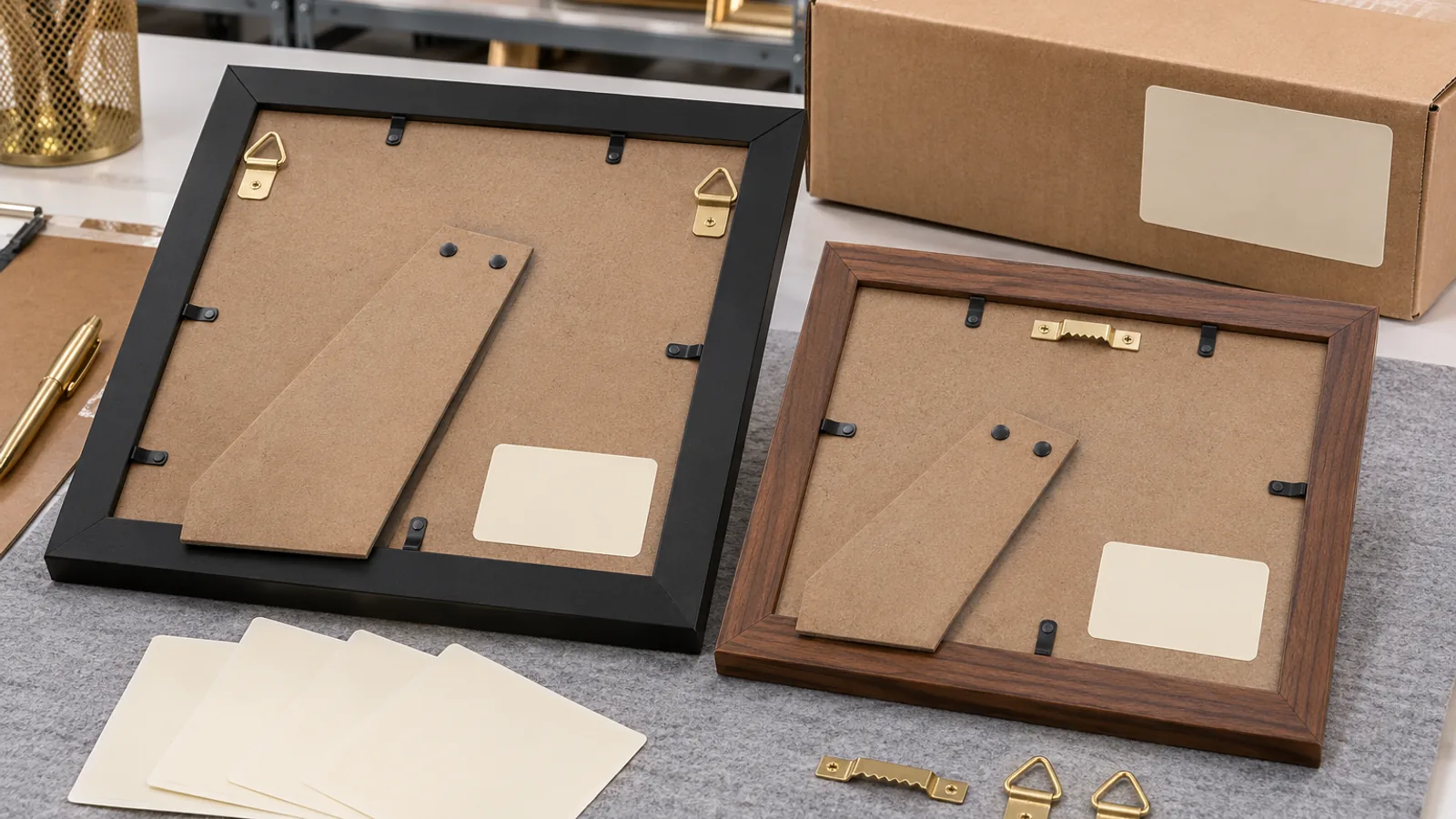
During sample review, test adhesion, legibility, contrast, abrasion and placement on the real backboard or carton. Avoid covering hanging hardware, safety notices, ventilation openings or finish details. Photograph the approved position and record label size without treating the image as regulatory approval.
Control individual, multiple and collective packaging
The standard provides detailed routes for multiple or collective packs. When the outer pack hides the contents, required information may need to appear on that pack, including the specified statement for units not labelled for individual sale. When individual units will be removed and sold separately, each may need the applicable information.
Tell the factory whether cartons are logistics masters, retail multipacks or break-pack inventory. A master carton is not automatically the consumer pack. Map the unit that reaches the consumer and every point where a retailer may split the shipment.
Agree where compliance work occurs
Mexican trade rules can provide different compliance or verification routes depending on the tariff line, NOM, customs regime and current procedures. Do not promise that labels may always be added after import, and do not insist they must always be printed at the factory without reviewing the applicable route.
The importer and broker should document whether factory labelling, a verification unit, authorised warehouse process or another route is used. The purchase order should then state the approved artwork, location, evidence and release gate.
Use Annex 27 as a customs-screening source, not a shortcut
SAT’s Annex 27 to the 2026 foreign-trade rules lists commercial-information provisions and exceptions relevant to customs procedures. It does not replace product classification or the full NOM text. A tariff line and product description must be screened by the responsible Mexican parties.
Keep the broker’s written instruction with the entry file. If the tariff classification or product function changes, rerun the screening. Do not reuse an old exception because the carton looks similar.
Build an artwork matrix by SKU
For each SKU, record product name, visible contents, quantity statement, importer block, country of origin, materials or care information if used, instructions, warnings, language versions, label location, retail pack type and approval date. Link the matrix to the final print file.
Mixed frame collections need separate rows when size, material, set count, glazing, hardware or importer differs. A single family label is efficient only when every statement remains true for every packed unit.

Review the e-commerce offer as a separate surface
A compliant physical label does not automatically make marketplace copy accurate. The product name, set count, dimensions, included hardware, materials, origin and responsible seller should match the packed unit. Do not show accessories or artwork that the consumer will not receive.
Provide retailers with an approved Spanish data sheet and current photographs. Control reseller feeds and mobile listings, where qualifiers may be truncated. Correct the online offer when packaging or importer information changes.
Run a packed-sample inspection
Inspect a production-representative unit rather than a PDF alone. Confirm the label is present, Spanish text matches the approved master, importer and origin are correct, quantity matches the pack, instructions are included and no old label remains visible underneath.
Check the individual unit, retail carton and master carton separately. Record photographs and lot information. A pre-shipment inspection cannot grant legal compliance, but it can catch practical artwork and packing errors before customs or retail distribution.
Set change triggers and inventory controls
Trigger review when the importer, country, product name, piece count, dimensions, materials, glazing, hardware, instructions, pack type, tariff classification or applicable NOM changes. Date the artwork release and identify old stock that remains in the channel.
Do not cover a previous importer label with a new one unless the Mexican team approves the method and the result is durable and unambiguous. Quarantine mixed artwork versions until the correct route is confirmed.
Mexico retail-label checklist
- The product and tariff classification are screened
- Product-specific NOMs are checked before NOM-050
- The official current standard and 2026 customs source are saved
- Mandatory information is approved in Spanish
- Generic product name and visibility are assessed
- Quantity matches the real consumer pack
- Importer details use the exact legal data
- Country of origin matches the customs file
- Instructions and warnings follow the product assessment
- Label placement remains legible and durable
- Individual, multipack and master cartons are distinguished
- A packed sample is checked before release
Experience scope and project limits
Editorial review: Jessica, Founder & Project Advisor at DOREMI Display. Updated 21 November 2026. Jessica’s practical scope covers display-frame specifications, OEM/ODM samples, packaging artwork, packing reviews and importer–supplier communication. She is not presented as SAT, Secretaría de Economía, a Mexican customs broker, verification unit or lawyer.
The Mexican importer, broker, verification body and qualified advisers must determine classification, applicable NOMs, commercial information, Spanish wording, label timing, customs route and final approval for the actual product. This guide prepares supplier and artwork facts; it is not a NOM certificate, customs instruction or legal opinion.