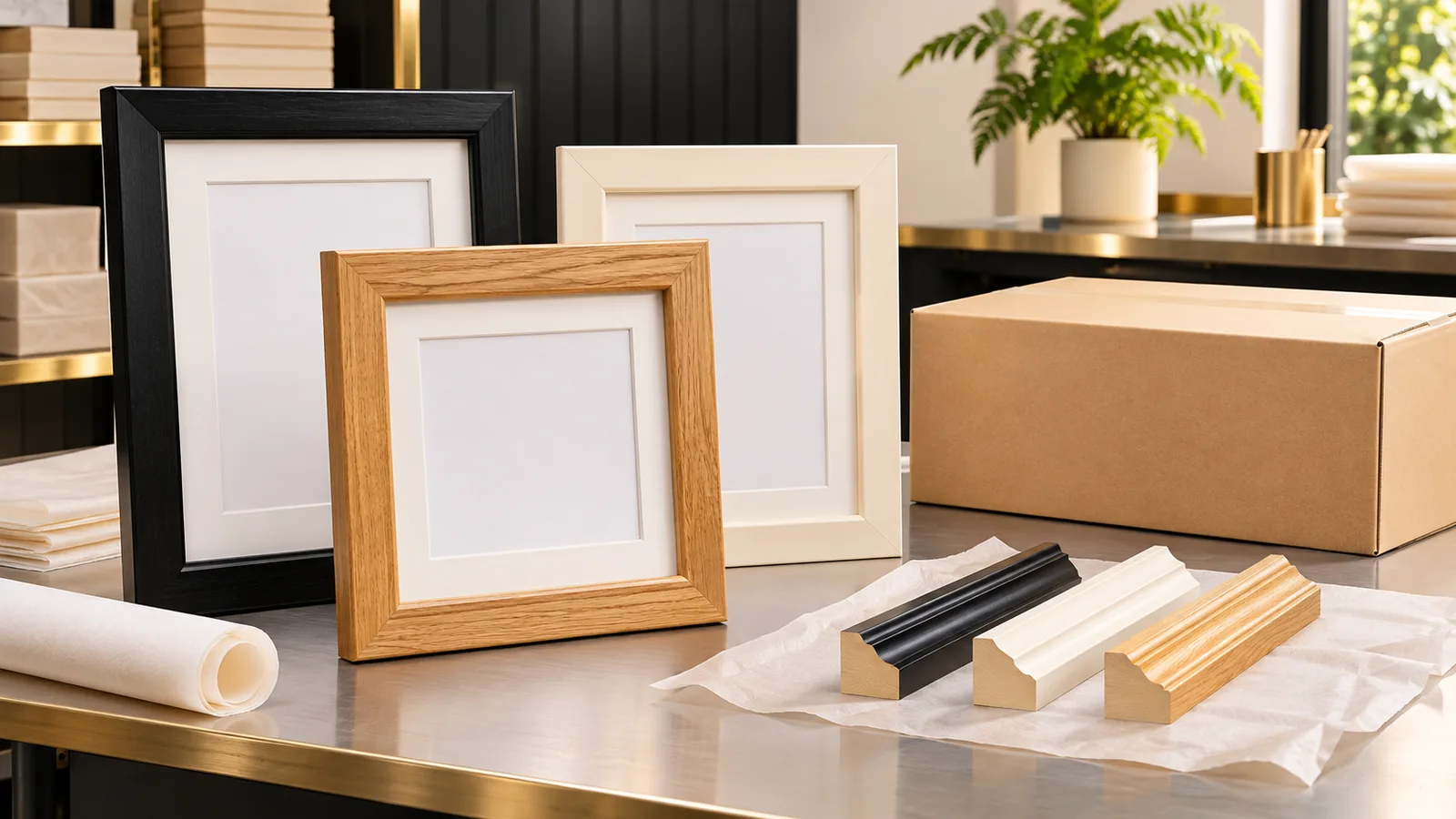
New Zealand's October 2026 low-risk wood-products profile explicitly lists picture frames, including framing for canvases. That is useful news for buyers, but it is not permission to ship any object called a frame. The product must match the low-risk description, remain clean and be supported by a shipment route that the importer can verify.
This guide is for New Zealand importers, frame retailers, galleries, private-label brands, procurement teams and overseas OEM/ODM factories. It turns current Ministry for Primary Industries material into a product, cleanliness and cargo handover. It does not issue an import permit, approve treatment, classify contamination or replace the applicable Import Health Standard.
What did MPI publish in October 2026?
MPI's Low Risk Manufactured Wooden Products risk profile identifies product classes considered low risk because of manufacturing processes, use and historical inspection records. The list includes picture frames and canvas framing, along with mouldings, MDF items and other commercially manufactured products. It also describes conditions for engineered wood, thermally modified timber and highly processed bamboo.
“Low risk” is a route description, not a marketing label. The product must fit the listed class and conditions. The importer should still review the applicable Import Health Standard and current MPI instructions, and cargo must be clean and free from biosecurity contamination.
What are New Zealand frame buyers asking?
Practical questions include: “Do finished oak frames need treatment?”, “Can our factory send loose moulding samples?”, “Does MDF follow the same route?”, “What if a rustic frame keeps a bark edge?”, “Is laminated bamboo low risk?”, “Will MPI inspect a clean frame anyway?”, “What photos should the factory supply?” and “Does the pallet need separate evidence?”
These questions are editorial inferences from MPI sources and normal export-frame handovers. They were not obtained from Google AI Overviews or AI Mode. Google Search Central recommends people-first content with clear sourcing and authorship, so this guide shows the decision points without inventing border outcomes.
Define the finished product precisely
Record the frame's intended use, moulding material, manufacturing steps, finish, backing, glazing, canvas or object insert, included hardware and retail packaging. Add photographs of the front, back, profile, corners and packed unit. State whether the frame is new and commercially manufactured.
Do not rely on “wood frame” alone. A smooth routed and sealed picture frame is different from a slab with bark, a hand-tied twig surround or a raw timber kit. A convincing commercial description explains why the product belongs to the low-risk class.
Keep manufacturing evidence proportionate
For an ordinary finished picture frame, the buyer may not need a laboratory dossier. A useful supplier statement can identify the factory, SKU, product class, wood or engineered material, processing steps, new condition, absence of bark or prohibited plant additions, cleanliness controls and effective date.
The importer should define the wording it needs. Avoid asking the factory to state “MPI approved” unless MPI has actually granted a specific approval. A supplier can describe facts; only the authority and importer can determine the accepted route.

Separate MDF, plywood and solid moulding
The October profile includes MDF items and names plywood, oriented strand board, particle board and other engineered products under specified conditions. A frame can combine a solid-wood moulding with an MDF backboard, so the product record should identify both rather than call the whole unit “MDF.”
Engineered material can lower plant-pest risk because heat, pressure and adhesive processes substantially transform the wood. That does not remove other product, chemical or packaging responsibilities. Keep the biosecurity explanation narrow and factual.
Screen bark, rough wood and natural additions
A decorative frame can leave the low-risk route when it introduces bark, unprocessed branches, seed pods, dried moss or other plant material. The Woodware Import Health Standard contains specific requirements for woodware and treatments. Do not assume a small decorative addition is ignored.
Ask the designer for a complete materials list before sampling. If rustic appearance is required, offer a processed texture or printed finish rather than adding uncontrolled natural material. If real bark or plant material remains essential, the importer should check the exact IHS route and treatment before the order is confirmed.
Treat bamboo as its own material decision
The MPI risk profile says bamboo items must be commercially manufactured and highly processed by pressure or heat, or composed only of split or slivered sections, to use the stated low-risk route. It lists photo frames among examples of highly processed bamboo homewares. Whole bamboo canes are not low-risk products under that section.
Record whether the “bamboo” frame is laminated bamboo board, split bamboo, fibre composite or a whole-cane construction. A colour name or supplier catalogue label is not enough. Keep process evidence and sample photographs with the SKU.
Make cleanliness a release criterion
New Zealand biosecurity is concerned with hitchhiking pests and contamination as well as the commodity description. Frames, cartons and containers should be free of insects, soil, seeds, plant debris, animal material and other contamination. Storage and loading conditions matter after production is complete.
Add a pre-packing inspection under good light. Check moulding rebates, hollow shadow-box spaces, carton folds, foam, pallets and container floors. Use clean tools and protective materials. Photograph representative clean units and the loading area without presenting photos as a guarantee of border release.
Do not confuse product treatment with cleanliness
A treated or highly processed product can still arrive contaminated during storage. Conversely, a visibly clean raw-wood item may still require treatment or certification because of its material route. Product eligibility and shipment cleanliness are separate gates.
Document both. The product file explains manufacturing and material status. The shipment release shows the cartons, container and packaging were checked. If treatment is required, use an MPI-accepted method and provider route specified by the applicable standard; do not invent a factory treatment statement.
Check loose samples and unfinished components separately
A buyer may import a finished frame, a length of moulding, corner chips and raw finish swatches in one courier parcel. These pieces may not all share the same product description. A finished corner sample can demonstrate a commercially processed moulding; a rough wood block may create a different question.
List every sample on the packing document and photograph it before dispatch. Ask the importer or broker to confirm whether each piece fits the low-risk profile. Never hide a raw sample inside the finished product carton to make the parcel appear simpler.
Keep the retail insert and displayed object visible
A frame shipment may include paper artwork, textile, dried flowers, feathers, leather, shells or other natural objects. MPI's wooden-frame route does not automatically clear every inserted item. Identify all biological materials and ask the importer which standards apply.
For commercial samples, use inert placeholder inserts when the natural object is not necessary. For finished retail products, preserve the complete bill of materials and declared description. A wooden frame with a dried botanical display is not only a wooden frame for biosecurity screening.
Control wood packaging separately
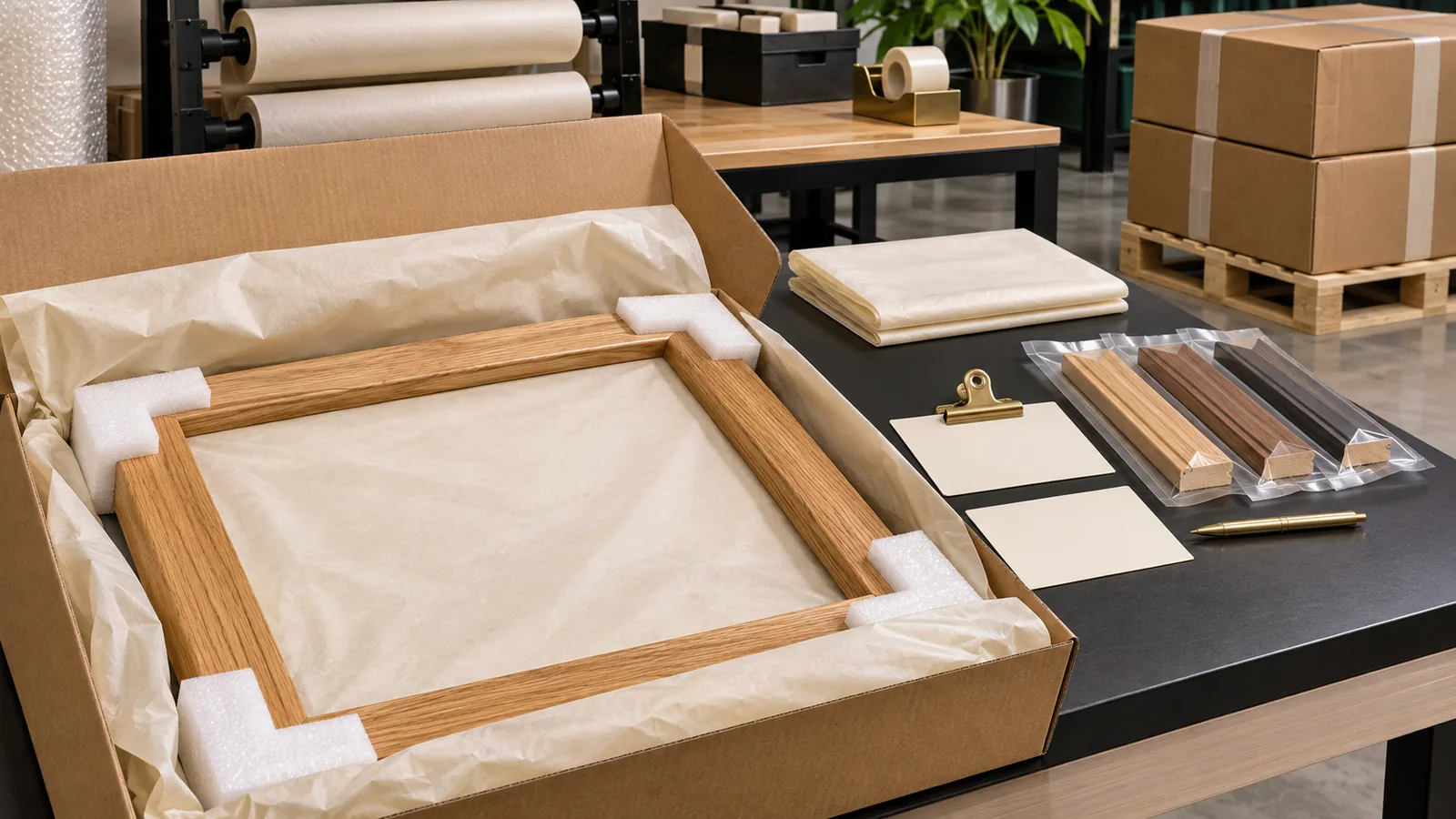
Pallets, crates, dunnage and braces can have their own requirements. A low-risk picture frame does not make a solid-wood pallet low risk. Record whether shipping supports are solid wood, plywood, paper honeycomb, plastic or another material and ensure any required marks or treatment are valid.
Do not use a decorative logo or a copied image as a treatment mark. The logistics team should inspect the actual packaging and retain supplier or service-provider evidence. Keep commodity and wood-packaging controls in separate checklist sections.
Prepare documents that match the goods
The commercial invoice and packing list should use a precise description such as new, commercially manufactured wooden picture frames, together with SKU, quantity, material and origin facts agreed with the importer. Avoid vague phrases such as “decorations,” “samples” or “wood products.”
If the route relies on a supplier declaration, treatment certificate or importer approval number, ensure the document covers the real goods and current shipment. Names, quantities and dates should agree. Do not reuse a certificate from another factory or material.
Give the importer time to use the current tools
MPI directs importers to the relevant Import Health Standard and advises checking other agencies such as New Zealand Customs. Requirements can depend on the product, country, treatment and cargo route. Send the product facts before booking so the importer can confirm the current path.
A website screenshot saved months earlier should not be the only decision record. Store the source URL, date checked, applicable section and the importer's written routing decision. Recheck when the product or source country changes.
Plan for inspection or non-compliance
MPI explains that non-compliant or contaminated wood products may need treatment, organism identification, reshipment or destruction, with costs borne by the importer. Build time and commercial authority for that possibility. Low risk does not mean zero border intervention.
Name who the broker calls, who can approve treatment, who informs the customer and how affected lots are isolated. Preserve photographs and supplier records. Do not clean or alter held goods without authority instructions.
Control changes after sample approval
A supplier may switch from kiln-dried moulding to a rustic profile, add a bark ornament, change bamboo construction or substitute a different backboard while keeping the same colour. Require advance notice for material, process, natural decoration, supplier and packaging changes.
Review the biosecurity route before approving the substitution. Update the bill of materials, photographs, documents and importer decision. Visual approval alone is not enough when the change affects biological risk.
Build the biosecurity gate into the quotation
Put the approved material route, excluded natural additions, documentation owner and packing standard into the quotation or project brief. If the buyer has not confirmed the import path, mark it as an open gate rather than hiding the uncertainty inside a unit price. Treatment, inspection handling or special packaging can affect cost and lead time.
Before deposit, confirm which party pays for any required treatment, border handling, storage, return or destruction. Incoterms allocate commercial responsibilities but do not make an inadmissible product acceptable. A clear quote prevents the factory, importer and freight partner from discovering different assumptions after production.
Check the first delivery at receipt
Ask the receiving team to compare cartons and products with the approved photographs, note any contamination or material change and preserve packaging from a representative unit. Feed the result back to the supplier. This closes the evidence loop and gives the next reorder a real receiving record rather than relying only on pre-shipment images.
New Zealand importer handover checklist
- The product is new and accurately described as a commercially manufactured picture frame
- Front, back, profile and packed-unit photographs match the approved SKU
- Solid wood, MDF, plywood and bamboo inputs are identified separately
- Bark, branches, seeds, dried plants and other natural additions are screened
- Bamboo construction matches the applicable processed-product description
- Finished products, loose samples and raw components are routed separately
- Frames, cartons and the loading area are checked for contamination
- The displayed object and retail inserts are included in the materials review
- Pallets, crates and dunnage have a separate compliance route
- Invoice, packing list and declarations match the actual shipment
- The importer has checked the current IHS and MPI resources before booking
- Inspection, treatment and non-compliance escalation owners are named
Experience scope and project limits
Editorial review: Jessica, Founder & Project Advisor at DOREMI Display. Updated 19 November 2026. Jessica's practical scope covers wooden frame specifications, OEM/ODM samples, material descriptions, packaging, production communication and buyer-supplier handovers. She is not presented as MPI, New Zealand Customs, a quarantine inspector, treatment provider, customs broker or lawyer.
The New Zealand importer, broker, MPI and qualified advisers must determine the applicable Import Health Standard, low-risk eligibility, treatment, documentation, inspection and action for the actual goods. This guide prepares supplier and shipment facts; it is not an import permit, treatment certificate, border decision or release guarantee.
Public sources used for this guide
- Google Search Central: creating helpful, reliable, people-first content
- New Zealand MPI: Low Risk Manufactured Wooden Products — October 2026
- New Zealand MPI: steps to importing wood products
- New Zealand MPI: Woodware from All Countries Import Health Standard
- New Zealand MPI: container and cargo importing resources