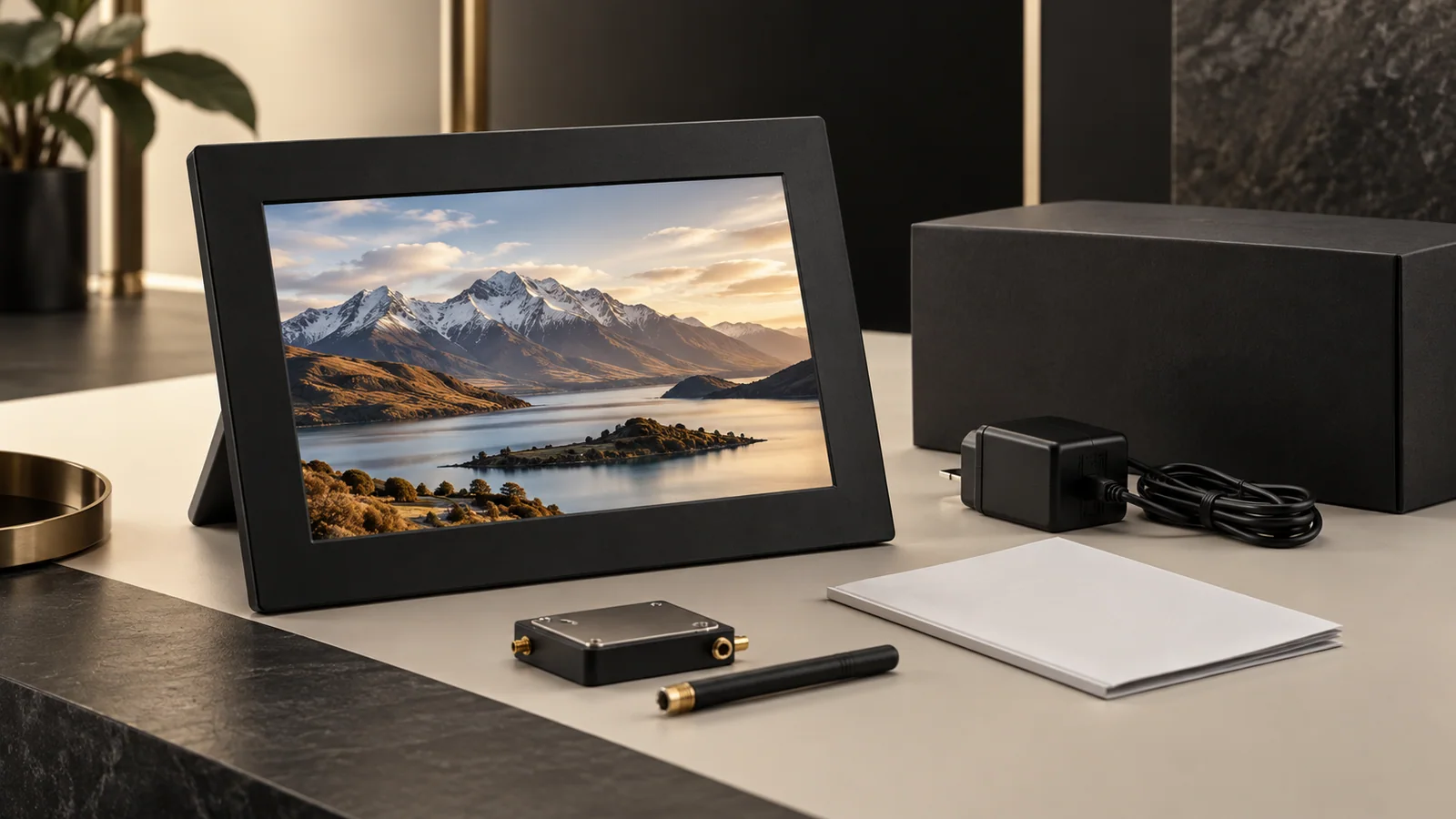
A Wi-Fi digital photo frame supplied in New Zealand is not cleared by a familiar radio module name or an overseas mark alone. The New Zealand supplier must connect the finished model to the applicable radio and electromagnetic-compatibility requirements, hold supporting evidence, complete the required declaration, use the correct compliance label and keep the approved configuration under control.
This guide is for New Zealand importers, distributors, private-label brands, retailers and overseas OEM teams. It is an operational handover, not a conformity-level ruling, licence, Supplier Declaration of Conformity, electrical-safety decision, customs clearance or legal opinion. The New Zealand supplier and qualified compliance specialists must confirm the current notices, standards, licence conditions and evidence route for the exact hardware, radio functions and software.
What are buyers really asking before they place an order?
The visible query may be “Does my digital photo frame need R-NZ?” The procurement decision is wider: which entity is the New Zealand supplier, which radio and EMC categories apply, whether the frame is permitted to use its enabled bands, what testing is acceptable, which declaration is required, where the label belongs and how later model changes are controlled.
Google Search Central explains that AI search features can explore related subquestions and use the same foundations as ordinary Search. This guide therefore answers the connected project questions rather than promising a single universal mark. The search intent is an editorial inference from public regulator material and buyer workflow; DOREMI does not claim direct access to private AI Overview data.
Start with the finished New Zealand configuration
Write a market-specific configuration sheet before asking a laboratory or supplier for a certificate. Record the model name, screen, processor board, Wi-Fi and Bluetooth module, enabled bands, channel controls, antenna type and location, external ports, storage options, power input, supplied adapter, firmware build, app relationship and intended use. Include photographs that connect the specification to the physical sample.
A global sales name is not enough. Two frames with the same enclosure may use different modules or firmware. A radio report for one board cannot silently cover a later antenna, processor or power design. The buyer should make the New Zealand variant visible in the bill of materials, test plan, artwork, purchase order and inspection reference.
Use the current standards notices, not an old checklist
Radio Spectrum Management says the standards framework uses separate EMC and radio notices. Its supplier guidance identifies the Radiocommunications (EMC Standards) Notice 2019 and the Radiocommunications (Radio Standards) Notice 2025, with product classes, relevant standards, conformity levels and exemptions. The current notice and exact product determine the route; a previous project's checklist is only a starting point.
Ask a competent reviewer to map every enabled radio function and the finished host to the notices. Record the selected standards, editions, conformity level and rationale. Do not choose a level because it has lighter documentation, and do not assume that a Wi-Fi module's classification automatically determines the EMC treatment of the complete digital frame.
Name the New Zealand supplier and decision owner
New Zealand's framework places responsibility on the supplier putting the product into the market. Decide whether that is the importer, distributor, brand owner or another New Zealand entity. Record its legal name, address, responsible contact and authority to sign declarations, register as required, hold evidence, respond to audits and manage corrective action.
The overseas OEM can prepare drawings, reports, samples and production controls, but it should not invent the supplier identity or apply a compliance mark without written artwork approval. The commercial agreement should state who approves the model file, who pays for additional testing, who controls the declaration and label, and who decides whether a change affects continued compliance.
Check the Licence to Supply workstream
RSM tells suppliers of radio transmitting products to obtain the appropriate Licence to Supply. Treat that as a supplier-level workstream separate from product testing. Confirm the licence holder, permitted activity, current details and any obligations before commercial import or supply. A factory's test report does not create a New Zealand supplier licence.
Put the licence check on the launch plan rather than leaving it to shipment week. If the importer, distributor or fulfilment structure changes, review who is legally supplying the radio product. Keep evidence of the decision with the compliance folder so the product file and the operating business arrangement do not drift apart.
Choose evidence according to the confirmed conformity level
RSM describes different evidence expectations for Levels 1, 2, 3 and A1, A2, A3. The higher routes can require test reports from accredited facilities, while lower routes still require applicable evidence. The buyer should not summarize every path as “CE report accepted.” Ask for a written matrix connecting each required standard to the exact report, laboratory, sample and model.
Review the report title page, model list, hardware description, antenna, firmware, photographs, accessories, test modes, standard edition, dates and accreditation scope. Keep the full report or acceptable copy, not only a one-page marketing certificate. RSM's guidance says test reports must be in English and retained for five years after the supplier stops supplying the product.
Do not confuse module evidence with host compliance
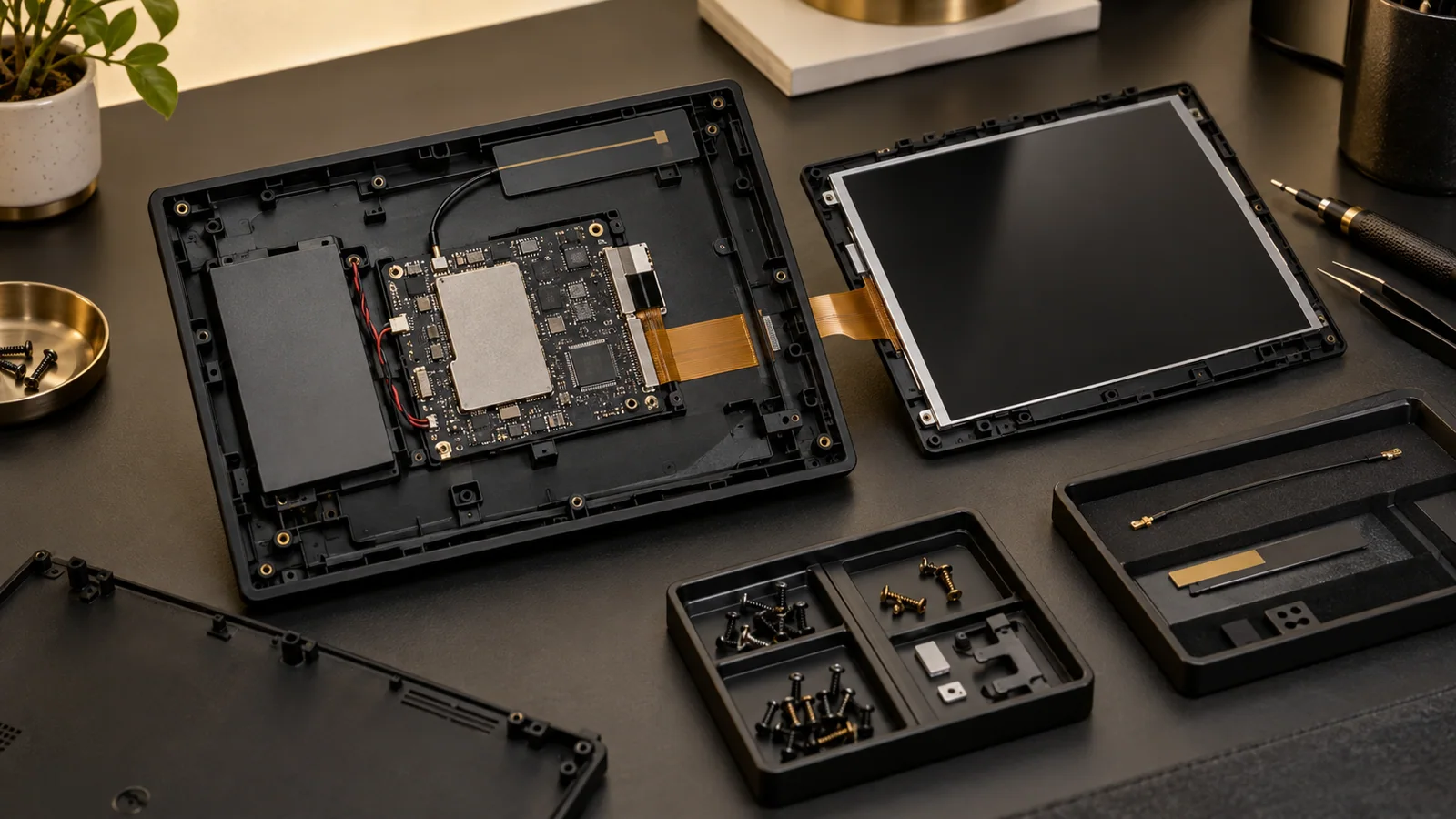
A radio module report is useful technical evidence, but the finished frame controls the antenna environment, power, clocks, enclosure, cable routing and enabled software. Those factors can affect radio and unwanted emissions. The project question is not only whether the module was tested, but whether the evidence supports the final host as it will be supplied.
Create a module-to-host integration record. Identify the module revision, antenna part and gain, cable, placement, ground and shielding, enabled modes, country settings and production firmware. Ask the compliance reviewer whether supplementary host testing or comparison is needed. Freeze the reviewed construction before production and flag substitutions for a new decision.
Complete the SDoC from evidence, not from a template alone
RSM states that each product or significant variation requiring the declaration needs a Supplier Declaration of Conformity, signed by a person who has seen supporting evidence. The SDoC should use the same supplier, product identity and standards as the compliance folder. A blank form is not approval, and a copied declaration from another market is not a New Zealand decision.
Variants may sometimes share a declaration when the records identify them, describe changes and explain the rationale. Build a family matrix showing screen sizes, memory, colours, brands, adapters, modules and firmware. Have the responsible signer approve the family logic. Sales convenience should not be the basis for combining technically different models.
Release R-NZ or RCM artwork only after the route is confirmed
RSM's public guidance distinguishes R-NZ labelling for the A-level radio conformity paths and RCM treatment for the harmonised levels it describes. Ask the New Zealand owner which mark applies to the exact product and whether any mutual-recognition route is being used. Do not apply both marks merely to make the artwork look more complete.
Create a marking schedule covering product, package, manual and online listing. It should name each field, source, approved artwork, placement, size, durability and revision. Check the physical sample for legibility and permanence. If the mark cannot practically be placed on the product, obtain qualified confirmation of the permitted alternative rather than moving it informally.
Review the power system as its own product decision
A digital frame may operate at extra-low voltage while the supplied external power supply connects to New Zealand mains. Record the adapter manufacturer, model, input and output, plug, cable, efficiency and safety evidence. Ask the importer and an electrical-safety specialist what separate rules, registration or certification apply to that power supply and the product combination.
Do not swap to a convenient travel adaptor at packing. The supplied adapter belongs in the model file, test configuration, manual, quotation and inspection plan. If the buyer supplies a local adapter separately, document who procures it, who verifies compatibility and which party controls the final retail pack.
Control firmware, bands and country settings
Firmware can enable a radio band, change channel behavior, alter output power, add Bluetooth modes or change update functions. Record the assessed build and the mechanism that locks the New Zealand configuration. A generic global image that enables unsupported behavior after an update can undermine an otherwise orderly hardware file.
Define who may approve releases and how the production line verifies the correct build. For an update, compare radio behavior, interfaces, cybersecurity functions and user instructions against the approved baseline. Keep a decision note even when specialists conclude that no new test or declaration action is necessary.
Prepare instructions and listings for the actual market model
The user information should match the frame, adapter, supported setup flow and New Zealand radio behavior. Explain power connection, installation, Wi-Fi setup, reset, cleaning, mounting or stand use, troubleshooting and service contact as applicable. Remove references to bands, apps or accessories that the New Zealand SKU does not support.
Online product data should use the same model and responsible supplier details as the physical release. Avoid claims such as “government certified” unless the responsible party has approved accurate wording for the relevant framework. A compliance mark is not a quality award, and a radio declaration does not prove every consumer, privacy or product-safety claim.
Align commercial, customs and compliance identities
The purchase order, invoice, packing list, declaration, report index, product label and e-commerce listing should point to the same model. Describe a connected digital photo frame accurately rather than using the tariff description of a passive picture frame. The importer and broker should confirm classification, valuation, origin and entry requirements separately.
Development samples, exhibition units and saleable stock may follow different arrangements. Do not use a sample movement as evidence that the commercial route is complete. Record the purpose and quantity of non-commercial units and keep them segregated from retail inventory until the supplier has finished the required compliance steps.
Inspect the production lot against the controlled file
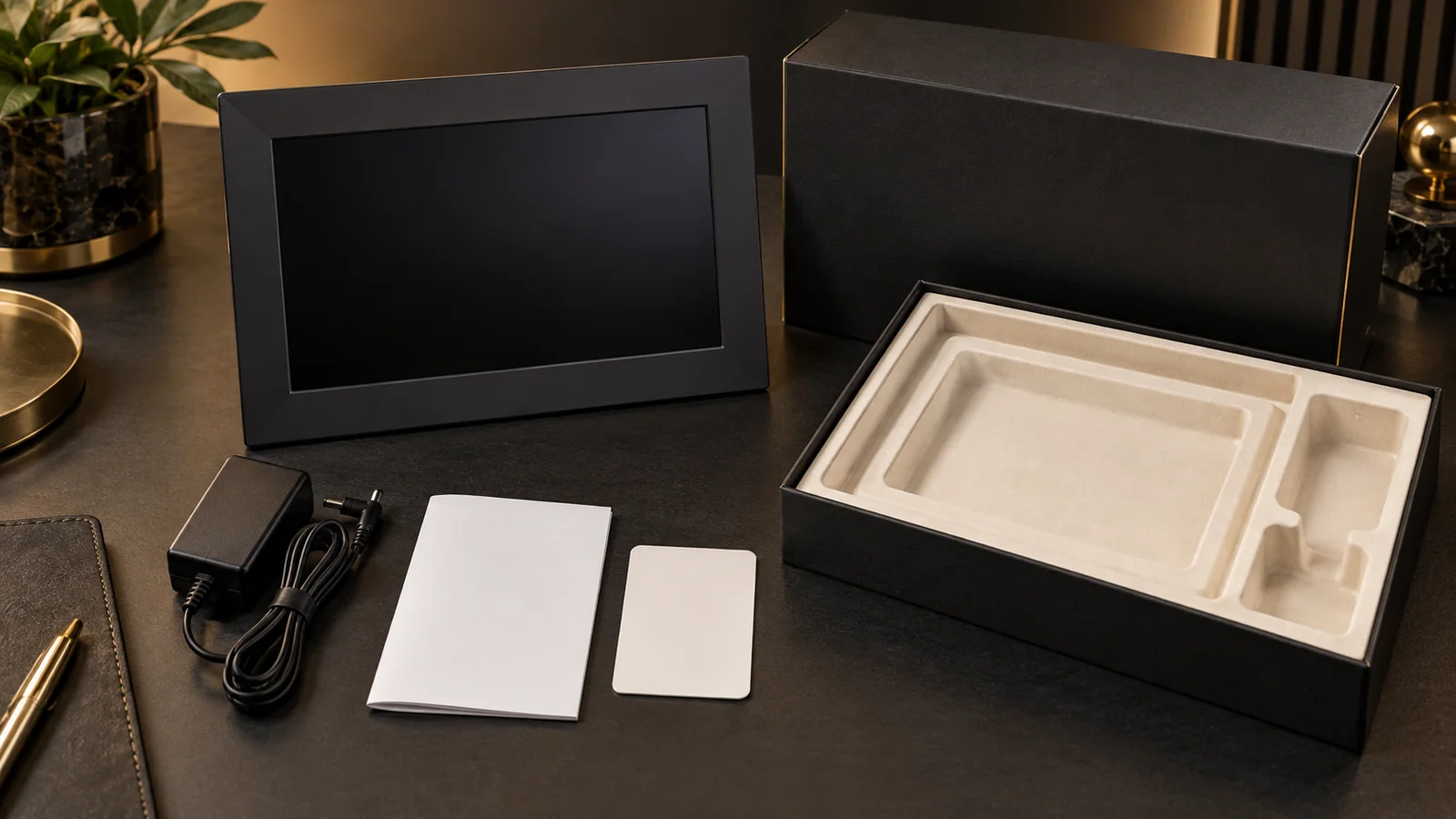
Pre-shipment inspection should compare the product model, exterior, rear label, module and antenna reference where practical, firmware identifier, power supply, plug, manual, accessories, carton and shipping marks with the approved baseline. Define which mismatches stop shipment and who may authorize disposition.
Photographs and sampled records do not replace conformity work, but they show whether the inspected lot resembles the approved sample. Quarantine mixed adapters, unexplained board substitutions, obsolete artwork and wrong firmware. Corrective action should update the physical stock and the documentary trail, not only a spreadsheet.
Recheck evidence before every reorder
Component shortages and software releases can change a digital frame between orders. Require the OEM to declare changes in modules, antenna, processor board, display, enclosure, power supply, firmware, app and packaging. Compare the declaration with the approved model file before production starts.
If the New Zealand supplier, brand, model family or distribution route changes, review the declaration, registration, licence and label ownership. Archive superseded artwork and identify the currently released version. A compliance folder is useful only when procurement and quality teams know which version controls the next shipment.
Buyer release checklist
- The exact New Zealand hardware, radio and software configuration is documented
- The current EMC and Radio Standards Notices have been reviewed
- A qualified owner confirms the conformity level and standards
- The New Zealand supplier and Licence to Supply responsibilities are assigned
- Full supporting reports match the finished model and accepted route
- The module, antenna and host integration are recorded
- The SDoC is completed by an authorized signer who has seen the evidence
- Variant-family logic is documented
- The correct R-NZ, RCM or mutual-recognition artwork route is confirmed
- The external power supply has a separate safety and market review
- Firmware and country settings are controlled
- Manual, listing and commercial records use the released model identity
- Inspection compares the production lot with the controlled baseline
- Reorders trigger a documented change review
Questions for the OEM and New Zealand supplier
Ask the OEM: Which module, antenna, bands and firmware ship? Which complete reports support the host? What differs across sizes, colours and brands? Which adapter is packed? Can the factory provide drawings, test modes, samples, manuals, controlled labels and change declarations?
Ask the New Zealand party: Which notices, standards and conformity level apply? Who is the supplier and licence holder? Which evidence is acceptable? Is a local SDoC required? Which mark and placement are authorized? Does the adapter need separate action? Which hardware or firmware changes require reassessment?
Experience scope and project limits
Editorial review: Jessica, Founder & Project Advisor at DOREMI Display. Updated 12 October 2026. Jessica's practical scope covers B2B digital-frame specification, OEM evidence handover, sample review, packaging coordination, artwork control and production change management. DOREMI is not presented as RSM, a New Zealand regulator, accredited laboratory, electrical-safety certifier, customs broker or legal adviser.
Use this guide to organize questions, evidence and owners. Current New Zealand law, Gazette notices, standards, licence conditions, the exact product and qualified local advice control the final radio, EMC, electrical-safety, labelling and import decisions.