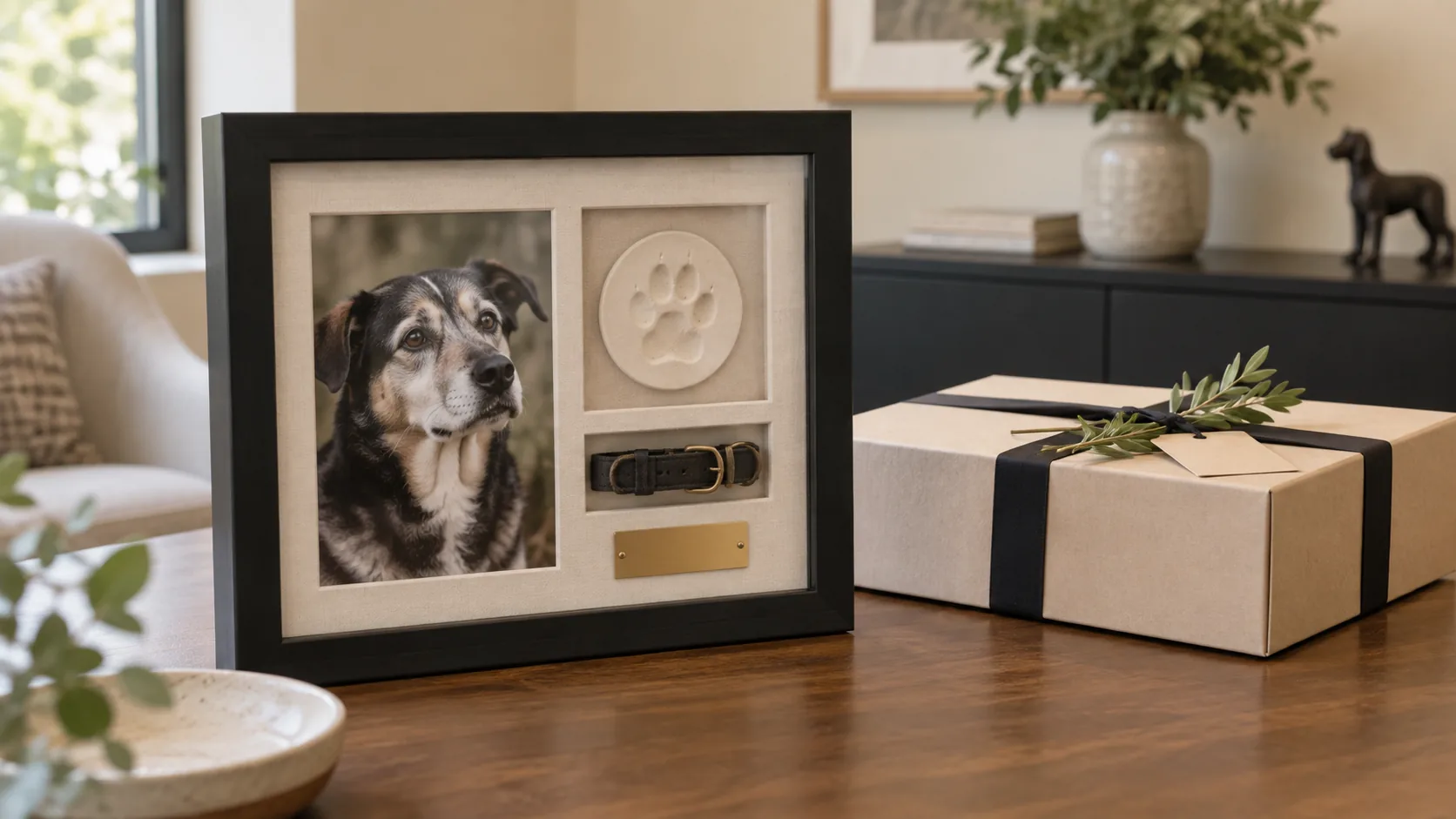
A pet memorial frame is not an ordinary gift item. It may be handled during one of the most emotional interactions between a veterinary team and a family, and it can contain irreplaceable material: a last photograph, paw impression, collar, fur keepsake or handwritten note. A programme therefore needs compassion, privacy, clear choices and reliable fulfilment alongside good frame construction.
This guide is for veterinary groups, animal hospitals, pet aftercare providers, cremation partners, pet-care brands and sourcing teams creating memorial shadow boxes at scale. It focuses on product and operational handover. It does not provide veterinary, mental-health, grief-counselling, funeral, data-protection or legal advice, and it does not prescribe how any individual family should remember a pet.
Begin with the care experience, not the catalogue
AAHA's end-of-life resources describe memorial items such as paw prints, fur, photographs and shadow boxes as ways practices may support bereaved clients. That does not mean every family wants the same object or that a product should be introduced at the same moment. The veterinary or aftercare team should define when choices are offered, by whom, and how a family can decline without pressure.
Write the programme purpose in one sentence. Is the frame a complimentary remembrance, a selectable aftercare item, a retail option, a staff-created gift or part of a premium package? That answer influences language, data collection, packaging, order ownership and price presentation. Keep the sourcing brief connected to the care protocol rather than treating the frame as an isolated SKU.
Choose a respectful and limited product architecture
Too many options can create administrative burden and force difficult decisions. A controlled family might include one photo-and-paw-print frame, one deeper collar shadow box and one flexible multi-keepsake design. Define which components are universal, which are optional and which are personalised.
Use calm, descriptive product names. Avoid language that promises healing, closure or a particular emotional response. The frame can help present memories with care; it cannot determine grief. Ask the clinical, client-care and brand teams to review names, insert copy and sales scripts before artwork is released.
Map every keepsake before drawing the openings
List the physical items that may enter the frame: photograph, paper paw or nose print, clay impression, collar, tag, ribbon, fur vial, condolence card, nameplate or other approved object. Record typical and maximum dimensions, thickness, mass, surface condition and who supplies each item. A digital photograph and a physical collar follow different workflows.
Identify irreplaceable inputs. If a collar or original print is lost, scratched or altered, a replacement may be impossible. Decide whether the programme accepts originals, uses reproductions or gives the family a self-fit frame. That decision affects custody, mounting, quality checks and liability review.
Design around real variability
Dog and cat collars vary widely in length, width, buckle size and stiffness. Clay impressions may be round, heart-shaped, oval or irregular and may shrink or chip. Photo orientation and image crop also vary. Avoid an elegant sample built around one perfect set that cannot accept normal programme inputs.
Create an input-size matrix and define the supported range for each SKU. Use adjustable, non-damaging retention where appropriate and provide a clear exception route. If an oversized collar or fragile impression cannot fit safely, the service team needs an approved alternative rather than forcing it into the standard layout.
Give the photograph a forgiving crop area
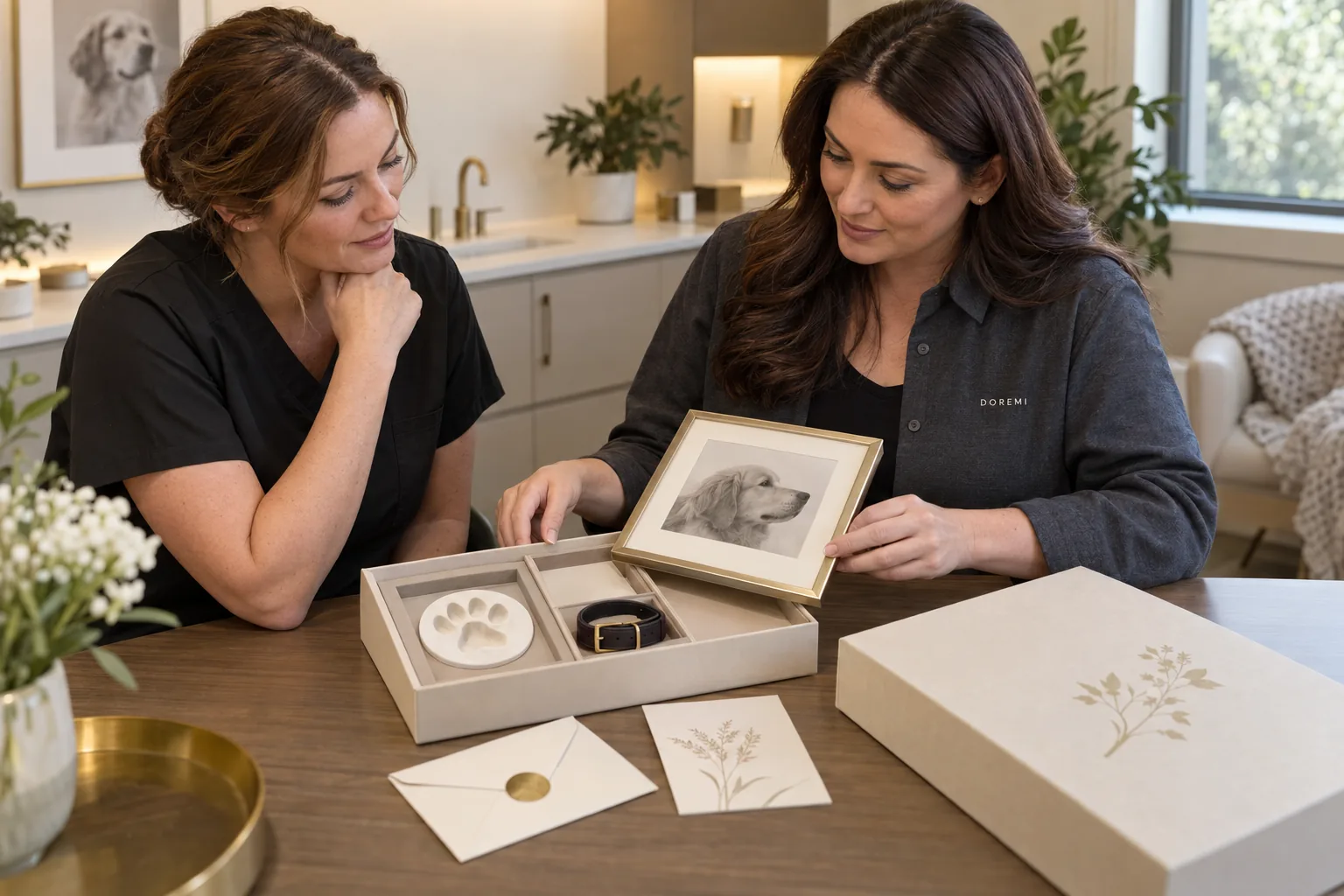
Families may provide phone images, screenshots, professional portraits or prints in different ratios. Show the visible opening, required bleed and safe subject area in plain language. A fixed opening should not cut ears, paws or a meaningful person from the image without review.
Decide who crops the file and who approves the result. If the fulfilment team makes a crop, preserve the original file, record the output version and provide a proof route proportionate to the programme. Do not use automated face detection as the only control for a sensitive image. A human check should confirm orientation, sharpness and subject placement.
Specify clay-impression handling separately
A clay paw print is not a flat paper insert. Record its composition where known, thickness, weight, edge condition, drying or curing status and permitted contact materials. Do not assume every impression from every clinic or aftercare partner shares the same dimensions or strength.
Use a cradle or retention method that supports the impression without concentrated pressure. Verify that normal frame handling and parcel movement cannot release it. Adhesive selection, if any, should be approved for the exact materials and replacement policy. For irreplaceable impressions, consider a self-fit or specialist assembly path and retain clear condition photographs.
Keep collars and tags from marking other items
Metal buckles and tags can strike glazing, scratch a nameplate or press into a photograph. Create clearance and restraint based on the largest supported hardware. If the collar is curved, avoid forcing it flat in a way that damages the material or changes the familiar appearance.
Ask whether the displayed collar is the original or a representative band supplied with the frame. If original collars are accepted, document receipt condition and any cleaning boundary. A frame supplier should not wash, polish, cut or remove tags without explicit programme instructions and consent.
Choose materials for the intended contact
Map the mat, liner, backing, spacers, fasteners, fabric, adhesive, ink and nameplate coating that can touch or sit near keepsakes. “Acid-free” on one board does not describe the entire shadow box. If the brand makes photo-safe or archival claims, those claims need component-specific evidence and qualified review.
For fur, textiles, coated tags or unknown materials, acknowledge uncertainty. A commercial frame supplier cannot guarantee compatibility with every personal object. Where preservation is important, involve a conservator or materials specialist and use removable supports so the item can be taken out.
Protect privacy from intake to delivery
Names, photographs, clinic details, dates and order identifiers may be personal information. The programme owner should define the lawful and approved handling process, minimum data required, transfer method, access roles, retention period and deletion or return procedure. Do not ask the factory to retain client lists merely because reorders are possible.
Use a controlled order identifier through production where practical. Separate a packing label from public-facing personalisation. Proofs should show source data, rendered result, approver and revision. Dispose of rejected nameplates, prints and test pieces according to the organisation's policy.
Create an intake form that prevents guessing
The handover should capture product code, photo file, crop preference, pet name exactly as approved, dates or message if offered, clinic or partner, shipping destination, keepsakes expected and any special handling note. Make optional fields visibly optional. Do not infer a title, nickname, species, gender or memorial wording.
Include a confirmation checkpoint before personalised production. If a field is unclear, stop the order rather than “correcting” it. A practical exception queue with a named owner is kinder and less costly than remaking a frame after delivery.
Design personalisation for long and complex names
Approve the font, character set, minimum readable size, line breaks and maximum field length using challenging examples. Test accents, apostrophes, hyphens and non-Latin scripts that the programme intends to support. A layout built around a four-letter placeholder can fail when real data arrives.
Define whether dates, messages and clinic marks are engraved, printed, foiled or supplied as inserts. Record colour, finish, position and contrast. Do not let the production team rebuild logos from low-resolution screenshots. Use approved vector artwork and a revision-controlled template.
Decide who assembles the final keepsakes
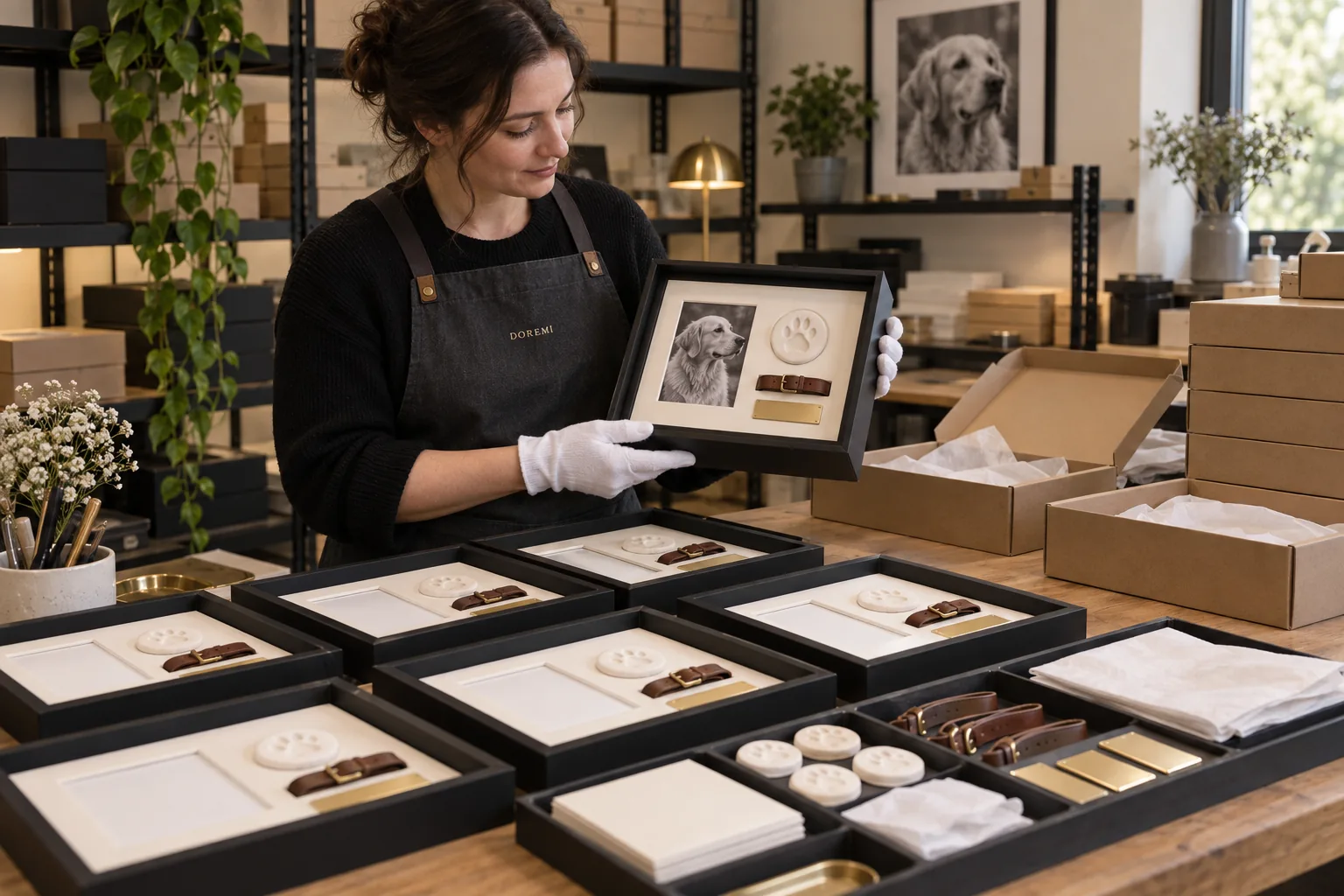
A factory can produce standard empty frames, a central fulfilment partner can assemble personalised kits, or clinic staff can fit local keepsakes. Each model has different custody, cleanliness and training requirements. If original items cross borders or enter a factory, review the practical, regulatory and insurance implications with qualified owners.
For clinic assembly, simplify the back opening and provide a protected workspace kit. For central assembly, use controlled trays, order separation and two-person verification for irreplaceable items. For family self-fit, make instructions calm, visual and reversible, and avoid specialist tools.
Build a custody record for original items
Record receipt, condition, order identifier, storage location, assembly step, quality check, packing and dispatch for any original keepsake. Use tamper-evident or sealed inner containers when appropriate. Keep different families' items physically separated.
Photographs can support the record but should not expose sensitive data unnecessarily. Define who can view them and when they are deleted. If an item arrives damaged or does not match the brief, quarantine it and contact the programme owner; do not repair or alter it without authority.
Test the assembly process with real operators
Give the instruction and sample inputs to someone who did not design the frame. Observe whether they identify orientation, fit the photo, support the impression, restrain the collar, close the back and clean the glazing without coaching. Record difficult steps and failure points.
The review should check fingerprints, trapped dust, adhesive exposure, loose objects, reversed photographs, nameplate alignment and pinched materials. Improve the product or fixture where possible. A warning sheet should not compensate for an awkward back or an unreliable mount.
Keep quality inspection compassionate and precise
Inspection must verify spelling, image, layout and keepsake placement without casual handling. Use the order identifier and approved proof, not memory. Define acceptable natural variation in clay impressions and collars separately from production defects in frame, mat, print and nameplate.
Provide a quiet, clean review area with controlled lighting. Check front, edges, back and packed unit. If a personal item must be removed during rework, return it to its labelled tray immediately. The tone of the workflow matters because staff know they are handling something meaningful.
Use packaging that feels private and presentation-ready
The inner presentation should protect the frame and create a calm opening experience. The outer transit pack should resist real distribution hazards without advertising sensitive contents. Decide whether clinic, aftercare provider or family opens the shipment first and place documents accordingly.
Keep hardware away from glazing and keepsakes. Protect the nameplate and frame finish from tissue or foam marks. If a condolence card is included, secure it so it is found before the frame is lifted. Do not place promotional inserts on top of the memorial unless the care and brand teams approve that experience.
Plan remakes and late corrections before launch
Names can be corrected, photographs can change and clay impressions can arrive late. Define the cut-off, approval state, remake owner, cost rule and communication path. Separate supplier-caused defects from client-requested changes without making the family navigate a factory dispute.
Maintain spare generic components and a controlled method for replacing only the affected part when possible. A removable nameplate or insert can reduce waste and speed correction, but the construction must still look intentional. Never discard an original keepsake while a case is unresolved.
Train partners on what the product can and cannot do
Provide a short guide for veterinary teams and aftercare partners covering supported keepsakes, choices, lead time, proof process, privacy route, cleaning, hanging and exception contact. Include honest boundaries: the frame is a memorial display product, not a preservation guarantee or grief intervention.
Use photography that reflects the actual product and avoids dramatizing loss. Do not invent testimonials, clinical outcomes or claims that a frame strengthens loyalty. AAHA resources support the importance of compassionate follow-up and memorial choices; each organisation must decide how a product fits its care model.
Monitor the programme beyond sales
Track spelling errors, crop concerns, missing items, damaged deliveries, assembly difficulty, late changes, declined options and remake time. Invite qualitative feedback from clinic staff about whether the ordering process felt appropriate and manageable. Do not ask bereaved families for promotional reviews at an insensitive moment.
Use trends to adjust the option set, intake form, layout, packaging and training. A low-volume exception may justify a specialist route rather than making the standard product more complex for everyone. Review the programme with care, operations, privacy, procurement and brand owners at an agreed interval.
Buyer handover checklist
- Programme purpose and point of offer approved by the care team
- Supported keepsakes, sizes and exception routes documented
- Original and replaceable items clearly identified
- Photo crop, proof and personalisation responsibilities assigned
- Clay impressions, collars and metal tags have dedicated retention methods
- Contact materials and marketing claims reviewed by qualified owners
- Only necessary personal data enters the production workflow
- Original-item custody and condition records are controlled
- Assembly model and operator instructions are validated
- Spelling, image and layout checks use the approved proof
- Packaging protects privacy, presentation and transit condition
- Remake, correction and item-return processes exist before launch
- Feedback improves the service without pressuring families
Experience scope and project limits
Editorial review: Jessica, Founder & Project Advisor at DOREMI Display. Updated 16 September 2026. Jessica's practical scope covers B2B display-frame briefs, materials, samples, personalisation handover, factory coordination, packaging and buyer communication. She is not presented as a veterinarian, mental-health professional, grief counsellor, funeral professional, conservator, privacy officer or legal adviser.
This guide supports product and procurement planning. It does not advise any individual family, define clinical standards, approve data processing, preserve every keepsake or guarantee an emotional outcome. Veterinary and aftercare organisations should use their qualified clinical, client-care, privacy, legal and preservation advisers for the exact programme and market.