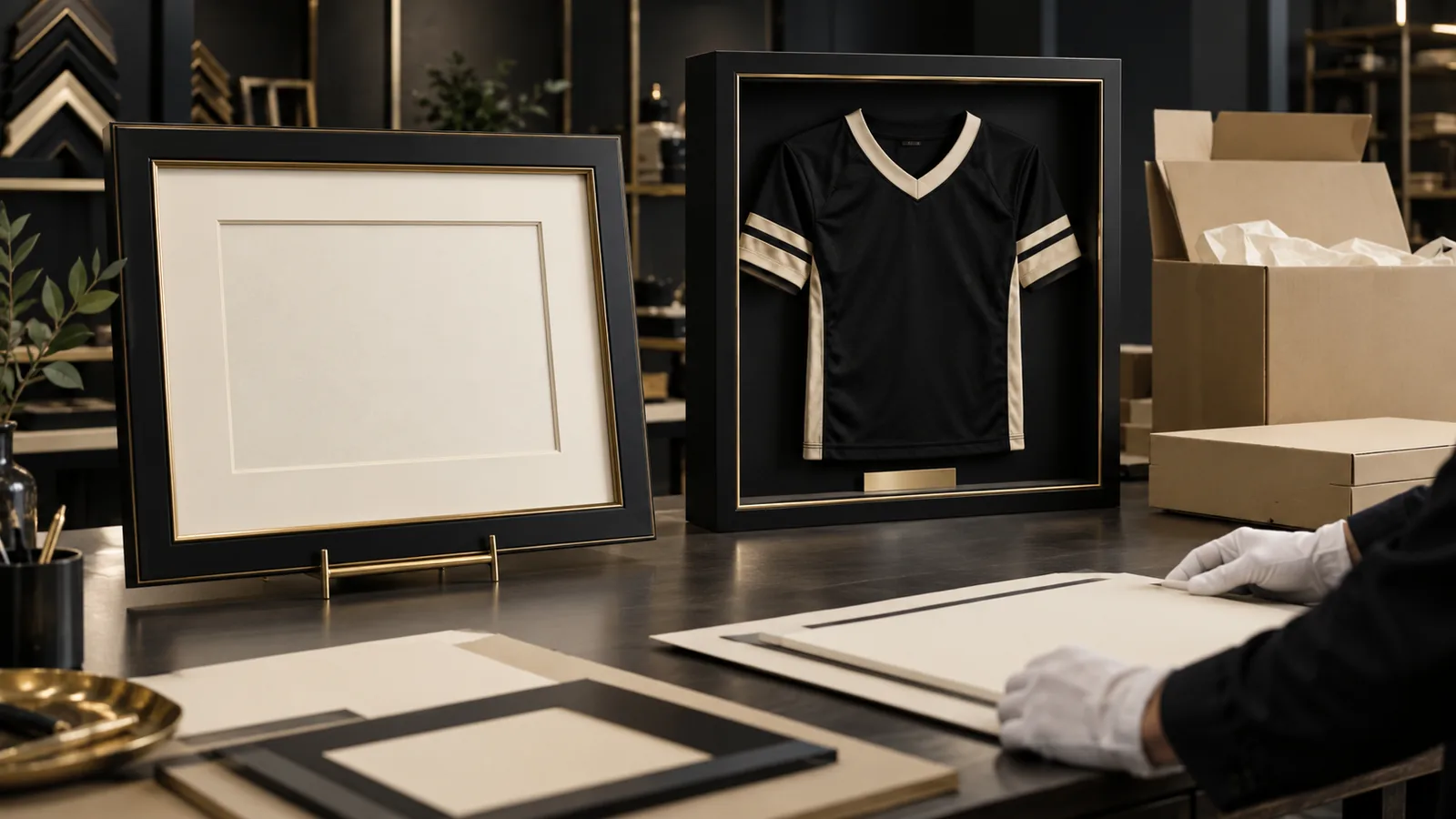
A display frame can meet a national Canadian packaging checklist and still need a separate Quebec language review. For private-label programmes, the risk usually appears late: an English feature name sits inside a trademark, instructions are only in English, or the retail carton has been approved before anyone maps Quebec's broader French-language requirements.
This guide is for Canadian importers, frame brands, retailers, institutions and overseas OEM teams preparing certificate frames, jersey shadow boxes, medal displays, vinyl record frames or connected digital frames for Quebec. It is a project-control framework, not a legal opinion, translation approval or ruling from the Office québécois de la langue française. The Quebec seller and qualified advisers must confirm the rules and exemptions for the exact product, trademark and route to market.
Why are buyers revisiting Quebec artwork in 2026?
Quebec's rules for trademarks on products changed on 1 June 2025. OQLF guidance explains that generic or descriptive elements contained in a trademark must also appear in French on the product or on a medium permanently attached to it. The name under which a product is marketed and the company name can be treated differently, so a buyer should not translate or preserve every word by intuition.
The practical 2026 question is not simply whether the DOREMI or private-label brand name can remain. It is which visible words are the recognised trademark, which describe the product or its characteristics, whether a French trademark version is registered, and where the required French wording will physically appear. Those decisions affect moulded labels, rating labels, carton panels, inserts, manuals and warranty cards.
Separate federal Canadian rules from Quebec rules
The Competition Bureau's federal guide says mandatory information on a prepackaged non-food consumer product is generally shown in English and French, subject to defined exceptions. Product identity and net quantity are among the fields that can trigger bilingual treatment. Quebec has additional language requirements, so passing the federal review does not close the provincial review.
Create two columns in the artwork matrix: federal consumer-packaging requirements and Quebec French-language requirements. Add a third column for product-specific regimes, such as electrical, radio, safety or recycling information for a digital frame. The same phrase can have more than one reason for appearing. Keeping the legal bases separate lets the buyer update one requirement without accidentally removing another.
Map every place where language appears
OQLF material addresses inscriptions on the product, its packaging and documents that accompany it. The Quebec regulation also treats containers, packaging, instructions and warranty certificates as connected touchpoints. For display-frame programmes, the review should cover the front and rear of the frame, removable labels, retail box, protective sleeve, instruction sheet, installation diagram, warranty, accessory bags and digital content reached through a printed link.
Do not review only the hero carton panel. A small hardware bag may say wall anchor, a stand may carry an embossed adjustment instruction, and a digital frame may show an English setup flow. Record every touchpoint, language, artwork file, production method and owner. Photograph the approved sample from all sides so the released matrix matches a physical product rather than a PDF folder alone.

Use French as the operating baseline
OQLF states that information on a product, its packaging or an accompanying document must be in French. Other languages may also appear, but they should not be more prominent or accessible under more favourable conditions. Treat French as a designed part of the product experience, not a small sticker added after the English artwork is complete.
In the artwork brief, compare type size, weight, colour contrast, placement, viewing sequence and access. If English is printed on the front while French is hidden under a flap or available only after scanning a code, the presentation needs qualified review. A balanced bilingual layout often reduces production risk because the same carton can support broader Canadian distribution while still respecting Quebec-specific requirements.
Distinguish the trademark from descriptive wording
A recognised trademark may appear only in a language other than French in certain circumstances. OQLF also notes that if a French version of the trademark is registered with the Canadian Intellectual Property Office, that French version must appear. The trademark team should therefore confirm the actual registration status and versions before packaging designers decide what can remain untranslated.
Then isolate generic and descriptive wording inside or beside the mark. Words that describe a product, ingredient, colour, scent or other characteristic can receive different treatment from the product name or company name. For a frame, terms such as shadow box, archival-look finish, wireless display or wall-mount kit may describe function or characteristics even when styled as part of a brand lock-up. Obtain a qualified decision instead of treating a logo image as automatically exempt.
Control the 1 June 2027 transition precisely
The Quebec government notice explains that certain non-compliant products may continue to be commercialised until 1 June 2027 when, among other conditions, they were manufactured before 1 June 2025 and no French version of the trademark had been filed by 26 June 2024. This is a constrained old-inventory transition, not a general deadline allowing new English-only production through 2027.
Build an inventory table with manufacturing date, SKU, trademark version, artwork revision, quantity, warehouse and evidence. Keep old and new production separate. A purchase order placed in 2026 should not inherit a transition assumption merely because older stock still exists. Ask Quebec counsel to confirm whether the specific inventory qualifies and what proof the seller should retain.
Design instructions and warranties for real use
A display frame may include wall-mounting steps, opening instructions, cleaning limits, weight warnings, power setup or warranty procedures. OQLF guidance treats accompanying documents as part of the French-language obligation. A translation must preserve product-specific meaning; copying generic wall-hanging text from another model can create both language and safety problems.
Use the released bill of materials and hardware photographs to prepare the French version. Have a competent reviewer check terminology, units, sequence and hazard communication. For a digital frame, review on-device and app-dependent instructions as well as the printed quick-start guide. Archive the approved bilingual files with the model and production revision so a reorder cannot silently revert to an older English-only insert.
Keep transport packaging and retail packaging distinct
The Quebec regulation contains specific situations for inscriptions on containers used for interprovincial or international transport. That does not mean every brown master carton is exempt from every language requirement, especially if the same carton is shown, transferred or sold at retail. Record the function of each packaging layer and where it enters the customer journey.
Ask whether a printed shipper remains in a warehouse, becomes a shelf-ready tray or is delivered directly to the end customer. A fulfilment label, retailer compliance label and consumer-facing product carton may be applied by different parties. The buyer's matrix should state who supplies each layer and which legal review covers it. Do not ask the OEM to guess whether a carton is transport-only.
Plan personalisation without reopening the whole pack
Award, certificate and jersey frames often carry names, event titles, club marks or dedication plaques. Distinguish customer-supplied personal content from standard product descriptors and instructions. Decide which phrases are fixed in the base product, which vary by programme and which are entered by the final customer.
For institutional programmes, maintain an approved bilingual phrase library for recurring fields such as employee recognition, graduation year, team season or mounting instructions. A translation memory can improve consistency, but every visible output still needs proofing against the actual layout. Long French phrases may require different line breaks or plaque dimensions, so approve realistic examples before production.
Freeze artwork against the correct SKU
A frame family can contain a non-electrical certificate frame, an LED version and a Wi-Fi digital model under similar branding. Their instructions, warnings and regulatory data are not interchangeable. Assign a model and revision to every product, carton, manual, warranty and label. The artwork release should state which components are shared and which are model-specific.
Require change notification when the OEM alters the frame profile, mounting hardware, power supply, radio module, app flow, package size or included accessories. Even a commercial name change can affect the trademark and descriptive-word analysis. A controlled change request lets language, legal, engineering and brand reviewers decide whether new files or translations are required.
Verify production, not only source files
Pre-production proofs should show colour, contrast, type size and placement at final scale. During inspection, compare the actual product and packaging against the released files. Check that the French and English versions are both present where approved, that labels are not covered by retailer stickers and that the correct instruction packet is inside the carton.
Use photographs of representative fronts, backs, sides, inserts and packed contents tied to the production lot. Sampling does not prove that every unit is correct, so critical language or model-identity features may need controls chosen by the responsible quality team. Quarantine unexplained mixed artwork, obsolete stock or reworked labels until the buyer approves the disposition.
Prepare an evidence pack the Quebec seller can use
The handover should include the language matrix, trademark review reference, translations and reviewer details, released artwork, production proofs, manufacturing dates, approved sample photographs, change history and inventory-transition decisions. Keep source text and final laid-out files together; a translation spreadsheet alone does not show what customers see.
Test the pack with a simple question: which French wording appears on the 11-by-14-inch black certificate frame sold in Quebec, and which artwork version was used for the current lot? If the team cannot answer without searching personal messages, the handover is not operational. Store evidence under access controls and retention rules selected by the seller.
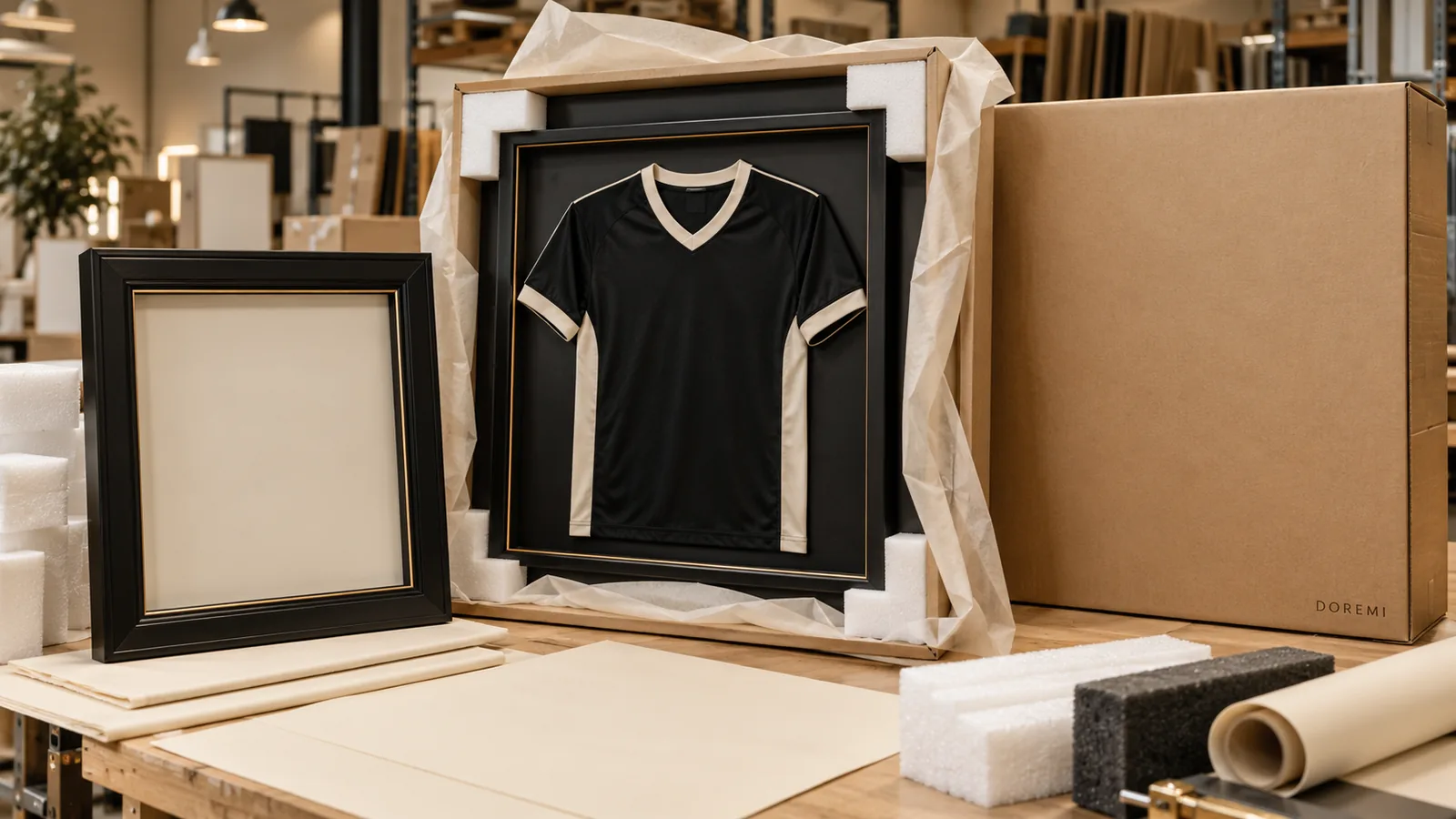
Buyer release checklist
- Federal and Quebec requirements are reviewed separately
- Every product, package and accompanying-document touchpoint is inventoried
- French prominence and access are checked in the final layout
- Trademark status and any registered French version are confirmed
- Generic and descriptive trademark elements receive qualified review
- Old-inventory transition evidence is SKU- and date-specific
- New production does not rely on a sell-through assumption
- Instructions and warranties match the actual product and hardware
- Personalised fields have approved language and layout rules
- Artwork files are tied to model and production revision
- Physical production is compared with the released proof
- Seller evidence remains retrievable after shipment
Questions to send the supplier and importer
Ask the supplier: Where does text appear on the product, carton, inserts, accessory bags, instructions and warranty? Which files and moulded parts are expensive to change? What is the manufacturing date and artwork revision for each stock lot? Can the production proof show final scale, contrast and every package panel? Which model changes force new artwork?
Ask the Canadian seller: Which entity sells or distributes the product in Quebec? Which federal and provincial rules apply? Is the non-French mark recognised, and is a French version registered? Which words are generic or descriptive? Does any old stock qualify for transition? Who approves the French, prominence, exemptions, instructions and final physical sample?
Experience scope and project limits
Editorial review: Jessica, Founder & Project Advisor at DOREMI Display. Updated 9 October 2026. Jessica's practical scope covers B2B display-frame briefs, packaging and label coordination, sample review, supplier handover and production change control. DOREMI is not presented as OQLF, the Competition Bureau, a trademark agent, certified translator or legal adviser.
Use this guide to organise product facts and artwork decisions. The current Charter, regulations, official guidance, trademark record, exact sales route and qualified Quebec/Canadian advice control the final language and inventory treatment.