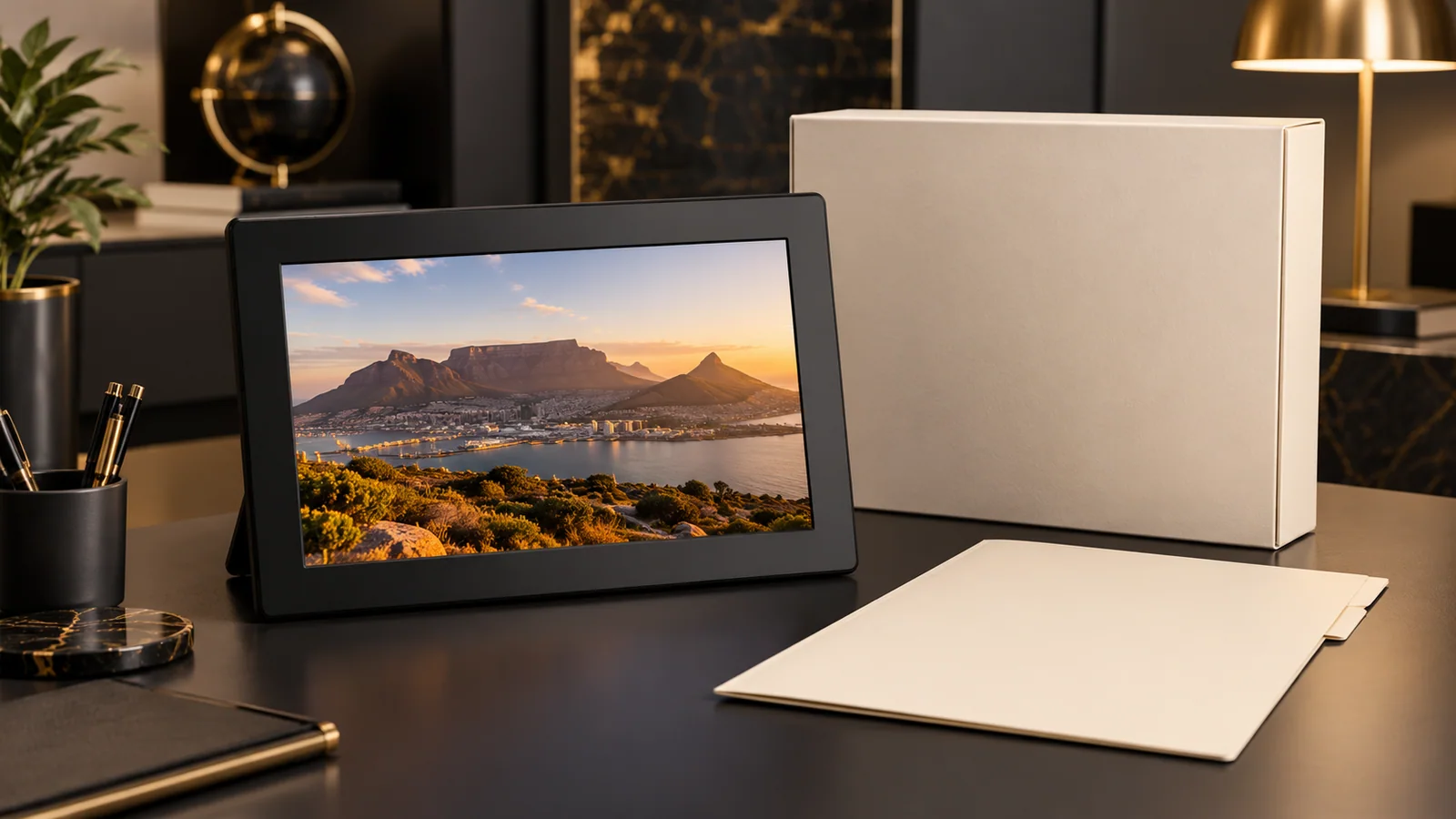
A Wi-Fi digital photo frame entering South Africa should not reach production on the assumption that its radio module is already approved somewhere else. The commercial model must be connected to the ICASA type-approval framework, a South African applicant, accepted technical evidence, controlled model particulars, authorized labelling and any separate electrical-product requirements.
This guide is for South African importers, distributors, retailers, private-label brands and overseas OEM teams. It is an operational handover, not an ICASA certificate, NRCS Letter of Authority, standards classification, customs clearance, test report or legal opinion. The South African applicant and qualified radio, safety and electrotechnical specialists must confirm the current route for the exact finished product.
What does the buyer need to decide before ordering?
The headline question is whether the frame needs ICASA type approval. The practical decision includes who can hold the approval, whether the model already appears in the register, which RF, EMC and safety reports apply, whether the tested device matches the commercial version, how labels are controlled, and what separate power-supply or NRCS work may be necessary.
Google Search Central says AI search features can fan out across related subtopics while relying on the same helpful-content foundations as Search. This guide uses that question-led structure. Search intent is an editorial inference from public sources; DOREMI does not claim direct access to unavailable AI Overview content.
Define the complete South Africa model
Create a controlled specification covering model and brand, screen, processor board, Wi-Fi and Bluetooth module, enabled bands, antenna, firmware, storage variants, interfaces, power input, external adapter, plug, enclosure and intended use. Add photographs of the exterior, rear, opened construction, label area and accessories.
The model submitted for review should be the model that will be imported and sold. A shared housing does not prove identical electronics. Keep the South Africa SKU visible in the bill of materials, test evidence, certificate application, artwork, purchase order and pre-shipment inspection plan.
Start with ICASA's type-approval scope
ICASA states that electronic communications equipment and radio apparatus used, supplied, sold or imported in South Africa require authority approval unless explicitly exempted. Type approval verifies equipment against applicable standards and other regulatory requirements. The buyer should obtain a written scope decision instead of assuming that low power or licence-exempt operation removes the equipment-approval question.
Ask the South African applicant or specialist to identify the equipment category, technical regulations and standards that apply to the finished frame. Record the decision and date because the applicable list and administrative process can change. A certificate from another country may support testing but is not itself an ICASA approval.
Appoint the South African applicant early
ICASA's public guidance says the type-approval certificate is issued only to South African registered companies, although manufacturers, importers and distributors may be involved in the application. Name the local entity before testing and artwork are finalized. Record its registration details, contacts, authority and responsibilities.
The commercial agreement should say who registers as a supplier of equipment, submits the application, owns the certificate data, pays fees, responds to authority questions and controls model changes. The overseas OEM should prepare evidence but should not invent a local applicant or place an approval number on the label without written release.
Choose standard or simplified approval from verified identity
ICASA describes a standard route for equipment not previously approved and a simplified route when identical equipment already appears in the type-approval register. “Same chipset” or “same factory” is not identical equipment. Compare brand, model, hardware, antenna, firmware, enclosure and technical particulars before relying on the simplified path.
If a prior approval is proposed, obtain the register entry and confirm the applicant's rights and the exact match. ICASA may request a representative sample. Record the comparison and approval owner's decision. A reseller listing or photograph should not be the evidence that two models are identical.
Map RF, EMC and safety evidence separately
ICASA's process describes testing of technical performance, electromagnetic compatibility and safety. Build an evidence matrix that connects each applicable requirement to a full report, laboratory, tested sample and product revision. Do not collapse the file into a single “CE certificate.”
Review report model names, hardware, module, antenna, firmware, accessories, test modes, standard editions, dates and laboratory accreditation. The authority's guidance says reports must be full and unmodified, prepared for the equipment being approved, with no changes made after testing. Ask specialists how any family variants should be documented.
Assess the finished host, not only the module
A radio module report does not describe the complete frame's antenna placement, shielding, ground, display noise, power system, clocks or enabled software. Those details can affect RF and EMC performance. Create a module-to-host record and give it to the applicant and laboratory before the sample is booked.
Identify the exact module revision, antenna and gain, cable, position, power, firmware, bands and channel behavior. If the factory changes the board, antenna, display or enclosure after testing, stop the release and ask the approval owner to decide what new evidence or application action is required.
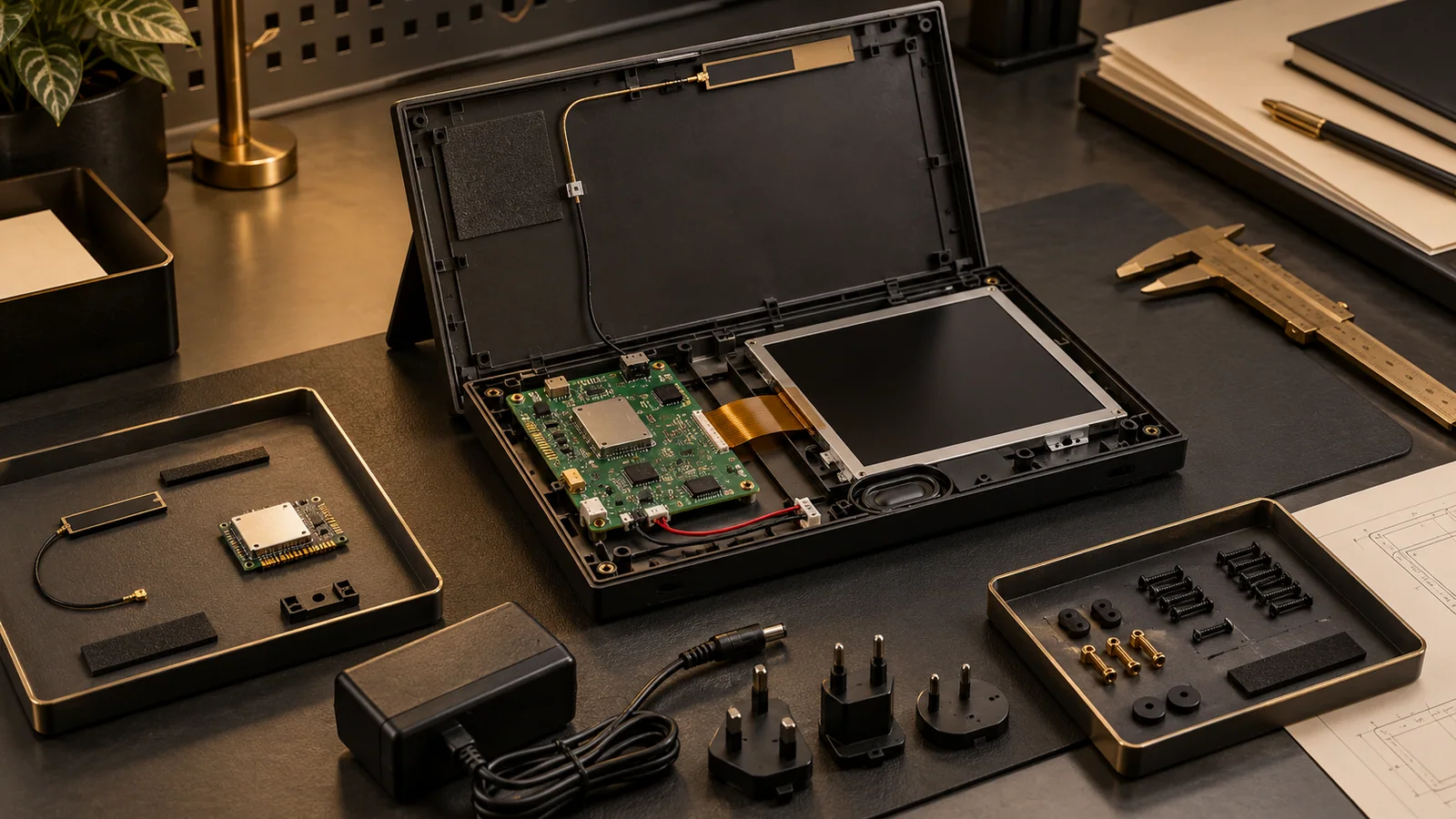
Prepare the application package as one controlled set
ICASA lists test reports, proof of payment, equipment and installation photographs, a user manual, functional description, schematic and PCB layout among standard application materials. The authority may ask for more information. Use one document index and one model identity across every item.
Mark confidential and released files according to the applicant's process, but do not submit an altered test report. Confirm that photographs show the actual sample, the manual matches its functions and the schematic revision corresponds to the PCB. Archive the submitted set and authority correspondence so production can be compared with the approved reference.
Control approval labels and model particulars
ICASA's public page discusses approval labels on the equipment and packaging and says manufacturing incorporation may require permission. Treat the label as controlled regulatory artwork. Use the exact approved certificate data, model and holder information supplied by the South African owner.
Do not copy an ICASA sticker from another product, invent a number or resize artwork by eye. Confirm placement, dimensions, permanence and whether product and package both require it. Check the printed sample before mass production and keep a signed or electronically approved label proof.
Review the external power supply and NRCS scope separately
ICASA type approval does not automatically settle every electrotechnical rule. The digital frame may use an external adapter, plug and cable that fall into a separate South African compulsory-specification or Letter-of-Authority workstream. Record the exact adapter manufacturer, model, ratings, construction and evidence.
Ask an NRCS or qualified local specialist to confirm the product classification, applicable compulsory specifications, test-report acceptance and applicant requirements. Do not state that an LOA is required—or not required—without an exact scope decision. Keep this workstream connected to the purchase order so packing cannot introduce an unreviewed power supply.
Freeze the power, plug and accessory pack
The tested and approved commercial configuration should identify the power supply, plug, cable, stand, remote, memory card or other accessories. Changes can affect safety, EMC, product identity and customer instructions. A local adapter selected after production may invalidate earlier assumptions.
Approve the packed arrangement with the physical sample. Verify voltage, fit, cable reach, ventilation and tray protection. The user manual and listing should show the actual South African product. If an importer supplies the adapter locally, document the split responsibilities and final-pack quality control.
Manage model families and private-label variants
One platform may be sold under several brands, colours, screen sizes and storage options. Build a family matrix showing common and changed elements. Ask the applicant whether each variant can be included, uses simplified approval, or needs separate action. Commercial convenience is not technical identity.
Keep certificates, register entries, reports, labels and purchase-order SKUs connected. A buyer brand change may be cosmetically simple but still affect approved particulars and artwork. Obtain the applicant's decision before the new brand is printed or listed for sale.
Control firmware and radio settings after approval
Firmware can enable a new band, change channel selection, output power, Bluetooth mode or update behavior. Record the assessed build and region settings. Restrict factory flashing and over-the-air deployment so the South Africa configuration cannot silently become a generic global build.
For each release, compare radio behavior, interfaces, security and instructions against the approved baseline. ICASA's public guidance ties approval validity to unchanged equipment and current technical requirements. Keep a specialist decision note for material changes and for changes judged not to affect approval.
Align certificate, customs and retail identities
The approval application, certificate, register entry, invoice, packing list, product label, safety file and online listing should identify the same model. Describe a connected digital photo frame accurately. The importer and customs broker must separately confirm tariff classification, valuation, origin and entry documents.
Provisional or special-event arrangements should not be treated as a commercial shortcut. ICASA describes provisional approval for trial, demonstration, research or testing on a non-commercial basis. Keep those units controlled and follow the permit conditions and disposition requirements.
Prepare truthful instructions and product claims
The manual should explain power connection, setup, Wi-Fi behavior, reset, ventilation, cleaning, mounting or stand use, troubleshooting and service contact for the real unit. Remove unsupported modes and overseas plug illustrations. Keep screenshots tied to a software version.
Avoid claims such as “ICASA certified quality” or “approved for all Africa.” Type approval relates to defined equipment and applicable South African requirements; it is not a universal performance endorsement. Retail content should state functions and included accessories accurately and direct customers to the responsible local service channel.
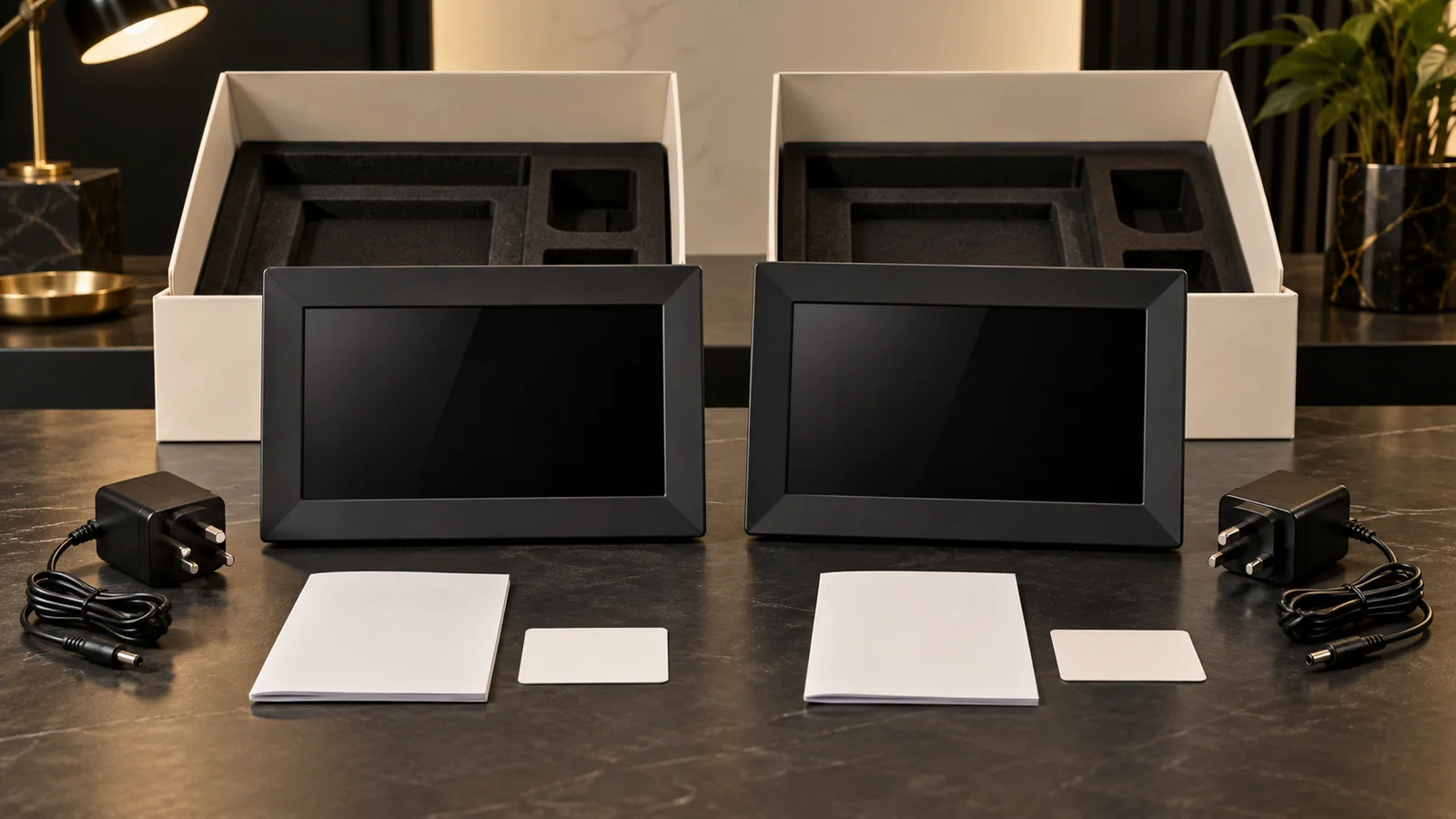
Inspect the shipment against the approved sample
Pre-shipment inspection should compare model, exterior, internal component references where practical, firmware, power supply, plug, product label, package label, manual, accessories and carton with the controlled file. Define critical defects that stop shipment and the person authorized to approve corrective action.
Photograph representative packed units and keep the inspection record with the order. Sampling does not issue an approval, but it can detect mixed boards, wrong adapters, obsolete labels and unauthorized firmware. Quarantine unclear units instead of editing documents to fit what was produced.
Run change control before reorders
Require the OEM to declare changes in radio module, antenna, processor board, display, enclosure, power, firmware, app and package. Compare the declaration with the approved reports and certificate particulars. Ask the South African holder whether the change is cosmetic, administrative or requires new technical action.
Review the local applicant, importer and brand relationships too. If certificate ownership or distribution changes, confirm how the new party may use the approval and artwork. Archive superseded files and release one clear baseline for the next production lot.
Buyer release checklist
- The complete South Africa hardware and software configuration is documented
- A qualified owner confirms ICASA type-approval scope
- A South African registered applicant is assigned
- Standard versus simplified approval is based on verified model identity
- Full RF, EMC and safety reports match the tested equipment
- The module, antenna and host integration are controlled
- The application index uses one model and document revision
- ICASA label data is authorized and checked on product and packaging
- The external power supply receives a separate NRCS and safety-scope review
- The packed plug and accessories match the released configuration
- Model families and buyer brands are mapped
- Firmware and region settings are frozen
- Commercial records and retail claims match the approved model
- Inspection and reorder gates compare production with the baseline
Questions for the OEM and South African applicant
Ask the OEM: Which module, antenna, bands and firmware ship? Which full reports match the finished host? Which adapter and plug are packed? What differs among variants? Can the factory provide samples, schematics, PCB layouts, manuals, photographs, labels and signed change declarations?
Ask the South African team: Does the equipment require standard or simplified approval? Who will hold the certificate? Which standards and reports are accepted? Which label artwork may be released? Does the adapter need separate NRCS action? Which hardware, brand or software changes require review?
Experience scope and project limits
Editorial review: Jessica, Founder & Project Advisor at DOREMI Display. Updated 12 October 2026. Jessica's practical scope covers B2B digital-frame specification, OEM evidence handover, sample and packaging review, artwork control and production change management. DOREMI is not presented as ICASA, NRCS, a South African approval holder, accredited laboratory, customs broker or legal adviser.
Use this guide to organize the project. Current South African legislation, ICASA regulations and technical standards, NRCS compulsory specifications, the exact product and qualified local advice control the final type-approval, electrical-safety, labelling and import decisions.
Public sources used for this guide
- Google Search Central: AI features and your website
- Google Search Central: helpful, reliable, people-first content
- ICASA: type approval requirements for South Africa
- ICASA: Type Approval Guidelines
- South African Government: Electronic Communications Act 36 of 2005
- NRCS: Letter of Authority administrative procedure