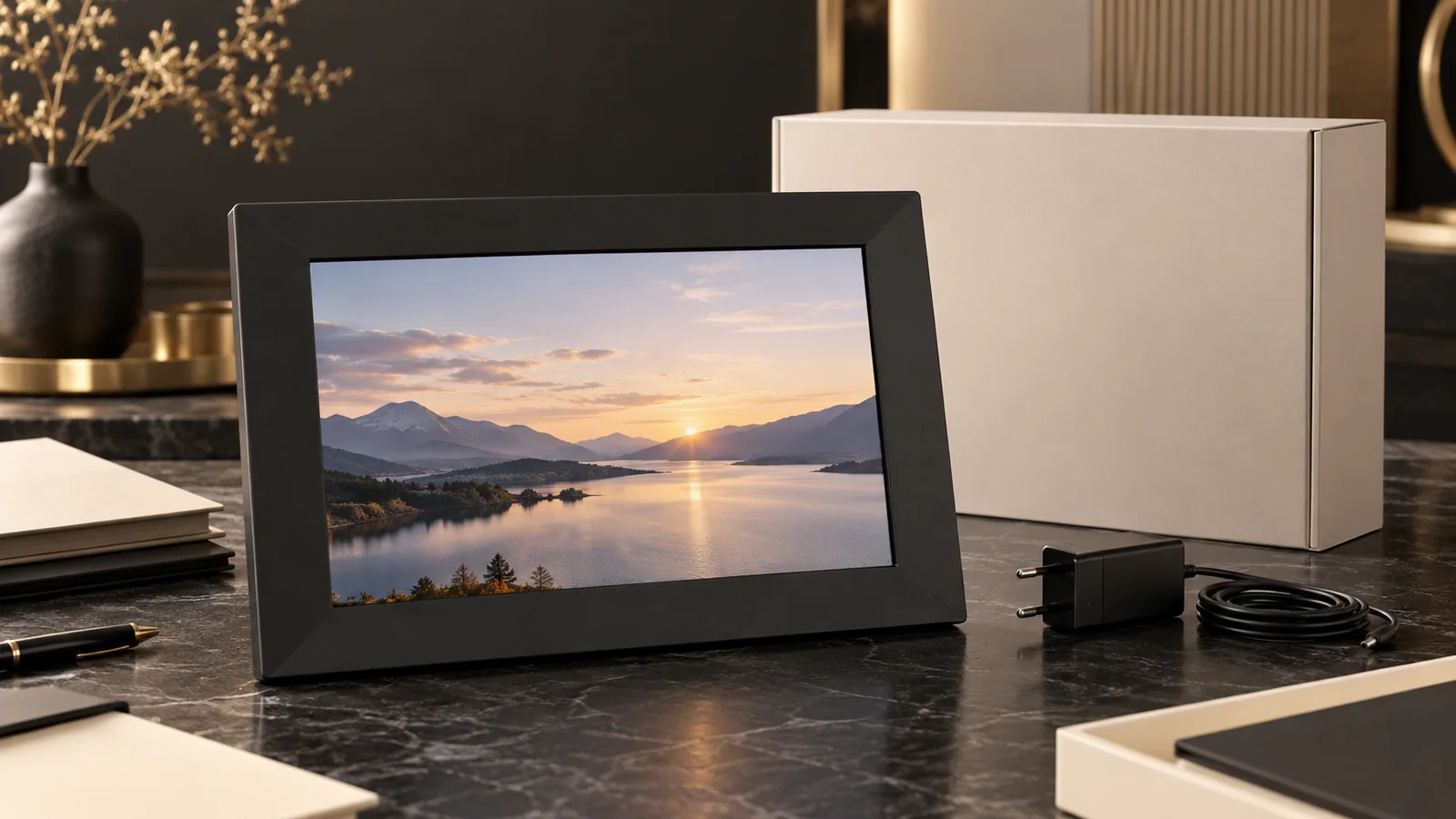
A Wi-Fi digital photo frame prepared for South Korea is more than a decorative screen with a certified radio module inside. The commercial release must connect the finished model to the correct broadcasting-and-communications conformity route, accepted test evidence, a responsible applicant, the applicable Korean marking information, the supplied power system and a controlled production configuration.
This guide is for Korean importers, private-label brands, retailers, sourcing teams and overseas OEM suppliers. It is a project handover, not an RRA certificate, KC safety certificate, product-classification ruling, customs clearance or legal opinion. The Korean applicant and qualified laboratory or certification specialists must confirm the current route, technical criteria, accepted reports, label format, electrical-safety scope and import requirements for the exact product.
Why does the finished frame need a Korean conformity decision?
Korea's National Radio Research Agency explains that broadcasting and communications equipment intended to be manufactured, sold or imported must follow the applicable conformity-assessment route. The official system distinguishes certification of conformity, registration of compatibility and interim conformity. A digital photo frame may combine wireless LAN, Bluetooth, a computing platform, display electronics and an external power supply, so a buyer should not decide the route from the retail name alone.
Begin with the actual Korea configuration. Record the Wi-Fi and Bluetooth functions, bands, channel controls, antenna, radio module, processor board, display, enclosure, power input, adapter, firmware and software settings. Ask a qualified Korean reviewer to map that finished configuration to the current RRA equipment table and technical criteria. The correct result may depend on features and implementation that are invisible in a product photograph.
Separate certification of conformity from registration of compatibility
The RRA public introduction describes certification of conformity for equipment that can seriously affect the radio environment or communications networks, and registration of compatibility for equipment outside that certification category that still must demonstrate compliance. Interim conformity addresses equipment for which appropriate criteria are unavailable or difficult to apply. These are different legal paths, not quality grades a supplier may choose for convenience.
Ask the Korean applicant or certification body to document the selected route and the provision or equipment category supporting it. Keep that decision with the model file. A report labelled EMC, RF or safety does not by itself prove which administrative route applies, and a certificate from another market does not automatically determine Korean treatment.
Do not treat a radio module as the complete product
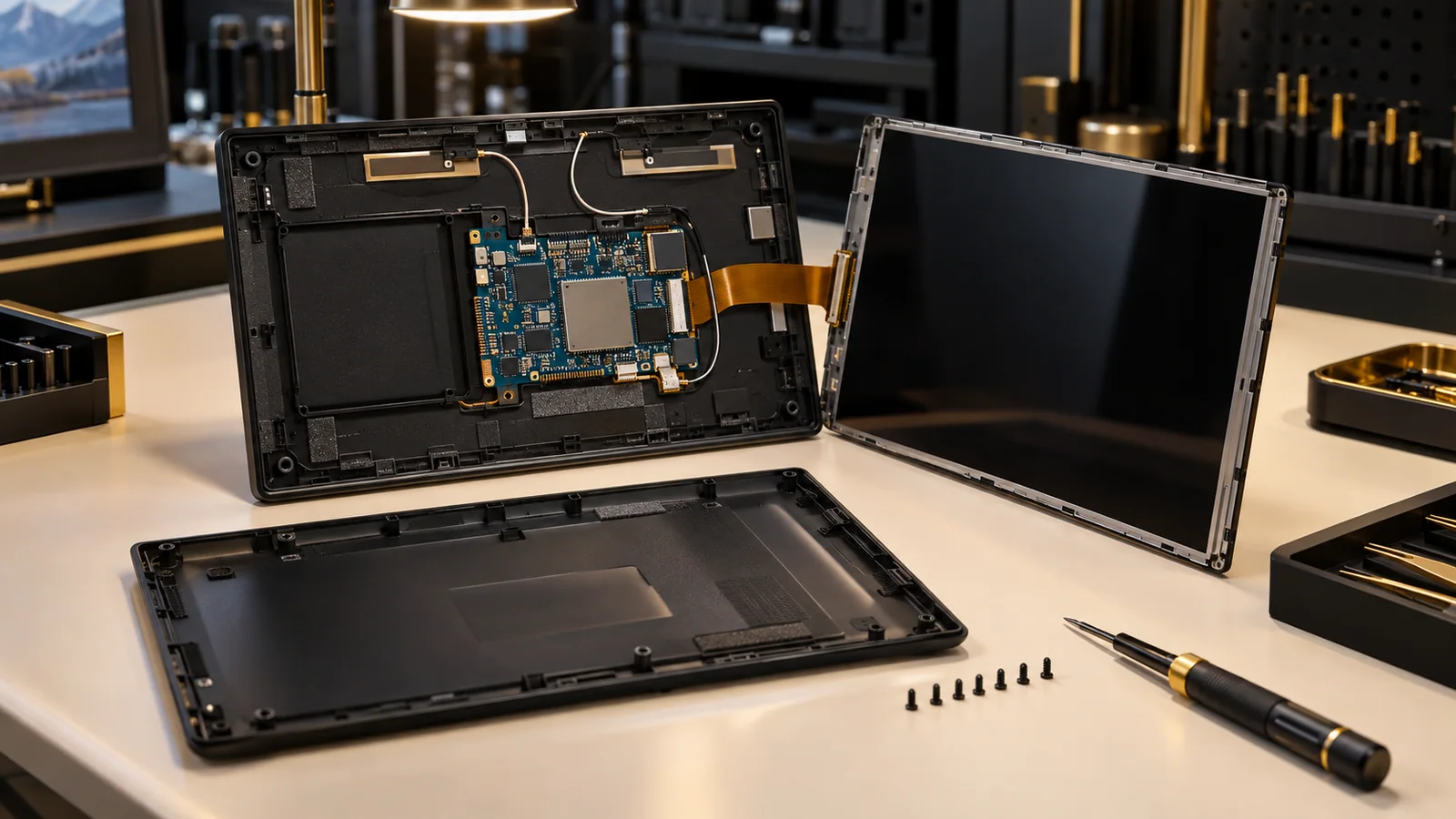
A module report can be valuable evidence, but the host controls antenna placement, ground conditions, enclosure effects, power, clock sources and the software that enables radio modes. The finished frame also contains digital circuitry that can create electromagnetic emissions. The practical buyer question is therefore not only “is the module approved?” but “what assessment and registration does the complete marketed frame require?”
Create a module-to-host integration record. It should identify the module and hardware revision, antenna type and gain, antenna cable, location inside the frame, shielding, power supply, enabled bands, firmware and host board. Compare those facts with the evidence proposed for the Korean application. If the factory changes the antenna, layout, processor board or enclosure after testing, the applicant must review the effect before production continues.
Choose the applicant and Korean representative early
The RRA process requires accountable application documents, including representation information for relevant routes. Before samples are booked, decide which entity will apply, receive notices, control the registration data and authorize marking. The overseas manufacturer can prepare technical evidence, but it should not place an applicant's details on artwork without written release.
Document the legal name, address, contact, role and authority of each party. Define who communicates with the laboratory, who pays fees, who holds original records, who approves model changes and who responds to market-surveillance questions. If a distributor changes, the team should not assume that the old approval and label arrangements transfer automatically.
Build the evidence package around the tested sample
RRA's public material lists documents such as a user manual, test report, appearance drawing, component arrangement information, circuit diagram and letter of representation for applicable routes. The exact list varies with the assessment path. Give the laboratory a controlled sample and document index instead of sending unrelated reports collected from component vendors.
Use one model and revision across the sample label, specification, photographs, manual, drawings and report request. State every supported radio mode and the production firmware used for testing. If optional adapters, memory sizes, screens or enclosure colours are planned, ask whether they may share evidence and what comparison is required. Record exclusions explicitly so sales cannot add an unreviewed option later.
Confirm accepted laboratory and MRA evidence
The RRA describes designated testing agencies and mutual-recognition arrangements, and its MRA page warns laboratories to check current technical and administrative requirements. That means “tested overseas” is not enough. The applicant must confirm that the laboratory, scope, standard edition, report format and tested configuration are acceptable for the Korean route.
Before authorizing a test, request a written test plan identifying applicable RF and electromagnetic-compatibility requirements, sample count, firmware mode, accessories and deliverables. Confirm whether an overseas report can be used directly, needs local review or must be supplemented. Preserve the laboratory's identity and scope evidence with the report rather than relying on a sales email.
Screen the power adapter as a separate electrical product
Korea's KC mark is an integrated mark used across multiple compulsory certification systems. KATS explains that legally controlled items are specified under their relevant laws and ordinances. The supplied external adapter, plug, cable or battery can therefore raise a separate product-safety question from the RRA radio and EMC assessment of the digital frame.
Record the adapter manufacturer, exact model, input and output ratings, plug, cable, construction and the frames it supports. Ask the Korean importer or safety specialist whether that adapter and the finished frame fall within safety certification, safety confirmation or another control route. Never reuse a KC number from a visually similar adapter, and never treat the presence of one KC mark as proof that every regulatory workstream is complete.
Connect marking artwork to approved data
The finished product, package, manual and online listing may need approved identification and Korean information. Build a controlled marking schedule that names each required field, its source, owner, placement, size or durability rule and artwork revision. Regulatory identifiers should enter the layout only after the responsible Korean party releases them for the exact model.
Do not ask a designer or AI image tool to invent a KC symbol, registration number or approval statement. Use official artwork supplied through the project owner and verify it on the physical sample. Check curved surfaces, recesses, removable stands and protective films that may make a label hard to see or easy to remove.
Prepare Korean customer information for the real product
The manual should match the production hardware, software and accessories. It should explain power connection, supported setup flow, wireless operation, reset, cleaning, mounting or stand use, troubleshooting and service access as applicable. A manual translated from a different market can create errors if it mentions unsupported bands, another plug, an unavailable cloud service or an obsolete app screen.
Have the Korean business approve language, warnings and customer-service details. Control screenshots by firmware and app version. If a QR code is added to the final product, validate the destination and ownership, but do not let a link replace information that must remain with the product. The buyer should archive the released Korean file, not just the editable source.
Control model families and private-label variants
One platform may be sold in several screen sizes, colours, memory capacities and brands. Those differences can affect the model name, enclosure, antenna environment, display emissions, power supply, manual and registration record. Make a family matrix that identifies common hardware and every changed feature.
Ask the certification body which variants may be included, registered as a family or require new evidence. Do not assume that a colour change is always administrative or that a new brand can use another holder's data without authorization. Tie each approved commercial SKU to the exact technical version and artwork pack that production will use.
Freeze firmware and radio settings
A digital frame's firmware can enable a band, change channel behavior, adjust output power, add Bluetooth functionality or alter update mechanisms. The tested software therefore belongs in configuration control. Record the build identifier and the settings used during assessment, and restrict the release process so a generic global image cannot silently replace it.
For an update after approval, compare radio behavior, clocks, interfaces, cybersecurity functions and user instructions. Ask the Korean owner whether the change needs testing, registration action or revised documents. Keep a decision note even when the conclusion is that no regulatory action is needed.
Align customs, purchase and product identities
The purchase order, invoice, packing list, test file, registration data, product label and online listing should describe the same model. A connected digital photo frame should not be declared as a passive picture frame merely because both have a decorative bezel. Give the broker an accurate description, origin, model, quantity and supporting records requested by the importer.
Confirm the import process before the shipment departs. Sample or exhibition exemptions described by RRA are purpose- and quantity-specific and should not be used as a substitute for the commercial route. Separate development samples from saleable stock and retain the approval or exemption basis for each movement.
Verify the production lot before shipment
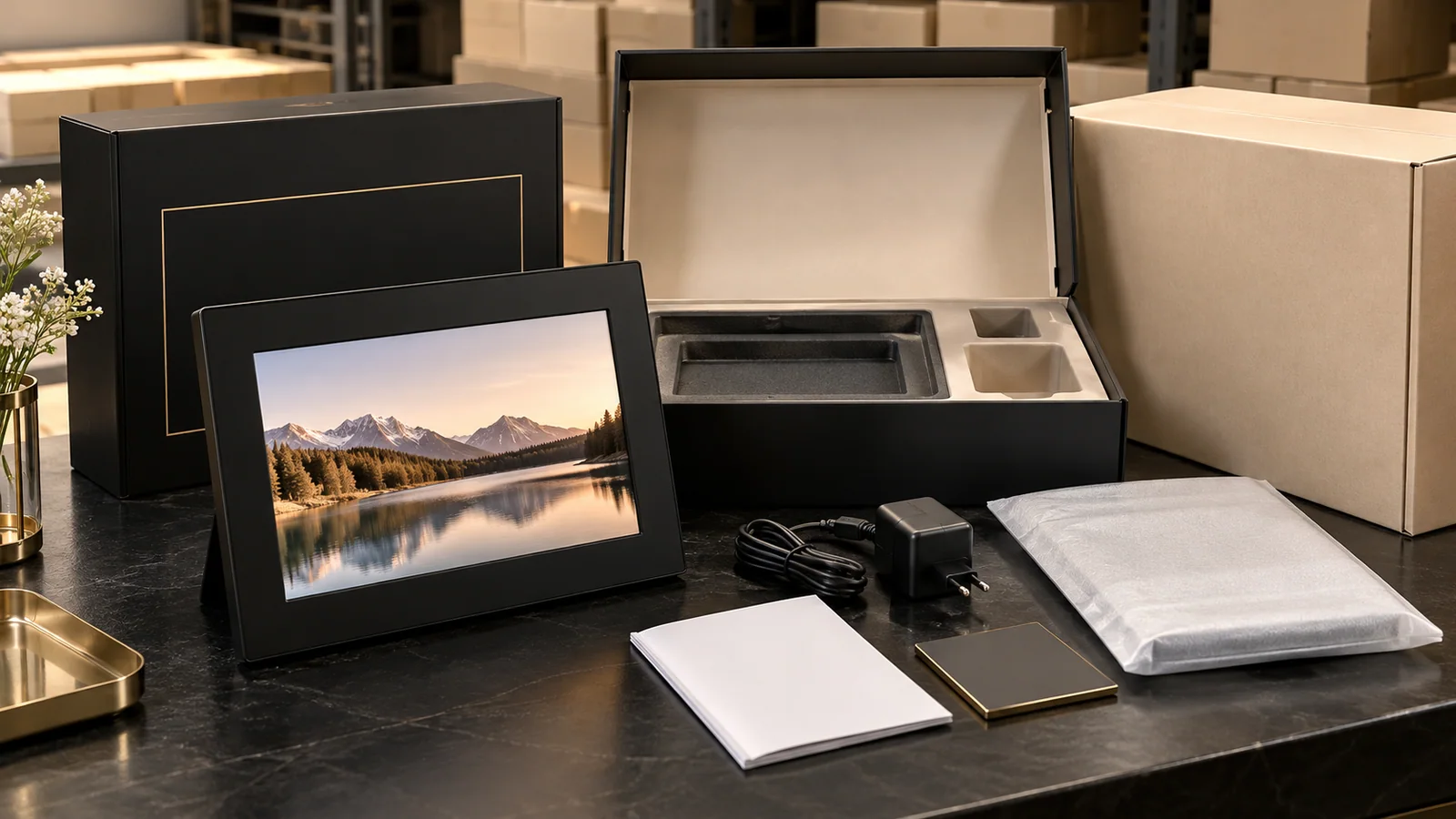
Pre-shipment inspection should compare the actual unit against the released configuration: model, exterior, module and antenna references where practical, firmware identifier, power adapter, rear label, carton, Korean manual and included accessories. The inspection plan should define critical mismatches that stop shipment.
Photograph representative evidence for the controlled project file. Sampling does not certify every unit or replace RRA and product-safety processes, but it can show whether the inspected lot matches the approved reference. Quarantine mixed adapters, unexplained board substitutions, obsolete labels or unapproved manuals until the responsible Korean team decides disposition.
Maintain evidence through reorders
Keep a controlled index containing the route decision, application records, certificates or registrations, test reports, drawings, manuals, released labels, applicant authorizations, sample photographs and change decisions. Assign renewal or status monitoring to a named owner. A folder that no one reviews is not an operating control.
Before each reorder, compare the current bill of materials, supplier list, firmware and artwork with the approved baseline. Ask the factory for a signed change list, including changes it considers equivalent. Revalidation is especially important after component shortages, board redesigns, adapter substitutions, app migrations or changes in the Korean importer.
Buyer release checklist
- The exact Korea-market hardware and software configuration is documented
- A qualified owner confirms the applicable RRA conformity route
- The finished host is assessed separately from module evidence
- The Korean applicant and representation responsibilities are assigned
- Test reports come from an accepted laboratory and scope
- The tested sample, drawings, manual and report use one model identity
- The power adapter receives a separate electrical-safety scope review
- KC and RRA marking data comes from controlled approved sources
- Korean customer information matches the production product
- Variants and private-label brands are mapped before quotation release
- Firmware and radio settings are under change control
- Customs and commercial records describe the connected frame accurately
- Inspection checks the released configuration
- Reorders trigger a documented comparison with the approved baseline
Questions for the OEM and Korean importer
Ask the OEM: Which module, antenna, bands and firmware ship in this model? Which reports support the finished product? What changes across screen sizes, colours and brands? Which adapter is supplied? Can the factory provide controlled samples, drawings, manuals, radio test modes and change notifications?
Ask the Korean team: Which RRA route and equipment category apply? Who is the applicant and representative? Which laboratory and report editions are accepted? Does the adapter or frame require separate electrical-safety action? What marking and Korean-language content may be released? Which changes require authority or certification-body review?
Experience scope and project limits
Editorial review: Jessica, Founder & Project Advisor at DOREMI Display. Updated 11 October 2026. Jessica's practical scope covers B2B digital-frame specifications, OEM data handovers, sample review, packaging coordination, artwork control and production change management. DOREMI is not presented as RRA, KATS, a Korean certification body, an accredited laboratory, customs broker or Korean legal adviser.
Use this guide to organize questions, owners and evidence. Current Korean law, equipment tables, technical criteria, authority guidance, accepted laboratory scope, the exact product and qualified local advice control the final conformity, safety, marking and import decisions.
Public sources used for this guide
- Google Search Central: optimizing for generative AI features
- Korea National Radio Research Agency: conformity assessment system
- RRA Communications Conformity Assessment Center: conformity assessment outline
- RRA: mutual recognition arrangement information
- KATS: overview of the KC Mark system
- KATS: electrical-appliance safety-management system and target items