
A low-priced frame sent to Switzerland can be exempt from import tax because the calculated tax is insignificant, yet repeated small-consignment sales can make the overseas mail-order company liable for Swiss VAT. Once the mail-order rules apply, the seller's role changes across all relevant deliveries, and the parcel must tell the customs declarant enough to avoid charging the customer twice.
This guide is for overseas frame brands, electronic platforms, parcel teams, Swiss tax representatives and OEM/ODM suppliers. It converts current Federal Tax Administration guidance into a seller, product and customs handover. It does not register a business, determine tax liability, appoint a representative, calculate customs value or replace Swiss VAT, customs and legal advice.
What are frame sellers asking about Swiss VAT?
Common commercial questions include: “What is a small consignment?”, “Is there a fixed product-price threshold?”, “What happens when small-consignment sales reach CHF 100,000?”, “Does a marketplace become the supplier?”, “Who should appear as importer?”, “Which number belongs on the invoice and parcel?” and “How can the customer avoid paying domestic and import tax?”
These questions are editorial inferences from public first-party guidance and normal e-commerce operations. They are not captured from Google AI Overviews or AI Mode. Google Search Central recommends useful, original and well-structured content for generative-search visibility. DOREMI follows that principle without claiming access to private query or response data.
Define “small consignment” by tax, not a universal price
The Swiss Federal Tax Administration describes small consignments as goods exempt from import tax because the import-tax amount is CHF 5 or less. That is not the same as one permanent retail-price threshold for every product. The result depends on the taxable amount and applicable rate, which can change.
Display frames generally need a rate and value review based on their actual transaction and contents. Do not publish a static “frames under CHF X are tax free” banner without advice and an update process. Keep sales value, transport and other value elements available so the customs and tax calculation can use the current legal basis.
Monitor the CHF 100,000 small-consignment turnover test
If a domestic or foreign mail-order company generates at least CHF 100,000 per year from qualifying small consignments dispatched or transported from abroad, the FTA says its deliveries become domestic supplies under the mail-order rules and it must enter the Swiss VAT register. Build a monitoring process before the threshold is reached.
Track qualifying turnover separately from total Swiss sales and global turnover. Preserve transaction date, product, recipient, value basis, import-tax result and delivery route. Ask a Swiss adviser how returns, cancellations, marketplace sales and related entities affect the calculation. The threshold is a legal test, not a sales forecast that can be rounded informally.
Understand what changes after registration
Once a mail-order company is registered because of the mail-order rules, not only its small consignments but also other shipments to Swiss buyers are generally treated as domestic supplies under the described regime. The registered company charges Swiss domestic VAT and is treated as importer for relevant goods, subject to the detailed conditions.
This changes checkout, invoices, importer instructions, import-tax recovery and customer support. Do not configure only the low-priced SKUs. Review large custom frames, wholesale cartons and replacement shipments too. State the effective date in the system so pre-registration and post-registration orders are not reconciled under one undated rule.

Consider voluntary subjection before the threshold
The FTA describes a declaration of subjection for abroad that can allow a mail-order company to become taxable voluntarily before mandatory mail-order liability. This can make the company the importer and help plan a consistent tax and import process, but it also creates reporting, representation and system obligations.
Model the commercial case with qualified advice. Compare customer experience, import-tax recovery, representative and compliance cost, parcel volumes and expected threshold timing. Do not register solely because a carrier recommends it or because one channel wants a tax-inclusive price. The decision should cover the business's full Swiss supply model.
Appoint a Swiss tax representative where required
Foreign mail-order companies that must register generally need a tax representative resident or domiciled in Switzerland. The representative is not a substitute for accurate product and order records. Agree data access, filing responsibility, invoice review, import assessment handling, correction process and termination before the first taxable order.
Give the representative a route map covering direct web sales, platforms, B2B sales, samples, replacements, returns and stock held in Switzerland. Confirm which entity signs contracts and which bank or settlement records support the VAT return. Keep role descriptions in writing rather than assuming the carrier, customs declarant and tax representative are interchangeable.
Apply the current rate to the actual product
The FTA publishes a normal Swiss VAT rate of 8.1% and reduced rates for specified categories. A standard display frame will usually require a product-specific confirmation rather than borrowing a reduced rate associated with books, food or another listed category. A printed insert inside a frame does not automatically determine the treatment of the whole sale.
Store the approved rate with an effective date and rationale. Review mixed offers such as a frame plus book, framed artwork, digital photo frame, spare part or installation service. The manufacturer supplies facts; the taxable seller and its adviser determine the rate and invoice treatment.
Map platform taxation separately
Swiss electronic-platform provisions, including Article 20a treatment described by the FTA, came into force on 1 January 2025. When a platform facilitates a goods sale under the stated conditions, it can be deemed the supplier to the buyer. That allocation can make the platform responsible for tax.
Obtain the platform's country-specific responsibility statement. Record who is supplier to the buyer, who issues the invoice, whose VAT number is used, who imports the goods and who provides customs-clearance instructions. Marketplace-fulfilled and merchant-fulfilled orders may share a storefront but use different logistics and data paths.
Use the FTA lists as an operational control
The FTA publishes lists of registered mail-order companies and platform operators. Customs declarants can use these records to distinguish whether import tax should be charged to the parcel recipient or handled through the registered operator's route. Ensure the legal name, trading name and VAT number in the order and parcel files match the registered identity.
Do not treat a listing as automatic proof that every parcel has been documented correctly. Carrier instructions still need the right supplier, importer and VAT data. Schedule a periodic identity check and update marketplaces, warehouses and couriers after a name, address, VAT status or representative change.
Build a frame SKU and parcel data spine
Each frame SKU needs a clear commercial description, materials, origin, saleable configuration, value components, customs classification, product revision and packed configuration. A wood photo frame, deep jersey shadow box and connected digital display may need different duty, product and tax review.
Connect this product master to order, invoice, parcel and customs records through durable identifiers. Avoid vague descriptions such as “decoration” or “gift.” If a supplier changes the profile, glazing, backing, electronics, insert or country of manufacture, issue a change notice before the next shipment so the seller can review the tax and import facts.
Prevent the customer from paying twice
A registered mail-order company charges Swiss domestic VAT and must ensure the customer is not also charged import tax. The FTA says the company should give the customs declarant the information needed to recognise its registered status. In postal traffic, the official guidance calls for the appropriate address label details and a pro forma invoice showing Swiss VAT.
For courier traffic, issue explicit customs-clearance instructions at booking. Confirm the VAT number, importer identity, invoice data and billing account accepted by the courier. Store the submitted instruction and import assessment. A website promise of “Swiss VAT included” is not enough if the parcel message still routes the tax to the recipient.
Reconcile domestic VAT and import tax
For shipments that remain subject to import tax, the registered mail-order company may be able to deduct import tax as input tax when the legal conditions are satisfied. Finance needs the import assessment, customs account, invoice, payment and order record in the same reconciliation chain.
Review exceptions: a parcel charged to the customer, a customs value adjustment, a returned shipment, a platform order under the wrong VAT number and a carrier invoice without the expected import record. Do not post all border charges to freight expense. Investigate whether the event indicates a tax, data or broker-instruction error.
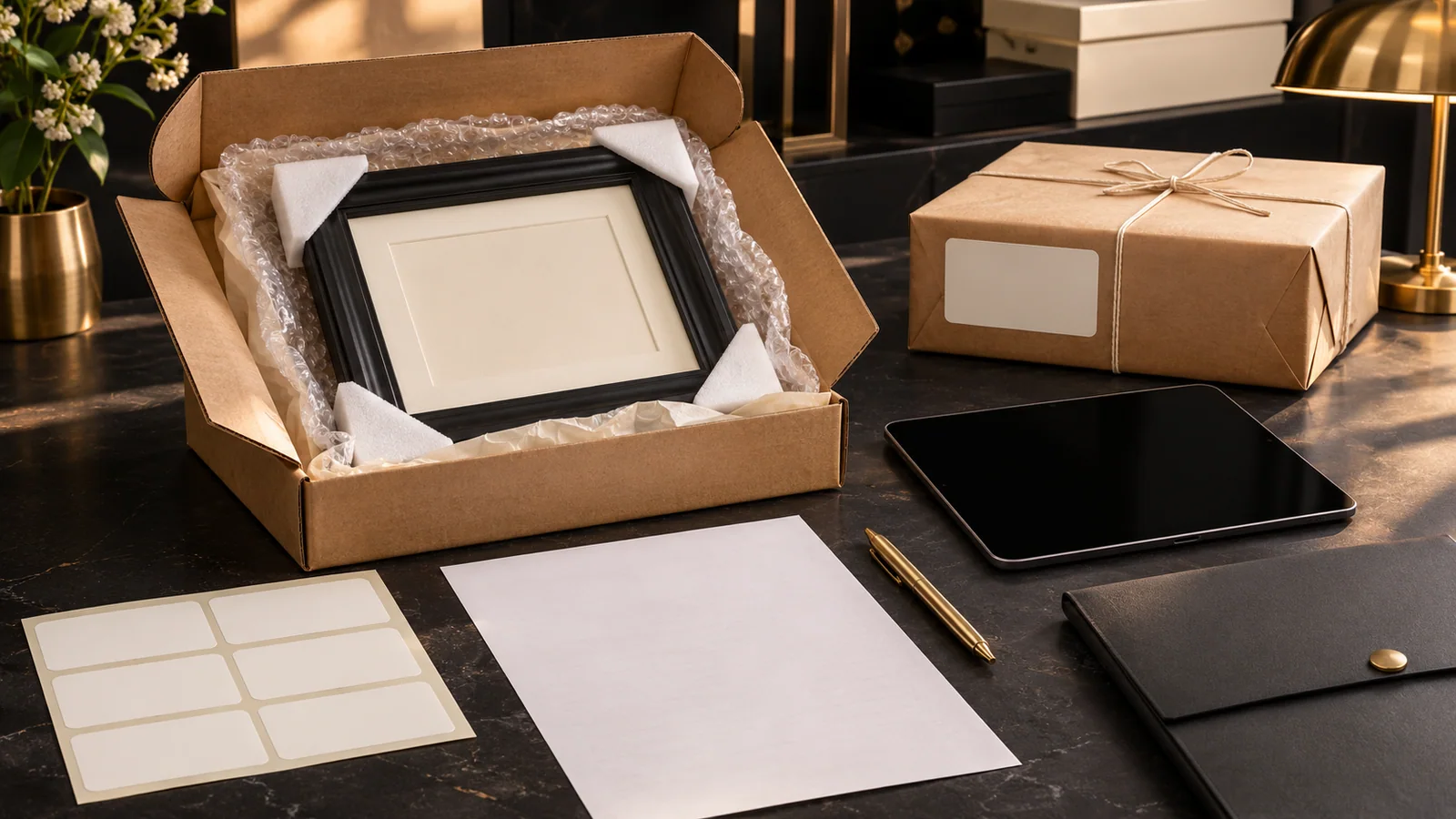
Design a duplicate-charge correction workflow
If the recipient pays import tax even though Swiss domestic VAT was charged, collect the customer's evidence and the carrier assessment, then compare them with the parcel instruction and FTA registration details. Decide who requests a correction or refund and who communicates with the customer.
Preserve the original documents and the corrected outcome. Do not simply issue a goodwill credit while leaving the carrier setup unchanged. Track repeated cases by channel, warehouse and logistics provider. A recurring error should trigger an integration or account review.
Handle returns and replacements deliberately
A returned custom frame can create a domestic-VAT adjustment and a physical customs movement. A free replacement still needs an accurate description, value method, reason and importer instruction. A repaired display may use another customs procedure. Ask advisers and the declarant how each case should be documented.
Link the return authorisation to the original invoice, parcel and import assessment. Keep product-condition photographs, carrier events, refund evidence and the disposition decision. The objective is to prove what moved and why, rather than reuse the outbound invoice for every later event.
Separate direct parcels, platforms and local stock
A direct overseas parcel, a platform-facilitated sale and goods held in a Swiss warehouse can produce different seller, importer and VAT roles. Draw each chain. Include the legal owner, supplier to the customer, platform, tax representative, customs declarant, warehouse and recipient.
Do not use mail-order small-consignment guidance as a complete explanation for stock already imported in bulk. Review local storage, domestic supplies, import ownership and registration with Swiss advisers. Channel-specific diagrams reduce the risk that one correct process is copied into a different model where it no longer fits.
Give the OEM a bounded evidence role
The frame manufacturer can provide commercial descriptions, materials, manufacturing location, packed dimensions and weight, product photographs, invoices, carton configuration and change notices. It can distinguish a standard frame from a digital frame or a mixed retail set. These facts support the seller's adviser and customs declarant.
The OEM should not determine Swiss registration, select the VAT rate, appoint the representative or promise that a customer will never see an import charge. Put the boundary in the RFQ and data handover. Accurate facts are the supplier's contribution; legal decisions remain with the taxable parties and their advisers.
Swiss mail-order VAT checklist
- Small consignments are identified by the import-tax amount, not a universal product-price claim
- Qualifying small-consignment turnover is monitored against CHF 100,000
- Mandatory and voluntary registration routes have been reviewed with Swiss advisers
- The foreign company has the required Swiss tax representation
- The approved VAT rate is linked to the actual frame offer and effective date
- Direct sales and platform-deemed-supplier routes are separated
- Registered names and VAT numbers match the FTA list and parcel data
- Every SKU has a precise description, classification and revision record
- The customs declarant receives explicit registered-mail-order instructions
- Domestic VAT, import tax and input-tax evidence reconcile to the order
- Duplicate charges, returns and replacements have correction workflows
- Local-stock operations are reviewed outside the simple overseas-parcel model
Experience scope and project limits
Editorial review: Jessica, Founder & Project Advisor at DOREMI Display. Updated 16 November 2026. Jessica's practical scope covers display-frame specifications, OEM/ODM quotations, samples, packaging, production communication and buyer-supplier handovers. She is not presented as the Swiss Federal Tax Administration, a tax representative, customs declarant, accountant or lawyer.
The seller, platform, importer, representative, customs declarant and qualified Swiss advisers must determine liability, registration, tax rate, value, classification, invoicing, import and correction treatment for the actual transaction. This guide prepares product and operational facts; it is not a VAT registration, return, customs declaration or legal opinion.
Public sources used for this guide
- Google Search Central: optimizing for generative AI features
- Swiss Federal Tax Administration: mail-order trade and platform taxation
- Swiss Federal Tax Administration: VAT registration for mail-order companies
- Swiss Federal Tax Administration: VAT registration for platform operators
- Swiss Federal Tax Administration: current VAT rates