
An aluminium display-frame programme can look like one product to a buyer and several very different goods to customs. Long extruded mouldings, cut profile sets, prepared components and assembled picture frames do not necessarily share one commodity code. From 1 January 2027, that distinction also matters for the United Kingdom's Carbon Border Adjustment Mechanism because current scope is defined through listed commodity headings, not through the marketing name “aluminium frame.”
This guide is for UK importers, private-label frame brands, distributors and overseas OEM teams preparing aluminium picture, certificate, poster, jersey or record-display programmes. It turns HMRC's current CBAM materials into a practical product-code, supplier-data and record handover. It does not classify a specific import, calculate tax, verify emissions or replace HMRC, the UK Integrated Online Tariff, a customs adviser, tax adviser or qualified verifier.
What are aluminium-frame buyers asking?
Commercial questions are usually short: “Are finished frames covered?”, “Do aluminium profiles count?”, “Does the £50,000 threshold apply to us?”, “What should the factory provide?” and “Can we use a default emissions value?” A useful answer begins with the exact goods at the UK border, the importer, the commodity code, value, net mass, origin, production installation and available emissions evidence.
Google Search Central's current guidance for generative search features recommends original, helpful content built for people, with ordinary SEO fundamentals and clear evidence. This article therefore joins related questions into one buyer workflow. Search intent is an editorial inference from HMRC's October 2026 updates and recurring sourcing handovers; DOREMI does not claim direct access to or measurement of Google AI Overview or AI Mode output.
Start with the 1 January 2027 tax point
HMRC states that UK CBAM comes into effect on 1 January 2027 and taxes embodied emissions in specified imported goods from the aluminium, cement, fertiliser, hydrogen, iron and steel sectors. The first practical task is not to ask whether the finished product contains aluminium. It is to identify whether the commodity code of the imported goods is on the current scope list.
Create a shipment-level readiness file before the first 2027 entry. Record the expected arrival date, importer, seller, product form, proposed code, supporting classification evidence, customs value, net mass, origin and supplier installation. If the goods may arrive before and after the start date, keep purchase-order and production-lot boundaries visible so records are not reconstructed later.
Read the aluminium scope by heading
HMRC's aluminium page currently lists headings including 7601, 7603 through 7614 and 7616. Heading 7604 covers aluminium bars, rods and profiles. That makes extruded picture-frame mouldings an obvious item for code screening. The scope page explains that subheadings beneath a listed heading are included even when every longer code is not printed on the page.
The page does not list heading 8306, which covers certain base-metal photograph, picture or similar frames in the tariff. That observation is not permission to declare every assembled display frame outside CBAM. Classification depends on the imported article, its material, construction and condition. A mixed-material shadow box, a profile kit, a prepared component or a finished frame may require different analysis.
Freeze the form at import
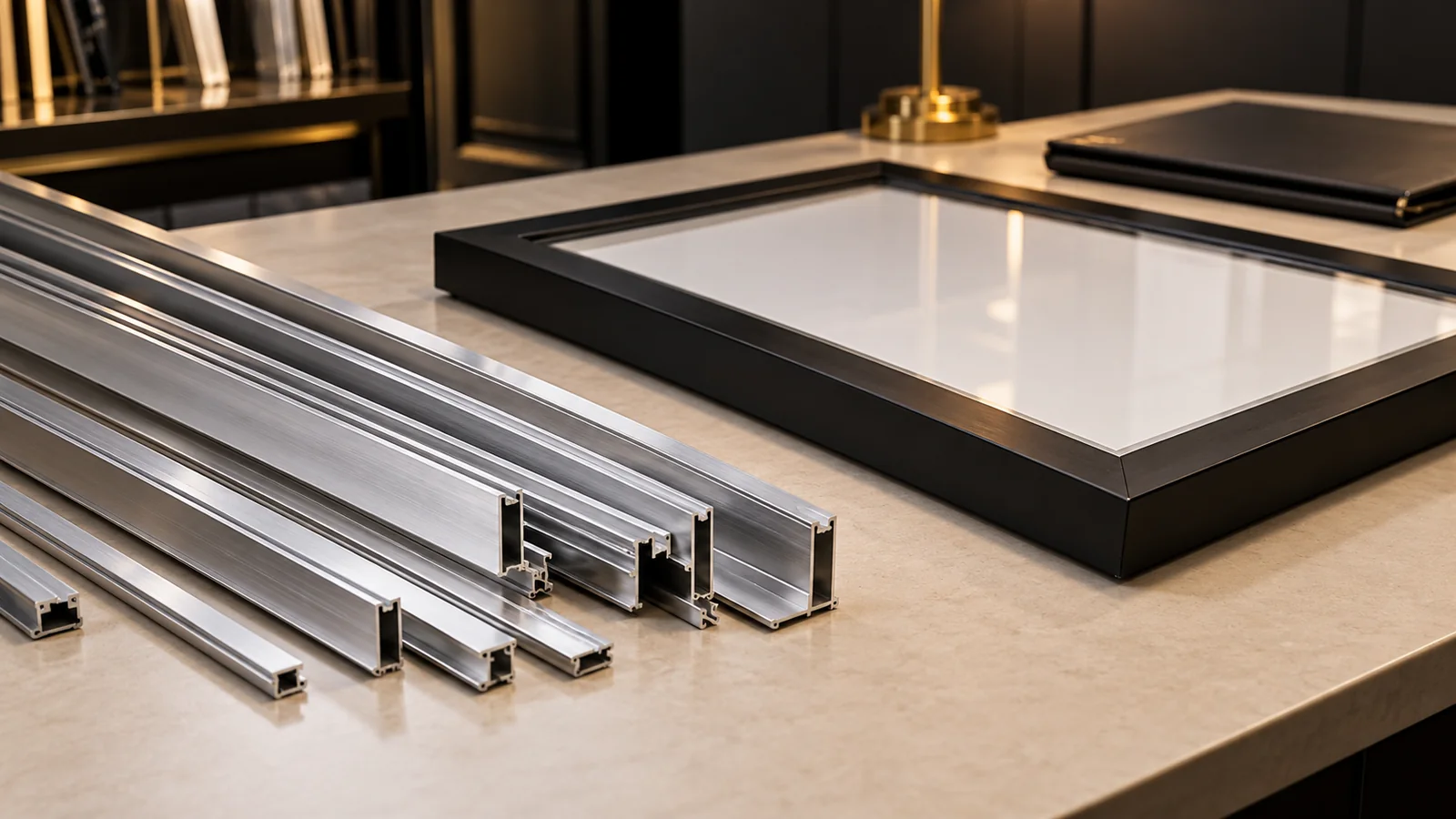
Build a configuration sheet for each imported form. State whether profiles are straight lengths or cut; whether mitres, drilling, corner keys or surface finishing are completed; whether glazing, backing, hardware or inserts are present; whether components are packed together; and whether the package has the essential character of a finished frame. Add clear photographs and dimensioned drawings for the customs professional, while keeping consumer artwork separate.
Do not assume that an internal SKU name controls classification. “Frame set,” “moulding,” “display kit” and “assembled shadow box” are commercial labels. The entry must describe the actual merchandise. When the programme changes from importing profiles for UK assembly to importing completed frames, trigger a new classification and CBAM review before the next shipment.
Use the current UK tariff, not an old quote
Commodity codes and measures can change. Verify the code against the UK Integrated Online Tariff for the intended entry date and keep the search result or adviser record in the file. A supplier's HS code on a quotation can be a useful starting point, but it is not evidence that the UK importer has completed its own review.
Give the customs adviser the material composition, alloy where known, cross-section, manufacturing operations, imported length or set, component list, photographs and intended function. If the answer remains uncertain or materially affects liability, ask whether a formal ruling or other HMRC route is appropriate. Do not copy a ruling for another product as if it automatically binds a new transaction.
Identify the liable importer
HMRC's registration workflow separates scope screening from the question of who is treated as the importer. Map the importer of record, customs representative, Incoterm, seller, UK buyer and any indirect representation. Do not let “delivered duty paid” or a freight forwarder's name substitute for a documented liable-person analysis.
Put the result into the purchase order and logistics instruction: legal entity, EORI or relevant identifier, customs representative, code owner, emissions-data owner, return owner and escalation contact. The overseas factory supplies technical facts; it does not decide the UK buyer's tax position simply because it booked freight.
Apply the registration threshold to controlled data
HMRC says registration is required when the total value of imported CBAM goods goes over, or is expected to go over, £50,000. Registration opens on 1 January 2028. A business can still have 2027 record duties before the online registration service opens. Track all potentially in-scope imports centrally rather than waiting for a year-end finance query.
Use the customs value population and the scope decision for each line. Separate clearly out-of-scope finished goods from in-scope profiles only after the code analysis is documented. Do not net returns, credits or non-CBAM goods informally. Have a tax adviser confirm the threshold method, timing and treatment of related entries for the actual importer.
Keep six-year records from the start
HMRC's October 2026 guidance says records are generally kept for six years from the later relevant date. For each CBAM good, records should include the eight-digit commodity code and description, tax-point date, value, weight and evidence for any exemption. Import declarations, entry acceptance advice, bills of lading, commercial documents and supplier records may support the file.
Create a digital index by entry number, shipment and SKU. Preserve the code decision, commercial invoice, packing list, net-mass calculation, origin evidence, bill of lading, customs response, emissions method, verification document, relief evidence and return calculation. A spreadsheet without source documents is not a durable audit trail.
Report net mass, not the packed shipment weight
HMRC states that CBAM weight records use the net mass of the goods excluding packaging, in kilograms, at import. Display-frame shipments can create confusion because master cartons, foam, protective film, pallets and glazing are a large part of gross weight. The supplier should separate the aluminium good's net mass from non-aluminium components and export packaging.
Approve a weight method per imported configuration. For profiles, reconcile piece count, length, cross-section or measured unit mass to the packing list. For mixed finished goods, the code and scope analysis comes first; do not invent an aluminium-only CBAM mass unless the applicable method requires and supports it. Retain calibrated measurement evidence and tolerances.
Ask for installation-level production facts
An invoice that says “aluminium frame” is not an emissions handover. Request the legal name and location of the producing installation, product and alloy description, production route, reporting period, quantity, net mass, emissions-intensity method, source data, allocation approach and contact responsible for clarification. If upstream data is used, record its source and relationship to the exported goods.
The frame assembler may buy extrusions from a mill and perform cutting, anodising, coating or assembly elsewhere. Map which installation produced the CBAM good and which processes fall within the relevant boundary under HMRC's current technical rules. Do not merge mill data, finisher estimates and assembly energy into one number without an approved method.

Choose actual or default data deliberately
HMRC says a default value must be used when actual emissions data is unavailable or when the importer lacks evidence that reported actual data has been verified. A supplier spreadsheet is therefore not automatically “actual verified emissions.” Ask the UK tax owner to decide which route will be used and what evidence is acceptable for the return period.
Model both paths during sourcing. Default values can provide a planning scenario, while verified actual data may require installation monitoring, calculation controls and an independent verifier. The lowest-looking number is not a valid selection rule. Contracts should state who supplies data, who pays for verification and what happens when evidence arrives late or fails review.
Control verification evidence
HMRC's record guidance refers to a verification report or verification summary containing the relevant emissions data when actual emissions are reported. Keep that evidence for the required period and link it to the installation, reporting period, goods and intensity used in the tax return. A certificate with no product or period connection is weak evidence.
Review the verifier's status, scope, methodology, data period, materiality findings and limitations with a qualified adviser. The OEM should not edit a verifier's conclusion to fit an internal template. Preserve the original file, translation if needed, version history and clarification correspondence.
Screen Carbon Price Relief separately
HMRC provides a route for Carbon Price Relief where qualifying conditions and verified evidence are met. This is not the same as reducing the supplier's emissions intensity, and it is not created by a generic claim that a factory has paid an environmental fee. The importer needs evidence of the qualifying scheme and effective carbon price calculation.
Keep relief records separate from production emissions records, then connect them in the return workbook. Record the scheme, installation, period, currency conversion, verification, amount claimed and approval owner. If eligibility is unclear, model the landed cost without relief until qualified advice confirms otherwise.
Put CBAM into the RFQ
Add structured fields to the request for quotation: imported form, alloy and profile description, manufacturing sites, proposed code, unit net mass, annual volume, production route, availability of installation emissions data, reporting period, verification status, carbon-price information and data lead time. Mark unknown items as pending instead of rewarding confident guesses.
Price the extra work. Ask whether the quoted unit price includes monitoring support, verification cooperation and annual updates. A supplier may be capable of making excellent frames but not yet have verified installation data. The buyer needs to see that gap before awarding a 2027 programme.
Align contracts and change control
Define delivery dates for data before shipment and before each return. Require notice of alloy, extrusion mill, installation, energy source, production-route or subcontractor changes. State which records must be retained and which party answers verifier questions. Include a practical remedy for missing or unusable information without claiming that the supplier can assume the importer's statutory liability.
Connect engineering change control to customs and CBAM review. A shift from long profiles to cut kits, from UK assembly to overseas assembly, or from one mill to another can change the code, scope or emissions file. Block shipment release until the affected owners approve the revised record.
Reconcile purchasing, customs and tax
Purchase orders identify components, customs entries identify imported goods and CBAM returns aggregate taxable data. Build a bridge table using supplier, PO, shipment, entry, commodity code, SKU, quantity, net mass, value, installation, emissions method and return period. Reconcile exceptions before filing.
Watch for free samples, replacements, tooling shipments, split consignments and mixed containers. These can disappear from ordinary sales reports while still creating import records. The finance team should not be asked to infer physical product form from invoice descriptions months later.
Run a pre-entry release gate
- The exact imported configuration is photographed and described
- The current UK commodity code has been reviewed
- CBAM scope is recorded by entry line
- The liable importer and customs representation are confirmed
- The threshold tracker includes all relevant imports
- Net mass excludes packaging and is supported
- The producing installation and process route are mapped
- Actual or default emissions treatment is approved
- Verification and relief evidence are separately controlled
- Contracts cover data timing and production changes
- Records can be retained and retrieved for six years
- The tax owner approves shipment release
Experience scope and project limits
Editorial review: Jessica, Founder & Project Advisor at DOREMI Display. Updated 26 October 2026. Jessica's experience scope covers B2B display-frame specifications, aluminium component handovers, packaging, supplier records, sample approval and import-project coordination. She is not presented as HMRC, a customs broker, tax adviser, emissions verifier or UK legal counsel.
Commodity classification, importer status, threshold calculations, emissions methods, verification and relief must be confirmed for the actual transaction using current official rules. Codes and guidance can change. This article provides an evidence workflow; it does not conclude that any particular profile, kit or finished frame is in or out of UK CBAM.