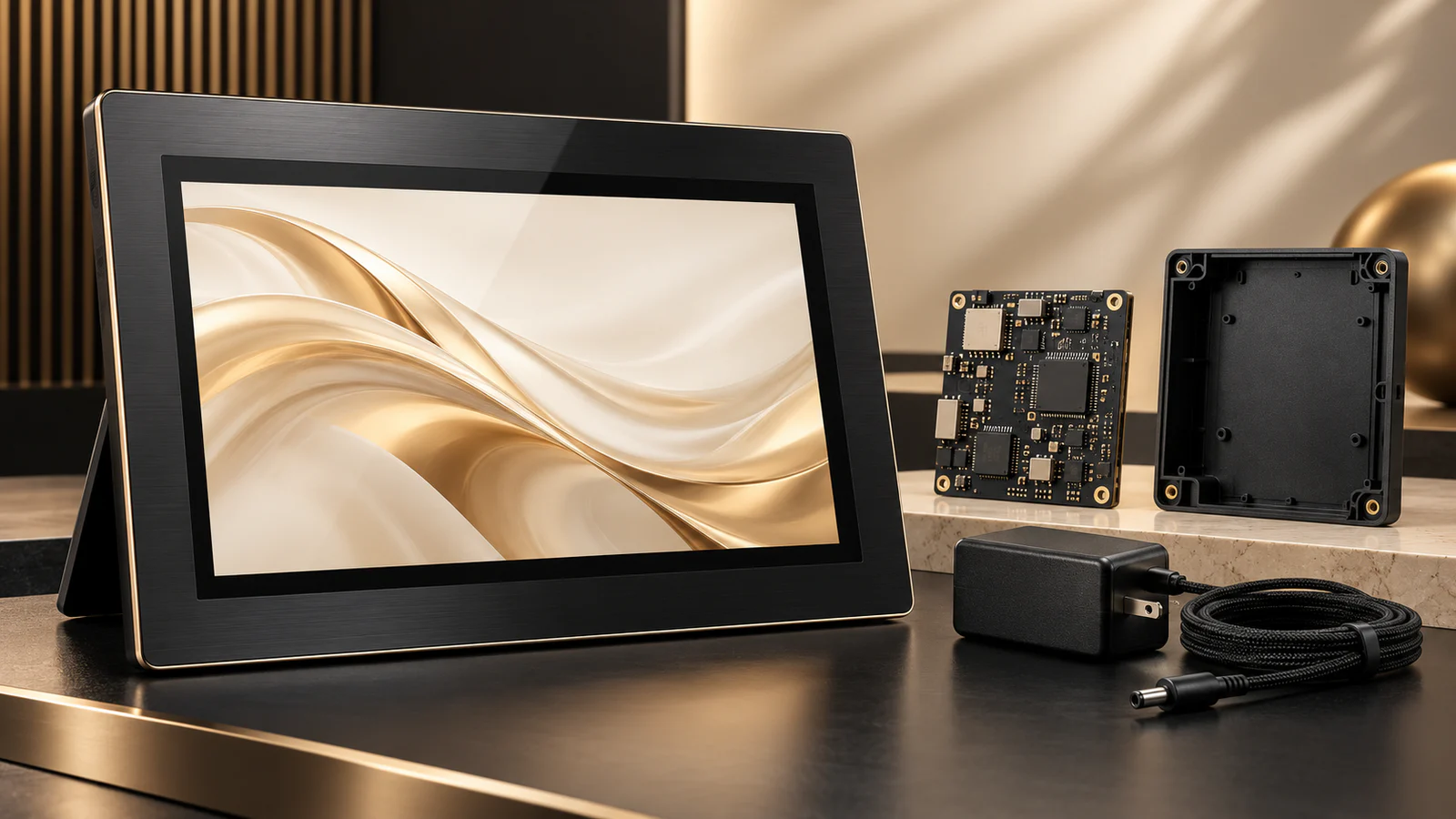
A supplier quotation that says “UL compliant” does not tell a digital-photo-frame buyer which model was evaluated, which edition was used, which certification body issued the result, which factory is covered or whether the adapter, enclosure, battery and production firmware match the certified construction. Those missing links become expensive when a retailer or workplace customer requests evidence near launch.
This guide is for North American brands, importers, retailers, corporate procurement teams, certification managers and digital-frame OEMs. It prepares a buyer–OEM handover around UL/CSA 62368-1 and the fourth-edition transition. It does not declare a product certified, choose a mandatory route for every jurisdiction or replace the NRTL/certification body, test laboratory, authority having jurisdiction, retailer standard, counsel or qualified product-safety engineer.
What is the real buyer question behind “Is it UL?”
The commercial question combines product scope, target country, sales channel, workplace use, standard edition, certification body, report or listing, product mark, production site and ongoing factory control. The answer can differ between a consumer listing, a corporate installation, a retailer onboarding file and a Canadian or U.S. market route.
Google Search Central's current generative-search guidance favors useful, expert-led content that resolves connected decisions. This guide treats the query as a procurement handover rather than a yes-or-no badge. Search intent is an editorial inference from public sources; DOREMI does not claim to have captured AI Overview or AI Mode responses.
Start with the exact product and intended market
Describe the digital frame as sold: screen size, mains adapter, battery, Wi-Fi or Bluetooth, USB ports, audio, wall or tabletop use, accessories, remote control and intended environment. State whether it will enter U.S. workplaces, Canadian retail, hospitality, education or direct household sales. These facts influence the applicable requirements and customer expectations.
Do not ask a laboratory to certify “our digital frames” as a category. Create a model matrix with hardware revisions and regional packs. Identify which models share a construction and which differ in power source, enclosure, display panel, radio, battery or mounting.
Understand what IEC 62368-1 covers
IEC describes IEC 62368-1:2023 Edition 4 as a safety standard for electrical and electronic equipment in the audio, video, information and communication technology field, plus business and office machines, with rated voltage not exceeding 600 V. It addresses safety rather than performance or functional quality.
A digital photo frame can be a candidate AV/ICT product, but the responsible certification body should confirm the exact product and national adoption. Do not present screen clarity, wireless performance, cybersecurity, EMC, radio authorization or energy efficiency as covered merely because a safety evaluation uses 62368-1.
Choose the national standard and edition deliberately
IEC publishes the international standard; the United States and Canada use national adoptions with national differences and their own effective-date policies. UL Solutions published its UL/CSA 62368-1 fourth-edition update in July 2025. Adoption timing and acceptance can vary by certification program, customer and jurisdiction.
Before a quotation, ask the chosen certification body to state the exact standard designation, edition, amendment or national differences, transition rule and target markets. Record the answer in the project brief. Do not assume an IEC report, an older UL/CSA listing and a new fourth-edition design file are interchangeable.
Separate testing from certification
A laboratory can produce test data, while certification adds a controlled decision, authorization to use a mark and ongoing conformity activities under the relevant scheme. OSHA explains that an NRTL's recognition covers specific standards and that properly certified products bear the certification body's registered mark under an applicable scope.
Ask what deliverable the quotation includes: development testing, a CB report, a North American certification, listing, follow-up service, factory inspection or only a pre-scan. Avoid using “certified” for an engineering test report that does not authorize a product mark.
Verify the NRTL and its scope
OSHA publishes a current list of NRTLs and an appropriate-test-standards list. A familiar laboratory name alone is not enough. For a U.S. workplace route, verify that the certification body and relevant site are recognized and that the applicable test standard is within scope.
Keep a dated screenshot or link, quotation, project number and certification-body contact in the file. OSHA recognition is not a general government endorsement of every product a company tests. The mark and certification must connect to the model and program that were actually evaluated.
Freeze the complete product construction
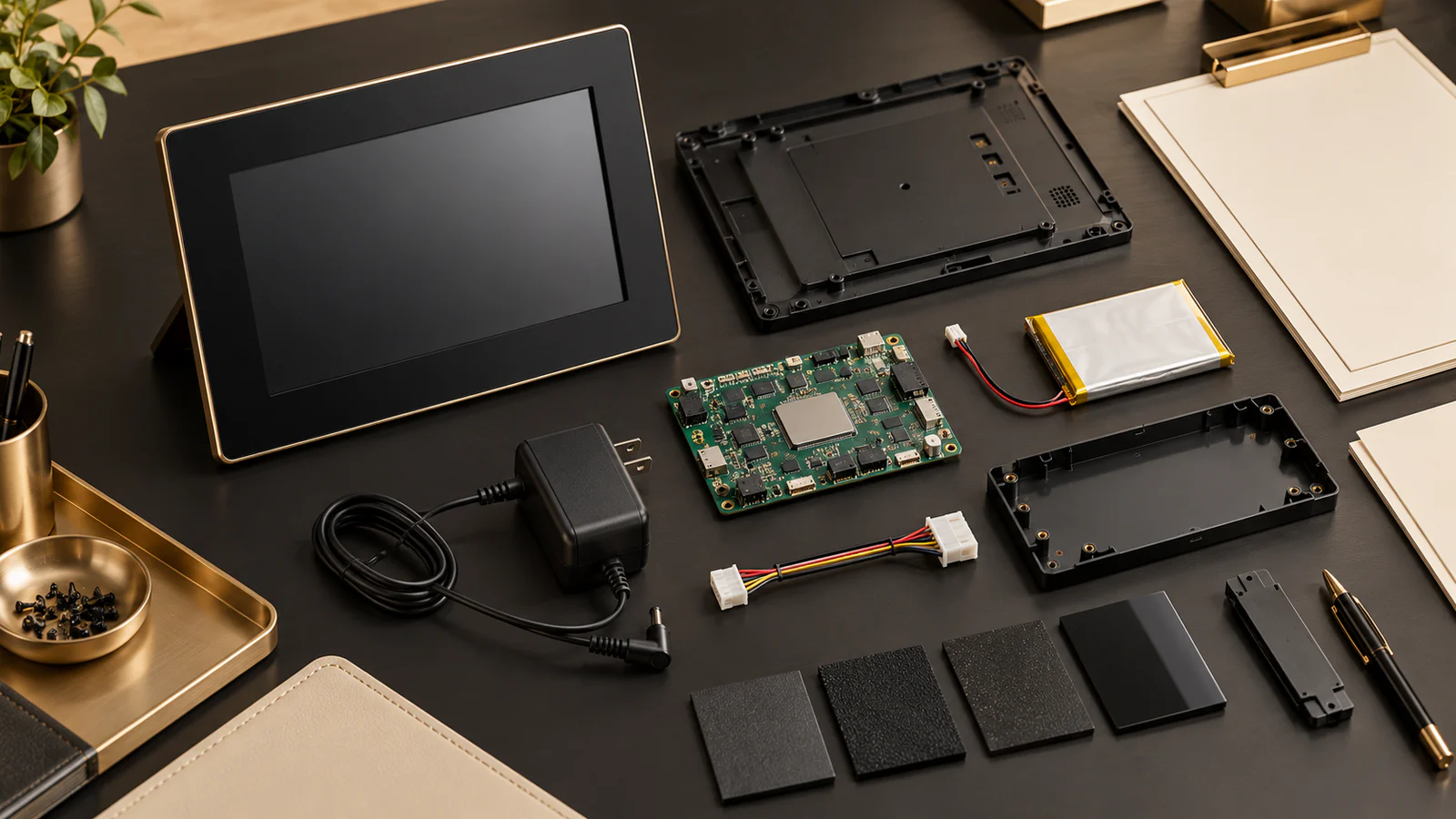
Create a controlled bill of materials covering the display panel, main board, power circuits, radio module, connectors, wiring, speakers, battery, protective devices, enclosure resin, stand, wall mount, adapter and power cord. Add manufacturer, exact part number, ratings, safety approvals where relevant and approved alternatives.
Certification is not protected by a generic component name. “ABS housing,” “12 V adapter” or “lithium battery” leaves out properties that may support the safety evaluation. Link each critical part to drawing, datasheet, certificate or certification-body decision.
Treat the adapter as part of the sold configuration
The external power supply creates mains-related and energy-source interfaces even when the frame itself runs at low voltage. Freeze adapter brand, manufacturer, model, input range, output rating, connector, polarity, cord, plug and certification evidence. Confirm which regional version was included in the evaluation.
An alternative adapter should not enter production because voltage and current match on paper. It can change insulation, abnormal-operation behaviour, temperature, touch current, EMC, low-load performance and the certified construction. Route every proposed alternative through the certification body's documented review.
Map energy sources and safeguards
IEC 62368-1 uses a hazard-based safety-engineering approach. The project team should help the laboratory understand electrical, thermal, fire, mechanical, radiation and chemical energy sources relevant to the design and the safeguards between those sources and ordinary, instructed or skilled persons.
Procurement does not need to invent classifications. It must provide accurate construction and use information. Show normal operation, foreseeable misuse, ports, covers, wall mounting, stand stability, accessible parts, battery access and service procedures so qualified evaluators can apply the standard to the real product.
Control enclosure materials and fire strategy
Enclosure resin identity, thickness, colourant, openings, internal spacing and proximity to potential ignition sources can matter. A supplier's resin certificate is not automatically a finished-product approval. Record the exact grade, manufacturer, colour and moulded thickness represented by the sample.
If the factory changes recycled content, colour masterbatch, tool, wall thickness or ventilation, stop the substitution until the certification owner reviews it. A visual match does not establish equivalent flammability or mechanical performance. Preserve approved material evidence with the production BOM.
Review batteries, remotes and accessible compartments
A digital frame or remote may contain a rechargeable cell or button/coin battery. The fourth-edition update highlighted by UL includes changes relevant to products with coin-cell/button batteries, but the exact obligations depend on construction, product use, national requirements and other applicable laws.
Identify battery chemistry, cell and pack models, protection circuit, compartment, fastener, accessibility, charging profile and transport evidence. Coordinate the safety standard with separate battery, transport and consumer-product requirements. Do not assume one component certificate covers the finished product or retail pack.
Prepare representative samples and operating modes
Agree which samples represent the worst relevant configurations: highest power, largest screen, smallest enclosure, battery version, maximum audio, active Wi-Fi, wall mounting or bundled accessories. Explain the rationale for a model family. Provide production-intent parts rather than hand-selected stronger materials.
Give the laboratory a mode script covering setup, maximum brightness, media playback, network activity, charging, standby, blocked ventilation where applicable, ports and supplied accessories. Record firmware and test accounts. A sample that cannot reproduce normal and abnormal conditions creates delays and weakens the family rationale.
Keep firmware in the safety change process
Software can control charging, current limits, screen brightness, thermal response, sleep, fan behaviour, fault handling and user warnings. Record the tested firmware identifier and safety-relevant settings. Restrict access to engineering overrides that could bypass production safeguards.
Ask software teams to flag changes affecting power, charging, temperature, fault response or instructional safeguards. The certification body should decide when review or retesting is required. “Firmware only” is not a reason to skip safety impact assessment.
Align markings and instructions with the certification file
Prepare label artwork using certification-body-approved content. Keep model, ratings, manufacturer or responsible-party information, certification mark and any required cautions consistent with the evaluated product. Do not copy a mark from a component certificate onto the finished frame.
Safety-related instructions should follow the approved language, format and delivery method. UL's technical Q&A notes that treatment of electronic versus printed safety instructions can differ by region and decision. Confirm the route with the certification body before removing paper instructions to save packaging.
Understand the certification mark
OSHA does not prescribe one universal NRTL logo. Each recognized organization uses its own registered certification mark, and marks can have qualifiers for country or product program. Ask the certification body for the exact approved artwork, placement, minimum size and production controls.
A mark on a supplier photo should be verified against the listing or certification record for the precise model and factory. Do not describe a bare adapter mark as proof that the digital frame is certified. The buyer should be able to connect the mark on the sold unit to an accessible certificate or directory record.
Plan factory follow-up and inspections
OSHA explains that NRTL certification includes controls and factory inspections intended to maintain conformity with the tested product. Identify the manufacturing sites covered by the certification and the person responsible for follow-up visits, records, labels, critical parts and corrective actions.
Before mass production, audit whether the factory BOM and work instructions match the certification file. Keep receiving records for safety-critical components. If assembly moves to another site, obtain certification-body approval before assuming the old authorization follows the tooling.
Create a controlled alternative-parts process
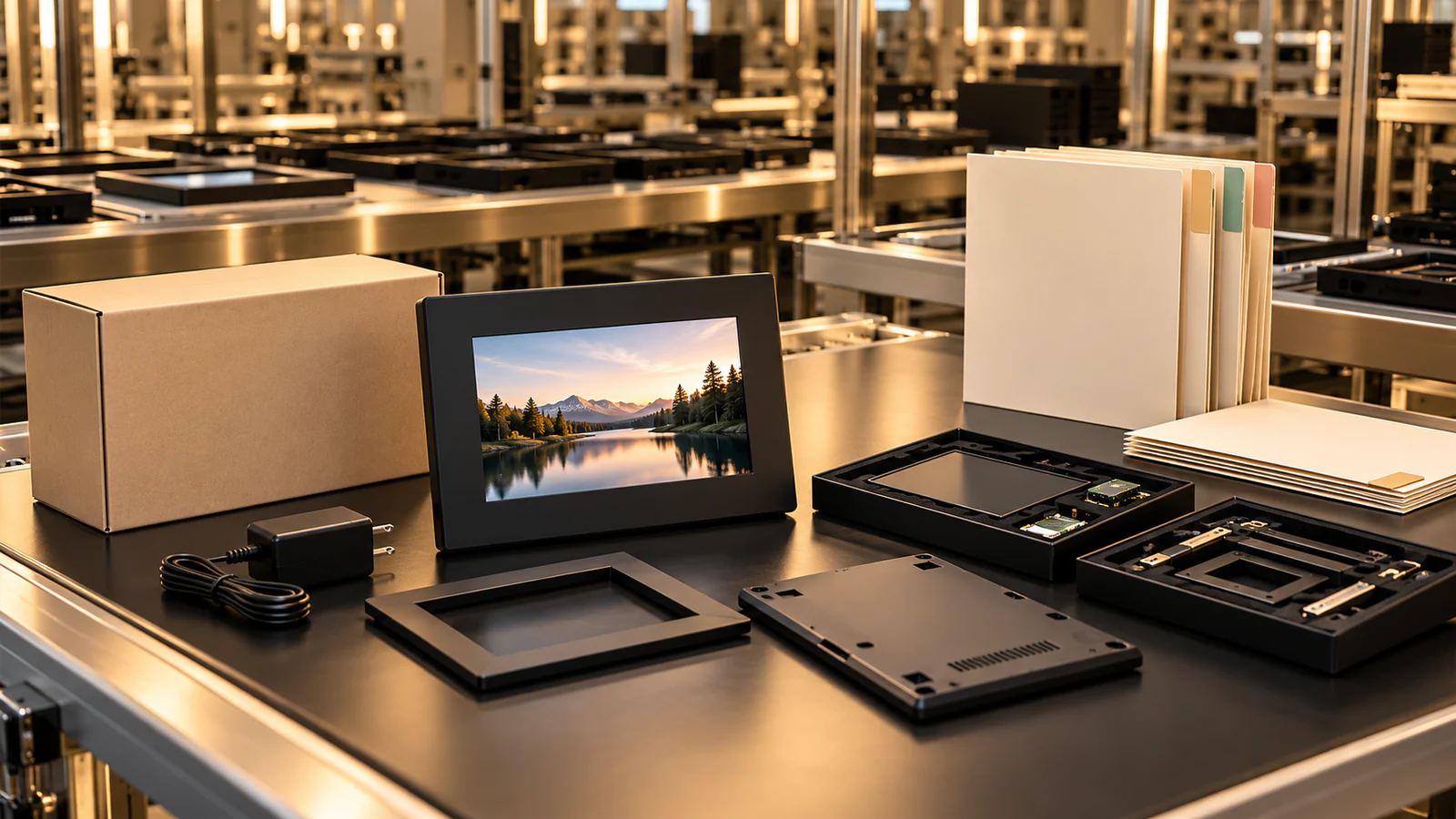
Supply interruptions make substitutions likely. For each critical component, define approved manufacturer and part number, documented alternatives and evidence required for a new option. Purchasing should not release an unlisted alternative while waiting for paperwork after production.
Use a change request containing reason, affected models, old and new datasheets, certificates, photographs, samples and proposed effective lot. The technical and certification owners decide whether document review, construction review or testing is necessary. Archive the decision with the product file.
Distinguish buyer testing from certification evidence
Incoming checks such as adapter output, polarity, basic function, visual label inspection and temperature screening can help production control. They do not recreate the complete standard evaluation or authorize a certification claim. Describe them accurately in quality plans.
Likewise, a supplier declaration, component recognition or CE document may be useful input but is not automatically a North American finished-product certification. Build an evidence table that states what each document covers, who issued it, which model it names, its status and its limitation.
Prepare retailer and corporate onboarding files
Commercial customers may request a certificate, listing link, test report summary, label, user manual, adapter evidence, battery transport documents, FCC or ISED records, cybersecurity information and insurance. Create a controlled disclosure pack rather than emailing an unreviewed laboratory archive.
Check that every document names the current model and company. Redact confidential design details only through an agreed process. A polished but mismatched certificate can delay onboarding more than an honest pending status with a clear completion plan.
Buyer release checklist
- Exact product, target markets and use environments are defined
- The certification body confirms the applicable national standard and edition
- Testing, certification, listing and pre-scan deliverables are distinguished
- NRTL recognition and standard scope are checked where relevant
- Model family and representative-sample rationale are documented
- Critical components and approved alternatives use exact identities
- Adapter, cable, plug, battery and accessories match the evaluated pack
- Enclosure resin, colour and thickness are controlled
- Firmware and safety-relevant settings are frozen
- Labels and instructions use approved source content
- The product mark connects to the exact listing or certificate
- Every production site is covered by the certification program
- Substitutions receive certification review before use
- Retail onboarding files match the shipped model
Questions for the certification body and OEM
Ask the certification body: Which standard, edition and national differences apply? Is the work development testing or certification? Which NRTL site and scope support the project? What samples, critical parts, factory inspections, marks, instructions and change reviews are required?
Ask the OEM: Which exact model and factory match the evidence? What adapter, enclosure, battery, panel, board and firmware were evaluated? Which alternatives are approved? Who controls certification labels and follow-up inspections? How will the factory block an unauthorized substitution?
Experience scope and project limits
Editorial review: Jessica, Founder & Project Advisor at DOREMI Display. Updated 21 October 2026. Jessica's practical scope covers digital-frame RFQs, supplier BOMs, samples, certification handovers, packaging, production inspection and change control. DOREMI is not presented as IEC, UL Solutions, OSHA, an NRTL, certification body, accredited laboratory, AHJ or product-safety engineer.
Use this guide to prepare a certification project. The exact product and use, current national standard adoption, chosen certification body's rules, NRTL scope where applicable, qualified engineering evaluation, factory controls, customer specifications and local authority requirements determine acceptance and legal obligations.