
“Are aluminium picture frames subject to U.S. antidumping and countervailing duties?” cannot be answered safely with a product name or tariff code alone. The result can depend on the exact extrusion, alloy, country, producer and exporter, whether the goods are finished frames or profiles and parts, what non-extruded components are included, what happens after import and which Commerce order or instruction is being reviewed.
This guide is for U.S. importers, private-label brands and sourcing teams comparing aluminium photo, certificate, poster, jersey and record-display frames. It explains two facts that are often mixed together: the broad 2024 multi-country aluminium-extrusion investigations ended without new orders after negative U.S. International Trade Commission determinations, while the older China aluminium-extrusions orders remain active and continue to generate scope and administrative-review activity. It is a product-file workflow, not a scope ruling or legal opinion.
First separate the 2024 case from the older China order
In September 2024, the U.S. Department of Commerce announced affirmative final dumping determinations for aluminium extrusions from multiple countries and subsidy determinations for several of them. The investigation scope was broad and expressly listed picture frames among product examples. That announcement did not complete the legal sequence. The USITC then made negative final injury determinations on 30 October 2024.
The Commission stated that, as a result, Commerce would not issue the proposed antidumping orders for the listed countries or countervailing-duty orders for China, Indonesia, Mexico and Türkiye from those investigations. A buyer reading only Commerce’s affirmative margin page can therefore reach the wrong current conclusion. Final injury is a necessary step.
Separately, the earlier China aluminium-extrusions antidumping and countervailing-duty orders, commonly identified through case numbers A-570-967 and C-570-968, did not disappear because the 2024 investigations ended. Commerce’s public scope portal and 2026 review notices show continued activity. Procurement must identify which proceeding is actually being discussed before applying a rate, exclusion example or supplier statement.
Do not turn the history into a universal exclusion
The older China order language includes a finished-merchandise exclusion and gives finished picture frames with a glass pane and backing material as an example. That wording is commercially important, but it should not be converted into “all picture frames are excluded.” The exact imported merchandise must satisfy the applicable scope language and current interpretations. Loose moulding lengths, chopped profiles, incomplete kits, replacement parts or assemblies designed to become part of a larger product may present different facts.
Likewise, the terminated 2024 investigations used their own scope language, including detailed conditions for assembled and unassembled merchandise. Those investigation exclusions are not automatically the test for the older order. A buyer should not splice the most favourable sentence from one proceeding into another.
Freeze the import configuration before requesting advice
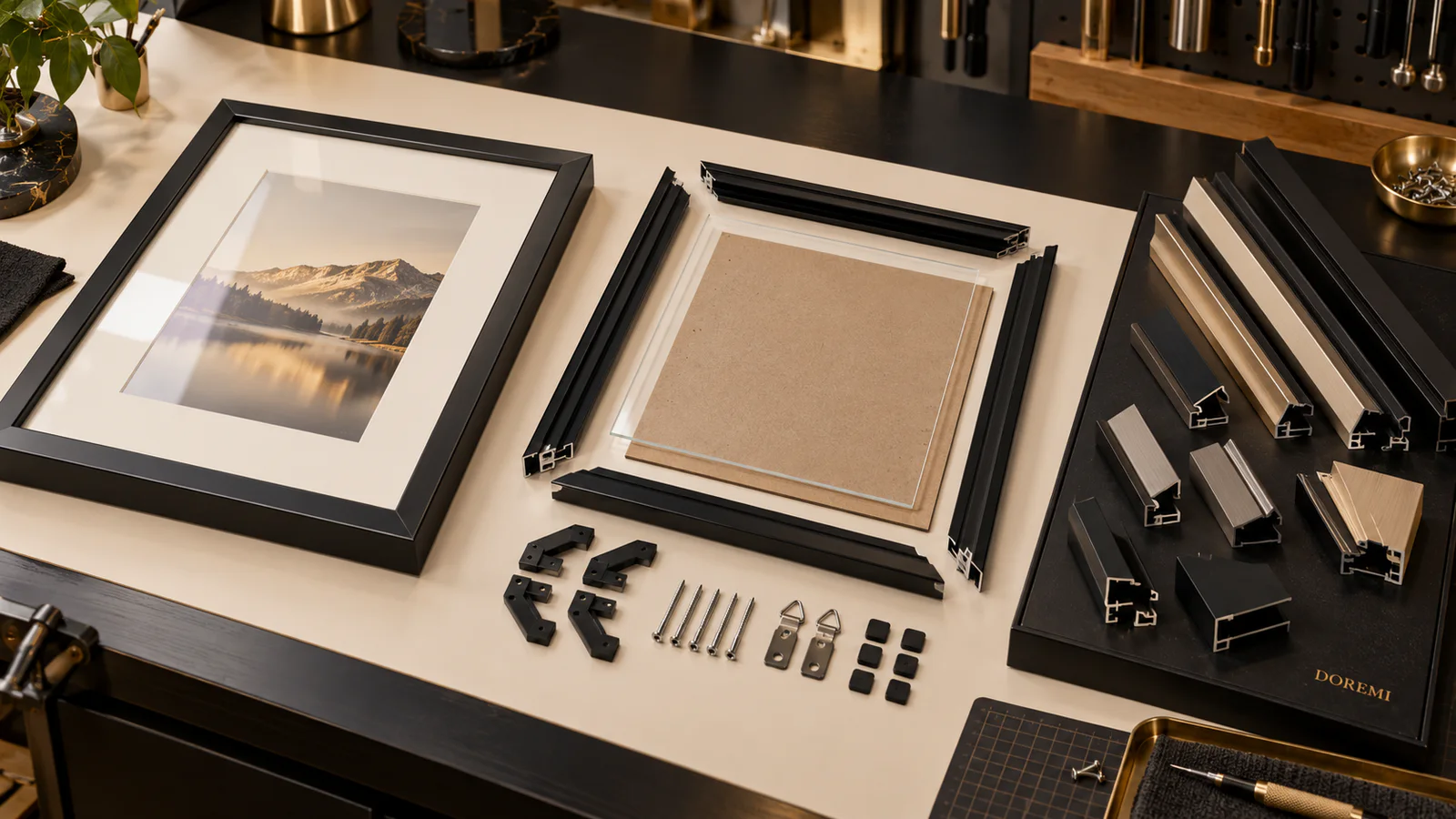
Prepare a drawing and packing map showing exactly what crosses the border. For a finished frame, list the joined aluminium profile, glazing, backing, mat, hardware, inserts and retail pack. State whether it is ready to display interchangeable media as imported or requires cutting, drilling, finishing, joining, adding glazing or adding other parts after entry.
For an unassembled kit, show every component and quantity in the discrete package. Identify anything supplied separately, sourced in the United States or added by the customer. For profiles and parts, give cross-sections, lengths, fabrication steps, alloy/temper and intended use. Do not describe a bundle as a “kit” merely because fasteners were placed in the same carton.
Record alloy, production process and finishing
Commerce scope descriptions typically define aluminium extrusions by production process and alloy series, then address fabrication and finishing such as cutting, machining, drilling, punching, notching, bending, mitering, anodising, painting, powder coating and wrapping. The supplier should identify the alloy designation, temper, extrusion producer and profile-drawing reference. Keep mill or material records that support the statement rather than relying on catalogue language.
Also map third-country processing. Sending a profile to another country for cutting, finishing or assembly does not necessarily change the scope result or country attributed under an order. Record where extrusion, fabrication, finishing, assembly and packing occur, and give that chain to the importer’s adviser. A “shipped from” country is not always the same as the relevant country of origin.
Link the producer and exporter to the entry
AD/CVD cash-deposit and assessment questions can depend on the producer/exporter combination and current instructions. Record the legal names and addresses of the extrusion producer, frame fabricator, exporter and trading company. Check whether the invoice uses an English alias or group name that obscures the entity named in case records.
Do not quote a margin from a search result or old supplier presentation as the landed-duty answer. The 2024 Commerce final-determination page, for example, published investigation margins, but the USITC’s later negative decision meant those investigations did not produce orders. For an active order, rate and deposit instructions can change through reviews, court decisions or liquidation instructions. The broker or trade counsel needs current case-specific evidence.
Keep tariff classification and scope as separate workstreams
An HTSUS classification helps declare the goods, but scope language is controlling for an AD/CVD order. An order may list tariff numbers for convenience while covering merchandise entered under other numbers if it meets the written scope. Conversely, a product entered under a listed aluminium heading is not automatically subject if the written scope excludes it.
Give the customs broker the full component and function evidence needed for classification. Give trade counsel or the scope reviewer the product facts needed to compare against the active order. Coordinate the conclusions, but do not ask an eight- or ten-digit code to answer a legal scope question by itself.
Build a comparison file before supplier nomination
When comparing suppliers, normalise more than the frame price. Create columns for extrusion country and producer, fabricator and exporter, alloy and profile, import configuration, non-aluminium components, post-import work, proposed HTSUS classification, active AD/CVD screening status, Section 232 or other tariff workstream, ordinary duty, freight, and unresolved assumptions.
This prevents a low quote for unfinished lengths from being compared with a finished retail frame without recognising the different assembly, entry and potential trade-remedy exposure. Use a “pending professional review” label where the facts are incomplete. Do not insert a zero duty just to complete the spreadsheet.
Document the finished-frame facts
For a frame claimed to enter as finished merchandise, capture the front, back, corners, glazing, backing, hanging hardware, stand or wall mount, and closed retail pack. Show that the frame has its completed commercial identity and what, if anything, a customer adds. Interchangeable media such as a photograph, certificate or poster is part of how the finished display is used; the legal reviewer should still decide how the current scope treats the configuration.
Record whether the joints are permanent, whether the frame can be disassembled, whether profiles are individually reusable and whether any machining occurs after import. Save product instructions, listings and purchase descriptions. Evidence created before an entry is generally more credible than a retrospective explanation written after a duty question appears.

Document unassembled kits honestly
A complete frame may ship unassembled to reduce cube or protect corners. The file should show whether one packaged combination contains all necessary parts to assemble the final display without further fabrication, finishing or added parts beyond any permitted consumables or interchangeable media under the relevant language. List every component and its source. Photograph the opened kit and the assembled result.
If glazing, backing, corner connectors or hanging hardware ship on a separate entry, say so. If lengths require cutting or corners require drilling in the United States, say so. A kit analysis can turn on precisely the facts that a buyer may be tempted to leave out. Transparent product engineering gives counsel a chance to structure the transaction lawfully instead of defending an ambiguous description later.
Treat spare profiles and replacement parts as separate SKUs
A finished-frame programme may also import extra lengths, rails, corner pieces, brackets or replacement surrounds. Do not assume the finished-product result covers those separate goods. Create distinct SKU, invoice and scope-review records. Identify whether a spare is an extrusion, a fabricated part, a non-extruded component or finished merchandise.
Ask customer service and the warehouse how replacements are actually shipped. An emergency carton assembled outside the approved process can create a different configuration from the original product. Control samples, production spares and after-sales parts with the same product-data discipline as the commercial order.
Use formal channels when uncertainty is material
Commerce’s ACCESS system and scope portals provide official proceeding records, but a buyer may still need customs counsel to interpret them. Where the commercial exposure is material and facts do not fit a clear existing determination, discuss whether a formal scope application or other ruling route is appropriate. Do not ask the overseas supplier to provide the final U.S. legal conclusion.
Keep the adviser’s assumptions with the conclusion. If a product changes, the analysis may need to change. If the conclusion depends on all components entering together, that condition belongs in the purchase order and shipping instructions. If it depends on a specific producer, substitution needs approval before production.
Align the purchase order and shipping documents
The purchase order should name the approved profile and product revision, extrusion producer, fabrication location, exporter and imported configuration. Require advance notice of material, producer, exporter, country, component or packing changes. Use product descriptions on invoices and packing lists that match the reviewed facts without adopting unsupported legal phrases such as “duty free” or “not subject.”
Before entry, reconcile the purchase order, commercial invoice, packing list, bill of materials, drawings and carton photographs. If the shipment contains both finished frames and spare profiles, separate them visibly. Give the broker enough time to escalate questions rather than discovering a mismatch after arrival.
Importer screening checklist
- Correct AD/CVD proceeding and case numbers identified
- 2024 terminated investigations separated from active older orders
- Exact imported configuration frozen and illustrated
- Alloy, temper, extrusion method and profile drawing recorded
- Extrusion producer, fabricator, exporter and countries recorded
- Finishing, fabrication and third-country processing mapped
- Finished frame, complete kit, loose profile and spare parts separated
- Post-import cutting, drilling, finishing, assembly and added parts disclosed
- HTSUS classification and AD/CVD scope reviewed as separate questions
- Current broker/counsel conclusion and assumptions saved before entry
Questions to send the supplier
Ask: Who extruded the profile, and in which country? What is the alloy and temper? Which factory cut, mitered, drilled, anodised, coated and assembled it? What enters the United States in each carton? Are glazing, backing, hardware and connectors included in the same package? What work remains after import? Are spare profiles or parts on the invoice? Can the supplier provide profile drawings, bills of materials, production records and photographs tied to the shipment?
Then ask the U.S. adviser: Which active order and scope language applies to these facts? Does an existing ruling address a genuinely comparable configuration? Which producer/exporter and rate instructions must the broker verify? What changes would invalidate the conclusion? Should the importer seek a formal determination?
Experience scope and project limits
Editorial review: Jessica, Founder & Project Advisor at DOREMI Display. Updated 29 September 2026. Jessica’s practical scope is B2B frame-project briefing, material and profile discussion, sample coordination, packaging evidence and supplier handover. This article does not present her or DOREMI as U.S. customs counsel, a customs broker, Commerce or CBP, and it does not determine scope, classification, origin, cash deposits or final duties.
Use the workflow to make the real product visible to qualified U.S. advisers before landed cost is approved. Trade-remedy proceedings and instructions can change. The importer remains responsible for the entry and should verify current official records for the exact merchandise and date.
Public sources used for this guide
- Google Search Central: optimizing for generative AI features
- USITC: negative final determinations in the 2024 multi-country aluminium-extrusions cases
- U.S. Commerce: 2024 aluminium-extrusions final determinations and case information
- U.S. Commerce: China aluminium-extrusions scope information
- U.S. Commerce ACCESS AD/CVD case portal
- U.S. Commerce: official scope memorandum referencing finished picture frames
- Federal Register public inspection: 2026 China aluminium-extrusions administrative review notice