
A Wi-Fi digital photo frame can receive family photographs, device invitations, voice messages, account names, camera images and persistent identifiers. The presence of a child in a photograph does not by itself decide whether the Children's Online Privacy Protection Rule applies. The product team must ask who operates the online service, whether it is directed to children under 13, whether the operator has actual knowledge that it is collecting personal information from a child, and how every device, app, cloud and analytics function behaves.
This guide is for U.S.-facing connected-frame brands, retailers, app and cloud owners, privacy and security teams, and OEM/ODM suppliers. It translates the FTC's amended COPPA materials into a practical product handover. It does not decide whether a service is child-directed, determine actual knowledge, approve an age screen or consent method, draft a privacy notice, or replace U.S. privacy counsel and current FTC guidance.
What are connected-frame buyers asking in 2026?
Commercial questions now include: “Does a parent uploading a child's photograph trigger COPPA?”, “What if the frame is marketed to grandparents?”, “Is a device identifier personal information?”, “Can a child send a voice message to the frame?”, “Who is the operator when the brand owns the app but the OEM runs the cloud?”, “Do analytics or advertising partners receive data?”, “How long can albums and logs be retained?” and “Does age verification create another sensitive dataset?” These questions affect feature scope, vendor contracts, onboarding, support and launch timing.
The questions are editorial inferences from the amended Rule, FTC FAQs and connected-product handovers. Google Search Central says generative search visibility begins with normal eligibility and useful, original, crawlable content; it does not provide a special AI Overview topic feed. DOREMI does not claim direct access to or measurement of Google AI Overview or AI Mode output.
Start with the service, not the photograph
The FTC's COPPA FAQ distinguishes information collected online from a child from information an adult uploads that may concern a child. For a general-audience service, an adult uploading photographs of children does not automatically trigger COPPA. That distinction is commercially important for family photo frames, but it is not a universal exemption for every feature or audience.
Map who provides the account, app, web portal, cloud album, invitation flow, support console and firmware service. Record which person supplies each data item and how the operator knows that person's age. A device sold for family use may still include a child-directed area, and a general-audience operator may acquire actual knowledge through account or support information. Avoid conclusions based only on the age of people pictured on the screen.
Inventory every collection point across device, app and cloud
List photographs, video, audio, names, email addresses, usernames, precise location, contacts, device identifiers, IP addresses, cookies, crash logs, support messages and usage events. For each field, record the user, purpose, processing location, recipient, retention, deletion route and whether the service works without it. Separate information stored only on the frame from information transmitted to the brand, OEM or another party.
Test setup, guest mode, factory reset, shared albums, family invitations, remote controls, camera features and support diagnostics. A data map built only from the primary mobile screen can miss background SDK collection and device logs. Use released versions and actual network evidence; a marketing feature list is not a complete data inventory.
Assess child-directed design with real evidence
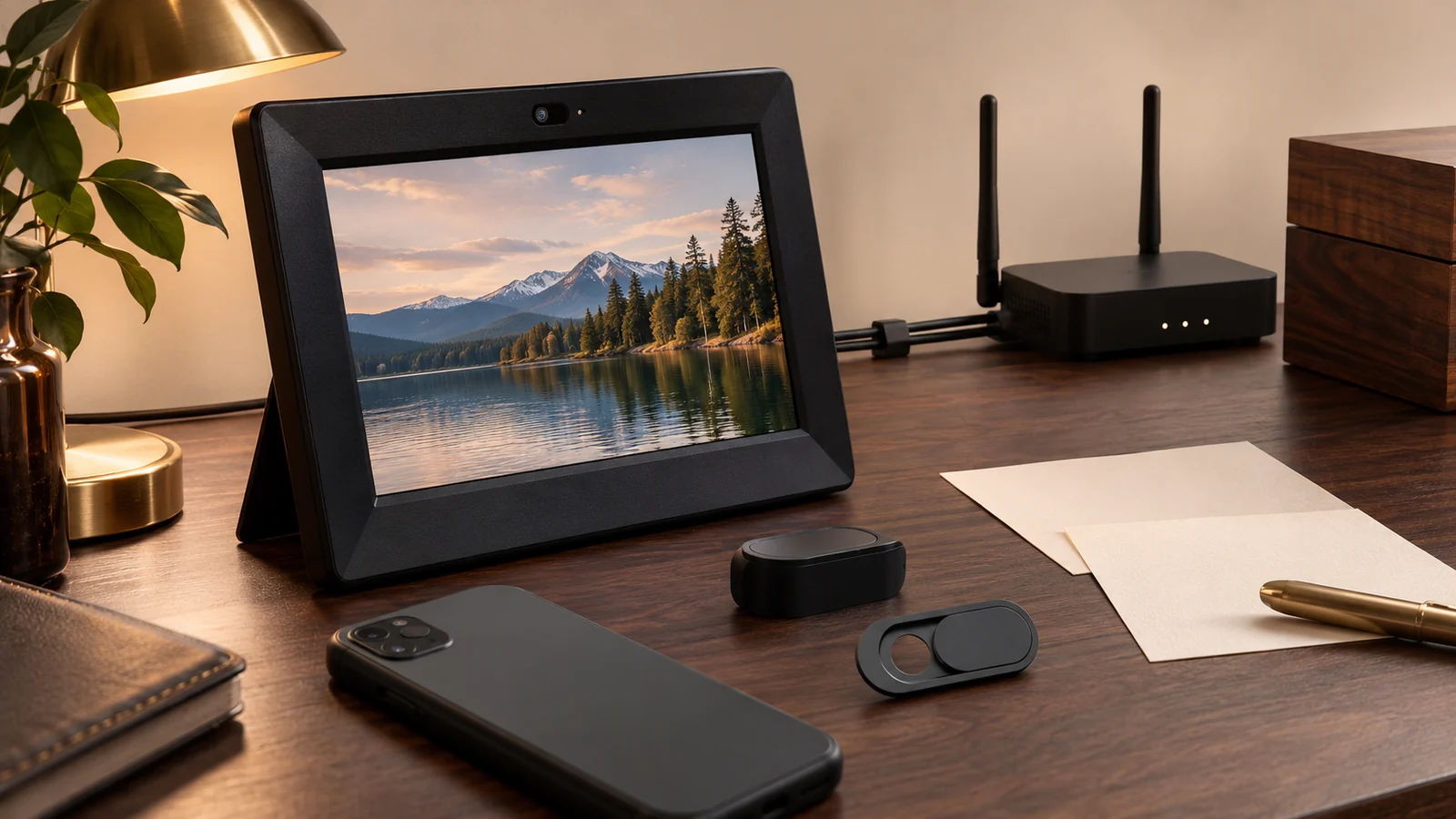
COPPA applies to operators of commercial websites or online services directed to children under 13, and to general-audience services with actual knowledge that they collect personal information from a child. The child-directed analysis is fact-specific. Product subject matter, visual and audio content, language, activities, advertising, audience evidence and other factors may matter. A beige interface or a “family” label does not settle it.
Review packaging, marketplace copy, app-store screenshots, onboarding language, characters, rewards, camera filters, games, voice prompts and retailer campaigns. Keep the intended audience and prohibited claims in the product brief. If a mixed-audience design uses an age screen, counsel should review its neutrality, timing and downstream controls instead of letting the OEM add a date-of-birth field at the end of development.
Separate adult family sharing from child participation
A parent, grandparent, teacher or coach may upload a photograph of a child to a general-audience service without the upload itself becoming information collected from the child. The risk changes when a child creates an account, uploads content, records a message, enters a name, receives repeated notifications or otherwise interacts directly with the online service.
Write use cases by actor: adult owner, invited adult, supervised child viewer, child contributor, school administrator and support agent. Define which actions each role can perform. If the service does not need child accounts, do not create them merely to simplify sharing. If child participation is part of the product, design notice, consent, access and deletion before the feature reaches sample approval.
Treat photos, voice and persistent identifiers as product requirements
Personal information under COPPA can extend beyond a typed name. Connected-frame teams should review images, video and audio containing a child's image or voice, persistent identifiers and other covered data under the current Rule. A device identifier used only for a narrowly defined internal operation is not the same as an identifier used to build a profile, contact a person or support behavioural advertising.
For each identifier, document why it is collected and block reuse outside the approved purpose. Do not assume an analytics SDK is harmless because the product team never sees a name. Ask the provider what it collects, combines, retains and discloses. Contract language should match tested behaviour, and a change to an SDK or cloud log should trigger privacy review.
Build notice and consent into the released flow
Where COPPA applies, the FTC describes requirements for an online privacy policy, direct notice to parents and verifiable parental consent before covered collection, subject to limited exceptions. The privacy-policy link must be clear and prominent in the relevant service locations. A link buried in a carton manual cannot perform the job of an in-app notice at a collection point.
Define the consented data, purpose, disclosures, method, parent access and revocation path. Test a new account, invited account, replacement device and reset device. Preserve screenshots and version records for the approved journey. If a product update adds voice messaging, camera upload or a new third party, determine whether the existing notice and consent still describe the service.
Control third-party disclosure and advertising separately
The amended Rule and FTC guidance require careful review of disclosures and uses beyond the operator's internal service. Connected-frame brands should identify cloud hosts, analytics providers, notification services, customer-support tools, image-processing vendors and advertising technologies. “Vendor” is not a legal conclusion and does not explain why the party receives data.
Give each recipient a purpose, data fields, instructions, security expectation, retention limit and deletion commitment. Separate a processor necessary to deliver an album from an advertising or profiling use. Do not let a retail growth team add a tracking SDK to a child-directed flow without reopening consent, disclosure and vendor-review decisions.
Use the 2026 age-verification policy statement narrowly
In February 2026 the FTC announced a policy statement concerning certain general- and mixed-audience operators that collect information solely to determine a user's age. The stated enforcement position is conditional: the information must be limited to age determination, promptly deleted, protected, clearly noticed and disclosed only under described safeguards, with reasonable steps regarding the method's accuracy.
This is not a blanket approval of an age-verification vendor or permission to reuse identity data for accounts, marketing or fraud scoring. Record the exact data collected, vendor route, result returned, deletion timing and fallback. Confirm that the statement remains current before launch and obtain legal review for the actual service.
Write a retention schedule that the system can execute
The FTC's current materials stress retaining children's personal information only as long as reasonably necessary for the purpose and deleting it using reasonable measures. “As long as the account exists” may be too vague where thumbnails, original photos, support attachments, logs and backups follow different lifecycles.
Create a retention table by data class and system. Define what happens after album deletion, account closure, invitation removal, device resale, consent withdrawal and failed upload. Test deletion through production-like services, including derived thumbnails and vendor systems. Keep evidence of the control without retaining the deleted content as proof.
Connect security to data sensitivity and model scope
A privacy promise depends on reasonable security for the device, app, API, cloud, support console and vendor chain. Identify authentication, invitation tokens, encryption, update signing, access logging, vulnerability reporting, backup access and incident response. A frame shared across households needs strong separation between accounts and a reliable ownership-transfer process.
The OEM should provide firmware and hardware facts; the brand and service operators must control the wider system. If models use different cameras, microphones, radios, processors or cloud tiers, do not cover them with one generic privacy declaration. Keep a model-family matrix and require advance notice for components or services that change collection or security.

Make parent access and support operational
Covered operators must be able to respond to parent requests concerning a child's personal information and future collection. Support staff need a controlled way to authenticate the requester without exposing data to the wrong person. They also need clear escalation for shared households, lost accounts, deceased owners and devices received second-hand.
Write response playbooks and test them with the product team. Do not ask the factory to release cloud records it does not control, and do not send a parent a generic device-reset instruction when server-side data remains. Log the request, decision, action and completion without copying unnecessary personal information into ordinary tickets.
Control claims, app-store content and retailer listings
Statements such as “safe for children,” “private family cloud,” “no tracking” or “photos stay on your frame” require complete technical evidence. A local display can still use remote logs; an encrypted service can still retain data; a child-friendly visual design can change the audience analysis. Give sales channels approved language and a list of claims that require review.
Archive the final packaging, listing, onboarding and privacy notice by market and version. Retailers may describe a frame as a toy or children's product even when the brand did not. Monitor material channel changes and correct inaccurate descriptions. A privacy file must connect to what buyers actually see, not only to the internal product brief.
Buyer–OEM COPPA readiness checklist
- The operator and every device, app, cloud and vendor role are mapped
- Collection points identify the person supplying each data item
- Adult uploads are distinguished from direct child participation
- Child-directed and actual-knowledge questions have named legal owners
- Photos, voice, video and persistent identifiers are included in the data map
- Age-screen and age-verification data have a narrow approved purpose
- Notices and consent are tested on released interfaces
- Third-party disclosure and advertising uses are separately controlled
- Retention and deletion work across originals, derivatives, logs and vendors
- Parent access and support requests have authenticated workflows
- Firmware, sensors, SDKs and cloud changes trigger review
- Retail claims match the tested service
Experience scope and project limits
Editorial review: Jessica, Founder & Project Advisor at DOREMI Display. Updated 4 November 2026. Jessica's practical scope covers connected-display product briefs, OEM/ODM handovers, samples, packaging, manufacturing communication and change control. She is not presented as the FTC, a privacy regulator, children's privacy lawyer, consent provider, cybersecurity auditor or cloud operator.
COPPA applicability, audience, actual knowledge, personal-information classification, notice, consent, exception, age-assurance method, security and response obligations must be determined for the actual service by the responsible operator and qualified advisers using current law and FTC materials. This guide is a project-preparation framework, not a legal opinion or approval of a pictured product.