
A licensed display frame can have three prices moving at once: the factory price for the physical frame, the royalty paid for a team, school, artist or brand right, and the U.S. resale price. Customs value does not automatically equal any one of them. The importer must identify the sale for export and then determine whether a royalty, licence fee, assist or later proceeds must be added under the applicable valuation method.
This guide is for U.S. importers, licensees, merchandise companies and OEM teams sourcing licensed jersey, vinyl record, certificate or award displays. It explains the records needed for a broker and customs adviser to analyse the transaction. It does not decide dutiability for a contract, classify merchandise, calculate duty or replace a CBP ruling or legal advice.
What are licensed-display buyers asking?
Typical questions are operational: “Is the royalty dutiable?”, “Do we add the licence fee to the commercial invoice?”, “What if it is paid to a third party?”, “How do we value a minimum guarantee?” and “Can the factory ship before final sales are known?” A correct response depends on the agreements, payment path, sale conditions and merchandise—not on the word royalty alone.
Google recommends useful, original content that answers connected user needs instead of producing a page for every query variant. This article joins those questions into one importer–licensor–OEM handover. Search intent is editorial inference from official public materials and licensed-product project workflows; DOREMI does not claim direct access to Google AI Overview or AI Mode results.
Begin with transaction value, then test each addition
CBP explains that transaction value generally starts with the price actually paid or payable for merchandise when sold for exportation to the United States. Statutory additions can include packing, selling commissions, assists, certain royalties or licence fees, and proceeds of later resale that accrue to the seller, to the extent they are not already included and sufficient information is available.
Do not add the entire U.S. retail economics to the factory invoice by instinct, and do not exclude an off-invoice payment because it travels through another department. Map every payment and benefit connected to the licensed SKU. The importer of record should give the complete structure to its customs professional before entry.
Ask the legal question precisely
Under 19 U.S.C. 1401a, the royalty or licence-fee addition concerns an amount related to the imported merchandise that the buyer is required to pay, directly or indirectly, as a condition of the sale for exportation to the United States. Those elements—related merchandise, buyer obligation and condition of sale—must be analysed together.
A domestic right to advertise a brand after importation can present different facts from a payment that authorises the foreign factory to manufacture and export a marked product. The identity of the payee matters, but payment to an unrelated third-party licensor is not by itself a complete answer. CBP describes royalty determinations as case specific.
Read all agreements as one transaction
Collect the purchase agreement, purchase orders, licence agreement, manufacturing authorisation, quality manual, royalty reports, side letters, approval emails and any agreement between seller and licensor. A clause may look optional in one document while another contract makes licensed production impossible without payment.
Identify who can terminate manufacturing, approve the factory, control quantities, reject designs, authorise subcontractors or prevent export. Record whether the seller or a related party receives any part of the fee. Do not send only a royalty percentage to the broker; the rights and conditions surrounding that number are central to the analysis.
Use CBP's analytical questions as a screen
CBP rulings commonly examine whether the imported merchandise was manufactured under a patent, whether the royalty was involved in production or sale for export, and whether the buyer could purchase the goods without paying the fee. These are analytical factors rather than an automatic scorecard, and the full circumstances still control.
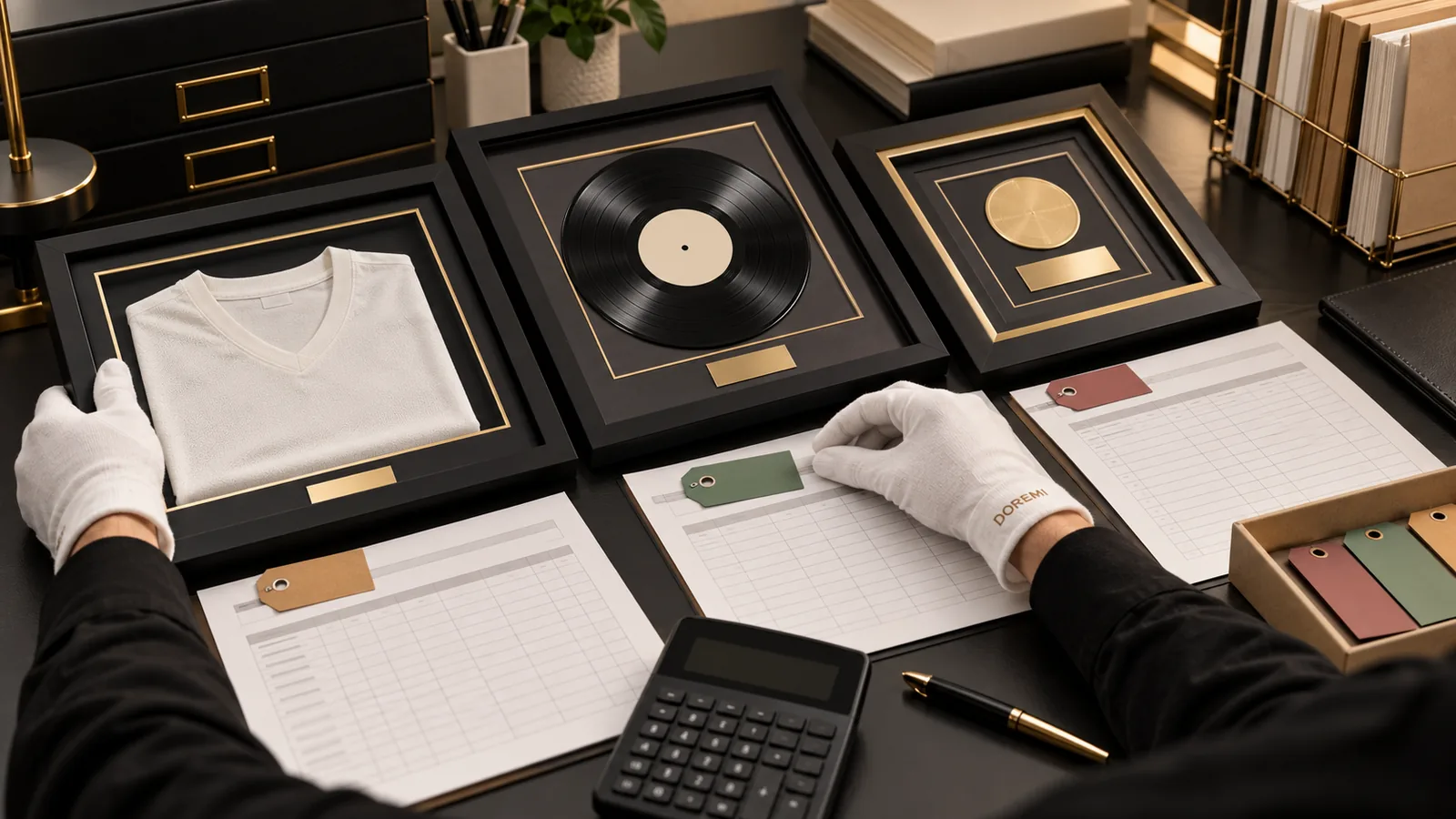
For a framed jersey, ask whether the licensed mark is on the jersey, mat, plaque, backing, carton or insert; who applies it; and whether the unlicensed physical frame could be bought separately. For a record display, distinguish the generic frame from a licensed edition containing approved artwork, replica disc, plaque or branded packaging.
Separate rights from physical components
Build a configuration drawing and BOM for every imported SKU. Show the generic frame, mat, mounting hardware, textile, disc, printed insert, plaque, packaging and any buyer-supplied item. Mark which elements carry protected artwork and which party supplies or pays for them.
This separation prevents two opposite errors: treating a licence for a complete branded edition as if it relates only to post-import advertising, or treating a broad portfolio payment as if every dollar relates to every imported frame. Customs analysis still belongs to qualified advisers, but they need product facts that only the buyer and factory can supply.
Trace the payment path and related parties
Record payer, payee, currency, timing, calculation base and accounting account. Note whether the seller, licensor, buyer or an affiliate is related to another participant. Identify reimbursements, rebates, credits, free goods and payments made on behalf of someone else. Indirect payments can matter even when the commercial invoice looks simple.
Ask whether the seller benefits from the royalty, whether the licensor controls or is related to the seller, and whether any later proceeds accrue to the seller. Keep the royalty analysis distinct from the related-party price analysis, but give the customs adviser enough information to evaluate both.
Handle per-unit royalties and minimum guarantees separately
A per-unit royalty tied to each imported licensed display may be straightforward to map even if the final payment occurs after sale. A minimum guarantee, advance or portfolio fee can be harder because it may cover several product families, markets or periods and may be recouped against future royalties.
Do not allocate a guarantee across imported units using an undocumented convenience percentage. Record the contractual coverage, expected sales, imported and domestic products, territories, recoupment and later true-ups. Agree a reasonable, supportable approach with customs counsel and the broker, including what happens when actual quantities differ.
Do not forget assists and supplied artwork
The royalty is only one valuation question. U.S. law separately defines assists that can include certain materials, components, tools, dies, moulds, engineering, development, artwork, design work, plans or sketches supplied by the buyer free or at reduced cost for production or sale for export. Existing DOREMI guidance addresses tooling and design assists in depth.
For licensed displays, map who created the plaque art, mat cut file, packaging die line and production-ready design, where the work occurred and what the buyer paid. Avoid double counting an amount already included in the price or another addition. Keep the assist register linked to the same SKU and production revision as the royalty file.
Make the commercial invoice tell the real story
The invoice should identify the actual merchandise, seller, buyer, quantity, unit price, currency and other required facts. Coordinate with the broker on how additions are declared and supported. A description such as “picture frames” may be too vague to connect an entry to the licensed edition and its valuation record.
At the same time, the invoice is not the place to paste confidential agreements. Maintain a secure supporting file and give authorised trade parties the data they need. Confirm that the PO, packing list, invoice, licence report and entry use stable SKU identifiers and quantities.
Plan for amounts unknown at entry
Final royalties may depend on later net sales, returns or tiered rates. That does not justify ignoring them. Before importation, ask the broker or customs adviser how the importer should handle value elements that remain unknown, including whether CBP reconciliation or another procedure is appropriate and available for the facts.
Create a calendar connecting entry dates, royalty statements, sales close, returns, allocation updates and customs follow-up. Assign owners in finance and trade compliance. A year-end royalty true-up that never reaches the import team can leave entry values unsupported.
Keep IP approval and customs valuation as separate gates
A licence approval answers whether the design and distribution are authorised. Customs valuation answers how imported merchandise is appraised. Passing one gate does not pass the other. The licensor may approve artwork without considering customs treatment, while a broker may classify and value goods without confirming the buyer's rights to use the mark.
Use a release matrix that requires both. The factory should receive only current approved files and a written production authorisation. The importer should retain the agreement and valuation analysis. If the licence territory, factory, design, royalty base or seller changes, reopen both reviews.
Build an auditable SKU ledger
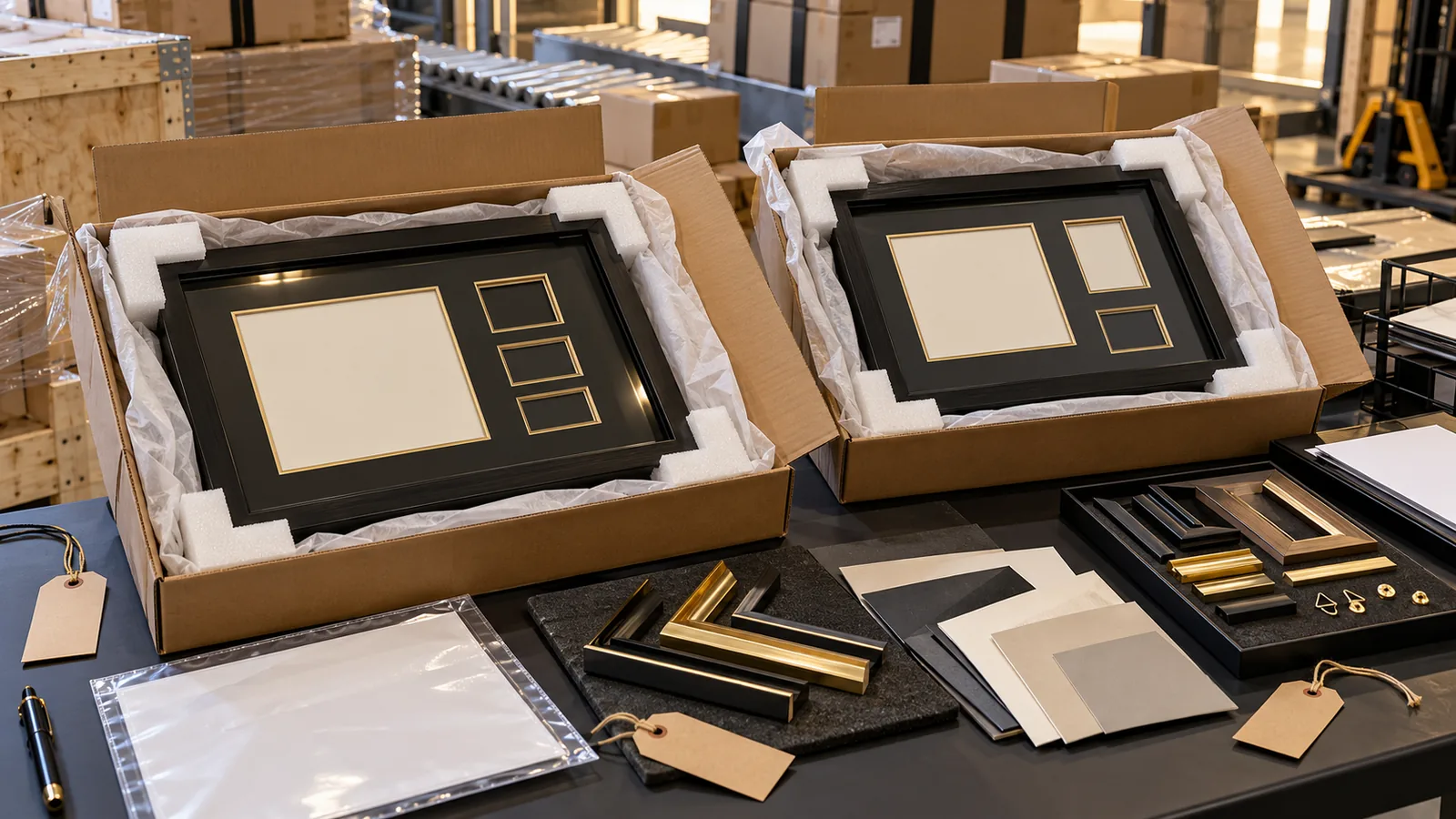
For each SKU, record the product description, licence, mark location, seller, factory, licensor, royalty formula, guarantee allocation if applicable, currency, effective dates, imported quantity, invoice price, additions considered, responsible adviser, entry number and later adjustment status. Link supporting files without placing confidential terms in uncontrolled shared folders.
Reconcile factory shipments against licence reports and entries. Investigate differences caused by samples, replacements, free goods, damaged stock, domestic assembly or cancelled orders. The purpose is not to force every dataset to match blindly; it is to explain why each difference is real and how it was treated.
Write a valuation decision memo before the purchase order
Summarise the parties, sale for export, merchandise, relevant agreements, payment formulas, protected elements, relationship facts, proposed treatment and unresolved questions in one dated memo. Attach the source documents or controlled links and identify who gave customs advice. The memo should distinguish facts from legal conclusions and state which assumptions require confirmation.
Use the memo to brief purchasing, finance, licensing, the broker and the factory before invoices are issued. If the agreement is later amended, do not silently replace the file. Record the change, affected entries and whether the valuation conclusion needs to be revisited. A short contemporaneous record is more useful than reconstructing intent after an audit.
Account for samples, replacements and no-charge units
Licensed programmes often move approval samples, photographer samples, warranty replacements or promotional units outside the normal sale flow. “No charge” does not mean “no customs value,” and a nominal invoice value chosen for courier convenience may not be supportable. Give each movement a reason code, product configuration and valuation instruction from the appropriate trade professional.
Reconcile these units to the licence agreement as well. A licensor may count samples differently from customs, and the two systems need not produce identical totals, but the importer should explain the difference. The factory must not reuse a normal commercial invoice template without knowing which transaction and rights apply.
Buyer and OEM readiness checklist
- The sale for export and importer of record are identified
- All licence, purchase and manufacturing agreements were collected
- Every payment and related party is mapped
- Protected content is located on the exact imported configuration
- Generic and licensed components are distinguished
- Condition-of-sale facts are documented
- Per-unit royalties and minimum guarantees are separated
- Assists, supplied artwork and later proceeds were screened
- The broker received stable SKU and payment data
- Unknown amounts have an approved entry and follow-up process
- Licence reports reconcile to shipment and entry records
- IP approval and customs valuation are separate release gates
- Changes trigger a new analysis
Experience scope and project limits
Editorial review: Jessica, Founder & Project Advisor at DOREMI Display. Updated 25 October 2026. Jessica's experience scope covers B2B display-frame specifications, licensed-artwork production handovers, sample review, packaging, supplier records and project coordination. She is not presented as a customs attorney, licensed customs broker, tax adviser, appraiser or intellectual-property counsel.
The importer should have qualified professionals analyse the complete agreements and transaction before entry. CBP rulings are fact specific, and a ruling about another business is not an approval for a new programme. Consider requesting a binding ruling where appropriate. This article is a preparation framework, not a conclusion that any fee is dutiable or non-dutiable.