
A display-frame sample, replacement unit or direct-to-consumer parcel can be worth far less than a wholesale shipment while still needing an import entry, classification, origin, value, admissibility data and duties. The old commercial shortcut—“under $800 means duty-free”—is no longer a reliable operating assumption for shipments entering the United States.
Executive Order 14388 continued the suspension of duty-free de minimis treatment in February 2026. It states that the exemption under 19 U.S.C. 1321(a)(2)(C) does not apply to covered shipments regardless of value, country of origin, transport mode or entry method, subject to the order’s terms and limited exceptions. Non-postal shipments require an appropriate ACE entry by a qualified party, while postal shipments follow a distinct process. This guide helps frame buyers design a handover; it does not select an entry type, calculate a duty rate, promise clearance or replace a licensed customs broker or trade counsel.
Replace the value shortcut with a shipment decision record
Start every route with the same questions: what is the merchandise, who is importing it, how will it travel, what is its country of origin, how was value determined, which tariff classification is supported, what other agency requirements may apply and who is qualified to file the entry? Low value changes the commercial scale, not the need for accurate facts.
Create a decision record for samples, replacements, gifts, ecommerce orders and bulk consignments. Do not copy the entry instruction from one route to another. A no-charge commercial sample can still have a customs value. A warranty replacement can still be imported merchandise. A parcel platform’s price may exclude duties, brokerage or customer disbursement fees.
Separate non-postal and international-mail workflows
The executive order and CBP materials distinguish shipments outside the international postal network from postal shipments. The order says an appropriate ACE entry must be filed by a qualified party for non-postal shipments that previously qualified for the exemption. CBP’s 2026 rulemaking describes a new postal informal-entry process and situations requiring formal entry.
Ask the logistics provider to identify the actual mode and entry workflow in writing. “Express,” “postal” and “courier” are often used loosely in sales conversations. Record the carrier, consolidator, filer, bond arrangement where relevant, entry type selected by the qualified party and data cut-off. Do not tell customers that every small parcel follows the same method.
Name the importer and the party qualified to make entry
A shipping account or ecommerce platform name does not always reveal the importer of record. Map seller, buyer, consignee, importer, customs broker, carrier and fulfilment provider for each route. Confirm who has power of attorney, who provides classification and value data, who receives CBP messages and who pays duties and fees.
Put the agreed party on the commercial workflow before accepting orders. If the U.S. customer is expected to act as importer, disclose that arrangement clearly and confirm the platform and broker can support it. For a brand-controlled delivered model, ensure the brand has the registrations, broker instructions and financial process required. The overseas OEM should not be named importer casually because it pays freight.
Use a supported classification for the finished frame
Display frames vary by material, construction and function. A wooden picture frame, metal frame, plastic frame, deep shadow box, illuminated product or item with an electronic function may require different analysis. Existing Journal guidance explains how buyers can build an HS classification evidence pack; the low-value suspension does not remove that need.
Give the broker a product description, materials by weight or value where requested, dimensions, use, photographs, component breakdown and prior ruling information. Do not let the carrier choose from “decor” or “gift” alone. Keep the final determination and effective date in the SKU master. If the product changes, reopen classification review.
Determine customs value even when the customer pays nothing
A supplier may ship a free sales sample, replacement for a damaged unit, promotional display or prototype with no normal invoice price. Zero commercial charge does not automatically mean zero customs value. Record the reason for shipment, production cost or comparable sale information, assists, packing and other elements for qualified review.
Use truthful commercial documents. Do not declare an arbitrary nominal amount to reduce duty or simplify the parcel. For ecommerce, reconcile order discounts, bundled personalisation, shipping and refunds with the value method chosen by the broker. Preserve the source transaction and any related-party facts.
Confirm country of origin and marking separately from ship-from location
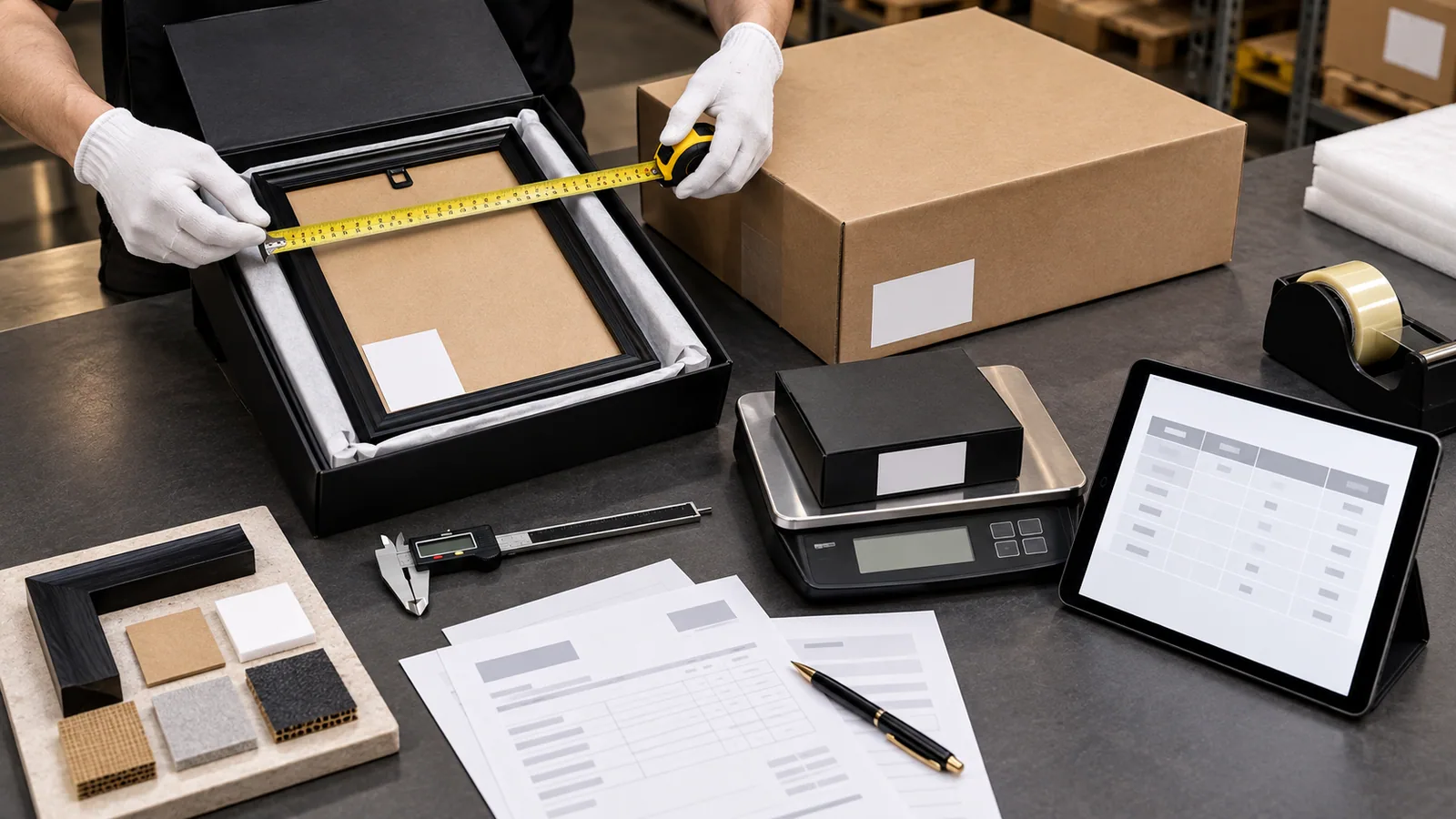
A parcel dispatched from a U.S. fulfilment centre may already have entered the country, while a parcel shipped from another country needs origin analysis based on manufacture and applicable transformation rules. The seller’s headquarters, design location or warehouse does not set customs origin. The finished frame and its container may also have marking requirements.
Link the origin decision to the production route and existing marking artwork. If frames are partially processed in more than one country, obtain qualified advice. Do not copy the marketing claim “designed in” into the customs origin field. If a supplier source changes, notify the broker before shipping.
Model duties and fees without publishing a fixed rate
The payable amount can depend on classification, origin, value, current tariff measures, entry method, processing fees, broker charges and other facts. This article does not state a duty rate because rates and additional measures can change, and display-frame constructions differ. A landed-cost model should show the source and date for each input.
Build low, expected and exception scenarios with the broker and finance team. Include duty, taxes where applicable, entry or brokerage charges, disbursement, carrier handling, storage risk, returns and customer-service cost. Keep government charges separate from private carrier fees. Update the model when law, tariff treatment, broker pricing or product sourcing changes.
Create a dedicated sample-shipment workflow
Samples often move fastest and therefore expose weak data first. Before dispatch, assign an importer, classification, origin, value method, description, quantity, purpose and broker. Mark prototype differences clearly. If the sample includes wood packaging, batteries, electronics, textiles or other regulated elements, check the relevant requirements for the actual shipment.
Use the sample to test the operational data route as well as the product. Confirm who received the entry notice and invoice, whether the description was accepted, what fees appeared and how long clearance took. Do not treat one smooth sample as a guarantee for production orders, but use it to correct missing information.
Design a replacement-unit process before damage occurs
A replacement may be free to the customer but still needs truthful value and entry data. Decide whether the replacement is a complete frame, glazing, backing, hardware kit or printed insert. Each option changes classification, origin, safety and packing needs. Record the original order and reason without assuming the new import is duty-free.
Customer service should not create customs descriptions from scratch. Give the team approved SKU descriptions, values or escalation rules, origin, broker route and customer communication. If damaged goods are returned, destroyed or retained, handle any duty-relief or drawback question with qualified advisers rather than making an automatic promise.
Make direct-to-consumer responsibility visible at checkout
Customers need to know whether the displayed price includes import duties, brokerage and other charges, and whether they will be asked to act as importer or pay the carrier. The commercial term, checkout copy, carrier setup and broker instruction must agree. A “free shipping” banner can be misleading if the recipient receives an unexpected import bill.
Test the complete journey with the legal and ecommerce teams: product page, cart, checkout, confirmation, carrier message, delivery and return. Use plain language and avoid guaranteed clearance dates. If the platform cannot show the intended landed-cost model accurately, pause the route or change the commercial structure.
Check admissibility and other-agency data for the actual configuration
The end of de minimis does not create product-safety or environmental requirements, but it can expose data gaps that the previous low-value flow did not surface consistently. A simple non-electrical frame differs from an illuminated digital frame, a children’s product, a frame with composite wood or one packed with untreated solid-wood dunnage.
Maintain a product compliance matrix by SKU and destination. Give the broker only supported facts and identify open questions early. Do not label every frame “general merchandise” to avoid a detailed description. Partner Government Agency requirements, restrictions or formal-entry triggers need qualified review for the specific goods.
Onboard carriers, brokers and platforms with a controlled data pack
Ask each provider what data, authorisation, bond, account and cut-off it requires for the selected route. Record who transmits the entry, how corrections are handled, which charges are advanced and what evidence the importer receives. A platform integration does not transfer legal responsibility automatically.
Run a test order and reconcile the provider’s output to your SKU master. Check that descriptions, values, origin and importer details are not truncated or replaced by marketplace defaults. Keep an escalation contact for holds and rejected data. Review the provider when service terms or customs processes change.
Connect the supplier BOM to parcel-level data
The OEM should provide product materials, manufacturing country, unit weight, dimensions, packing configuration and a stable SKU or part number. The buyer combines those facts with commercial value, importer details, classification and route. For personalised frames, separate the value of the physical goods from services or assists as directed by the broker.
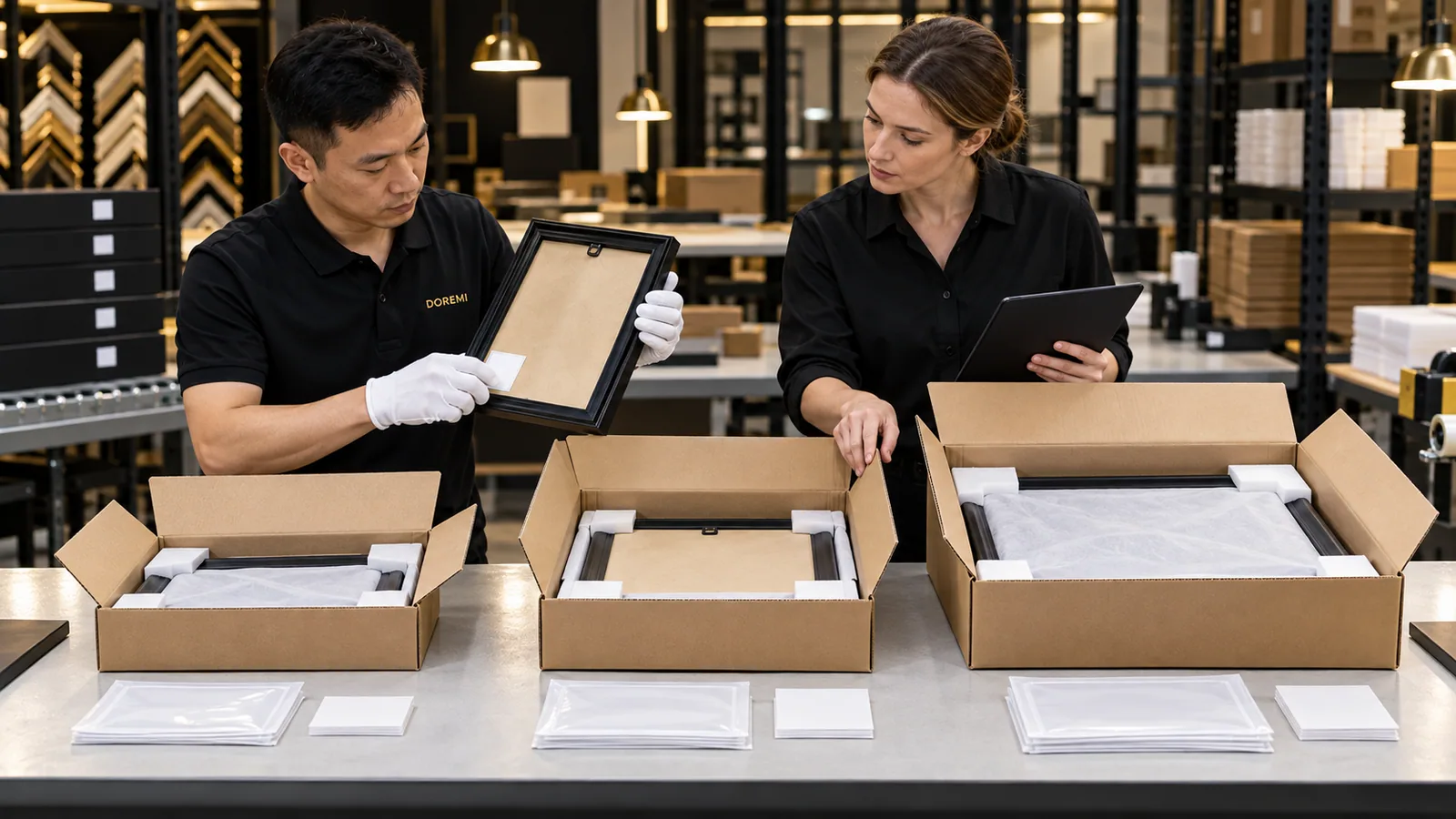
Control packed dimensions and weight because courier charges and operational feasibility depend on them. Measure a production-equivalent parcel, not an empty carton. If the fulfilment centre adds an over-box, capture the final data there. Do not let one generic weight cover multiple sizes.
Use separate route codes for samples, replacements and ecommerce
Create a route code that points to the importer, carrier, broker, entry instruction, commercial term, document set and customer message. A sample to the brand office, a warranty replacement to a consumer and a paid ecommerce order should not share one uncontrolled shipping note. Train sales and customer-service teams to select the code rather than improvise.
Monitor exceptions by route. Record clearance holds, data corrections, unexpected fees, damage and customer refusal. A recurring issue may come from classification, descriptions, platform configuration or commercial terms rather than the factory. Use evidence before changing the product or pack.
Install change control and a current-source review
Trade rules, tariff measures and CBP processes can change quickly. Assign an owner to check official sources and broker advice before launch and at defined intervals. Date every route instruction. When a change occurs, identify affected open orders, parcels in transit, checkout promises and cost models.
Product changes matter too. New electronics, different wood components, a new production country or a higher-value personalised insert can change the analysis. Require the OEM and internal teams to notify the customs owner before shipment. Never use a months-old low-value template simply because the parcel looks similar.
Buyer readiness checklist
- The old “under $800 is duty-free” shortcut is removed from procedures
- Postal and non-postal routes are identified correctly
- Importer, filer, broker, carrier and consignee roles are named
- Every SKU has a supported classification description
- No-charge samples and replacements have a reviewed value method
- Origin and marking are based on manufacture, not ship-from location
- Landed cost separates government duties from private fees
- Sample shipments test the operational data route
- Replacement units use approved descriptions and escalation rules
- Checkout clearly communicates importer and charge responsibility
- Other-agency requirements are checked for the actual configuration
- Route instructions are dated and reopened when rules or products change
Experience scope and project limits
Editorial review: Jessica, Founder & Project Advisor at DOREMI Display. Updated 27 September 2026. Jessica’s practical scope covers custom display-frame specifications, samples, packaging, product data, supplier coordination and buyer logistics handovers. She is not presented as a customs broker, customs counsel, CBP, a tariff-classification authority or a carrier.
This guide is educational procurement material, not legal or customs advice, an entry instruction, duty quotation or clearance guarantee. Importers should confirm the current suspension, entry method, classification, origin, value, admissibility and charges with CBP, a licensed customs broker and qualified counsel for each route.
Public sources used for this guide
- Google Search Central: optimizing for generative AI features
- The White House: Executive Order 14388 continuing the suspension
- U.S. Customs and Border Protection: duty and low-value mail guidance
- Federal Register: 2025 implementation notice for Executive Order 14324
- Federal Register and CBP: postal suspension and new informal-entry process
- Federal Register and CBP: non-postal low-value merchandise suspension
- U.S. Customs and Border Protection: suspension of duty-free de minimis treatment factsheet