
A U.S. importer may pay duty on custom display frames that are later rejected, exported to another market, destroyed, or used in an exported article. Duty drawback can return eligible duties, taxes or fees when the statutory and regulatory conditions are met. It is not an automatic credit for a bad shipment, and the evidence needed usually begins at import entry rather than when finance discovers the opportunity months later.
This guide is for U.S. display-frame importers, brands, retailers, finance teams, customs owners, brokers, warehouses and OEM suppliers. It translates CBP's modernized drawback framework into a product and record handover. It does not determine eligibility, claimant rights, substitution, admissibility, export proof, value, timing or refund amount, and it does not replace a licensed customs broker, drawback specialist, customs counsel or current CBP instructions.
What are frame importers asking?
Typical questions include: “Can we recover duty on defective frames returned overseas?”, “What if the customer opened the carton?”, “Can unused black frames substitute for the exact imported units?”, “Does relabelling count as use?”, “Can we claim on frames destroyed in the United States?”, “Who owns the right to claim after a distributor sale?”, “Do Section 301 duties qualify?”, “What about AD/CVD cash deposits?” and “Which import and export records must match?” The answers depend on the drawback provision, facts and current rules.
These questions are editorial inferences from 19 U.S.C. 1313, 19 CFR Part 190, CBP filing materials and display-frame operations. Google Search Central does not provide a guaranteed AI Overview question list, and DOREMI does not claim direct access to or measurement of AI Overview or AI Mode output.
Screen the commercial scenario before choosing a claim type
CBP's materials describe several forms of drawback, including manufacturing, unused-merchandise and rejected-merchandise drawback. A shipment of unopened retail frames exported to another country presents a different issue from frames returned because they did not conform to the approved sample. Imported moulding incorporated into completed displays for export raises another path.
Write the facts without starting from the desired refund. Identify the importer, claimant, merchandise, entry, payment, warehouse route, operations performed, defect or rejection basis, exporter, destination and dates. Ask a qualified owner to select the provision. A finance code labelled “returns” is not a customs determination.
Build the import-side evidence at entry
Keep entry summary data, commercial invoice, packing list, bill of lading or air waybill, HTS classification, origin, quantities, values, duty and fee lines, purchase order, product description and receiving record. The commercial SKU should connect to the customs line and physical units. If one entry line contains several sizes or finishes, preserve the allocation logic.
Do not rely on a supplier's family description such as “picture frames.” Record model, size, moulding, material, finish, glazing, backing, packaging configuration and lot where relevant. Substitution rules can depend on tariff classification and product identifiers. The drawback specialist needs product facts that survive comparison, not only a carton photograph.

Separate unused merchandise from ordinary inventory activity
Under modernized drawback, unused merchandise can undergo specified operations that do not amount to manufacture or production, but the specific facts still matter. Inspection, testing, cleaning, repacking, sorting, refurbishing, relabelling, disassembly or component replacement can require careful analysis. Sale, display, customer installation or another use may change the result.
Create an operation history by lot or unit. Record receipt, quality check, sample opening, relabelling, storage, transfer and export. Do not call an item unused merely because it remained in saleable condition. Ask the drawback adviser to review showroom samples, e-commerce returns and frames briefly installed at an event.
Document rejected merchandise at the first inspection
Rejected-merchandise drawback may be relevant where imported merchandise was defective at import, did not conform to sample or specification, or was shipped without consent, subject to the current statute and rules. The defect file should show the approved requirement, condition received, inspection method, affected quantity, supplier communication and disposition.
Use dated photographs, sample comparison, inspection records, nonconformance reports, credit notes and return authorization where available. A supplier's later agreement to replace goods supports the commercial story but does not by itself prove the customs condition. Separate transit damage, customer damage, installation damage and manufacturing nonconformance.
Do not export or destroy before checking notice requirements
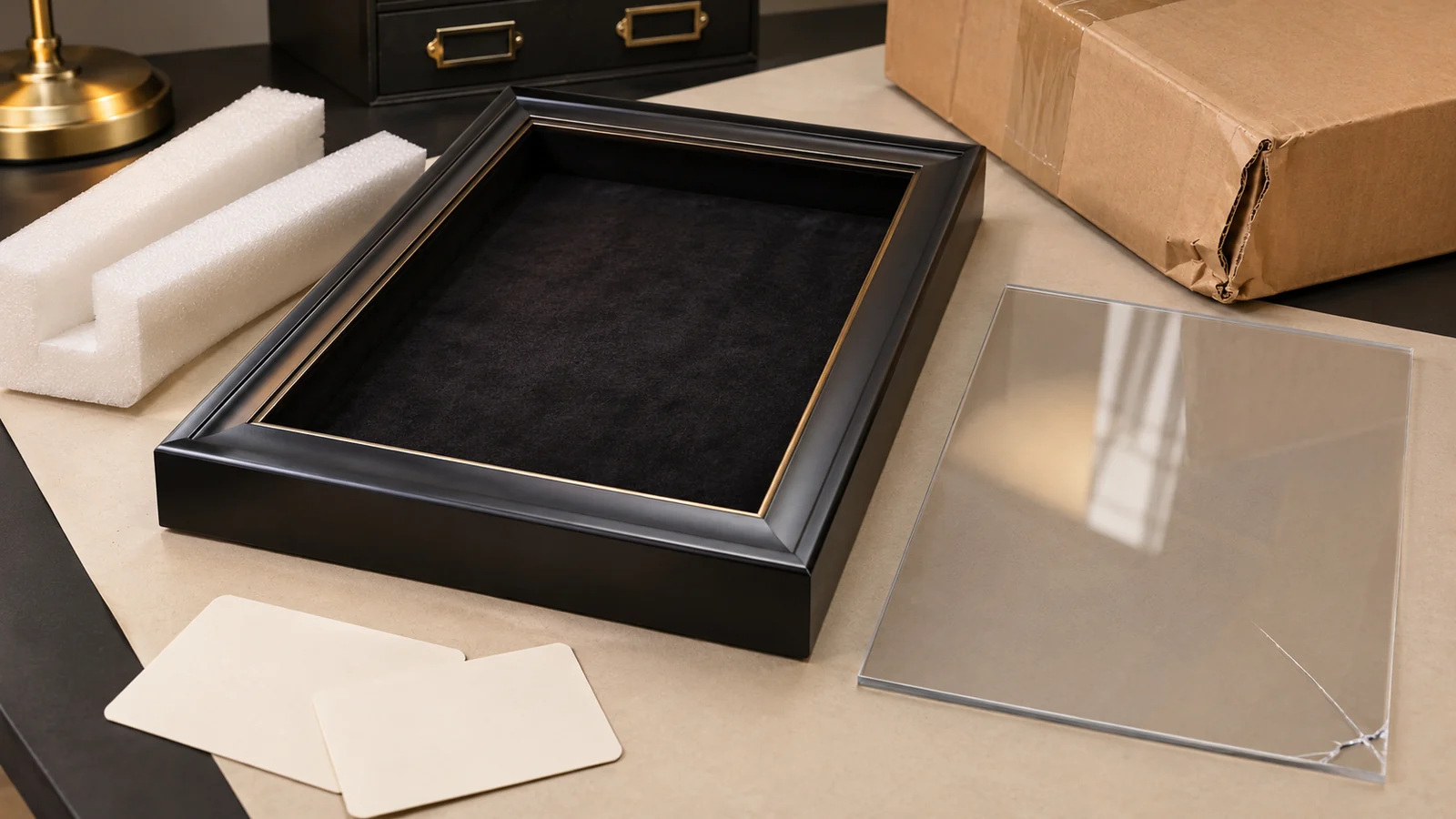
Some drawback paths require notice, opportunity for CBP examination or supervised destruction procedures. If a warehouse scraps frames immediately after an insurance decision, the importer may lose evidence or fail a procedural condition. A certificate from a recycler created after the event may not cure every gap.
Add a customs hold to the disposition workflow. Before export, return or destruction, the warehouse should obtain written release from the drawback owner. Record carton count, unit identity, condition, location, planned date and method. Destruction should leave no commercial value where the applicable rule requires it, with recovery value and materials handled as directed by the specialist.
Map substitution before inventory is commingled
Modernized drawback includes substitution routes with classification and, for rejected merchandise, product-identifier requirements described in 19 CFR Part 190. The imported unit may not always need to be the exact exported unit, but eligibility is not established by visual similarity or the buyer's internal category.
Keep HTS data, SKU, product code, size, finish and inventory movements. If a code changes after repacking or channel allocation, preserve the cross-reference. Do not substitute a walnut frame for a black frame merely because both share an eight-digit classification unless the applicable rule and all other conditions permit it. Let the qualified filer document the basis.
Connect export proof to the claimant's merchandise
Export evidence can include the export filing, carrier documents, commercial invoice, packing list, warehouse release, delivery information and foreign receipt records, depending on the transaction and claim. The file should establish what left U.S. customs territory, when, in what quantity and under whose control.
A carrier tracking page showing “delivered” is not a complete product match. Link export cartons to the inventory lot and import designation. Reconcile shortages, replacements and split shipments. If the merchandise is sent to Canada or Mexico, ask counsel to review USMCA-specific limitations rather than applying the general rule automatically.
Control transfers and the right to claim
The importer, purchaser, distributor, exporter and claimant may be different parties. Drawback rights and supporting certifications can require controlled transfers. Commercial ownership and the right to claim are not always identical. A supplier outside the United States should not promise the refund in a quotation.
Name the claimant early. Add contract terms for record access, assignments, cooperation, confidentiality and duplicate-claim prevention. If a retailer returns frames to a distributor that exports them, document every movement and party. Make sure no other participant is designating the same import or export transaction for another claim.
Calculate only after eligibility and data quality are established
Drawback can cover specified duties, taxes and fees under current law, but 19 CFR Part 190 states that antidumping and countervailing duties are not allowable. Other duty programmes, value limits and lesser-of rules can affect the amount. A gross-duty figure from the entry summary is not the expected refund.
Provide the filer with duty lines, fees, quantity, value, designated imports, exported articles and any recovered value. Keep the calculation version and assumptions. Finance should separate a potential receivable from an approved or paid claim and account for broker fees, internal administration and audit exposure.
Use electronic filing and current CBP instructions
CBP states that drawback claims must be filed electronically through an authorized electronic data interchange route. A claimant may self-file with appropriate software and connectivity, use a licensed customs broker or use a service provider. Claims are not filed directly through an ordinary ACE Portal screen or by emailing a port.
Confirm the responsible filer, powers of attorney, claimant identifiers and accelerated-payment status where relevant. Use current CATAIR and business-process documents. Do not copy a legacy checklist that refers only to former drawback centres or superseded Part 191 procedures.
Manage the five-year clock and record retention
Modernized drawback generally requires a complete claim within the applicable statutory period, commonly tied to five years from importation for the main pathways discussed here. Manufacturing operations and export or destruction also have time limits. The actual date calculation belongs with the filer; do not wait until the final month to assemble product and transfer records.
Part 190 requires drawback-related records to be retained for three years after liquidation of the claim, or longer where another law requires. Build reminders from import date, export date, claim filing and liquidation. Keep records in an auditable format after staff, brokers or warehouse systems change.
Align supplier credits, insurance and drawback
A rejected shipment may also involve supplier replacement, debit note, cargo insurance, carrier recovery or customer refund. These commercial remedies do not automatically determine drawback, but they affect the evidence story and financial reconciliation. Prevent duplicate recovery assumptions and inconsistent defect descriptions.
Use one incident number across quality, finance, customs and logistics. Record which party bears freight and destruction cost, whether goods are repaired, where title transfers and what final disposition occurs. The OEM can support model facts, sample requirements and defect evidence; it cannot certify U.S. drawback eligibility it does not control.
Test the programme with a controlled pilot
Before redesigning every warehouse transaction, select a small group of entries and exports with clean data. Ask the filer to trace one claim from entry line to inventory receipt, operation history, export or destruction, calculation and supporting certification. The pilot should expose missing identifiers, inconsistent units, transferred rights and systems that overwrite old SKU values.
Calculate the operational cost as well as the potential recovery. A technically available claim may be uneconomic if the merchandise cannot be traced or if the refund is small relative to filing, data and audit work. The result should guide which product families, duty programmes, return reasons and export routes enter the long-term process.
Design the future purchase and warehouse handover
If drawback is commercially relevant, add the required fields to new purchase orders, receiving records and warehouse instructions. Preserve customs-facing descriptions, model and lot references, source entry data and disposition approvals. Train quality teams to document nonconformance against the approved requirement rather than using unexplained defect codes such as “bad frame.”
Give the supplier a concise evidence request: approved sample or drawing, affected batch, manufacturing date, inspection finding, credit or replacement decision and return address. Do not ask the supplier to recreate U.S. import or export records it never held. A reliable process assigns each fact to the party that actually controls it.
Buyer–broker drawback readiness checklist
- The commercial scenario is written before a claim provision is selected
- Import lines connect to SKU, quantity, value and physical product facts
- All operations after import are recorded
- Rejected goods tie to an approved sample or specification and dated evidence
- A customs hold prevents premature export or destruction
- Substitution has a documented classification and product-identifier basis
- Export proof connects to the designated merchandise and dates
- Transfers and the right to claim are controlled
- AD/CVD amounts are excluded from expected drawback
- The authorized electronic filer and current instructions are confirmed
- Deadlines and post-liquidation record retention are calendared
- Supplier credits, insurance and customs recovery reconcile
Experience scope and project limits
Editorial review: Jessica, Founder & Project Advisor at DOREMI Display. Updated 4 November 2026. Jessica's practical scope covers display-frame specifications, samples, supplier quality evidence, packaging, production handovers and change control. She is not presented as CBP, a customs broker, drawback specialist, customs lawyer, accountant or authorized electronic filer.
Eligibility, designation, substitution, notice, export, destruction, claimant rights, time limits, calculations and filing must be determined for the actual transactions under current law and CBP instructions. This guide is a project-preparation framework. It is not a drawback claim, refund estimate, customs ruling or authorization to export or destroy merchandise.