
A customs broker may file a clean U.S. entry for a display frame, but the evidence behind that entry often remains scattered across sourcing emails, supplier folders, finance systems and artwork platforms. Years later, the importer may need to explain the product description, country of origin, customs value, classification, assists, royalty payments or why a frame changed from one shipment to the next.
This guide is for U.S. importers of record, brand operations teams, finance managers, customs brokers and overseas OEM/ODM suppliers. It translates current CBP and eCFR recordkeeping material into a display-frame handover. It does not provide a complete legal retention schedule, decide which records apply to a particular entry, calculate value or duty, determine classification or origin, or replace advice from CBP and qualified customs professionals.
What are importers asking about display-frame records?
Common operational questions include: “Does the broker keep everything for us?”, “Which file proves the frame material and construction?”, “How do we connect a yearly royalty payment to entries?”, “Is a supplier invoice enough for a wooden shadow box?”, “What if the item description in our ERP is shorter than the customs description?”, “Do we retain old sample approvals after a supplier change?” and “Who can answer a CBP request if the employee who placed the order has left?”
These questions are editorial inferences from current CBP guidance and recurring buyer–supplier handovers. Google Search Central recommends useful, original, structured content for generative search; it does not expose a dependable AI Overview question feed. DOREMI therefore does not claim that these questions were directly captured from AI Overview or AI Mode.
Start with the importer of record's responsibility
CBP explains that using a licensed customs broker can be convenient, but the importer remains ultimately responsible for knowing requirements and ensuring lawful importation. A broker can prepare and transmit entry data; it cannot replace the product, purchasing and payment knowledge held by the importer and supplier.
Assign an internal record owner even when a broker is used. That person should know where the entry packet, underlying product facts and payment evidence are stored, which adviser approved key decisions and how records will be produced if requested. The ownership should survive personnel and broker changes. A service-provider portal is useful access, but it should not be the only path to the importer’s compliance history.
Understand the five-year baseline without oversimplifying it
CBP's February 2026 Entry Summary Record-Keeping page says records generally must be kept for five years from the date of entry or the activity that required creation of the record. Part 163 and CBP's informed compliance publication contain details, exceptions and record-production rules. The importer should obtain professional advice for its actual transaction and other agency requirements.
Build a policy that records the start event, retention period, system, responsible owner and disposal hold for each record class. Do not translate “five years” into an automatic deletion date for every document. Drawback, litigation, audits, other government agencies, contracts, tax rules and product-safety duties can create different needs. The practical objective is controlled retention, not the shortest possible archive.
Create one entry index before storing individual documents
For every entry, create an index using the entry number, importer, broker, supplier, manufacturer, vessel or airway bill, arrival date, purchase order, invoice, SKU, HTS line, origin, value and release status. Link the index to source documents rather than uploading one unstructured folder. If one entry includes several frame families, preserve the line-level connection.
The index should also identify unusual facts: assists, moulds, licence fees, free-issue plaques, related-party pricing, returned goods, special programmes, partner-government-agency data or a binding ruling. This does not decide how those facts are treated. It makes them visible so the importer can prove that the entry instruction was based on an intentional review rather than a generic template.

Preserve the commercial invoice and the facts behind it
CBP's invoice guidance identifies core information such as an adequate merchandise description, quantity, value, appropriate eight-digit HTS subheading and the responsible foreign invoicing party. A display-frame invoice should be specific enough to distinguish, for example, a wooden certificate frame from an aluminium shadow box or an electronic photo frame.
Keep the final invoice transmitted for entry and the source data used to create it. If the supplier invoice uses a short model code, retain the model dictionary and specification that explain material, construction and included contents. Record credits, debit notes and later price adjustments. Where value may include packing, assists, commissions, royalties or proceeds, preserve the contracts and calculations reviewed by the customs adviser.
Connect classification evidence to the imported configuration
A classification record should describe the finished goods as imported: frame material, glazing, backing, mount, plaque, included jersey or medal, electronics, packaging and principal use. Keep drawings, photographs, BOMs, catalogues, samples or laboratory information that materially supported the decision. A ruling for one configuration should not silently migrate to a different product.
Record the authority used: broker advice, internal analysis, CROSS ruling research, binding ruling or other professional conclusion. Show effective dates and any assumptions. When a product changes, decide whether the classification record remains valid. A marketing name such as “memory frame” can stay constant while the customs facts change substantially.
Make origin traceable to the real manufacturer and process
Country of origin cannot be supported only by the supplier’s address. Preserve the manufacturer identity, plant location, bill of materials, component countries and processing facts needed for the applicable origin analysis. If wooden profiles, metal inserts or textile mounts are sourced elsewhere, the file should show how the responsible adviser considered the finished product.
Link origin records to each SKU and supplier revision. Retain country-of-origin marking artwork and product photographs when relevant, but do not use a carton mark as proof of origin. If a free-trade claim, special tariff treatment, AD/CVD scope screen, Lacey Act declaration or other origin-sensitive programme applies, add its specific evidence and professional conclusion to the index.
Reconcile purchase orders, packing lists and quantities
Quantity mismatches are easier to resolve when documents share identifiers. The purchase order may use a buyer SKU, the invoice a supplier model, the packing list a carton code and the entry a shortened description. Build a cross-reference before shipment. Preserve carton quantity, unit quantity, gross and net weight where relevant, and any split shipment or short-ship explanation.
For personalised certificate or award frames, distinguish the commercial unit from variable artwork data. CBP usually does not need recipient names in the entry record, but the importer needs enough production and quantity evidence to reconcile what was ordered and shipped. Protect personal data according to company policy while keeping customs-relevant quantity and value facts reproducible.
Track assists, tooling and buyer-supplied materials
A buyer may pay for a mould, supply artwork or plaques, provide packaging, or fund design and engineering outside the supplier's unit price. The record file should show the cost, payer, recipient, ownership, location, affected SKUs, quantities and allocation method considered by the customs adviser. Free-of-charge inputs can be commercially invisible on the invoice while remaining relevant to valuation.
Use a ledger that reconciles the original input value, units produced, imports covered and remaining balance. Keep supplier confirmation of how the input was used. When a tool supports several countries or product families, document the allocation assumption and changes in expected volume. Do not invent a customs-value treatment from this guide; preserve the facts for the professional who decides it.
Keep licence and royalty records with manufacturing records
Licensed jersey, university, sports and entertainment frames can involve payments to parties other than the manufacturer. Store the manufacturing agreement, licence agreement, payment statements, sales base and relationship map together. A finance folder containing only a yearly royalty total may be difficult to connect to imported goods and entry periods.
Create a matrix showing which intellectual property appears on which SKU, who pays whom, how the fee is calculated and whether it was included in invoice value. Record the customs adviser’s conclusion and effective date. If the licence, seller control or payment basis changes, reopen the analysis. The archive should prevent both omission and double counting.
Archive broker instructions and transmission evidence
Keep the instruction sent to the broker, the documents supplied, questions raised, corrections made and final entry summary. If a broker changes classification, origin or value from the instruction, document the reason and approval. A final CBP form without the communication trail may not explain how a material issue was resolved.
Use secure shared access and export key records from portals before an account closes. Confirm who can retrieve historical ACE or broker data and how quickly. Test the retrieval process annually with one old entry. A retention policy that has never been tested can fail when a login, employee or software vendor changes.
Control product and supplier changes by shipment date
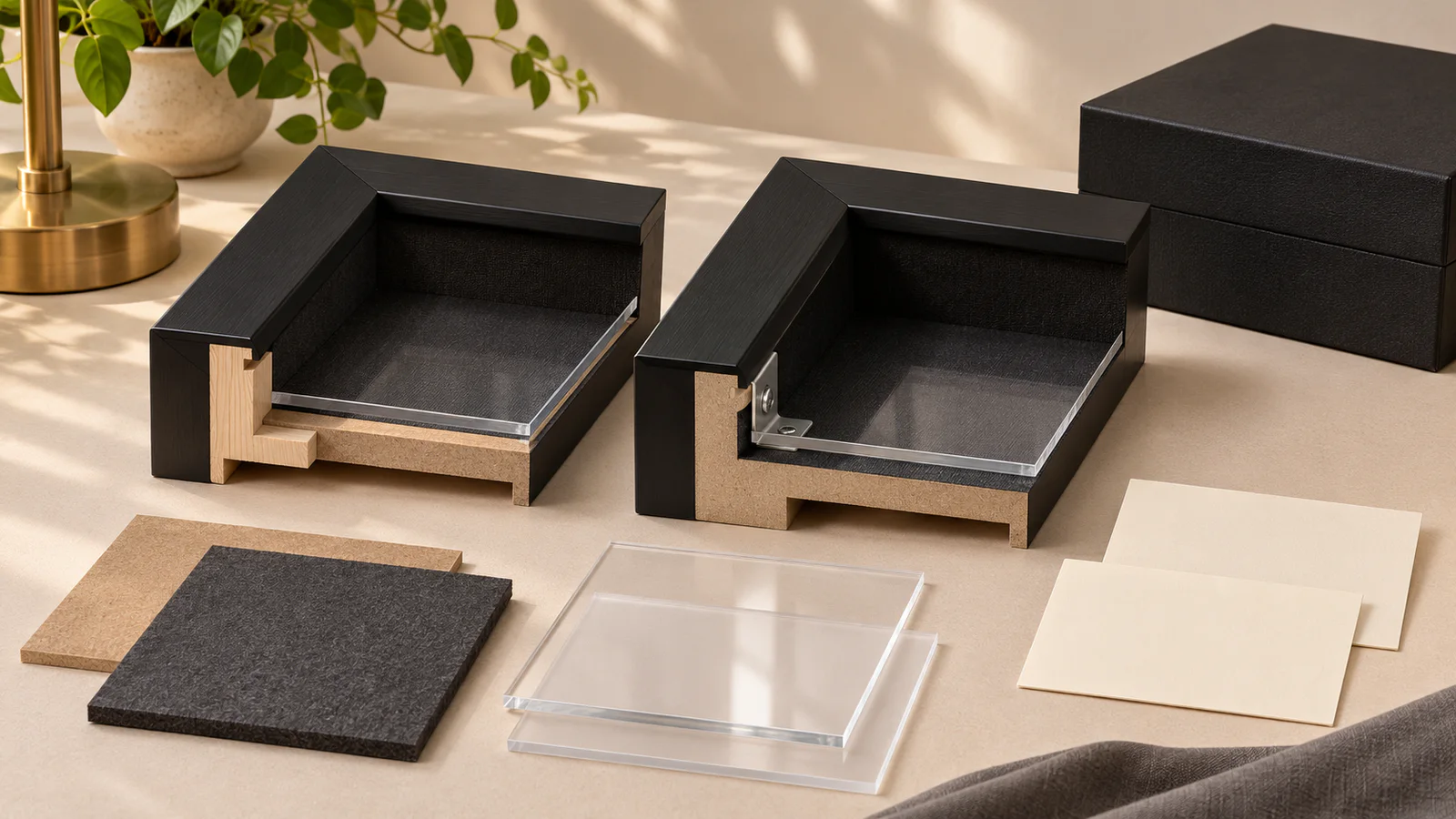
A frame's exterior appearance can remain stable while its customs facts change. The supplier may replace solid wood with MDF, move assembly, add a metal plaque, ship the product with a jersey, change glazing or introduce a battery-powered light. Each change can affect classification, origin, value or another agency requirement.
Require the supplier to submit a change notice before production. The importer should record the affected purchase order, first shipment, old and new BOM, photographs and decision owner. Do not overwrite the prior specification; freeze each version so earlier entries remain explainable. The shipment date and entry line should identify which version actually arrived.
Prepare for record production before a request arrives
Part 163 addresses the maintenance and production of records. Build a response playbook identifying the internal lead, customs counsel or adviser, broker contact, IT support and approval path. Record where original electronic files are held, how integrity is protected and how confidential supplier information will be handled.
When a request arrives, do not reconstruct facts casually or send an uncontrolled data dump. Confirm scope, deadline and responsible reviewer. Preserve the request and response set together. Note any unavailable record and the steps taken. The aim is a complete, consistent production that can be traced back to the entry and underlying business records.
Give finance and sourcing compatible identifiers
Customs records often fail because departments use different keys. Finance sees supplier invoice number and payment; sourcing sees project and PO; logistics sees shipment and container; customs sees entry and line. Create a crosswalk using stable SKU and transaction identifiers. Make it possible to move from an entry line to the supplier payment and back.
Reconcile periodically. Compare entered value and quantities with purchase orders, payments, inventory receipts, assists, royalties, credits and post-entry adjustments. Investigate differences while staff remember the transaction. Record the disposition: data correction, professional confirmation, reconciliation, protest, disclosure or no change. This guide cannot decide the proper procedure.
SKU-to-entry record checklist
- An internal owner is assigned despite broker use
- The retention policy records start event, duration and exceptions
- Every entry has a searchable line-level index
- Commercial invoices contain adequate product descriptions
- Supplier models cross-reference buyer SKUs
- Classification evidence matches the imported configuration
- Manufacturer and origin facts are preserved
- Purchase orders, invoices, packing lists and entries reconcile
- Tooling, assists and free-issue inputs have a ledger
- Licence and royalty payments map to affected SKUs
- Broker instructions, questions and final transmissions are retained
- Product and supplier changes create new evidence versions
- Historical records can be exported from portals
- A record-production playbook has owners and approvals
- No five-year general rule is treated as the only retention duty
Experience scope and project limits
Editorial review: Jessica, Founder & Project Advisor at DOREMI Display. Updated 8 November 2026. Jessica's practical scope covers display-frame BOMs, OEM/ODM quotations, product and artwork coordination, samples, packing, production communication and buyer–supplier handovers. She is not presented as CBP, a customs broker, customs lawyer, auditor, valuation specialist or recordkeeping adviser.
The importer of record and qualified advisers must determine applicable records, retention periods, classification, origin, value, admissibility, partner-agency data, corrections and responses for the actual entry. This guide is an evidence-organisation workflow, not a complete Part 163 schedule or legal opinion.