
When a U.S. display-frame shipment moves by vessel, the customs-data deadline arrives before the cargo. U.S. Customs and Border Protection requires an Importer Security Filing—commonly called ISF 10+2—for covered vessel cargo. Eight importer data elements are generally due no later than 24 hours before lading at the foreign port, while container stuffing location and consolidator are due as early as possible and no later than 24 hours before arrival, subject to the rule's detailed timing provisions.
For buyers, the operational problem is a handover problem. The overseas factory knows the product and packing. The consolidator knows where the container was stuffed. The broker or filing agent knows the electronic channel. The U.S. ISF Importer remains responsible for making sure the filing is timely, complete and accurate. This guide organises those roles for display-frame projects. It is not legal advice, a customs ruling or a broker instruction for a particular shipment.
Does ISF apply to every display-frame shipment?
CBP's ISF rule applies to cargo arriving in the United States by vessel, with specified treatment for U.S.-bound, foreign-remaining-on-board, immediate-export and transportation-and-exportation cargo, plus exceptions for certain bulk and break-bulk movements. The ordinary private-label container or less-than-container-load consignment of finished display frames should be screened as vessel cargo with the U.S. broker before booking.
Air, courier and land movements do not become ISF shipments merely because the product is the same. Conversely, a small ocean consignment does not escape the rule simply because its commercial value is low. Ask the broker to identify the filing type and responsible ISF Importer for the actual bill and movement. Do not rely on a supplier's statement that “the forwarder handles customs” without naming the filing agent and the U.S. responsible party.
Who is the ISF Importer?
The rule defines the responsible party according to the shipment type. For ordinary goods intended to be entered in the United States, that is generally the party causing the goods to arrive within the limits of a U.S. port. In many commercial imports this is the owner, purchaser, consignee or agent in the United States, but the exact answer should be confirmed for the transaction.
An authorised agent can transmit an ISF. That does not transfer the commercial responsibility to the Chinese OEM or turn a booking agent into the importer. Record the ISF Importer legal name and number, the filing agent, the bond arrangement and the power-of-attorney status before the shipment approaches lading. If a marketplace, distributor or fulfilment programme changes the contractual buyer, ask the broker to recheck the party map.
What are the ten importer data elements?
CBP lists seller; buyer; importer of record number or foreign-trade-zone applicant identification number; consignee number; manufacturer or supplier; ship-to party; country of origin; commodity HTSUS number; container stuffing location; and consolidator or stuffer. The “+2” refers to carrier data rather than two extra fields supplied by the importer.
Memorising the names is not enough. Several parties may look similar on a purchase order, and a display-frame programme may use a trading company, actual manufacturer, third-party warehouse and separate U.S. consignee. Build a row for each element with the value, source document, owner, due date, validation status and change trigger. That table becomes the control sheet shared with the broker.

Separate seller, buyer and manufacturer
The seller is the last known entity by whom the goods are sold or agreed to be sold. The buyer is the last known entity to whom they are sold or agreed to be sold. The manufacturer or supplier identifies the entity that last manufactures, assembles, produces or grows the commodity, or supplies the finished goods in the relevant sense under the rule and guidance. These roles may be held by two parties or three.
If a sourcing company invoices the U.S. brand while another factory makes the frames, do not automatically put the invoicing company into every field. Give the broker the purchase-order chain and the actual manufacturing facts. For a mixed shipment produced by multiple facilities, ask whether multiple manufacturer records are required by commodity line. Record the legal English name and full address, not a factory nickname copied from a messaging app.
Control the importer and consignee numbers
The importer of record number and consignee number may be an IRS number, Social Security number or CBP-assigned number according to the responsible party and filing context. These identifiers are sensitive and should be exchanged through the broker's secure process, not circulated through an uncontrolled factory chat.
Confirm that the number belongs to the named entity and that the bond can support the filing route. If a new U.S. subsidiary, distributor or foreign importer of record enters the programme, stop and remap the transaction. The frame model may be unchanged, but the party identity is not. A copied number can create a filing that is syntactically complete and commercially wrong.
Define the ship-to party from the actual first delivery
CBP describes the ship-to party as the first deliver-to party scheduled to physically receive the goods after release from customs custody. That may be a U.S. distribution centre, retailer warehouse, fulfilment provider or another facility. It is not necessarily the invoice buyer or corporate headquarters.
Ask the U.S. buyer to approve the legal name and street address of the physical destination used for the filing. For cross-docked or transloaded cargo, provide the broker with the real planned flow rather than the final consumer destination. If the warehouse changes before arrival, ask the filer whether and how to update the ISF.
Country of origin is a product fact
Country of origin for customs purposes is not simply the port of loading, seller's country or location of final packing. Display frames can combine moulding, glass or acrylic, backing, hardware, printed inserts and electronics from several sources. The responsible importer and broker should make the origin decision from the applicable rules and actual manufacturing process.
The OEM should supply a bill of materials, manufacturing location, process description and change notice for relevant components. For a digital frame, identify where the finished electronic article is produced and how the enclosure, module and final assembly relate to the origin analysis. Do not use this article to make a substantial-transformation decision; document the facts and obtain a qualified determination.
Make the HTSUS line match the physical article
The ISF asks for a commodity HTSUS number. CBP guidance permits the number at the six-digit level, though the later entry requires the appropriate full classification. A buyer should still connect the pre-lading code to the classification record used for entry. If the two differ, the broker should understand why and update the filing when required.
A wooden picture frame, aluminium shadow box, glass-front certificate frame, digital photo frame and set of unassembled mouldings may not share one classification. Ask the supplier for construction facts and a proposed code, then have the U.S. importer or customs specialist validate it. Avoid forcing a convenient six-digit code across a mixed container simply because all cartons are marketed as “display frames.”
Identify stuffing location and consolidator early
The container stuffing location is the physical place where goods were stuffed into the container. For factory-loaded full containers, that may be the production or packing site. For less-than-container-load cargo, it may be a consolidator's freight station. The consolidator is the party that stuffed the container or arranged for stuffing.
These fields are commonly uncertain when a buyer books through one forwarder and the cargo is handed to another warehouse. Obtain the legal name and address, not only a facility code. Ask when the forwarder can provide the final values, who will send them to the filer and what happens if the cargo is moved to a different station.
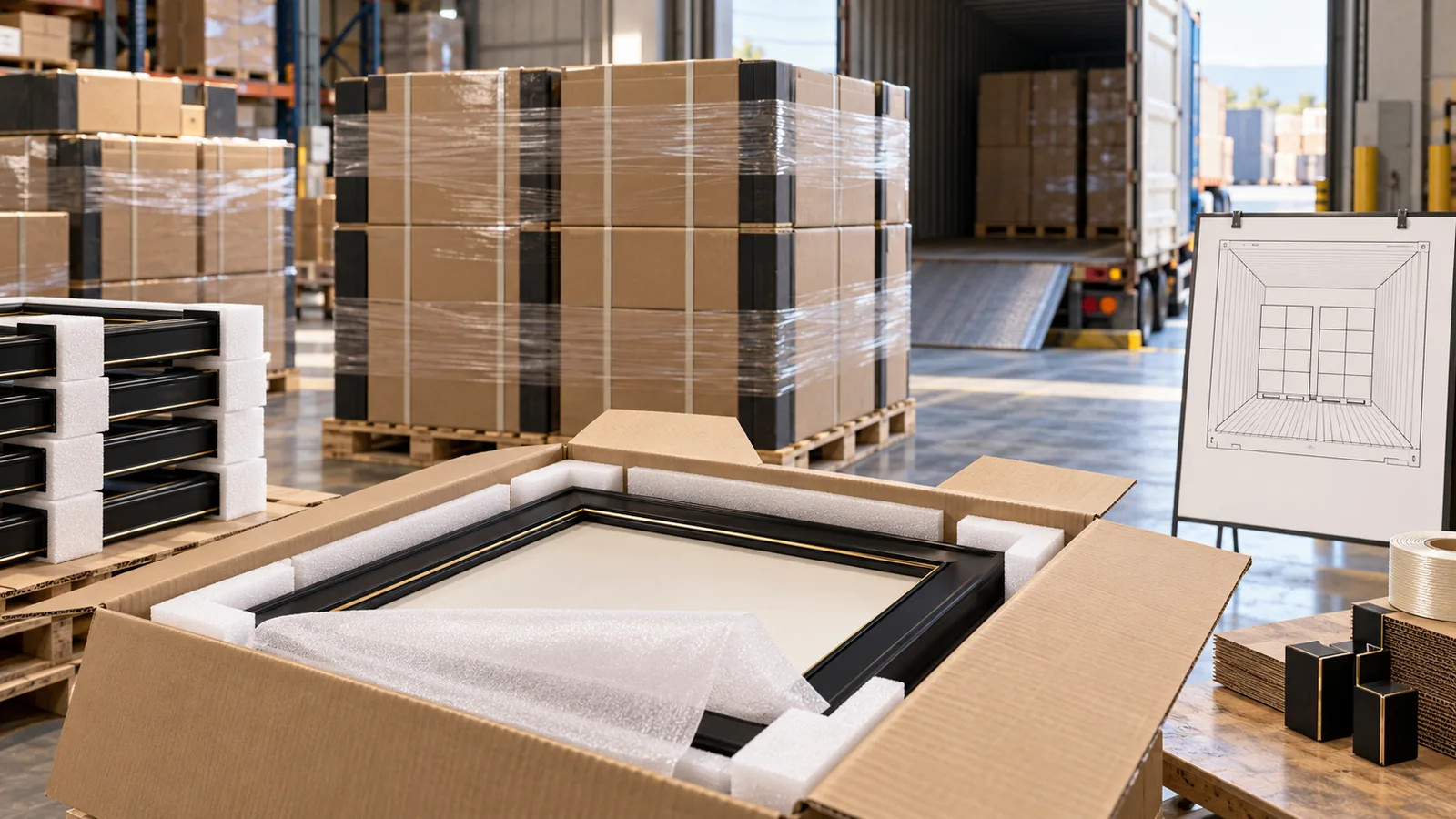
Use the 24-hour rule as the outside gate, not the work plan
CBP says eight elements are due no later than 24 hours before lading. A buyer should not plan to send data at the legal edge. Carriers, brokers and consolidators need time to validate the bill number, parties, code and routing. Establish an internal deadline before the agent's cut-off, and make shipment release conditional on broker acknowledgement.
The rule allows specified elements to be based on the best available information within defined flexibility, but that is not permission to insert placeholders. The filing must be updated if information changes or more accurate information becomes available before the goods enter the limits of a U.S. port. Ask the broker which fields it accepts as flexible and how it documents the update.
Control the bill of lading link
The ISF is matched to carrier data through the bill of lading number. A mismatch, missing house bill or late split can prevent the systems from linking the records as intended. Ask the forwarder for the bill format it will use and send it to the filer through one controlled channel.
For a consolidation, confirm whether the ISF should reference the house bill, master bill or both according to the filing process. Do not create a bill number from a draft booking reference. If the forwarder revises the bill, splits the cargo or rolls it to another sailing, require an immediate notice to the importer and filer.
Build a display-frame ISF source pack
The overseas supplier pack should include the legal seller and factory identities; commercial buyer; product list; materials and function; proposed HS code; manufacturing country and location; carton counts and weights; planned stuffing site; consolidator contact; booking and bill references; and a named person authorised to answer corrections. Add product photographs for any description that could be confused with components or electronic goods.
The U.S. buyer pack should add the importer and consignee numbers through a secure channel, ship-to address, broker appointment, bond confirmation, approved classification and origin decision, and release authority. The broker owns the filing process; the buyer owns the accuracy of the facts it approves.
Manage private-label and mixed-SKU complications
A private-label programme often uses the brand owner's artwork and retail packaging while the product is made by an independent factory. Marketing ownership does not answer the manufacturer field. Likewise, a common retail brand does not make unlike frame constructions one commodity. Preserve the manufacturer, origin and code relationships at SKU or appropriate line level.
For mixed loads, create a matrix showing SKU, description, factory, origin, HTSUS, cartons, quantity and bill allocation. Reconcile its totals to the packing list. If a last-minute substitution comes from another factory, do not treat it as a harmless colour change. It can alter manufacturer, origin, code and filing accuracy.
Plan for amendments, non-lading and cancellation
Ask the broker to document the workflow for changes, withdrawals and shipments that do not load. Keep the timestamp of each data version and the carrier event that triggered it. Examples include a changed seller, a different delivery warehouse, revised stuffing site, split house bill, new manufacturer, origin correction or cancelled booking.
One person on the buyer's team should authorise updates. The supplier should not send corrections independently to multiple logistics contacts. After an amendment, retain the agent's confirmation and the final value set used. This record is useful if CBP later asks how the importer obtained and verified the information.
Understand the consequence without turning it into a scare claim
CBP's current public help states that it may issue liquidated damages of USD 5,000 per violation for an inaccurate, incomplete or untimely filing. Whether CBP assesses or mitigates a claim depends on the facts, bond and enforcement process. Do not use the number as a marketing promise that every error costs exactly that amount.
The operational case for control is broader: a poor filing can create holds, examinations, document work, broker escalation, missed delivery windows and a weak compliance record. The remedy is not a disclaimer on the purchase order. It is an earlier data gate, an approved party map and evidence that the importer used reasonable processes.
Pre-lading approval checklist
- Confirm the movement is covered vessel cargo and identify the filing type.
- Name the ISF Importer, filing agent and bond arrangement.
- Validate seller, buyer, manufacturer or supplier and ship-to roles.
- Transmit importer and consignee numbers securely.
- Approve country of origin from the actual manufacturing facts.
- Have the responsible specialist validate each commodity code.
- Obtain the final house and master bill references used for matching.
- Confirm stuffing location and consolidator ownership.
- Reconcile SKUs, cartons, quantities and weights to the packing list.
- Meet an internal deadline before the broker and carrier cut-offs.
- Receive and retain filing acceptance or status evidence.
- Keep a controlled amendment and cancellation process active until arrival.
Questions to ask the OEM, forwarder and broker
Ask the OEM: Who sold the goods, and which factory actually made each SKU? Where did the manufacturing and final packing occur? What materials and functions support the code and origin review? Which party and address will stuff the container? Which details remain provisional? Can you notify us before any factory, component, country or packing-location change?
Ask the broker: Who is the ISF Importer for this movement? Which data are due at your internal cut-off? Which elements can be updated, and by when? What bill number will you use? How should mixed manufacturers and codes be submitted? Who confirms acceptance? What evidence should we retain? Ask the forwarder: What are the final vessel, lading, house-bill and stuffing milestones, and how will a roll or split be reported?
Experience scope and project limits
Editorial review: Jessica, Founder & Project Advisor at DOREMI Display. Updated 4 October 2026. Jessica's practical experience covers display-frame specification, OEM coordination, sample review, packing handover and export-document consistency. DOREMI is not a U.S. customs broker, filing agent, surety or legal adviser and does not determine the ISF Importer, tariff classification, origin or bond treatment for a shipment.
The project recommendation is to create one broker-ready data pack before lading and control every later change. The U.S. importer and its licensed professionals must make and document the legal and filing decisions.