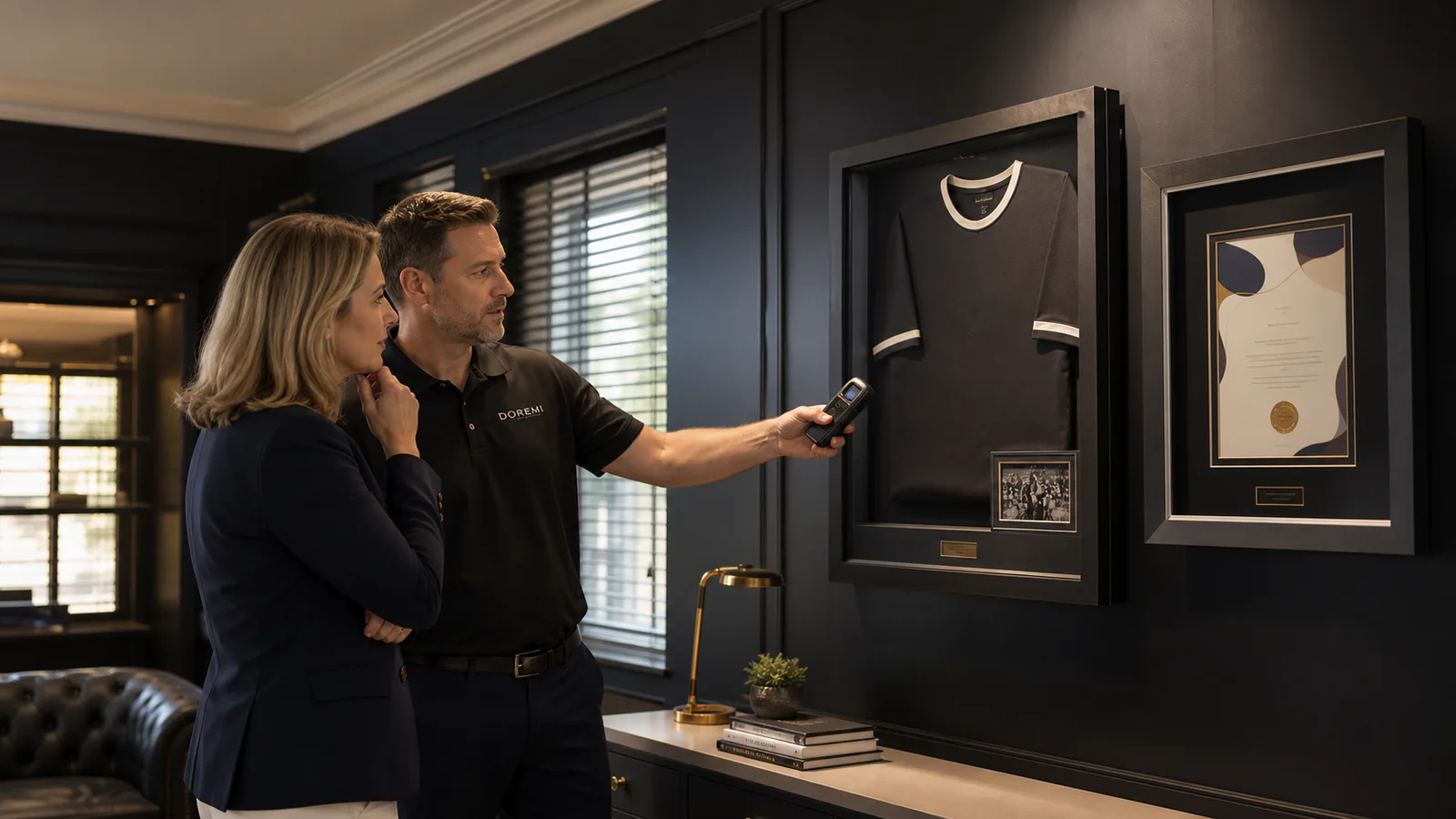
“UV protected” is not a complete display specification. A glazing sheet may reduce part of the ultraviolet reaching an object, but visible light, exposure time, object sensitivity, room placement and maintenance still influence fading and other change. No transparent front turns continuous display into zero risk.
This guide is for clubs, universities, hospitality groups, venues, memorabilia retailers and premium gifting teams specifying framed jerseys, certificates, photographs, medals or mixed displays. It translates a broad protection request into evidence questions, placement decisions and an operating handover. It does not certify a glazing product or replace advice from a conservator, lighting professional or destination-market authority.
Begin with the object, not a UV percentage
Record what is being displayed and what part is most sensitive. A jersey can include dyed textile, printed number, heat-applied sponsor mark and autograph ink. A certificate can combine paper, coloured print, embossing, metallic foil and signatures. A mixed frame may also include photographs, ribbons or adhesive labels.
These components may respond differently to light and heat. The Canadian Conservation Institute notes that textile damage depends on light intensity, ultraviolet proportion and duration, and that the vulnerability of colourants varies. The buyer should therefore avoid assuming that one generic material claim describes the risk to the entire object.
Understand why visible light still matters
The U.S. National Archives states that exposure to all light—visible and ultraviolet—can cause fading, darkening and other change. It recommends limiting intensity and time as well as using ultraviolet-filtering glazing when originals are displayed. This is why removing UV does not make bright continuous light harmless.
For a commercial programme, the practical conclusion is simple: glazing, room light and operating hours belong in the same brief. A product datasheet can describe the glazing. It cannot control a south-facing window, a spotlight left on overnight or a venue that moves the display after installation.
Classify the display use before choosing controls
Ask whether the object is replaceable merchandise, a signed collectible, a presentation replica, an original institutional document or an irreplaceable historic item. Define the expected display period and who owns the risk decision. A rotating exhibition can use different controls from a permanent hospitality installation.
If the original is too important for the intended location, consider displaying a high-quality copy while storing the original appropriately. The National Archives describes copies as the best protection from light for family papers and photographs. That principle may be suitable for some institutional displays, but the owner and conservator should decide when authenticity requirements make a copy inappropriate.
Map the actual room exposure
Record window orientation, daylight at different times, shade or blind control, electric light type, fixture distance, operating hours, seasonal changes and whether the display may be moved. A sample reviewed in a factory studio does not reproduce the final exposure. Include photographs and a simple wall plan in the project file.
Direct sun should be treated as a location problem, not something a glazing label automatically solves. Use blinds, shades, curtains, window films or a different wall where appropriate, and confirm their performance with the facilities or lighting team. Keep heat sources, moisture, air outlets and areas of repeated contact in the broader location review.
Ask what the glazing claim actually covers
Request the manufacturer and exact glazing grade, sheet thickness, relevant spectral or UV-transmission data, test method, report or datasheet date, and any limitations. Confirm whether the quoted material and the sampled material are the same. A statement from a different grade, coating or thickness should not be attached to the project as though it described the supplied unit.
A buyer should also ask how the material is identified during production and future replacement. If the protection feature depends on a coating or orientation, record which side faces the object and how installers recognise it. Do not publish a percentage in marketing copy until documentation supports the exact product configuration and the compliance team approves the wording.
Do not confuse UV filtering with anti-reflection
UV control and reflection control address different buyer needs. A glazing product may offer one, both or neither. The product description, quotation and sample review should separate them. Anti-reflective appearance also depends on lighting angle, room brightness and what is behind the viewer.
Review the finished frame front-on and at realistic viewing angles in the intended environment. If photography is important for a retail page, test the actual sample under a repeatable lighting setup. Do not assume a low-reflection appearance means a particular UV performance, or that a UV claim guarantees low glare.
Control light intensity and time together
The Canadian Conservation Institute describes light damage as cumulative and irreversible and explains total exposure as light intensity multiplied by time. For institutional collections, it recommends monitoring and recording exposure for sensitive items. A commercial buyer does not need to copy a museum policy blindly, but it should understand that lower intensity and shorter operating hours work together.
Practical controls can include dimming, increasing the distance from a light source, switching display lights off outside visiting hours, visitor-activated lighting or rotating sensitive originals. Select controls with the facilities and lighting team. Any numerical target must be set for the actual object and context by a qualified professional rather than copied from a general article.
Build textiles into the lighting brief
Textile dyes, printed graphics and autograph inks can have different sensitivities. Record whether a jersey is game-worn, replica, signed, heat-printed or embroidered. If an ink or print is the most vulnerable part, photograph it at approval so later condition reviews use a consistent reference.
Avoid language such as “will never fade.” Even with selected glazing and controlled light, materials can change. The buyer-facing care guidance should say what the programme actually controls: recommended location, avoidance of direct sunlight, lighting hours, cleaning method and whom to contact if the frame is moved or damaged.
Build paper and certificate protection into the frame
For papers, the National Archives recommends suitable mat board, separation from glazing and ultraviolet-filtering glazing in rooms with sunlight or fluorescent lighting. It also recommends mounting methods that avoid unnecessary adhesive. Use those as questions in the product brief, then identify the exact supplied materials.
A certificate with embossing or a raised seal needs enough clearance from the glazing. A photograph may require a mat that has passed the relevant Photographic Activity Test if that is part of the conservation specification. Do not claim a general frame is “museum grade” without defining and documenting every component behind that phrase.
Review mixed-object displays component by component
A shadow box containing a jersey, paper certificate, photograph and metal medal cannot be assessed as one homogeneous object. List each component, its contact materials, distance from glazing, mounting method and visible-light sensitivity where known. The most sensitive element may determine the operating approach.
Metal objects can also create weight and mounting challenges unrelated to UV. Keep those risks in the construction review rather than allowing a light-protection discussion to hide them. The correct brief connects object mounting, glazing, backing, wall hardware, room exposure and maintenance.
Decide when a light survey is warranted
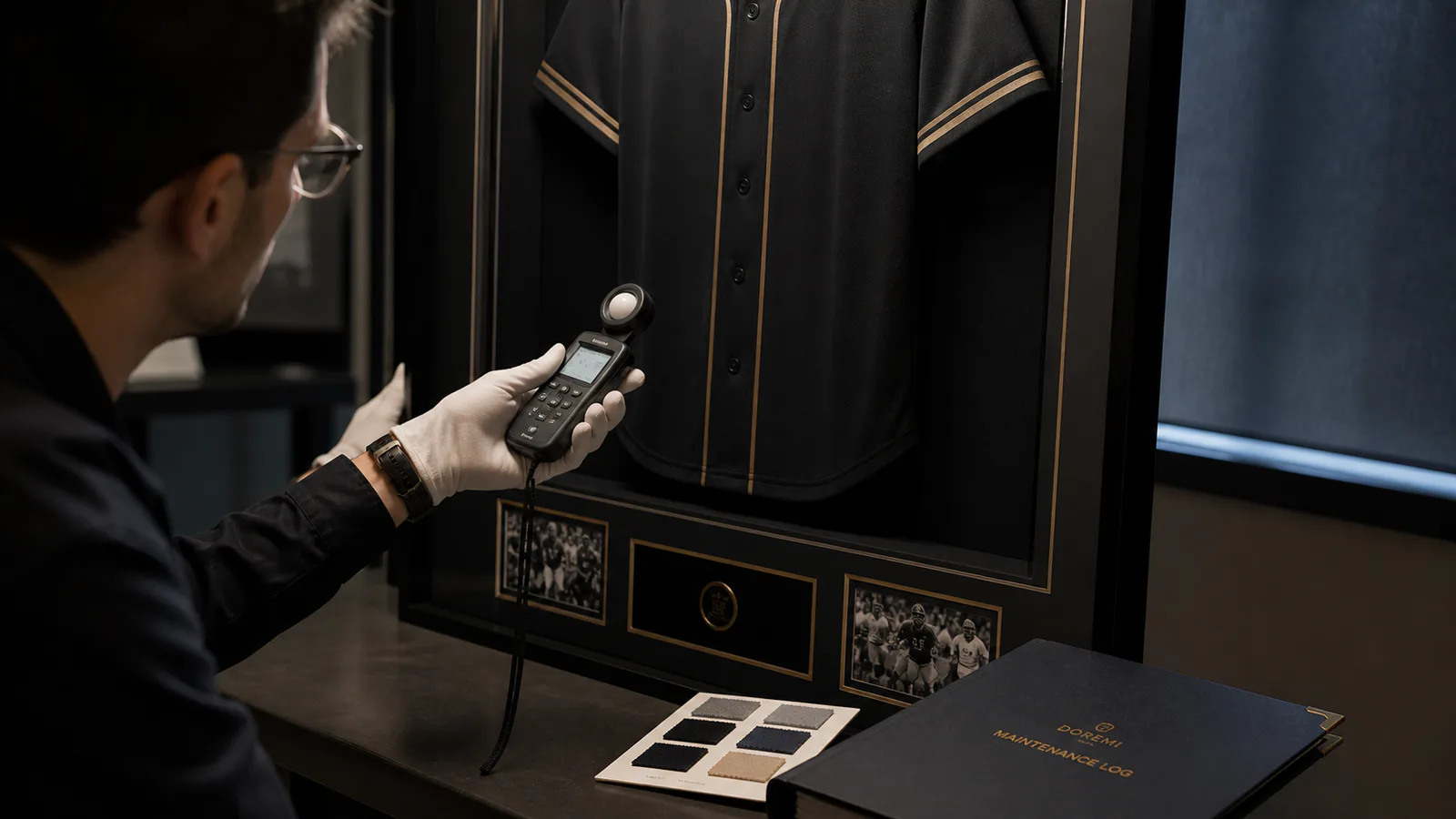
For one replaceable product in a controlled room, a location checklist may be enough. For valuable originals, many displays, changing daylight or a public venue, ask a conservator or lighting professional whether measurement and monitoring are appropriate. The survey should capture representative conditions rather than one convenient reading.
Record instrument, position, date, time, blinds, electric-light state and operating conditions so the number has context. A handheld meter photograph with no method does not prove that a location is safe. If the display moves, review the new position instead of transferring the old conclusion.
Use the physical sample to review appearance and operation
Inspect the finished frame in representative room light. Check reflections, colour appearance, glazing flatness, separation from the object, frame rigidity, access to switches or blinds and whether care labels are visible but unobtrusive. Photograph the approved display under controlled conditions for the project record.
Also test cleaning and handling. Protective film should be removed using a method that does not mark the glazing or object. The care instruction should identify an appropriate cloth and cleaning product for the exact supplied grade. If a coating has special requirements, use the material manufacturer’s guidance rather than a generic household instruction.
Put lighting responsibilities into the handover
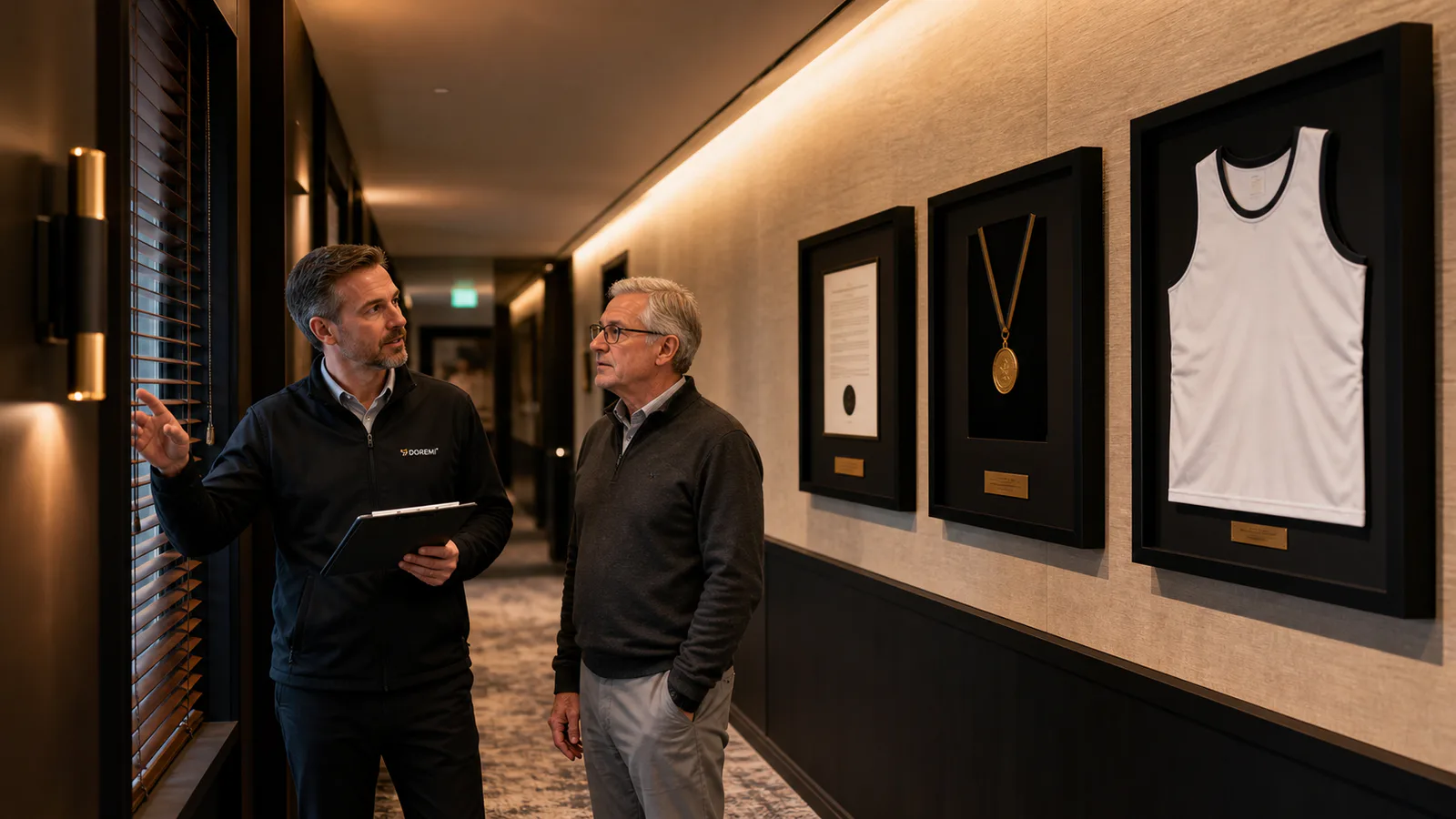
The product team may specify glazing, but facilities controls the room after installation. The handover should state the approved wall position, blind or shade use, light operating schedule, prohibited direct sun, cleaning method, display rotation if any and the person responsible for review. Keep a dimensioned back view and wall-hardware information with the same file.
For clubs, hotels and institutions, include the policy in maintenance documents rather than only in a procurement email. If a display is moved during refurbishment or an event, the new owner should know that location is part of the protection system.
Create a simple condition record
At installation, photograph the whole frame and sensitive details under consistent light. Record the date, location, object description, glazing grade and any existing marks. For higher-value programmes, schedule a review with the object owner or conservator. This creates a basis for decisions without claiming that every change can be measured from a casual photograph.
If fading, condensation, mounting movement, mould, glazing damage or adhesive failure appears, move the issue to a qualified person. Do not clean or remount a valuable object based on a general care article. Separate the immediate action—such as switching off a light or preventing access—from the specialist assessment.
Verify filters and replacements over time
The Canadian Conservation Institute advises verifying the performance of ultraviolet filters and films before installation and periodically thereafter in collection settings. A commercial project should decide whether similar verification is appropriate based on object value, exposure and programme duration. The glazing supplier or qualified professional can advise on method and interval.
Replacement glazing must use the same controlled grade or go through a new approval. Record product code, thickness, orientation, source and installation date. A local repair that substitutes an unidentified clear sheet can silently remove the feature the buyer originally specified.
Write marketing claims with restraint
Consumer-facing copy should distinguish documented product characteristics from expected outcomes. “Uses glazing grade X with supplier-documented UV transmission data” is more controlled than “prevents fading forever.” The latter ignores visible light, duration, object sensitivity and room placement.
Have legal or compliance reviewers approve claims for the destination market. Keep the supporting datasheet and supplied-grade record. If evidence changes, update marketing and replacement instructions. Do not convert a supplier’s general brochure into a DOREMI certification or guarantee.
Compare proposals on the complete protection system
A useful comparison table includes exact glazing grade, documentation, reflection appearance, weight, scratch and cleaning considerations, frame depth, object separation, mounting approach, location controls, maintenance needs, replacement identification, packaging and total cost. Add an “unknown” field instead of awarding a score to an unsupported claim.
The right option depends on programme risk. A lighter glazing material may support shipping and installation. A different surface may offer a preferred viewing appearance. Neither choice removes the need to verify the exact product and manage exposure. Compare like-for-like against the actual display, not generic material names.
Questions to return with the supplier quotation
- What exact glazing manufacturer, grade and thickness are proposed?
- Which document supports any UV or optical claim for that grade?
- Does performance depend on a coating, side or installation orientation?
- How is the glazing identified in production and replacement?
- What separation is maintained between glazing and each object?
- Which mat, backing and mounting materials contact paper or textile?
- What cleaning method does the glazing manufacturer recommend?
- How does the completed weight affect frame and wall hardware?
- Which room-light and placement assumptions informed the proposal?
- What changes require a new sample, claim review or professional advice?
Buyer checklist before installation
- Objects and sensitive components documented
- Replaceable versus original-value decision recorded
- Actual wall, daylight, electric light and operating hours reviewed
- Exact glazing grade and supporting documentation matched
- UV, reflection and safety claims kept separate
- Object-to-glazing clearance verified in the sample
- Facilities, cleaning and relocation responsibilities assigned
- Approved position and initial condition photographed
- Replacement glazing code retained
- Qualified conservator or lighting review arranged where warranted
Experience scope and project limits
Editorial review: Jessica, Founder & Project Advisor at DOREMI Display. Updated 13 August 2026. Jessica’s practical scope covers B2B display briefs, sample review, material discussions, branded project coordination, packaging and handover. She is not presented as a conservator, conservation scientist, lighting engineer, glazing testing laboratory, museum registrar or destination-market claims authority.
This article provides procurement and project-planning questions, not a preservation guarantee or numerical exposure policy. Final decisions should be based on the actual object, exact glazing documentation, real room conditions, physical sample, installation method and appropriate professional advice. Irreplaceable, historic, culturally significant or high-value objects should be reviewed by a qualified conservator.